
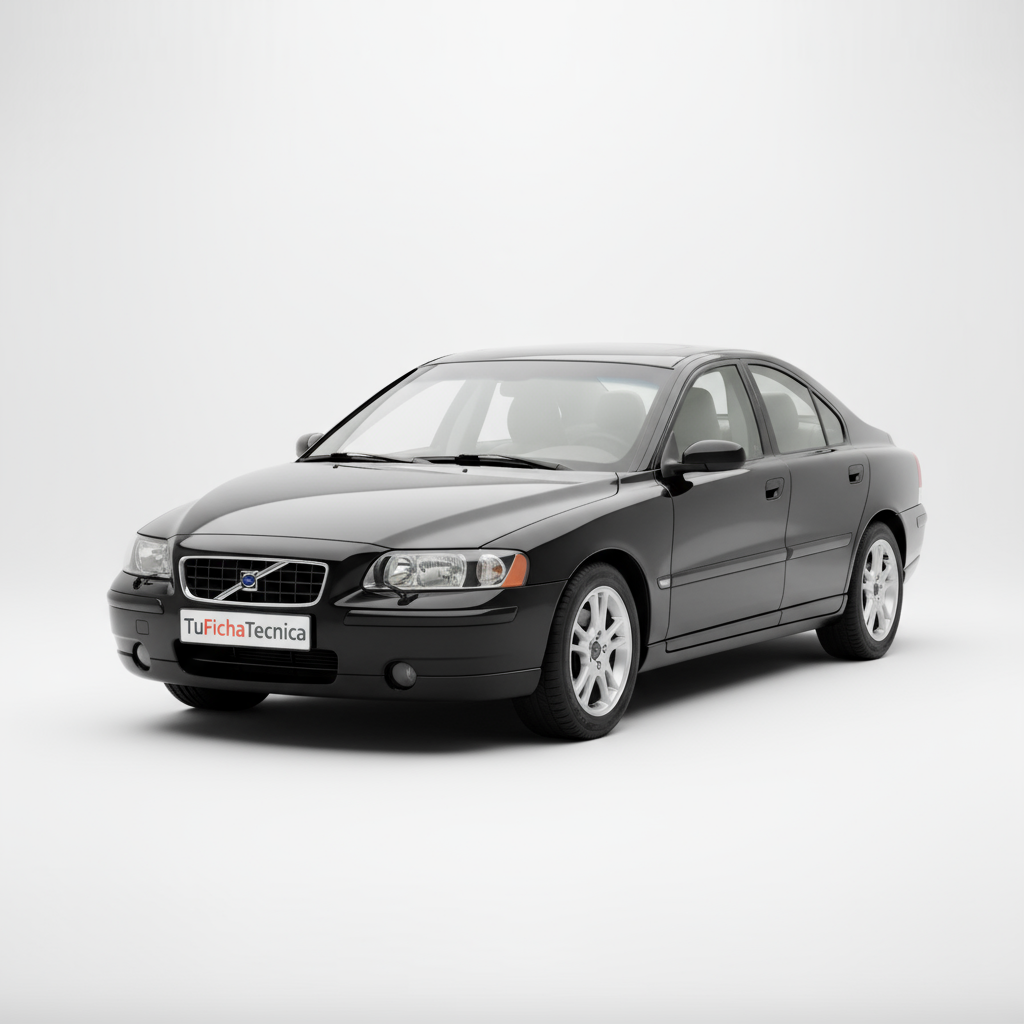
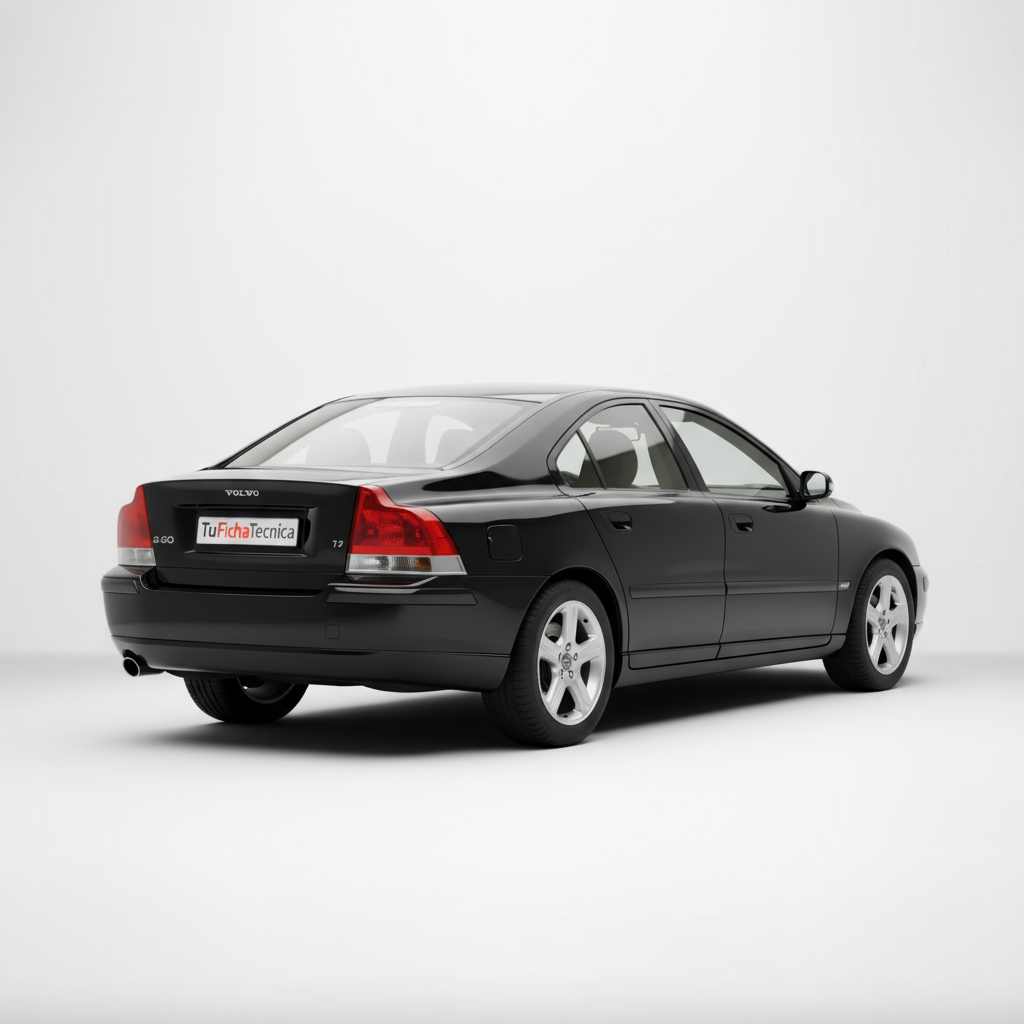
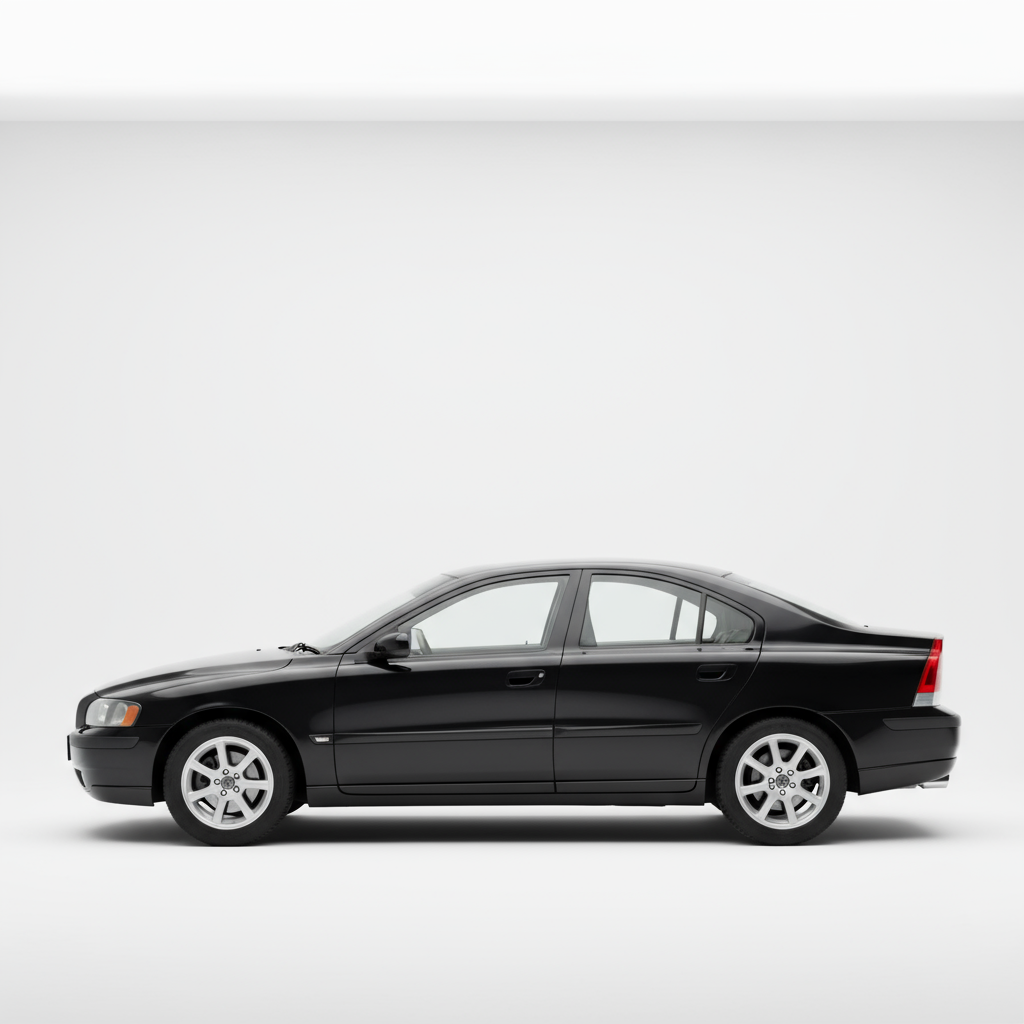
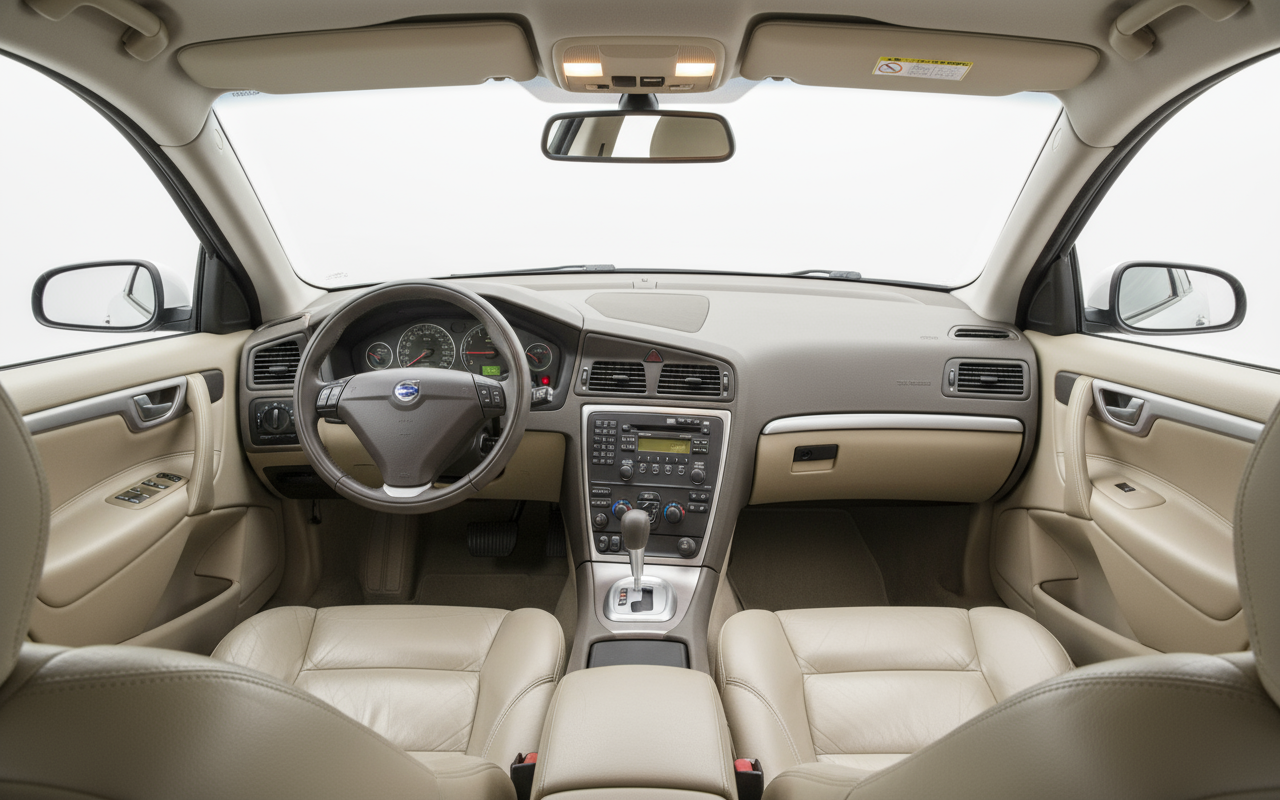
Especificaciones y análisis del Volvo S60
Power
126HP
Torque
300Nm
Consumption
6.4l/100
Emissions
169g/km
0-100 km/h
11.9s
Top Speed
200km/h
Weight
1575kg
Price
37,460€
Technical summary
Gasóleo
Manual 5v
FWD
5 / 4 doors
424 L
70 L
93 kW
Current
Technical specifications
Engine
Capacities
Detailed analysis of the Volvo S60 126 CV Summum (2005-2008)
General description
The 2001 Volvo S60, in its Standard 2.4 Diesel 126 HP Summum trim, is a sedan that embodies the essence of Swedish safety and comfort. Priced at €37,460 at the time, this model positioned itself as an attractive option for those seeking a robust and reliable vehicle, without sacrificing a touch of elegance and comprehensive equipment. Its five-cylinder diesel engine, with 126 HP, promised a balance between performance and efficiency, ideal for long journeys and daily use.
Driving experience
Behind the wheel of the Volvo S60, the predominant feeling is one of solidity and poise. The suspension, McPherson type at the front and deformable parallelogram at the rear, masterfully filters out road irregularities, offering exceptional ride comfort. The steering, although not the most communicative, conveys safety and precision. The diesel engine, with its 300 Nm of torque from 1750 rpm, pulls smoothly and forcefully, allowing for safe overtakes and relaxed driving. The five-speed manual gearbox is precise and well-geared, contributing to a pleasant and uneventful driving experience. Despite its 11.9 seconds from 0 to 100 km/h, the power delivery is linear and satisfactory for everyday use, reaching a top speed of 200 km/h.
Design and aesthetics
The design of the 2001 Volvo S60 is a clear reflection of Scandinavian philosophy: clean, elegant, and timeless lines. Its four-door body, with a length of 4603 mm and a width of 1804 mm, projects an image of robustness and distinction. The characteristic headlights are harmoniously integrated into the front, while the rear, with its vertical taillights, is unmistakably Volvo. The interior, with its quality materials and ergonomic design, invites calm and well-being. The seats, famous for their comfort, offer excellent support on long journeys. The boot capacity, at 424 liters, is adequate for a family's needs.
Technology and features
Although the 2001 Volvo S60 did not feature the touchscreens and connectivity of current cars, its technology focused on safety and comfort. The 2.4-liter diesel engine, with common rail direct injection, variable geometry turbo, and intercooler, was an example of efficiency for its time. The engine's construction, with an aluminum block and cylinder head, contributed to contained weight and greater durability. In terms of safety, Volvo was already a benchmark, incorporating advanced braking systems with 305 mm ventilated discs at the front and 288 mm discs at the rear, as well as a body structure designed to protect occupants in the event of an impact. Independent suspension on both axles and anti-roll bars ensured safe and predictable dynamic behavior.
Competition
In its segment, the 2001 Volvo S60 competed with premium sedans such as the BMW 3 Series, the Audi A4, and the Mercedes-Benz C-Class. Compared to them, the S60 offered a different proposition, prioritizing safety, comfort, and a more sober and elegant aesthetic. While its German rivals might offer a sportier driving dynamic or greater technological deployment in some aspects, the Volvo S60 distinguished itself by its welcoming interior, the quality of its finishes, and its reputation for reliability and durability. It also competed with models like the Saab 9-3, with which it shared a Nordic design and safety philosophy.
Conclusion
The 2001 Volvo S60, in its 2.4 Diesel Summum version, is a car that, despite the passage of time, remains a very interesting option in the used car market. Its combination of safety, comfort, timeless design, and an efficient diesel engine make it an ideal travel companion for those seeking a robust and reliable sedan. It is a car that invites you to enjoy the road with peace of mind, knowing that you are traveling in a safe and comfortable environment. Its combined consumption of 6.4 l/100km and its environmental label B make it still relevant today.