
Especificaciones y análisis del Volkswagen Passat
Power
170HP
Torque
220Nm
Consumption
9.8l/100
Emissions
-g/km
0-100 km/h
10.8s
Top Speed
224km/h
Weight
1496kg
Price
31,480€
Technical summary
Gasolina
Automático 5v
FWD
5 / 4 doors
475 L
62 L
125 kW
Current
Technical specifications
Engine
Capacities
Detailed analysis of the Volkswagen Passat Highline 2.3 V5 170 CV Tiptronic (2000-2004)
General description
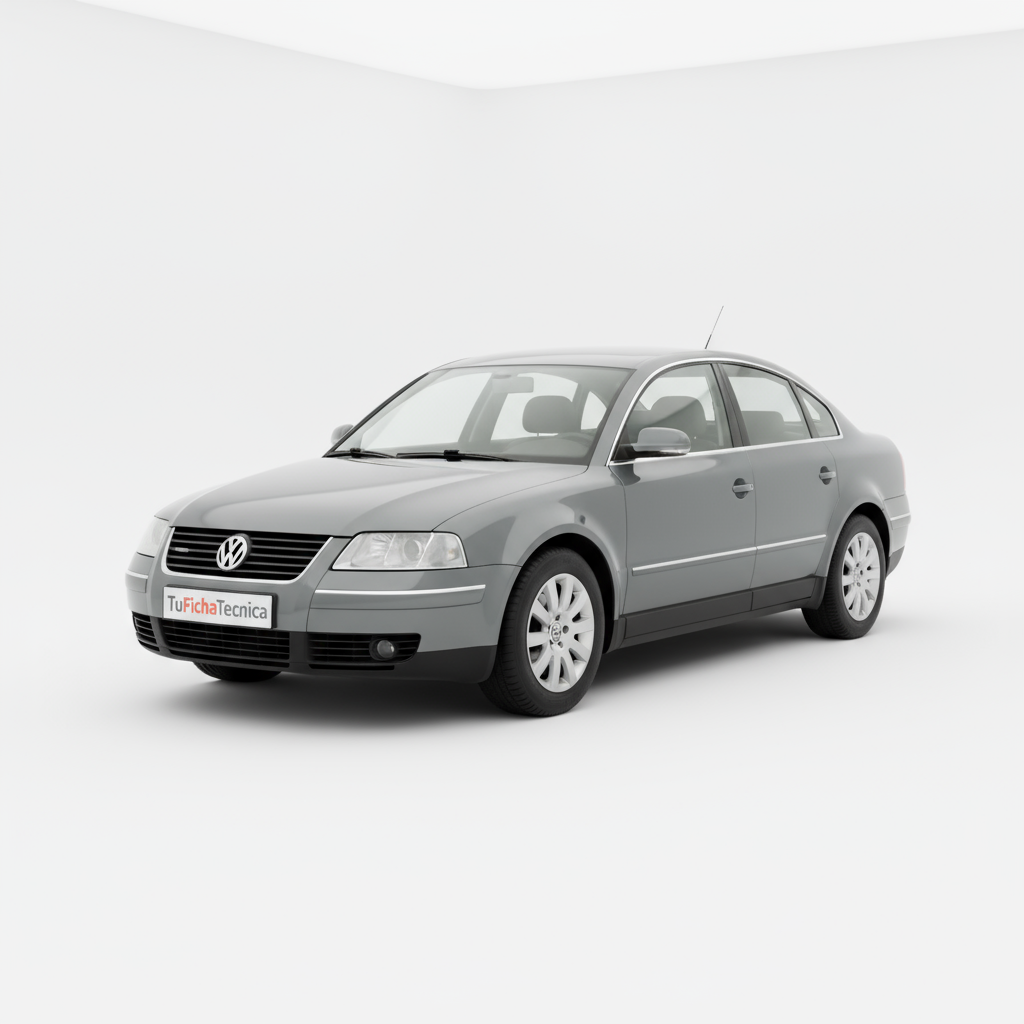
The 2001 Volkswagen Passat Highline 2.3 V5 is a sedan that embodies the essence of early 21st-century German engineering. With its five-cylinder, 170 hp engine and a five-speed Tiptronic transmission, this Passat promised a balance between comfort and a touch of distinction. Its price of €31,480 at the time positioned it as an attractive option for those seeking quality and superior equipment in the mid-size sedan segment.
Driving experience
Behind the wheel, the Passat Highline 2.3 V5 offered a smooth and refined driving experience. The V5 engine, with its particular sound, delivered power linearly, although 10.8 seconds to reach 100 km/h did not make it a sports car. The five-speed Tiptronic gearbox contributed to a relaxed journey, ideal for long trips. The suspension, McPherson type at the front and trailing arm with torsional element at the rear, was configured to prioritize comfort, absorbing road irregularities well. The rack-and-pinion steering, while not outstanding for its sportiness, offered the necessary precision for daily use. Overall, the feeling was one of solidity and poise, instilling confidence in the driver.
Design and aesthetics
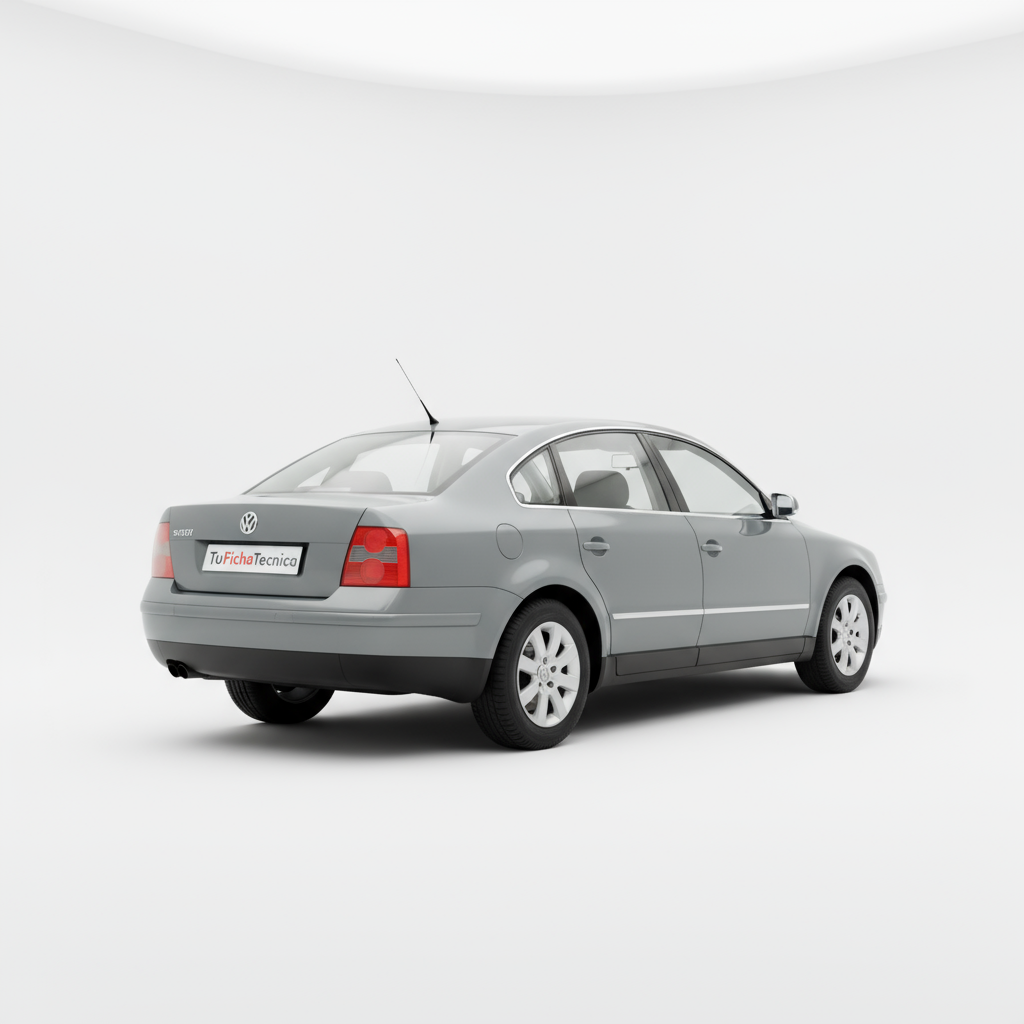
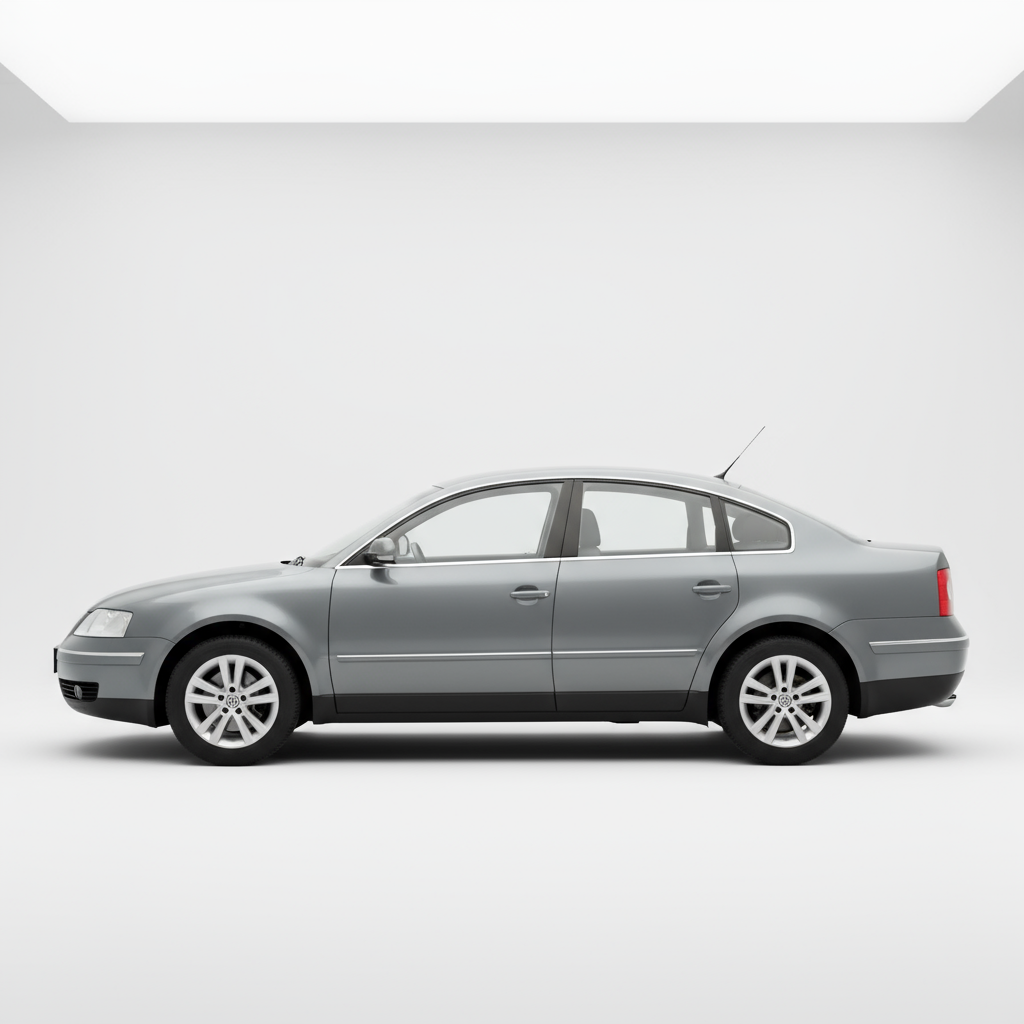
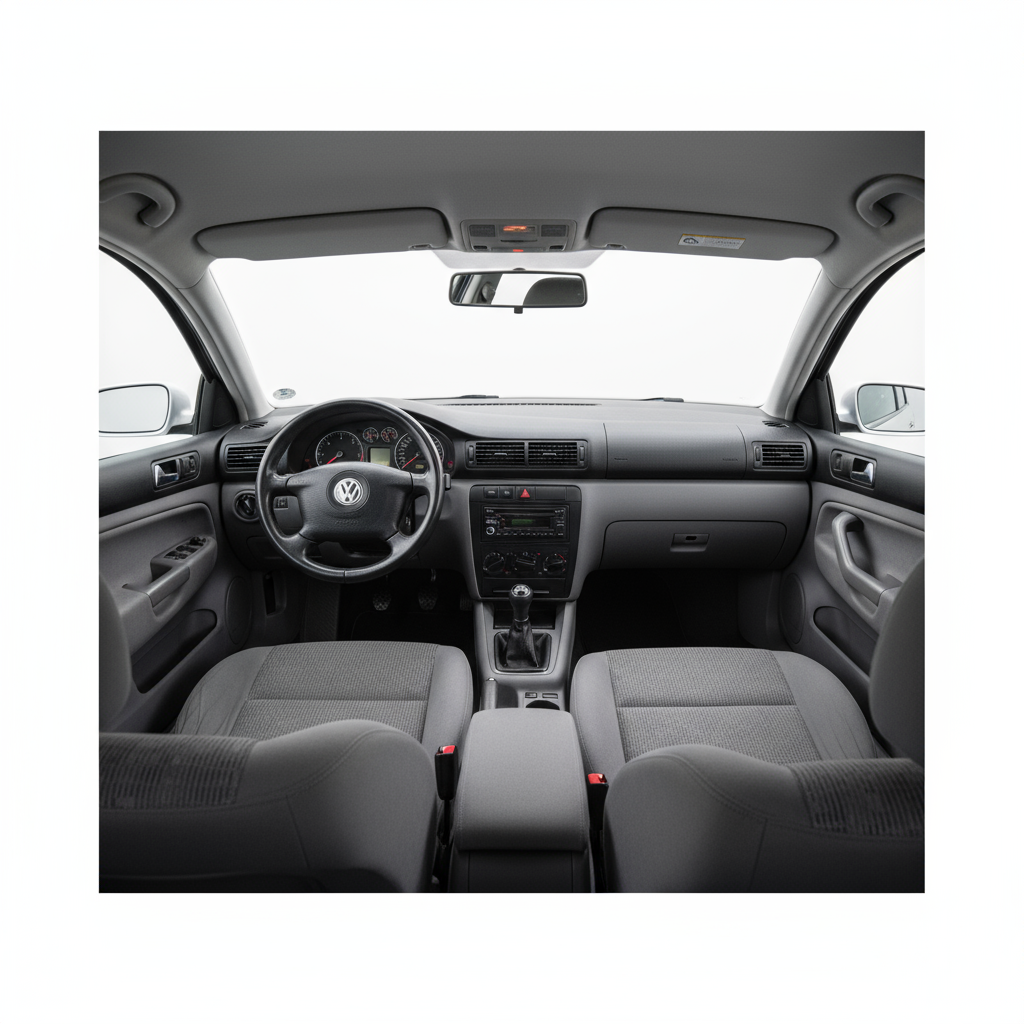
The design of the 2001 Volkswagen Passat, in its sedan version, was characterized by sober and elegant lines, timeless for its era. With a length of 4703 mm and a width of 1746 mm, it presented a classic three-box silhouette. The Highline version added details that enhanced its appearance, such as 16-inch wheels with 205/55 R16 W tires, which gave it a more distinguished presence. The interior, though not revolutionary, stood out for the quality of its materials and a functional design, with a 475-liter trunk offering good luggage capacity. It was a car that, without fanfare, projected an image of seriousness and good taste.
Technology and features
In terms of technology, the 2001 Passat Highline 2.3 V5 incorporated elements that were considered advanced for its time. The 2.3-liter, 170 hp V5 engine, with indirect injection and an aluminum cylinder head, represented an interesting mechanical option. The 5-speed Tiptronic automatic transmission offered the possibility of sequential handling, providing extra control to the driver. In terms of safety, it featured 312 mm ventilated disc brakes on the front axle and 245 mm discs on the rear, ensuring good braking capability. Although driving assistance systems are not specified, it is expected to have included the usual passive safety elements in its category.
Competition
In the early 2000s mid-size premium sedan market, the Volkswagen Passat Highline 2.3 V5 faced strong competitors. Models like the BMW 3 Series, Mercedes-Benz C-Class, or Audi A4 were its main rivals, each offering its own interpretation of luxury and performance. It also competed with more generalist but well-equipped options, such as the Ford Mondeo or Opel Vectra, which sought to offer similar value at a more affordable price. The Passat positioned itself as a balanced alternative, with a good level of equipment and a distinctive engine, without reaching the prices of the most exclusive premium brands.
Conclusion
The 2001 Volkswagen Passat Highline 2.3 V5 was a sedan that managed to combine Volkswagen's sobriety and build quality with a peculiar engine and comprehensive equipment. It was a car designed for those who valued comfort, reliability, and a certain status, without falling into ostentation. Its combined consumption of 9.8 l/100km and its environmental label B reflect the characteristics of an era where efficiency was not the absolute priority. Today, it remains a car that evokes an era of robust and well-made sedans, with a particular charm for lovers of medium-displacement engines.