
Especificaciones y análisis del Volkswagen Passat
Power
102HP
Torque
148Nm
Consumption
7.7l/100
Emissions
-g/km
0-100 km/h
12.7s
Top Speed
192km/h
Weight
1303kg
Price
20,780€
Technical summary
Gasolina
Manual 5v
FWD
5 / 4 doors
475 L
62 L
75 kW
Current
Technical specifications
Engine
Capacities
Detailed analysis of the Volkswagen Passat Edition 1.6 102 CV (2001-2005)
General description
The 2001 Volkswagen Passat, in its 1.6 102 hp Edition sedan version, is presented as a balanced and reliable option within the mid-size sedan segment. Priced at 20,780 euros at the time, this model offered an interesting value proposition for those looking for a spacious car with Volkswagen's renowned build quality. Its 1.6-liter 102 hp gasoline engine, combined with a 5-speed manual gearbox, promised adequate performance for daily use and long journeys, without great sporting pretensions but with the necessary efficiency for the era.
Driving experience
Behind the wheel of the 2001 Passat 1.6, the predominant feeling is one of solidity and comfort. The suspension, McPherson type at the front and trailing arm with torsional element at the rear, effectively filters out road irregularities, providing a smooth and composed ride. The rack-and-pinion steering, although lacking the immediacy of more modern systems, offers a predictable and safe response. The 102 hp engine, with 148 Nm of torque at 3800 rpm, allows for acceleration from 0 to 100 km/h in 12.7 seconds and a top speed of 192 km/h, figures that, while not spectacular, are sufficient for family use and road trips. The combined consumption of 7.7 l/100km is reasonable for its category and year. In general, the Passat conveys a sense of safety and control, ideal for drivers who value tranquility and comfort in their travels.
Design and aesthetics
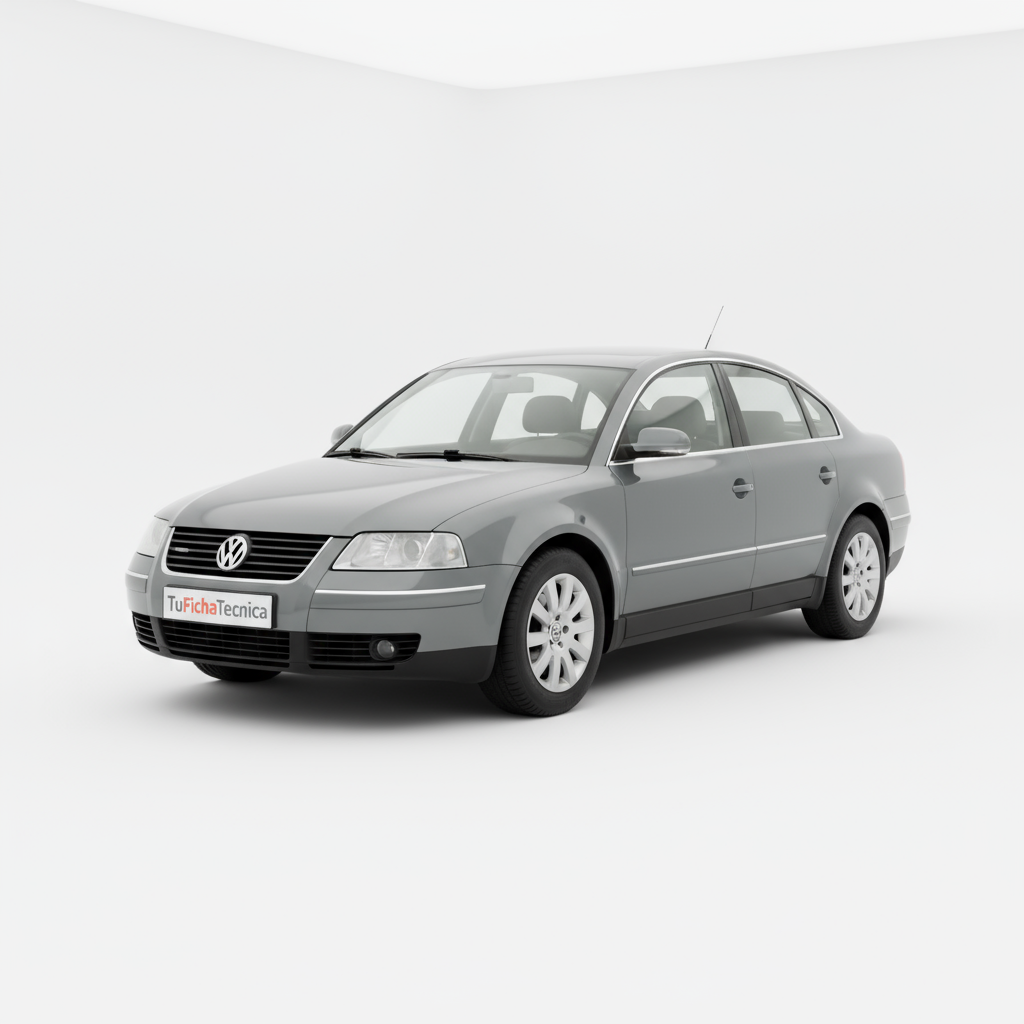
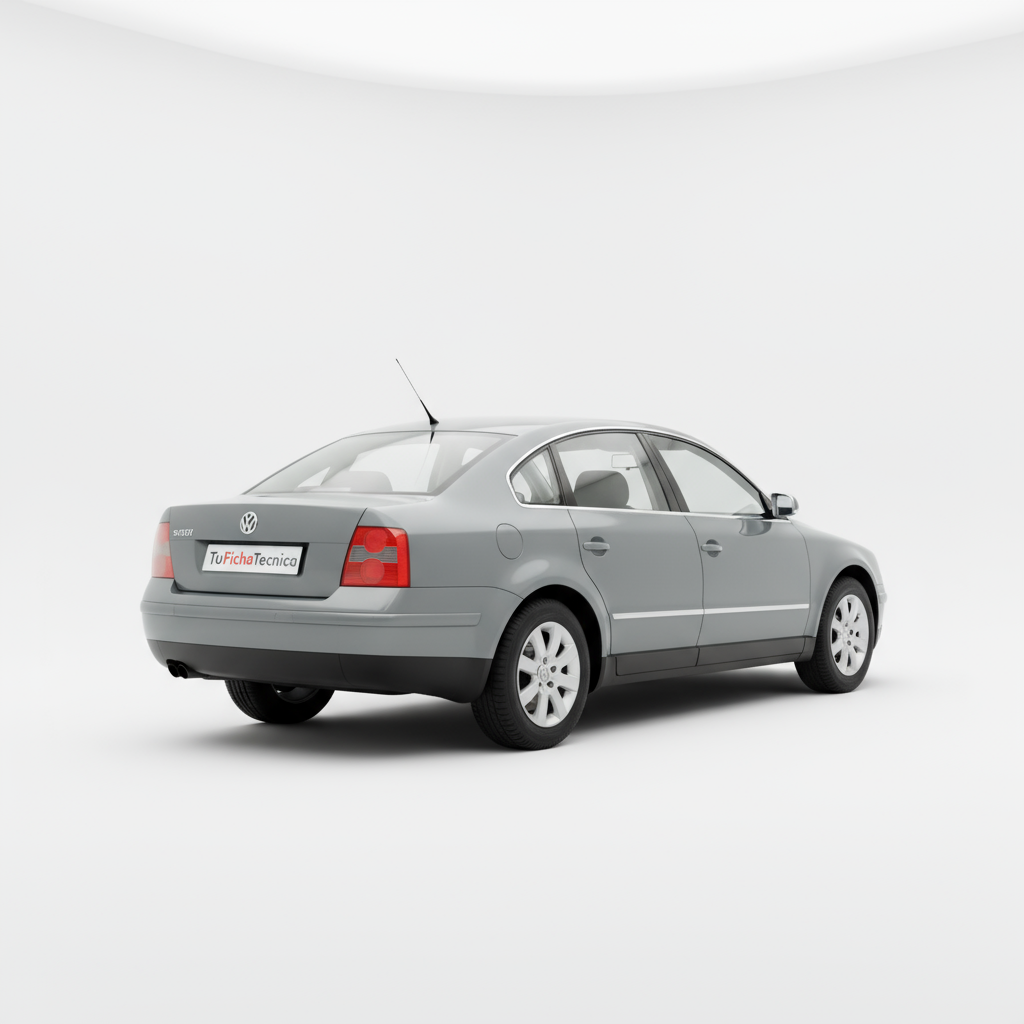
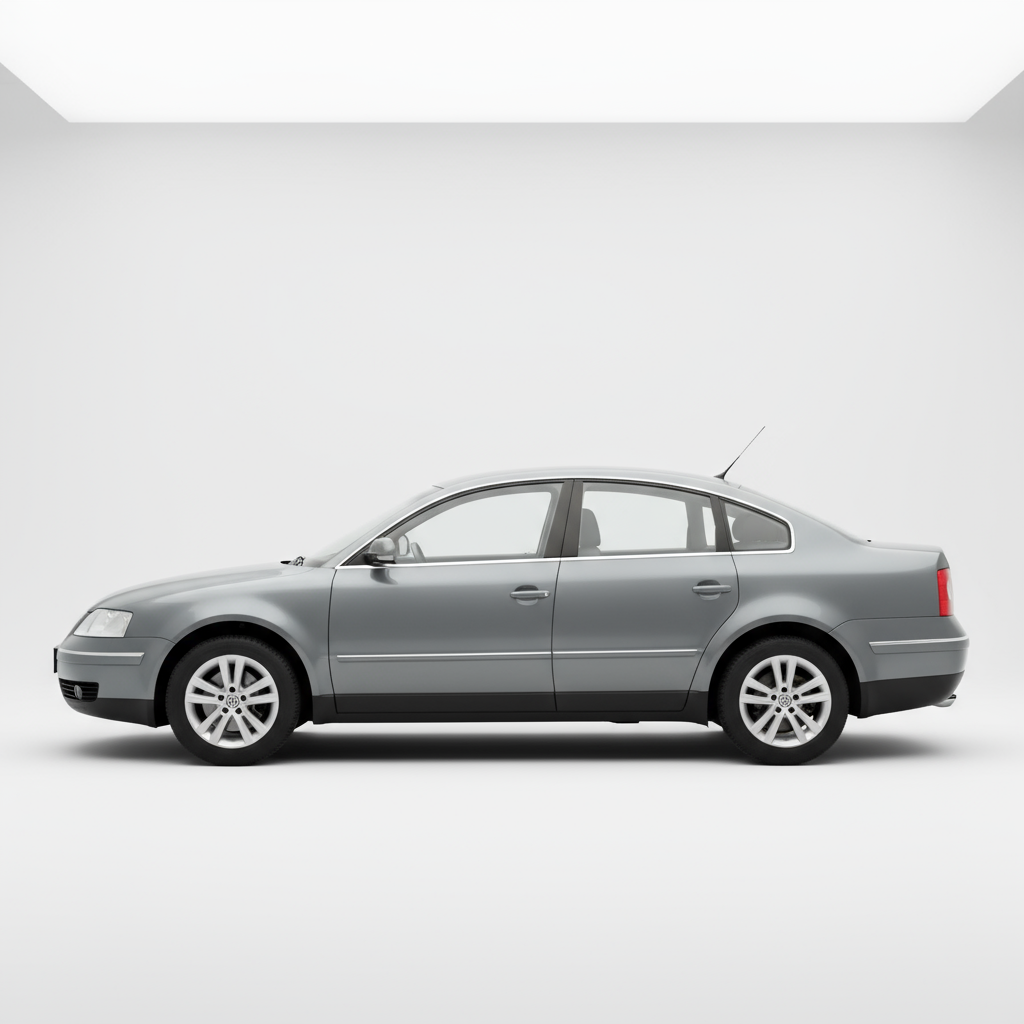
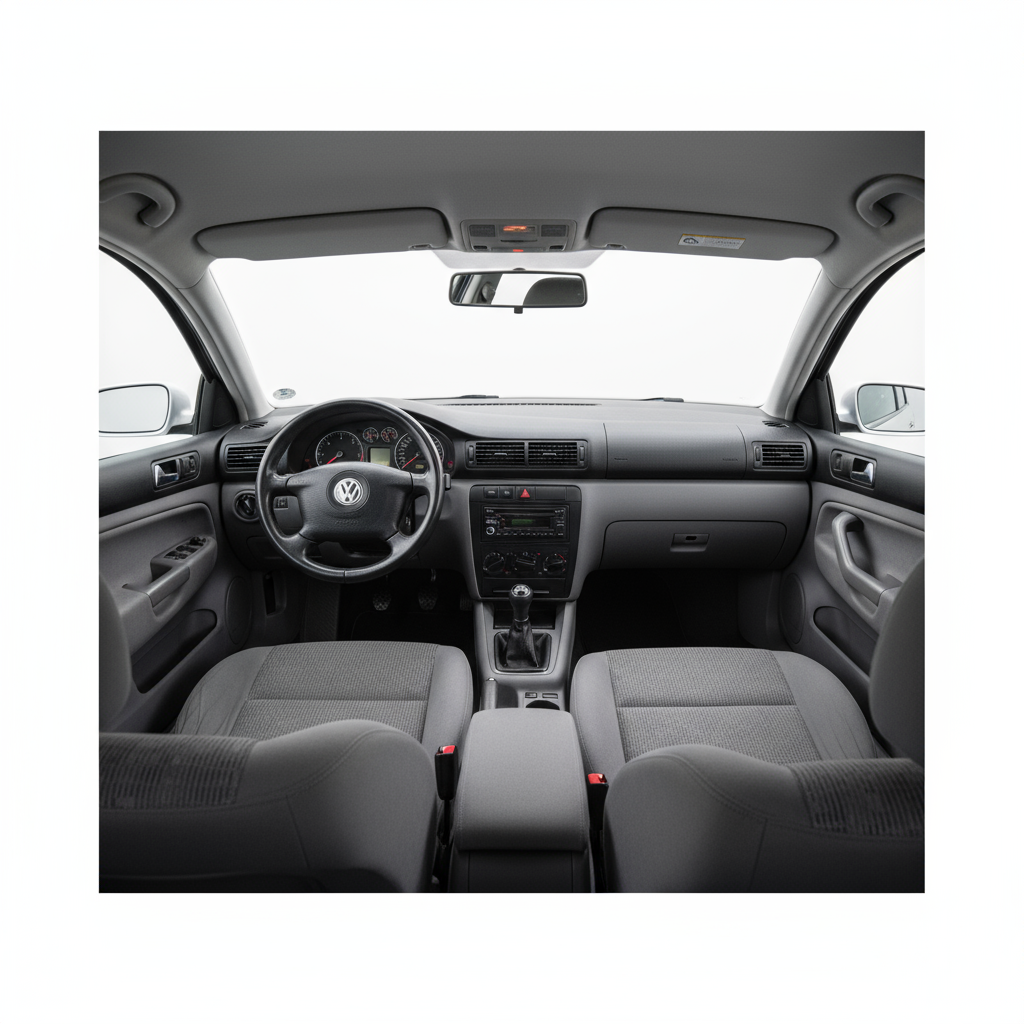
The design of the 2001 Volkswagen Passat is a reflection of the sobriety and timeless elegance that characterizes the brand. Its lines are clean and functional, with a classic sedan silhouette that has aged with dignity. The 4-door body and generous dimensions (4703 mm long, 1746 mm wide, and 1462 mm high) give it a robust presence and a spacious interior. Although it does not seek extravagance, its aesthetic conveys an image of a well-made and durable car, with details that, without being flashy, contribute to a perception of quality. The interior design follows the same philosophy, with a well-organized dashboard and materials that, although not luxurious, are pleasant to the touch and resistant to the passage of time.
Technology and features
In 2001, the Volkswagen Passat incorporated technologies that, while they may seem basic today, were advanced for its segment. Its 1.6-liter gasoline engine featured indirect injection, a proven solution for efficiency and reliability. The 5-speed manual transmission was standard in many vehicles of the time, offering direct control over power. In terms of safety, it had ventilated front disc brakes and rear discs, complemented by stabilizers on both axles to improve stability. Although modern driving assistance systems are not specified, the Passat offered the essential elements for safe and comfortable driving, such as power steering and a well-balanced chassis. Its environmental label B indicates that it complied with the emission regulations of its time.
Competition
In the competitive mid-size sedan segment of the early 2000s, the 102 hp Volkswagen Passat 1.6 faced tough competitors. Models such as the Opel Vectra, Ford Mondeo, Peugeot 406, or Renault Laguna offered alternatives with similar characteristics and prices. Each of them had its strengths, whether in design, equipment, or driving dynamics. However, the Passat stood out for its reputation for reliability, the quality of its finishes, and a generally higher residual value. Its proposal was that of a sensible and well-built car, appealing to an audience that valued durability and functionality above extreme sportiness or risky design.
Conclusion
The 2001 Volkswagen Passat 1.6 102 hp sedan is a car that, despite the years, remains an example of German engineering oriented towards durability and functionality. Its timeless design, spacious interior, and reliable mechanics make it an interesting option for those looking for a used vehicle with a good balance between comfort, performance, and maintenance economy. Although it is not a car for strong emotions, it more than fulfills its purpose as a family sedan, offering a safe and pleasant journey. It is a testament to an era when robustness and practicality were fundamental pillars in automotive design.