
Especificaciones y análisis del Toyota Aygo
Power
68HP
Torque
93Nm
Consumption
4.6l/100
Emissions
107g/km
0-100 km/h
14.9s
Top Speed
157km/h
Weight
-kg
Price
9,950€
Technical summary
Gasolina
Automático 5v
FWD
4 / 3 doors
138 L
35 L
50 kW
Current
Technical specifications
Engine
Capacities
Detailed analysis of the Toyota Aygo 3p 1.0 VVT-i Blue Confortdrive · 68 CV (2009-2010)
General description
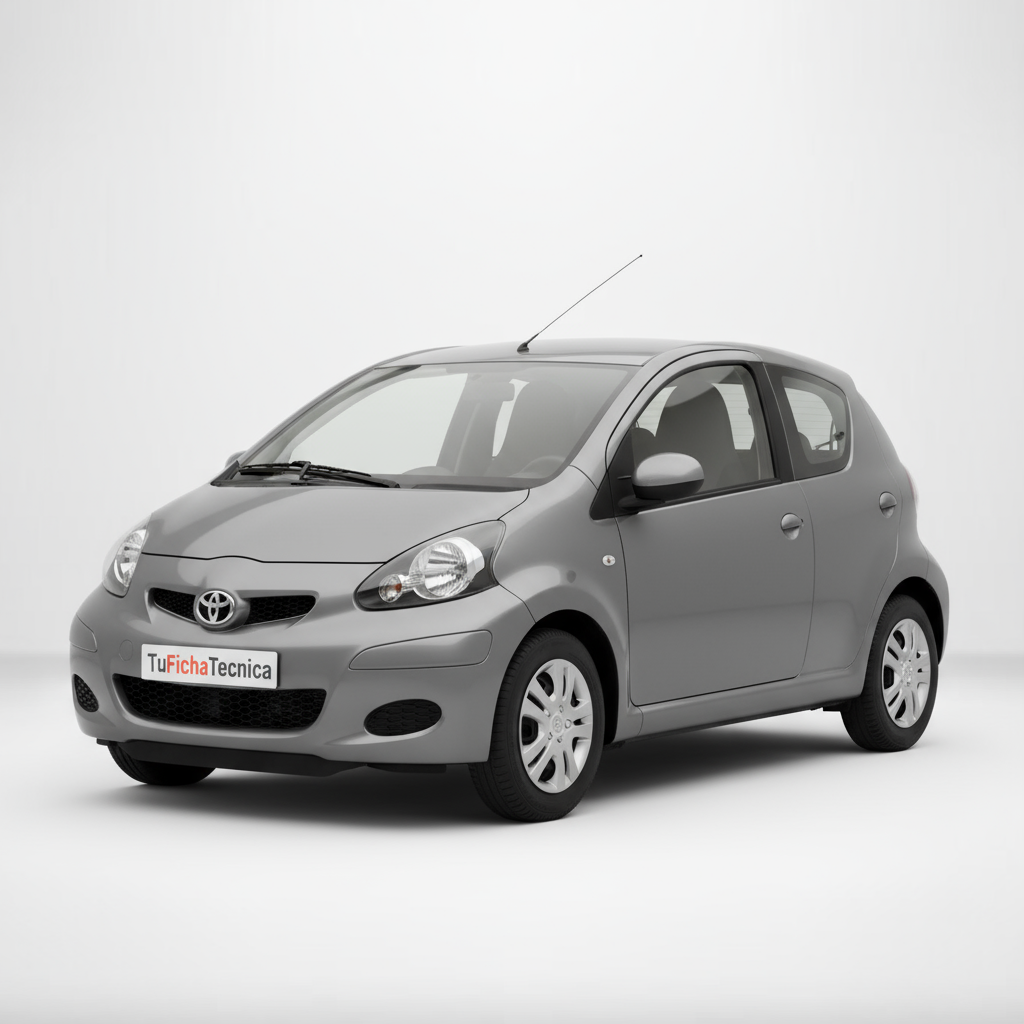
The 2009 Toyota Aygo, in its 3-door 1.0 VVT-i Blue Confortdrive version, is presented as a compact and efficient urban option. Priced at €9,950, this small Japanese car aims to win over those who prioritize agility and low consumption in the city. Its 68 HP gasoline engine, combined with a 5-speed automatic transmission, promises a simple and hassle-free driving experience, ideal for daily use.
Driving experience
Behind the wheel of the Aygo, the predominant sensation is one of lightness and maneuverability. Its 68 HP, though modest, are sufficient for agile movement in urban traffic, and the automatic transmission greatly facilitates driving in congested environments. The 0 to 100 km/h acceleration in 14.9 seconds doesn't make it a speedster, but its agility in changes of direction and its small turning circle of 9.46 meters make it a perfect ally for navigating narrow streets and parking. The combined consumption of 4.6 l/100km is one of its great assets, offering very attractive running costs. The suspension, McPherson type at the front and trailing arm with torsional element at the rear, seeks a balance between comfort and stability, although on more demanding roads it may show its limitations. The front ventilated disc brakes and rear drum brakes perform their function correctly for a vehicle of its size and weight.
Design and aesthetics
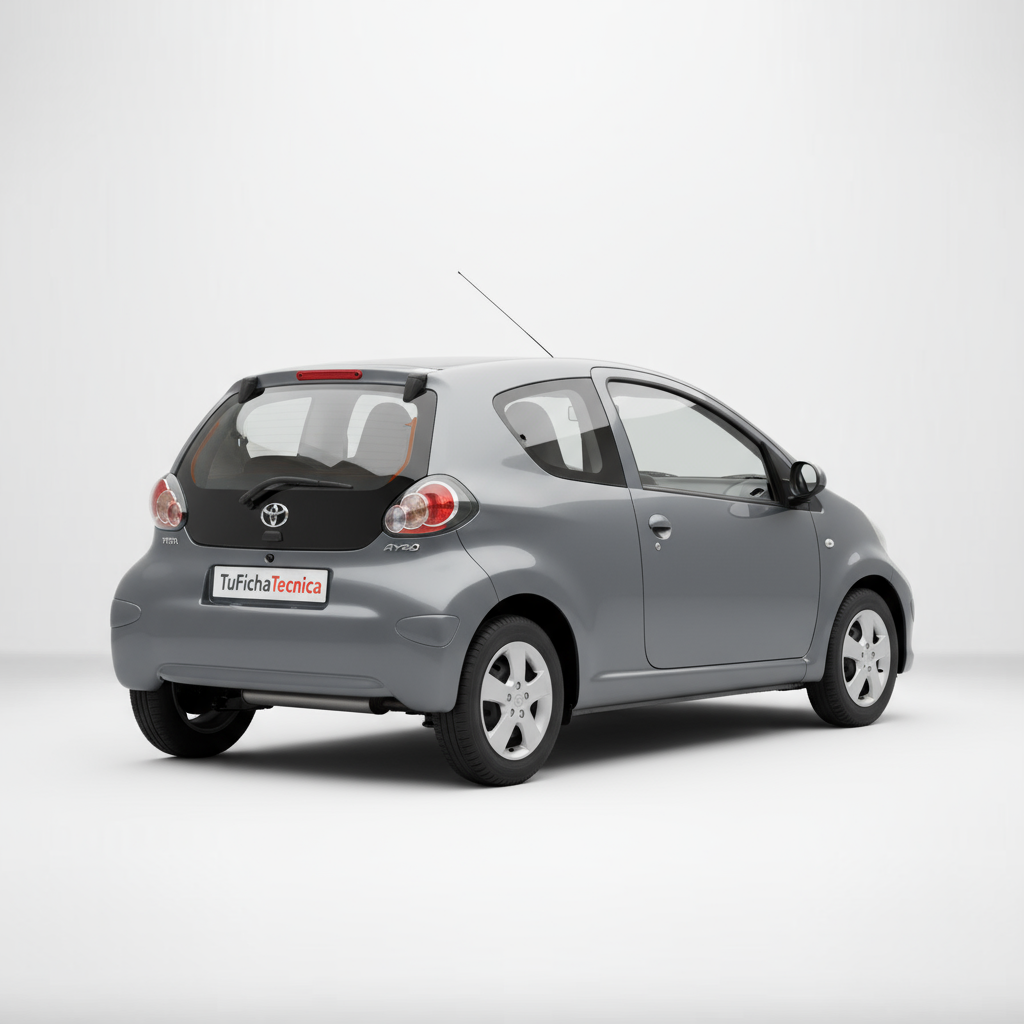
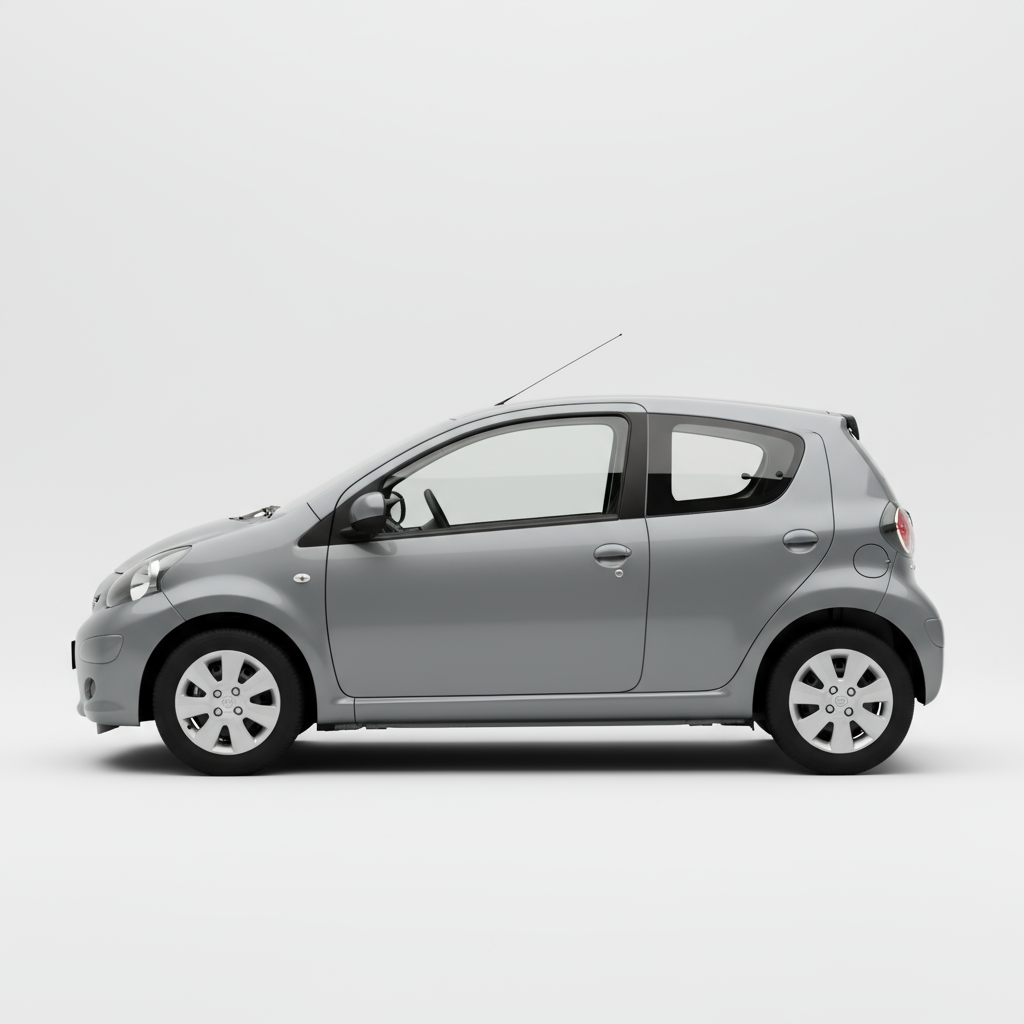
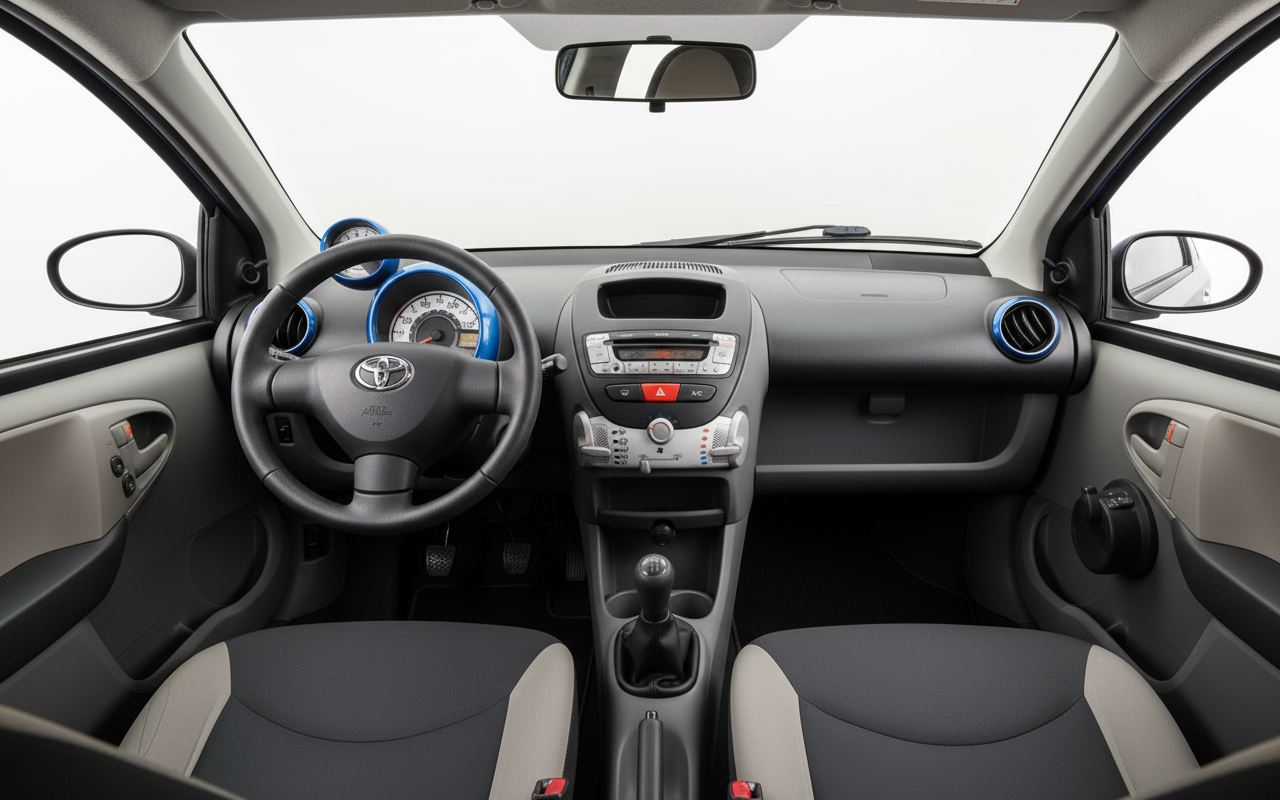
The design of the 2009 Toyota Aygo is youthful and carefree, with lines that seek to maximize interior space despite its compact dimensions. The 3-door version accentuates its urban and dynamic character. Its 3415 mm length, 1615 mm width, and 1465 mm height make it extremely compact, ideal for the city. The interior, though simple, is designed to be functional, with 4 seats and a 138-liter trunk, sufficient for daily shopping or small getaways. The 'Blue' color of this version adds a distinctive and fresh touch to its aesthetic.
Technology and features
In terms of technology, the 2009 Toyota Aygo focuses on the essential and practical. Its 1.0 VVT-i 3-cylinder engine, with indirect injection and variable valve timing, is an example of mechanical efficiency, seeking to optimize fuel consumption. The 5-speed automatic transmission, although not the most sophisticated on the market, offers comfort in urban driving. Electric power steering facilitates maneuvers at low speeds. In terms of safety, it features front ventilated disc brakes and rear drum brakes, and although details of active or passive safety equipment are not specified in the provided data, the basics for the era are expected. Its DGT 'C' label reflects its compliance with the emission regulations of the time.
Competition
The 2009 Toyota Aygo competes in the micro-urban segment with models such as the Citroën C1 and the Peugeot 107, with which it shares a platform and many components, essentially being the same car with slight aesthetic and equipment differences. Other direct rivals include the Fiat Panda, the Renault Twingo, and the Hyundai i10. Compared to them, the Aygo stands out for its proven mechanical reliability and low consumption, although some competitors might offer a more refined interior or more complete equipment in equivalent versions.
Conclusion
The 2009 Toyota Aygo 3p 1.0 VVT-i Blue Confortdrive is an honest and effective proposal for urban mobility. Its compact size, low consumption, and ease of handling make it a very attractive option for those looking for a practical and economical car for daily city life. Although it is not a vehicle that stands out for its performance or luxuries, it more than fulfills its purpose, offering a simple and reliable driving experience. Its price of €9,950 positions it as an accessible alternative in its segment, backed by Toyota's reputation for reliability.