
Especificaciones y análisis del Toyota Aygo
Power
68HP
Torque
93Nm
Consumption
4.6l/100
Emissions
109g/km
0-100 km/h
14.2s
Top Speed
157km/h
Weight
865kg
Price
9,600€
Technical summary
Gasolina
Manual 5v
FWD
4 / 3 doors
139 L
35 L
50 kW
Current
Technical specifications
Engine
Capacities
Detailed analysis of the Toyota Aygo 3p 1.0 VVT-i Blue · 68 CV (2007-2008)
General description
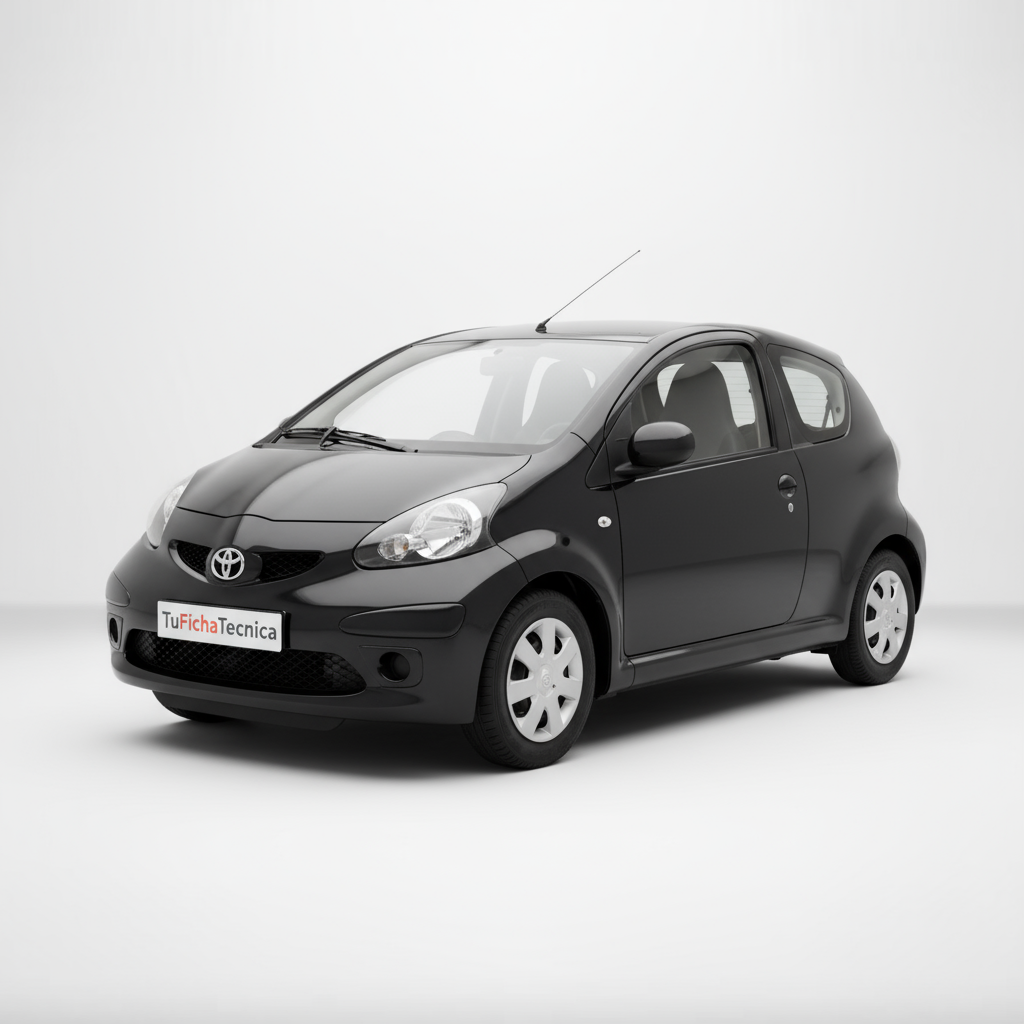
The 2005 Toyota Aygo, in its 3-door 1.0 VVT-i Blue version, is presented as a compact and efficient urban option. Priced at €9,600 at its launch, this small Japanese car aimed to conquer cities with its agility and adjusted consumption. Its 68 hp gasoline engine, combined with a 5-speed manual gearbox, promised a simple and functional driving experience, ideal for daily use in urban environments.
Driving experience
Behind the wheel of the Aygo, the predominant sensation is that of an agile and easy-to-handle car. Its 68 hp, although modest, are sufficient to move its 865 kg weight with ease in the city. The electric power steering facilitates maneuvers in tight spaces, and its turning circle of 9.46 meters makes it an expert in navigating narrow streets. On the road, its performance is more limited, with an acceleration from 0 to 100 km/h in 14.2 seconds and a top speed of 157 km/h, clearly positioning it as a vehicle primarily for urban use. The combined consumption of 4.6 l/100km is one of its strong points, making every trip economical.
Design and aesthetics
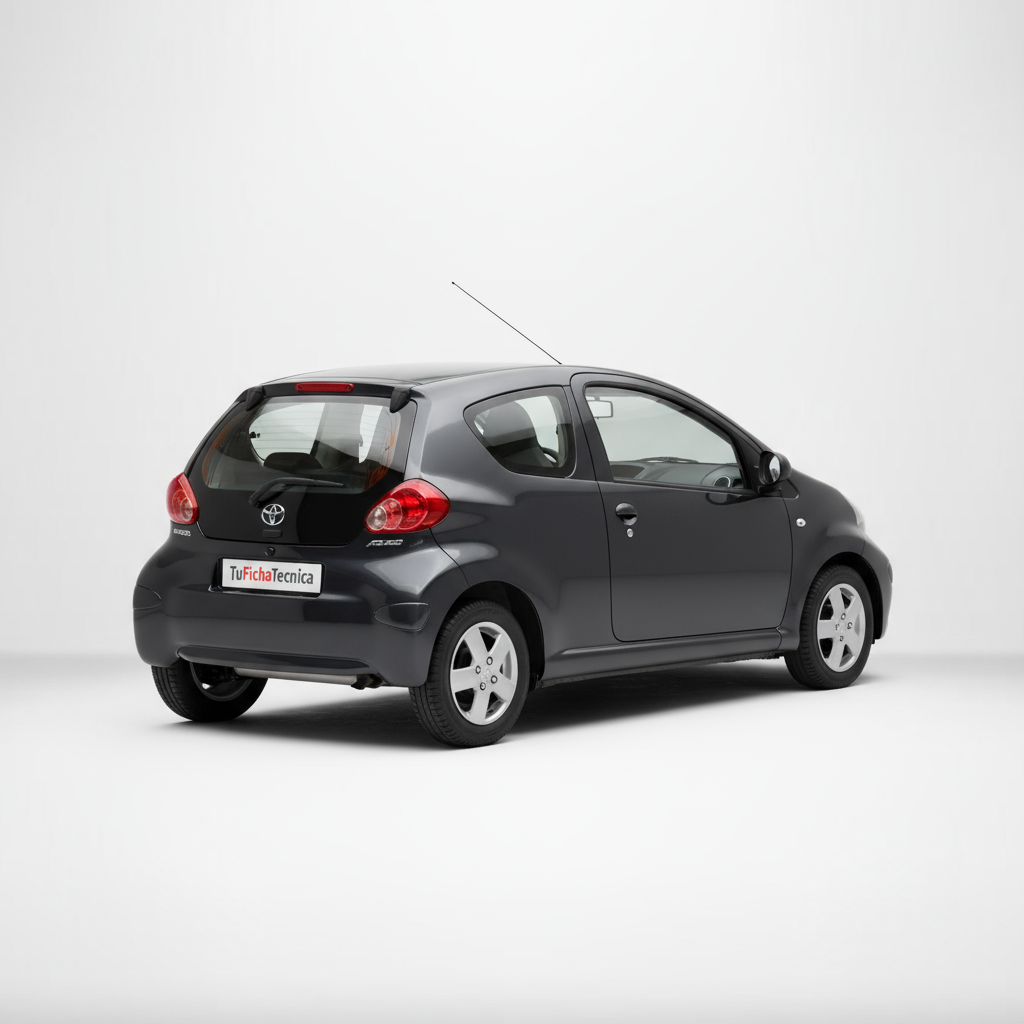
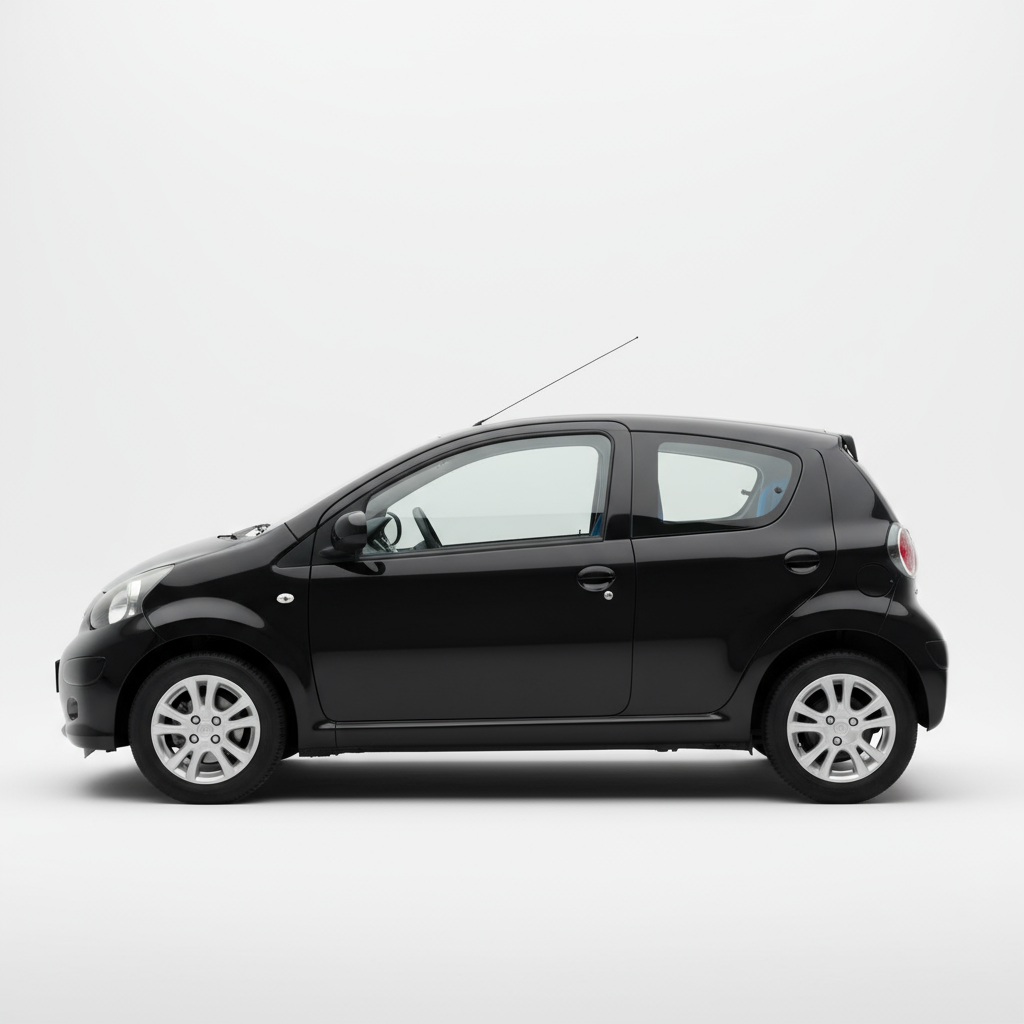
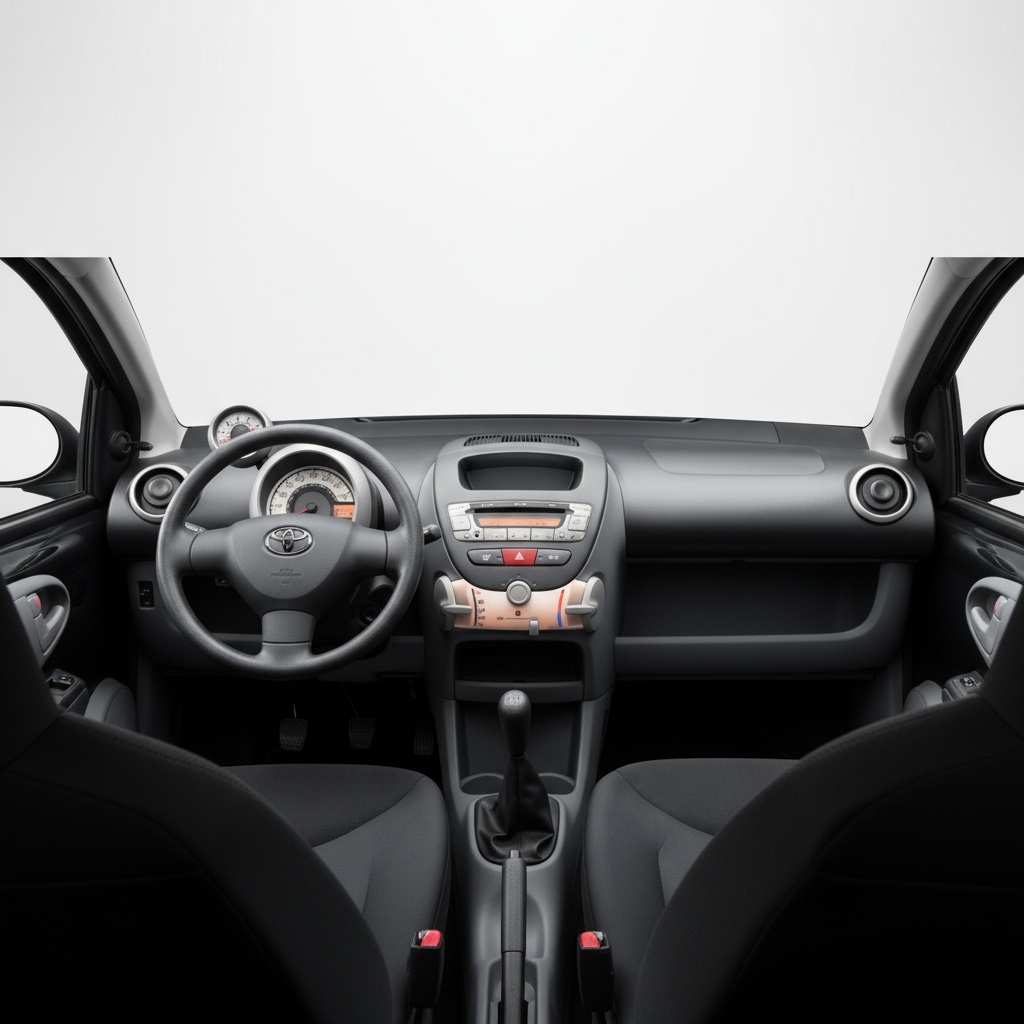
The design of the 2005 Toyota Aygo is fresh and youthful, with lines that seek to maximize interior space despite its contained dimensions (3405 mm long, 1615 mm wide, and 1465 mm high). The 3-door version accentuates its compact and dynamic character. Although it is not a car that seeks ostentation, its functional and casual aesthetic makes it attractive to a young audience or for those looking for a practical second car. The interior, although simple, is designed to be functional and durable, with a trunk capacity of 139 liters, suitable for weekly shopping or small getaways.
Technology and features
In the technological section, the 2005 Aygo focuses on simplicity and efficiency. Its 1.0 VVT-i three-cylinder engine, with an aluminum block and cylinder head, is an example of lightweight and efficient engineering. Indirect injection and VVT-i variable valve timing contribute to low consumption and CO2 emissions of 109 g/km. The 5-speed manual transmission is robust and reliable. In terms of safety and comfort, it features front ventilated disc brakes and rear drum brakes, McPherson front suspension, and a rear torsion beam axle, elements that guarantee safe and stable driving for its segment.
Competition
The 2005 Toyota Aygo faced tough competitors in the urban segment, such as the Citroën C1 and the Peugeot 107, with which it shared a platform and many components, as a result of a collaboration between Toyota and the PSA Group. Other direct rivals included the Fiat Panda, the Renault Twingo, and the Volkswagen Fox, all of them striving to offer the best combination of price, size, and efficiency for the city. The Aygo stood out for Toyota's reputation for reliability and its efficient engine.
Conclusion
The 2005 Toyota Aygo 3p 1.0 VVT-i Blue is a car that perfectly fulfills its purpose: to be an economical, agile, and reliable urban vehicle. It does not seek to be the most powerful or the most luxurious, but rather the ideal companion for daily life in the city. Its low consumption, ease of parking, and Toyota's renowned durability make it a very sensible option for those who value functionality and efficiency above all else. It is a car that, despite its age, remains an interesting option in the used car market due to its low maintenance costs and proven reliability.