
Especificaciones y análisis del SsangYong Rodius
Power
165HP
Torque
340Nm
Consumption
8.1l/100
Emissions
223g/km
0-100 km/h
12.9s
Top Speed
181km/h
Weight
2082kg
Price
19,472€
Technical summary
Gasóleo
Manual 5v
RWD
7 / 5 doors
1641 L
80 L
121 kW
Current
Technical specifications
Engine
Capacities
Detailed analysis of the SsangYong Rodius 270Xdi · 165 CV (2012-2013)
General description
The 2008 SsangYong Rodius 270Xdi is a minivan that defies conventions, offering unparalleled interior space and a value proposition focused on functionality. With its 165 hp diesel engine and rear-wheel drive, it presents itself as a robust option for large families or those seeking high cargo capacity.
Driving experience
Behind the wheel of the Rodius, the predominant feeling is one of spaciousness and solidity. Its 2.7-liter diesel engine, while not a powerhouse, delivers a torque of 340 Nm at low revolutions, which translates into a forceful response to move its considerable mass. The acceleration from 0 to 100 km/h in 12.9 seconds and a top speed of 181 km/h are adequate figures for a vehicle of its size and purpose. The suspension, with a deformable parallelogram on both axles, seeks a balance between comfort and stability, absorbing road irregularities well. The hydraulic steering, although not the most communicative, fulfills its function in a vehicle of these characteristics. The combined consumption of 8.1 l/100km is reasonable for a minivan of its size.
Design and aesthetics
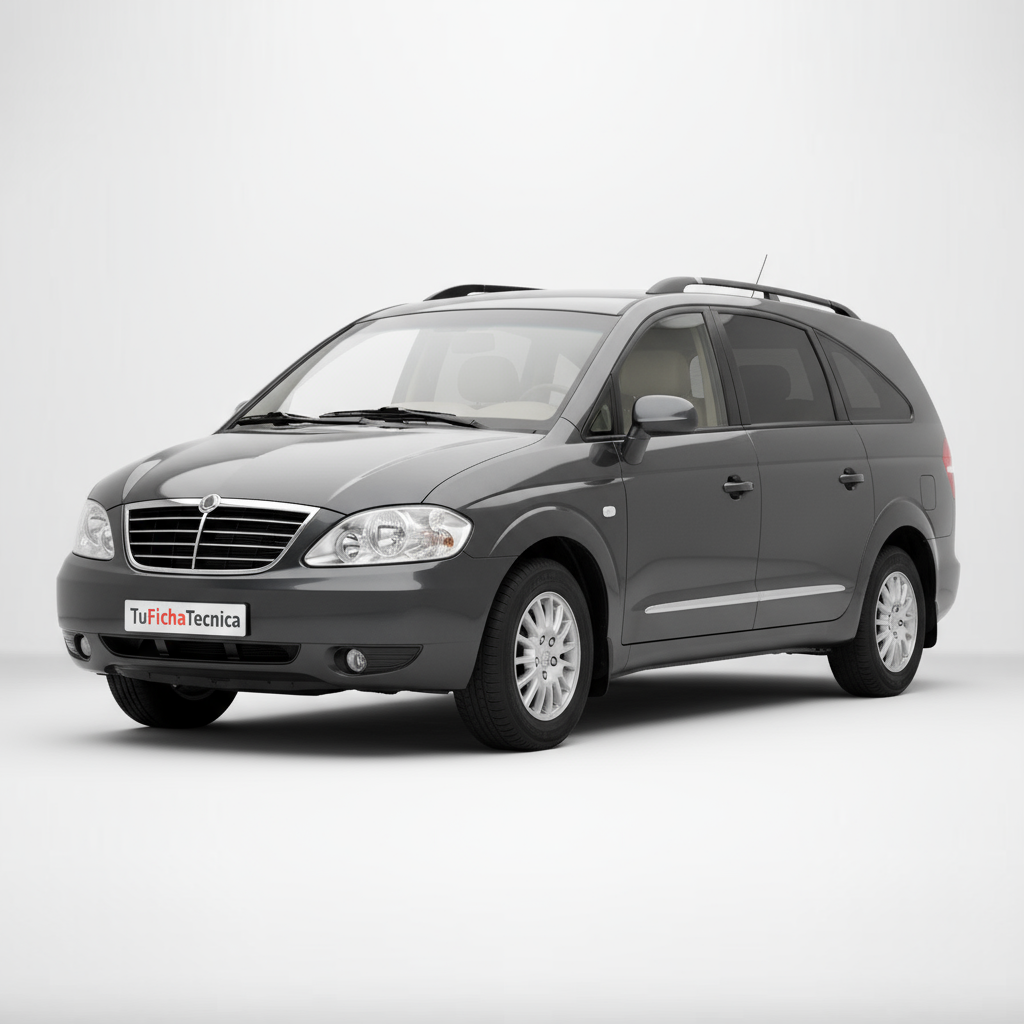
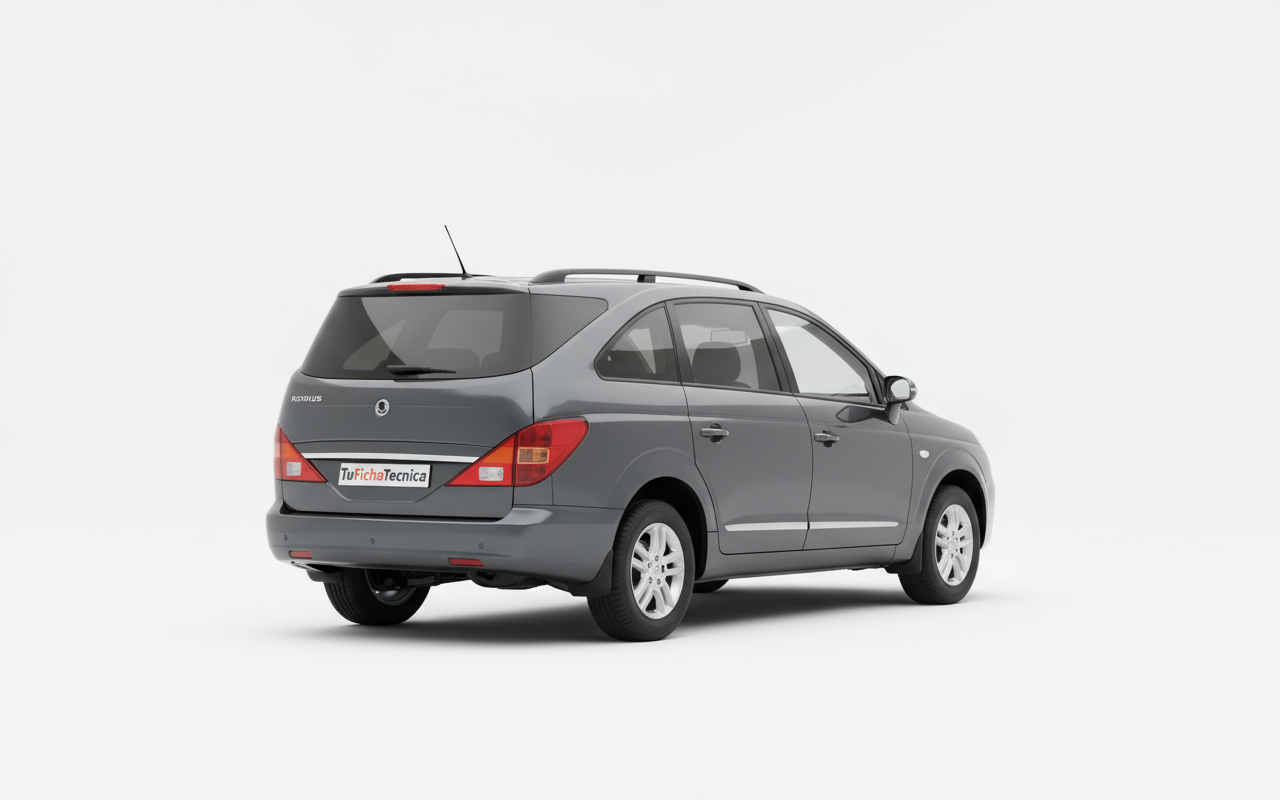
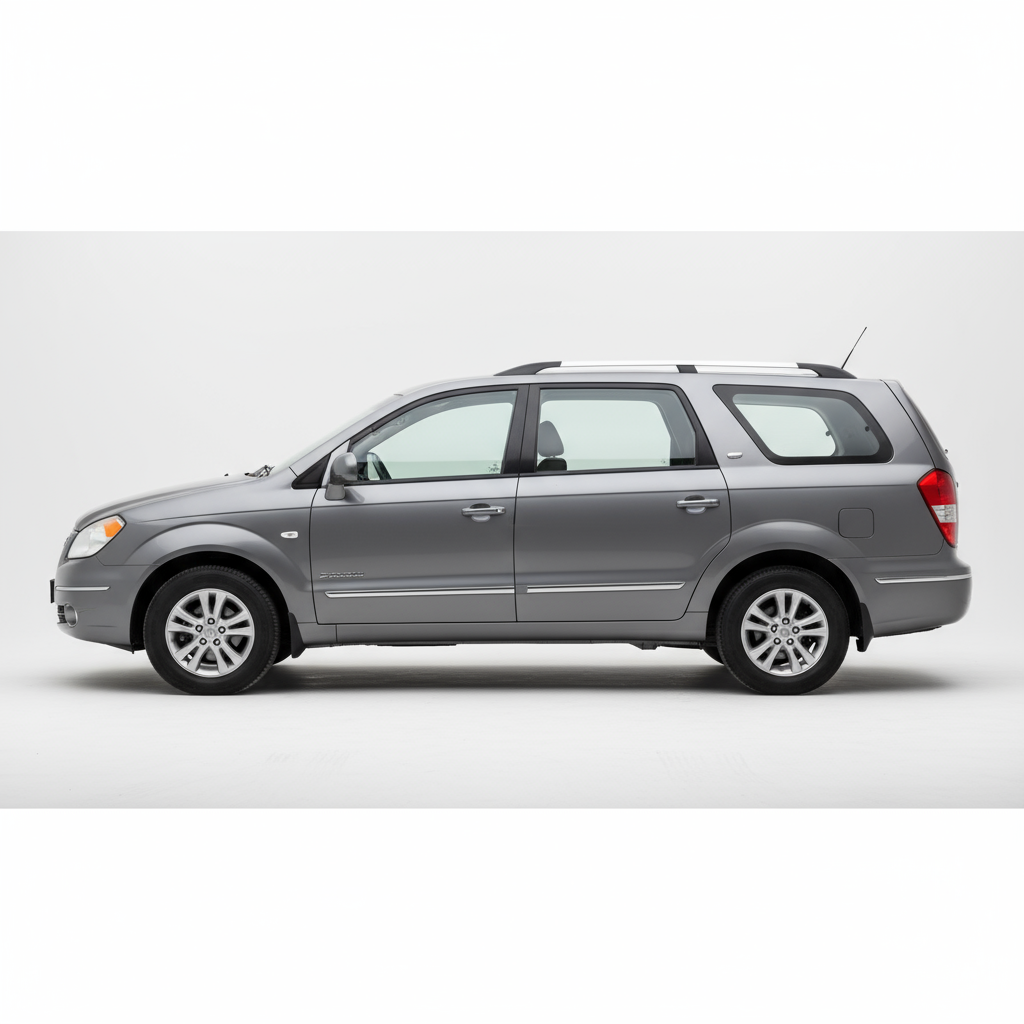
The design of the 2008 SsangYong Rodius is, without a doubt, one of its most distinctive and, for some, controversial aspects. Its lines seek to maximize interior space, which is reflected in a voluminous body and a silhouette that prioritizes functionality over conventional aesthetics. With 5125 mm long, 1915 mm wide, and 1840 mm high, the Rodius imposes its presence. The rear, with its large tailgate, facilitates access to a gigantic 1641-liter trunk. Although its aesthetics may not be to everyone's liking, its design is unmistakable and fulfills its objective of offering a generous cabin.
Technology and features
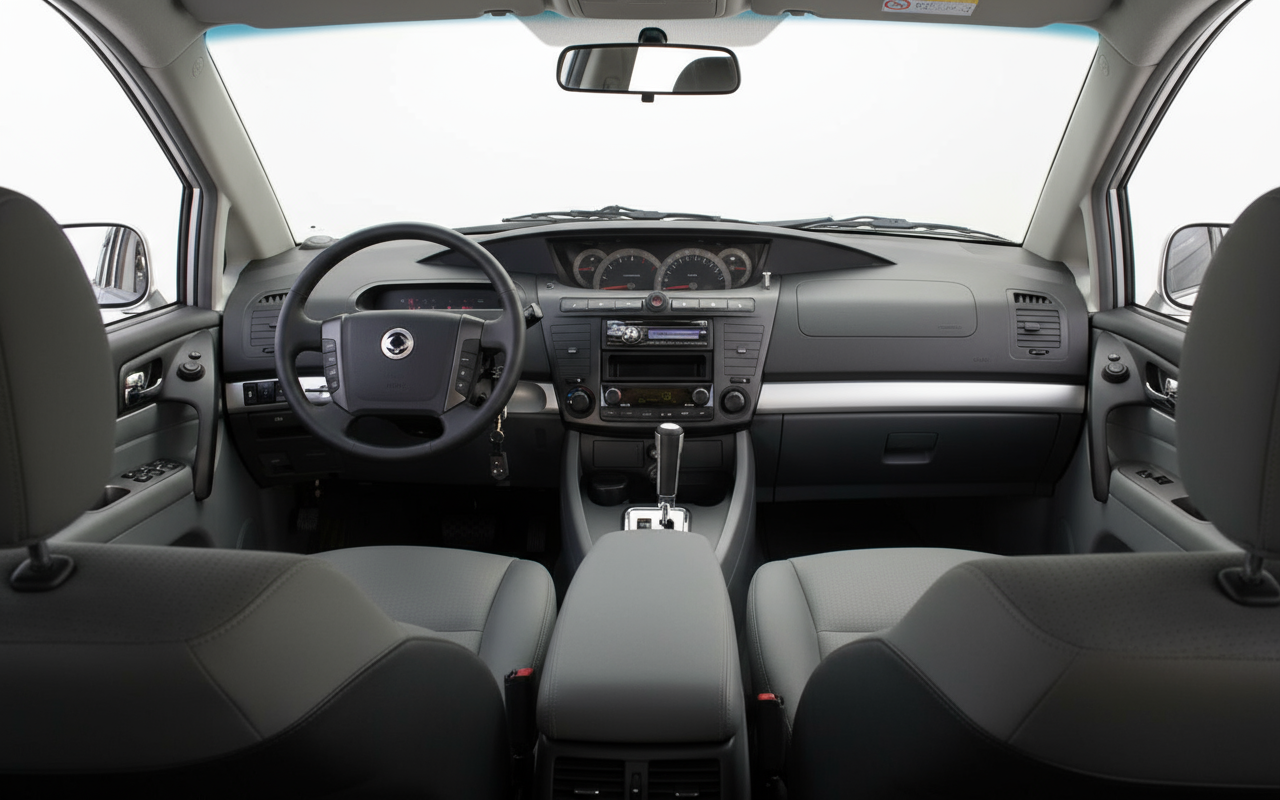
In terms of technology, the 2008 SsangYong Rodius 270Xdi focuses on the essential and functional. Its 2.7-liter diesel engine with common rail direct injection, turbo, and intercooler, is a proven mechanism that offers reliability. The 5-speed manual transmission, combined with rear-wheel drive, provides a direct driving experience. Although it does not have the latest innovations in infotainment or driving assistants found in more modern vehicles, its equipment focuses on practicality, offering what is necessary for a comfortable and safe journey. Ventilated disc brakes on both axles ensure adequate braking capacity for its size.
Competition
In the large minivan market, the 2008 SsangYong Rodius 270Xdi competes with models such as the Chrysler Grand Voyager, the Volkswagen Sharan, or the Ford Galaxy. However, the Rodius stands out for offering interior space and cargo capacity that few can match in its price range. Its proposal is more pragmatic and oriented to pure functionality, which makes it an interesting alternative for those who prioritize space and versatility above other attributes.
Conclusion
The 2008 SsangYong Rodius 270Xdi is a vehicle that more than fulfills its promise of offering exceptional interior space and great versatility. Although its design may generate divided opinions and its technology is not the most avant-garde, its robustness, its efficient diesel engine, and its competitive price make it a very attractive option for large families or for those who need a vehicle with an unusual cargo capacity. It is an honest car, which does not pretend to be what it is not, and which offers a practical solution to a very specific need.