
Especificaciones y análisis del SsangYong Korando
Power
149HP
Torque
191Nm
Consumption
7.5l/100
Emissions
175g/km
0-100 km/h
-s
Top Speed
178km/h
Weight
1612kg
Price
16,990€
Technical summary
Gasolina
Manual 6v
FWD
5 / 5 doors
486 L
57 L
109.6 kW
Current
Technical specifications
Engine
Capacities
Detailed analysis of the SsangYong Korando G20 Line 4x2 · 149 CV (2012-2014)
General description
The 2011 SsangYong Korando, in its G20 Line 4x2 version, presents itself as an interesting option in the compact SUV segment. With a price of 16,990 euros, this model seeks to offer an economical and functional alternative, standing out for its 149 HP gasoline engine and front-wheel drive. It is a vehicle that, despite its origin, tries to compete with more established proposals, offering a balance between cost and equipment.
Driving experience
Behind the wheel of the Korando, the feeling is one of solidity and comfort. The 149 HP gasoline engine, although not an extravagance of power, more than fulfills its purpose for daily use and occasional getaways. The 6-speed manual gearbox allows adequate control of power delivery, and the electric power steering facilitates maneuvers in the city. The suspension, McPherson type at the front and deformable parallelogram at the rear, absorbs road irregularities well, providing a smooth ride. However, do not expect sporty agility; its approach is rather practical and relaxed.
Design and aesthetics
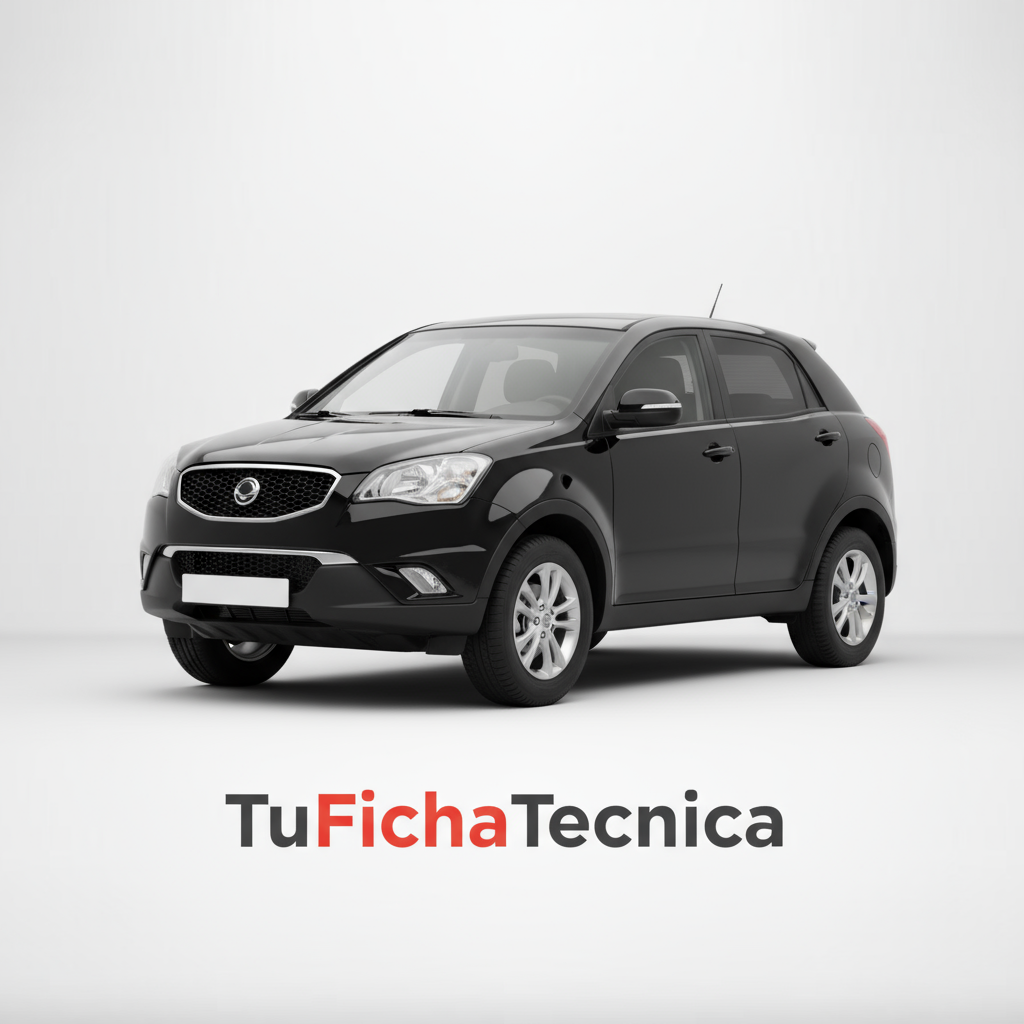
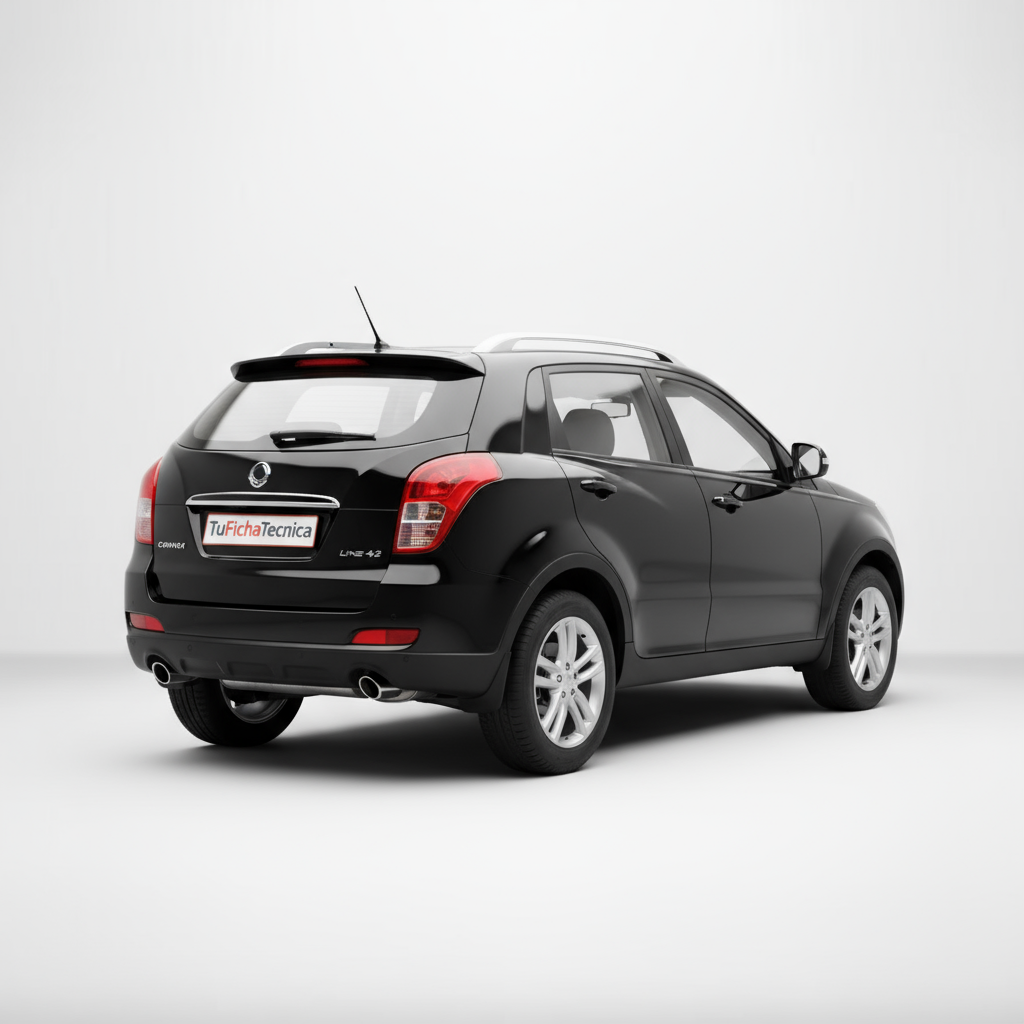
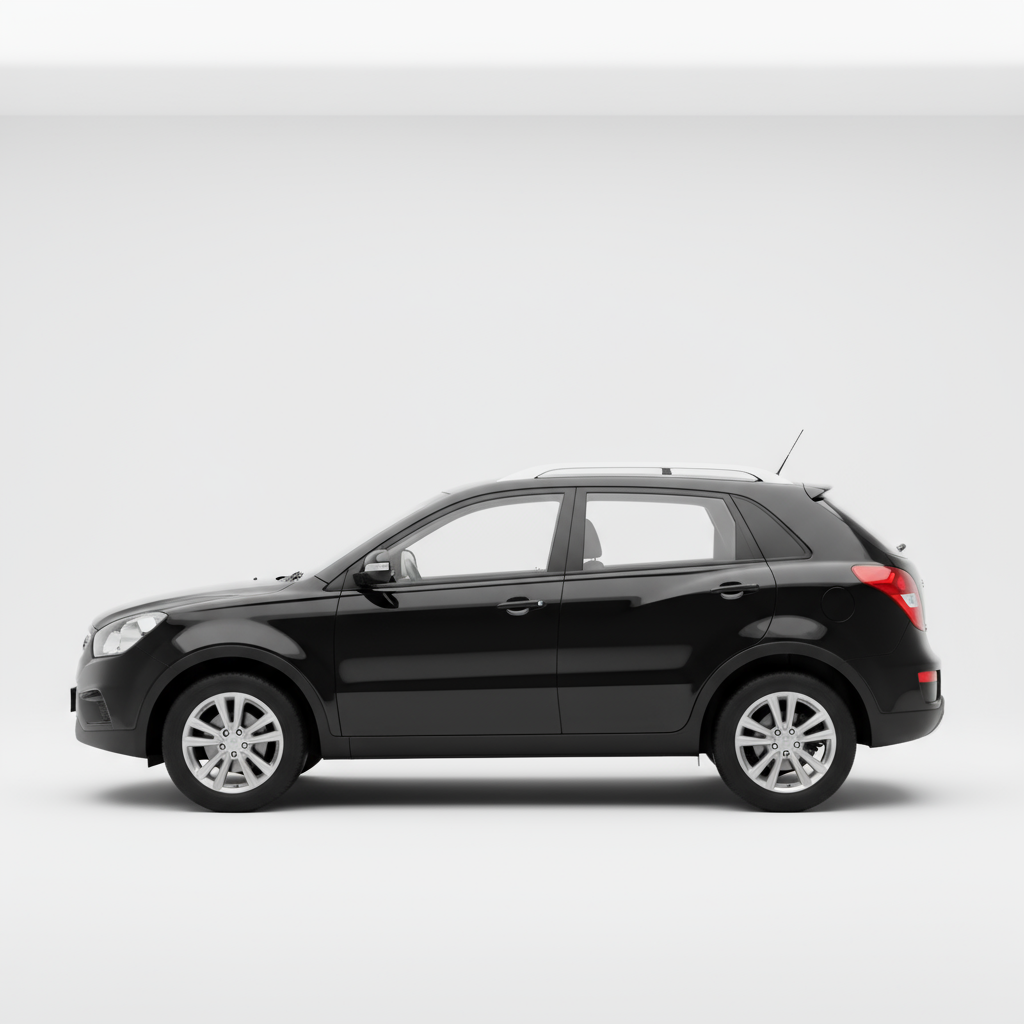
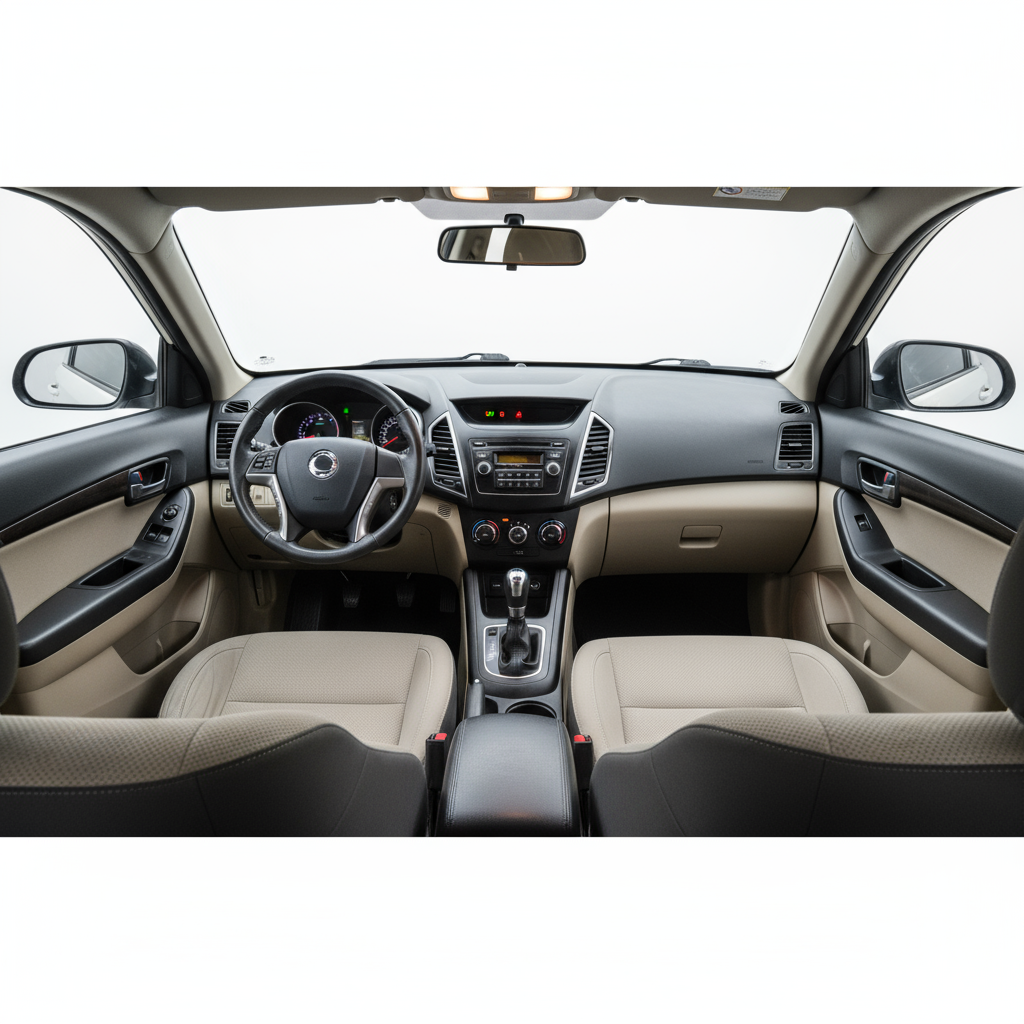
The design of the 2011 SsangYong Korando is modern and robust, with lines that seek to convey an image of a capable and attractive SUV. Its dimensions, with 4410 mm long and 1830 mm wide, give it an imposing presence on the road. The front stands out for its grille and headlights, while the rear maintains a coherent aesthetic. The interior, although functional, does not dazzle with its materials, but it meets the expectations of a vehicle in its segment and price. The habitability is good, with enough space for five occupants and a 486-liter trunk, very practical for daily use.
Technology and features
In the technological section, the 2011 Korando is rather discreet, in line with its focus on a practical and affordable vehicle. It has a 1998 cc and 149 HP gasoline engine, with indirect injection and variable intake, which contributes to a combined consumption of 7.5 l/100km and CO2 emissions of 175 g/km. The 6-speed manual transmission and front-wheel drive are key elements in its configuration. In terms of safety and comfort, it incorporates the essentials, without great fanfare, but with what is necessary for a safe and pleasant journey. Electric power steering is a plus in urban driving.
Competition
The SsangYong Korando G20 Line 4x2 faces a very competitive segment, with rivals such as the Nissan Qashqai, the Hyundai ix35, or the Kia Sportage. These models, although often with higher prices, offer a level of equipment and finishes that the Korando tries to match with its value proposition. Its main asset is the price, significantly lower than many of its direct competitors, which makes it an attractive option for those looking for a functional SUV without a large initial outlay.
Conclusion
The 2011 SsangYong Korando G20 Line 4x2 is an SUV that fulfills its purpose: to offer a spacious, functional vehicle with good value for money. It is not the most powerful or the most luxurious, but its 149 HP engine, its large trunk, and its robust design make it a sensible option for families or for those looking for a versatile car. Its competitive price, especially with the official discount, positions it as an alternative to consider in the compact SUV market, ideal for those who prioritize practicality and cost over high-end performance.