
Especificaciones y análisis del SsangYong Korando
Power
149HP
Torque
191Nm
Consumption
7.5l/100
Emissions
175g/km
0-100 km/h
-s
Top Speed
178km/h
Weight
1537kg
Price
19,950€
Technical summary
Gasolina
Manual 6v
FWD
5 / 5 doors
486 L
57 L
109.6 kW
Current
Technical specifications
Engine
Capacities
Detailed analysis of the SsangYong Korando G20 Sport GT 4x2 · 149 CV (2012)
General description
The 2011 SsangYong Korando presents itself as an interesting option in the compact SUV segment, seeking a balance between functionality and a competitive price. With its 149 hp gasoline engine and front-wheel drive, it positions itself as a versatile vehicle for daily use and occasional getaways, offering an alternative to more established models on the market.
Driving experience
Behind the wheel of the Korando, the overall feeling is one of solidity and comfort. The 149 hp gasoline engine, while not an abundance of power, more than suffices for normal use, offering adequate response in most situations. The 6-speed manual gearbox allows for precise control and helps optimize fuel consumption. The suspension, McPherson type at the front and deformable parallelogram at the rear, filters road irregularities well, providing a smooth ride. The electric power steering facilitates city maneuvers, although it could offer a more direct feel on the highway. Overall, it is a car that invites relaxed driving, without great sporting pretensions, but with the ability to tackle long journeys comfortably.
Design and aesthetics
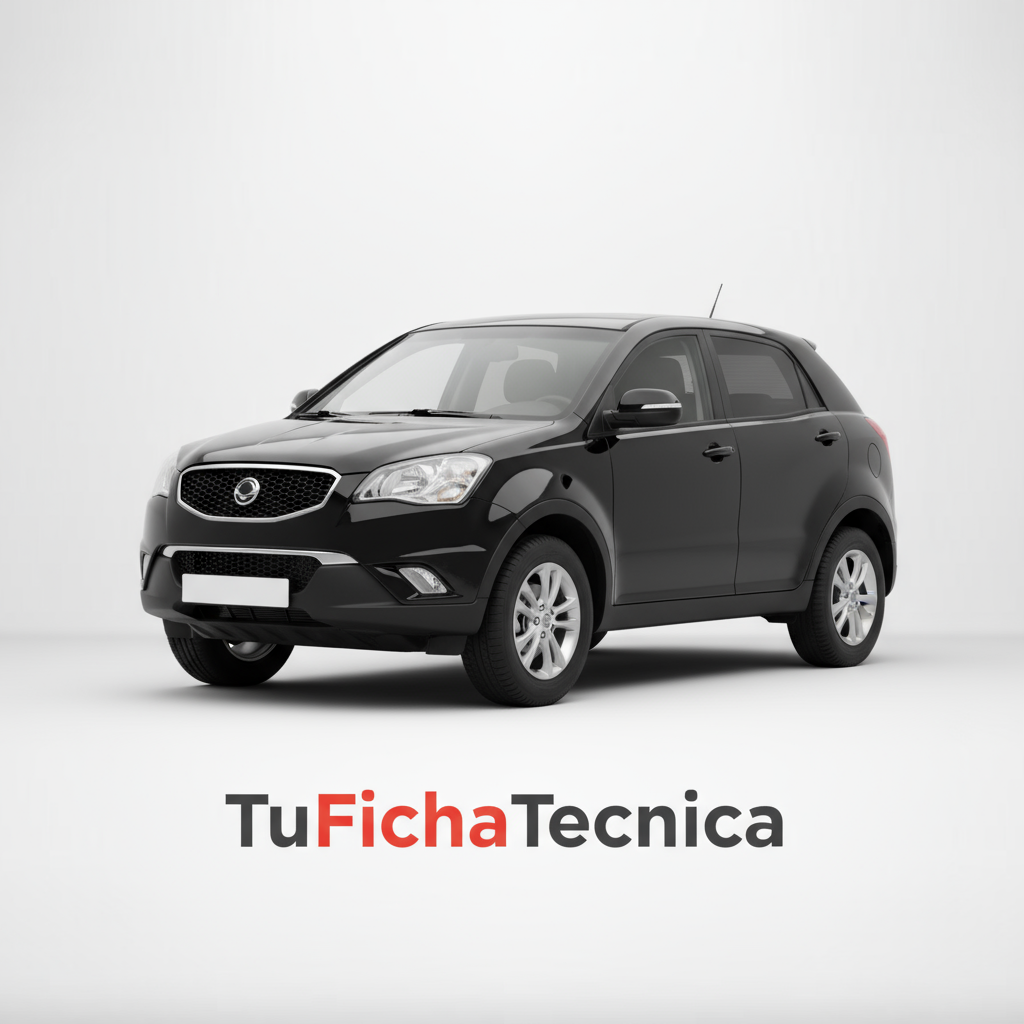
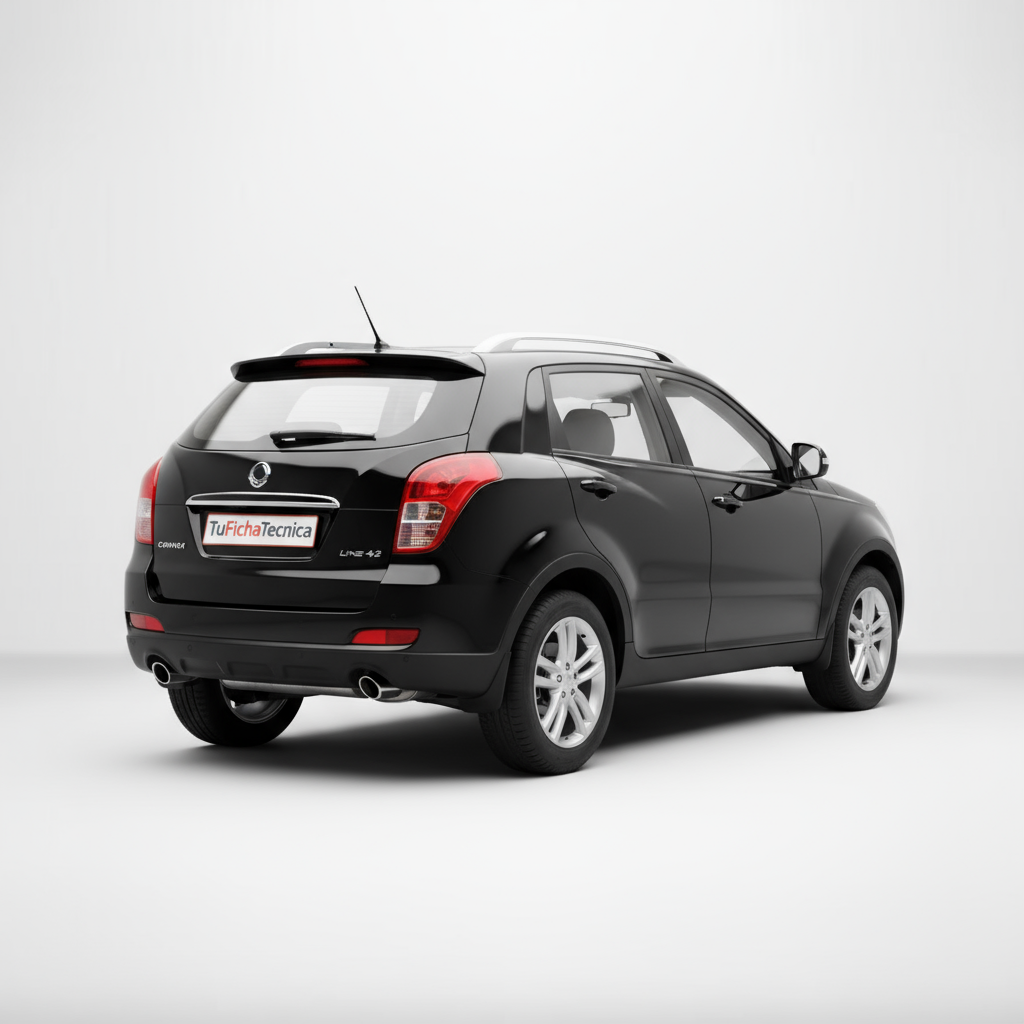
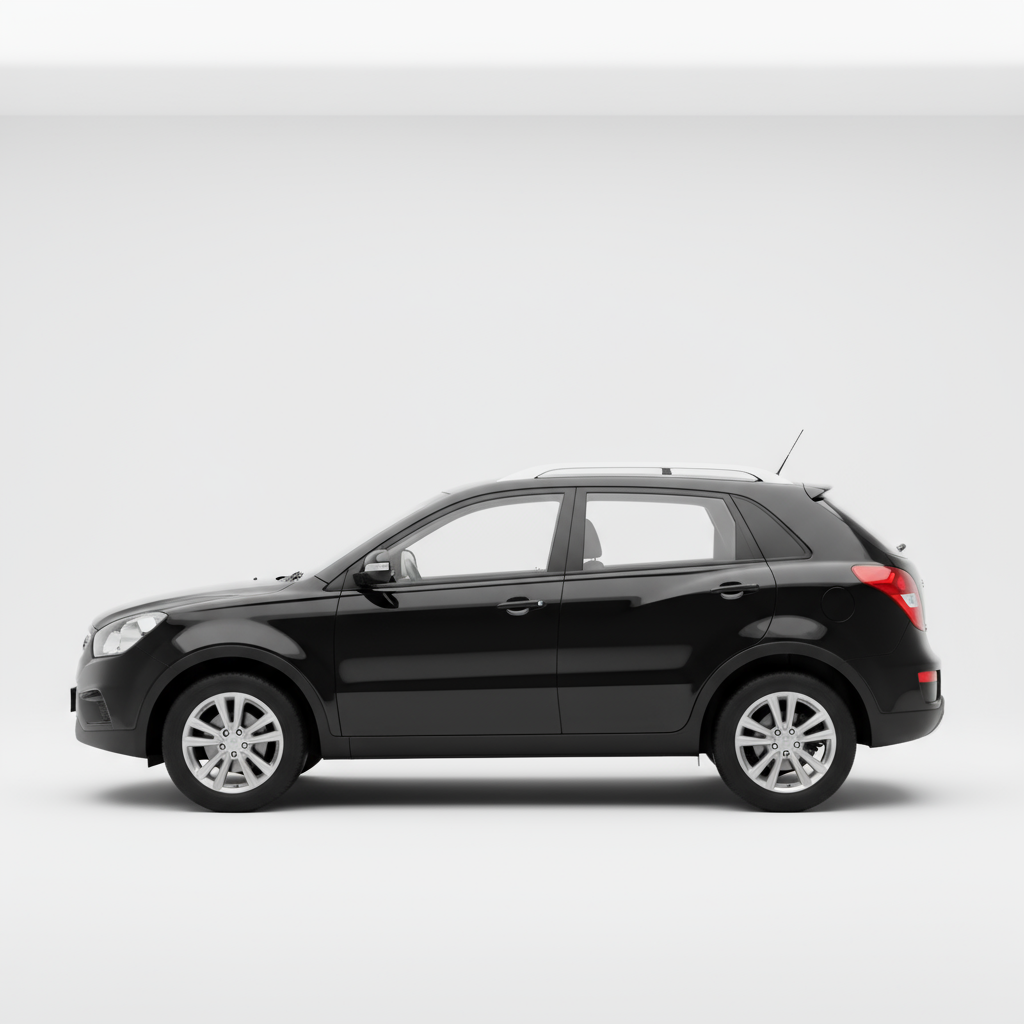
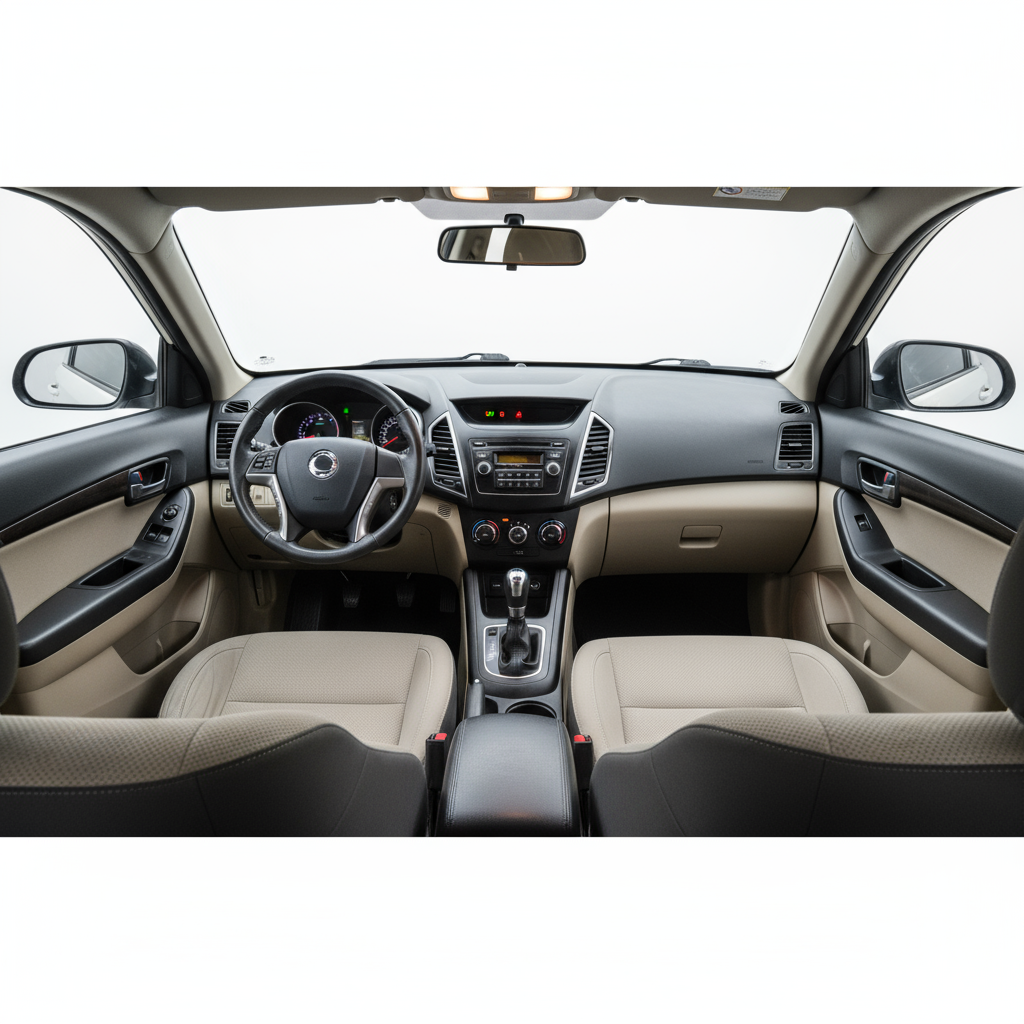
The design of the 2011 SsangYong Korando breaks with the brand's more traditional lines, adopting a more modern and European aesthetic. Its balanced proportions, with a length of 4410 mm and a width of 1830 mm, give it a robust but not excessively bulky presence. The front headlights, grille, and chrome details give it a contemporary look. Inside, the design is functional and practical, with a well-organized dashboard and materials that, while not luxurious, convey durability. Habitability is good, both in the front and rear seats, and the 486-liter trunk offers generous space for luggage.
Technology and features
In the technology section, the 2011 Korando focuses on the essential and functional. Its 1998 cc gasoline engine, with indirect injection and variable intake, seeks efficiency and linear power delivery. The 6-speed manual transmission is a key element for driver control. In terms of safety, it features ventilated disc brakes at the front and solid discs at the rear, ensuring good braking capacity. Electric power steering contributes to driving comfort. Although it does not incorporate the latest innovations in connectivity or driving assistants seen in more recent models, it meets the standards of the time, offering adequate equipment for the segment.
Competition
The 2011 SsangYong Korando faces consolidated competition in the compact SUV segment. Its main rivals include models such as the Nissan Qashqai, Hyundai ix35, Kia Sportage, and Mitsubishi ASX. Against them, the Korando seeks to differentiate itself by its value for money, offering competitive equipment at a more adjusted cost. While it may not match some of its competitors in refinement or in the offer of more powerful engines, its proposal is based on reliability, habitability, and a design that, for many, is attractive.
Conclusion
The 2011 SsangYong Korando is a compact SUV that offers an honest and functional proposal. It is a car that delivers on its promises: a spacious, comfortable vehicle with a modern design, ideal for those looking for a versatile car without great luxuries. Its 149 hp gasoline engine, combined with the 6-speed manual gearbox, provides adequate performance for most situations, and its combined consumption of 7.5 l/100km is reasonable for its category. Although it is not the most powerful or the most technological in its segment, its value for money makes it an option to consider for those who value practicality and economy.