
Especificaciones y análisis del smart fortwo
Power
54HP
Torque
80Nm
Consumption
5.1l/100
Emissions
-g/km
0-100 km/h
17.2s
Top Speed
135km/h
Weight
795kg
Price
10,645€
Technical summary
Gasolina
Automático 6v
RWD
2 / 3 doors
150 L
33 L
40 kW
Current
Technical specifications
Engine
Capacities
Detailed analysis of the smart & passion city coupé · 54 CV (2002-2003)
General description
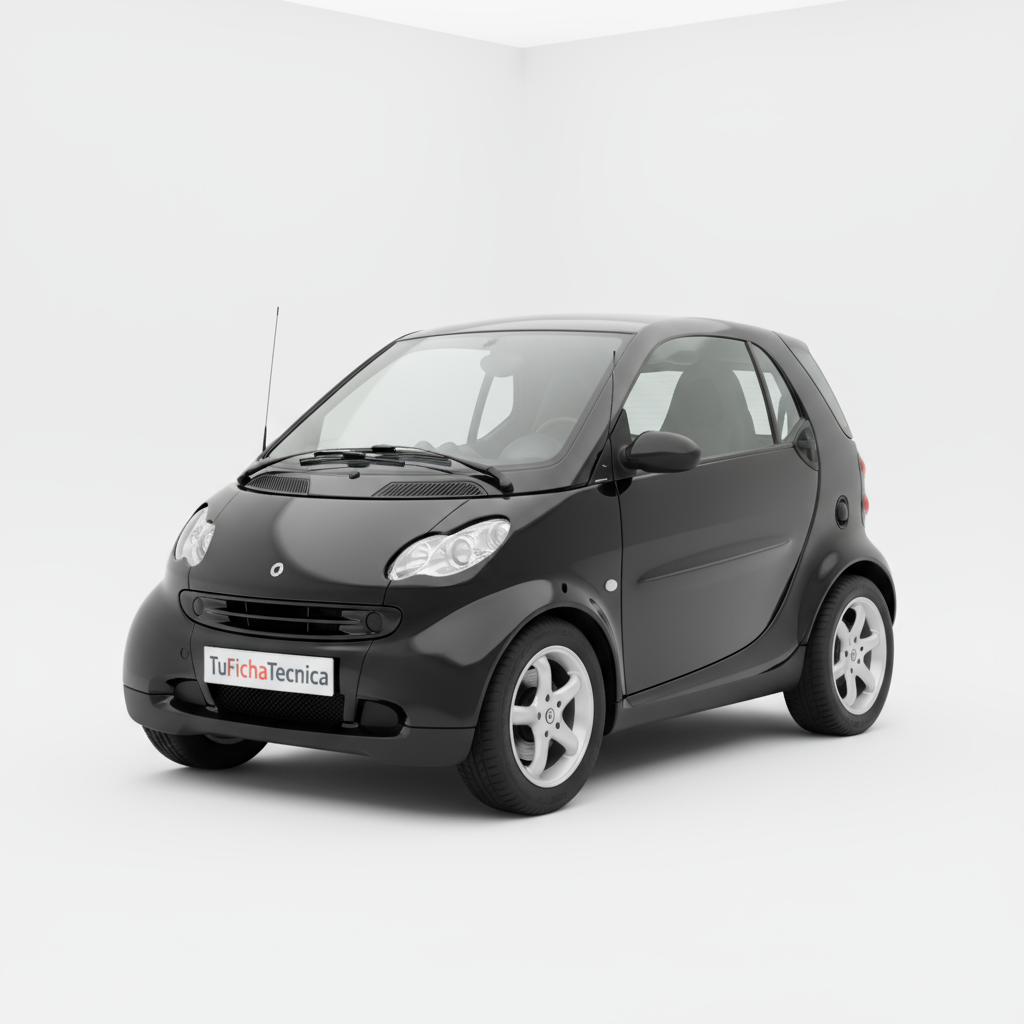
The 2000 Smart Fortwo, in its coupé version, is a vehicle that defies conventions. With its compact size and distinctive design, it presents itself as an ingenious urban solution with a touch of audacity. It is a car that, despite its dimensions, seeks to offer a unique driving experience and an unmistakable personality on the city asphalt.
Driving experience
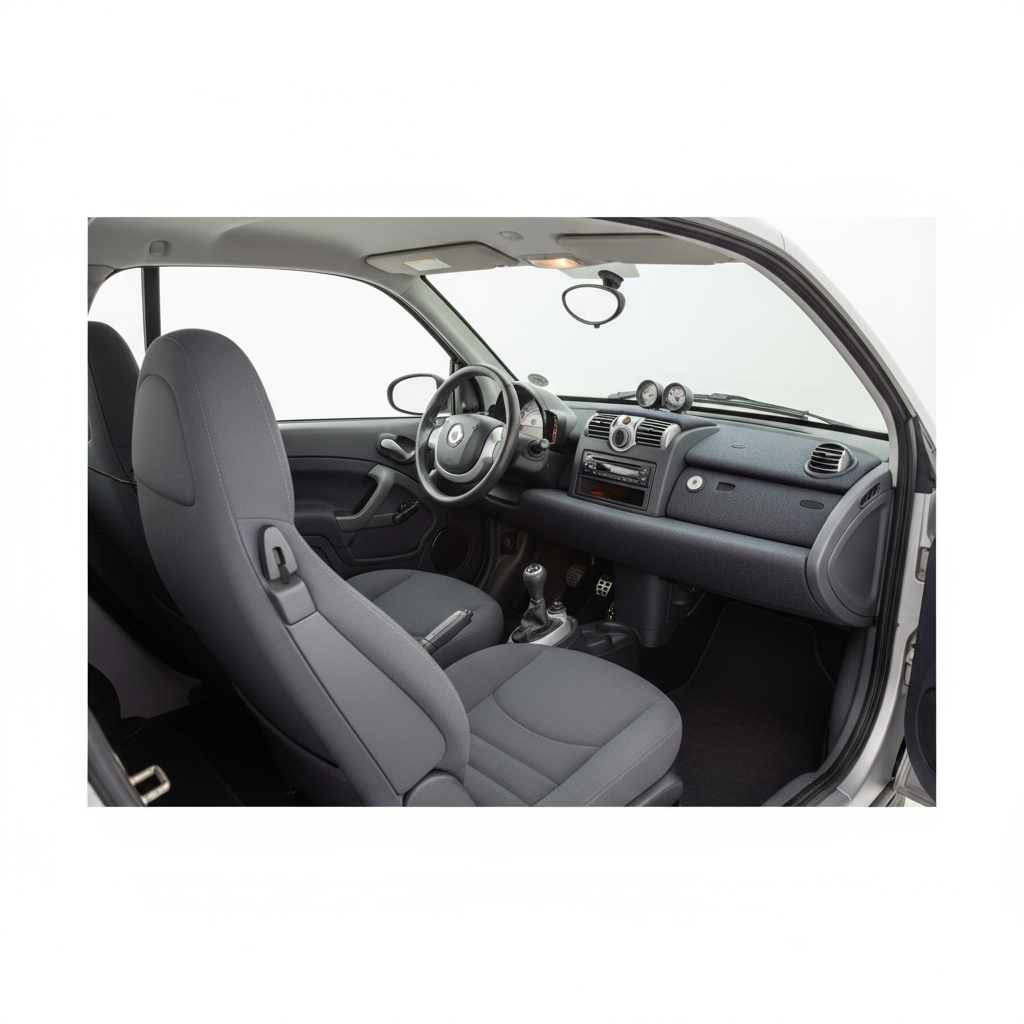
Behind the wheel of the Smart Fortwo, the sensation is one of agility and ease. Its size allows for astonishingly nimble maneuvering in traffic and finding parking where others can only dream. The acceleration from 0 to 100 km/h in 17.2 seconds and a top speed of 135 km/h do not make it a speed demon, but its 54 hp engine, combined with its lightness, offers an adequate response for the urban environment. The 6-speed automatic transmission, although not the fastest, contributes to relaxed driving. The suspension, McPherson type at the front and De Dion rigid axle at the rear, along with front disc brakes and rear drum brakes, provide a balance between comfort and safety for its segment.
Design and aesthetics
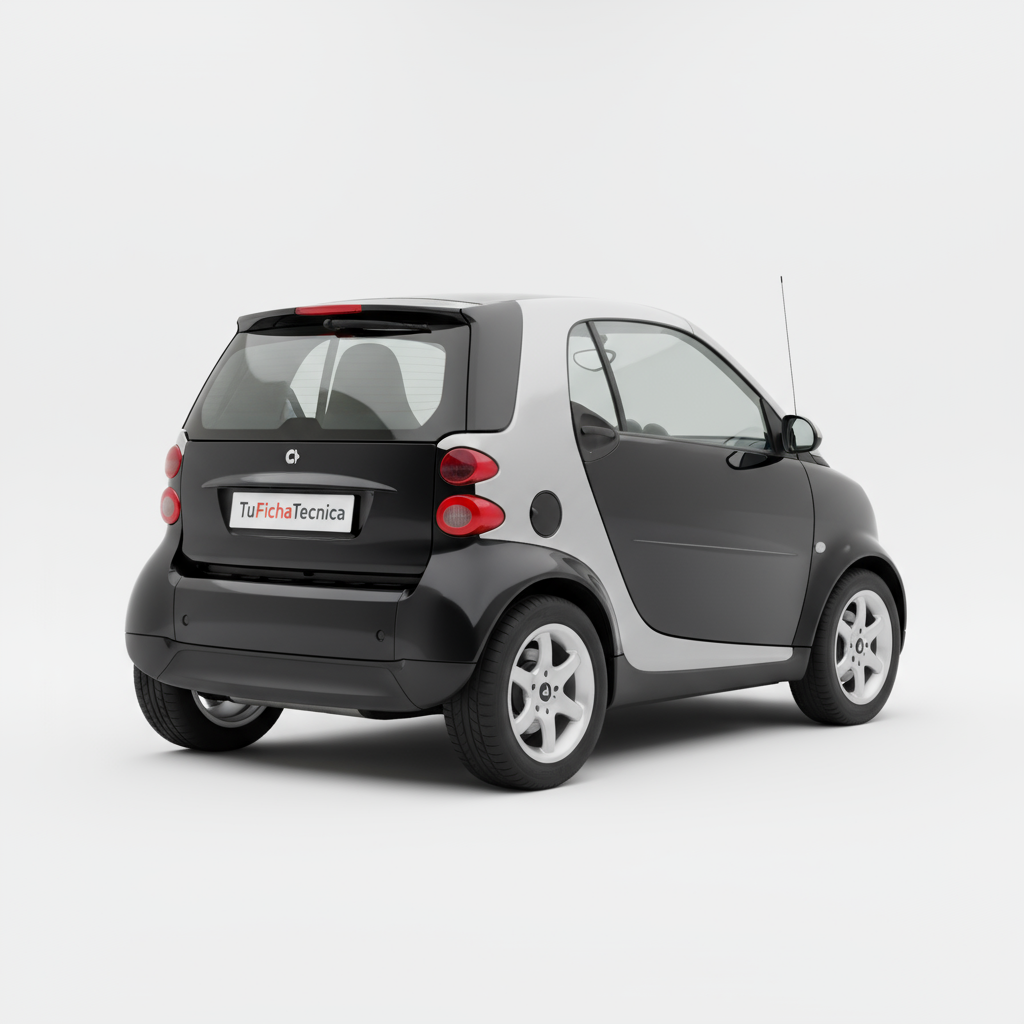
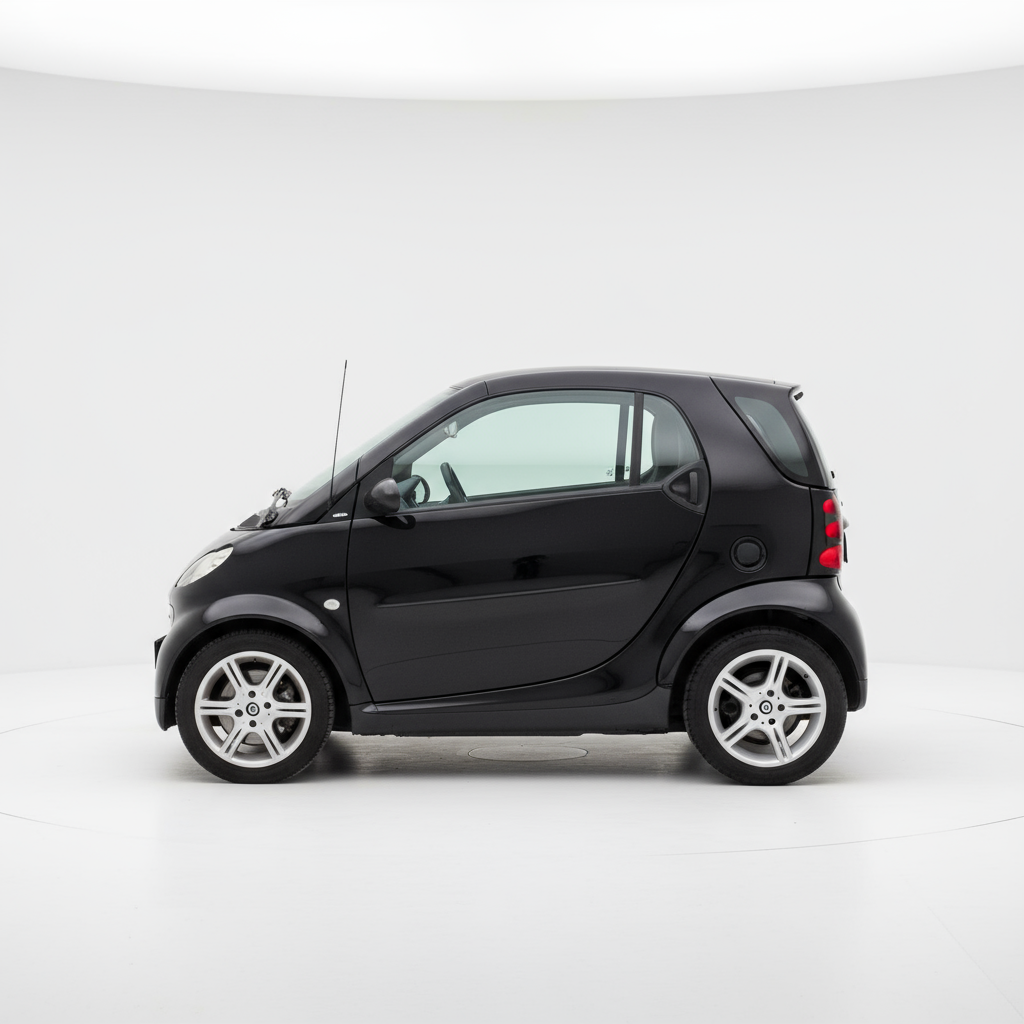
The design of the Smart Fortwo is, without a doubt, its calling card. Its 2500 mm length, 1515 mm width, and 1529 mm height make it unmistakable. The three doors and two seats define its purpose: a car for two, optimized for the city. The aesthetic is modern and functional, with a silhouette that maximizes interior space despite its reduced exterior dimensions. The different tire sizes (145/65 R15 at the front and 175/55 R15 at the rear) not only add a visual touch but also contribute to its stability and maneuverability.
Technology and features
In the 2000 Smart Fortwo, technology focuses on efficiency and functionality. Its 599 cc gasoline engine, with 3 cylinders and turbo, delivers 54 hp of power and 80 Nm of torque. Indirect injection and an intercooler optimize performance. The 6-speed automatic transmission, although not state-of-the-art, facilitates city driving. The chassis features independent front suspension and a rigid rear axle, with anti-roll bars on both axles, giving it good stability for its size. The rack-and-pinion steering system ensures a direct and precise response.
Competition
In its time, the Smart Fortwo faced few direct rivals in its microcar urban concept. It could be considered that it competed with small vehicles such as the Toyota Aygo, Citroën C1, or Peugeot 107, although these were slightly larger and offered four seats. Other possible competitors, albeit with a different approach, could be some models from the Fiat range, such as the Seicento, which also sought practicality in the city. However, the Smart Fortwo stood out for its radical design and its purely urban mobility proposal for two occupants.
Conclusion
The 2000 Smart Fortwo is more than a car; it is a statement of intent. It is the answer to the need for efficient and practical mobility in congested urban environments. Its iconic design, surprising agility, and ability to park in any corner make it an ideal companion for city life. Although it is not a car for long journeys or for those seeking high performance, it more than fulfills its purpose, offering a fun and functional driving experience. It is a vehicle that, despite its age, still maintains its charm and relevance in the automotive landscape.