
Especificaciones y análisis del smart fortwo
Power
61HP
Torque
95Nm
Consumption
4.7l/100
Emissions
-g/km
0-100 km/h
15.5s
Top Speed
135km/h
Weight
815kg
Price
12,125€
Technical summary
Gasolina
Manual 6v
RWD
2 / 2 doors
150 L
33 L
45 kW
Current
Technical specifications
Engine
Capacities
Detailed analysis of the smart cabrio pure 45 (61 cv) · 61 CV (2003-2004)
General description
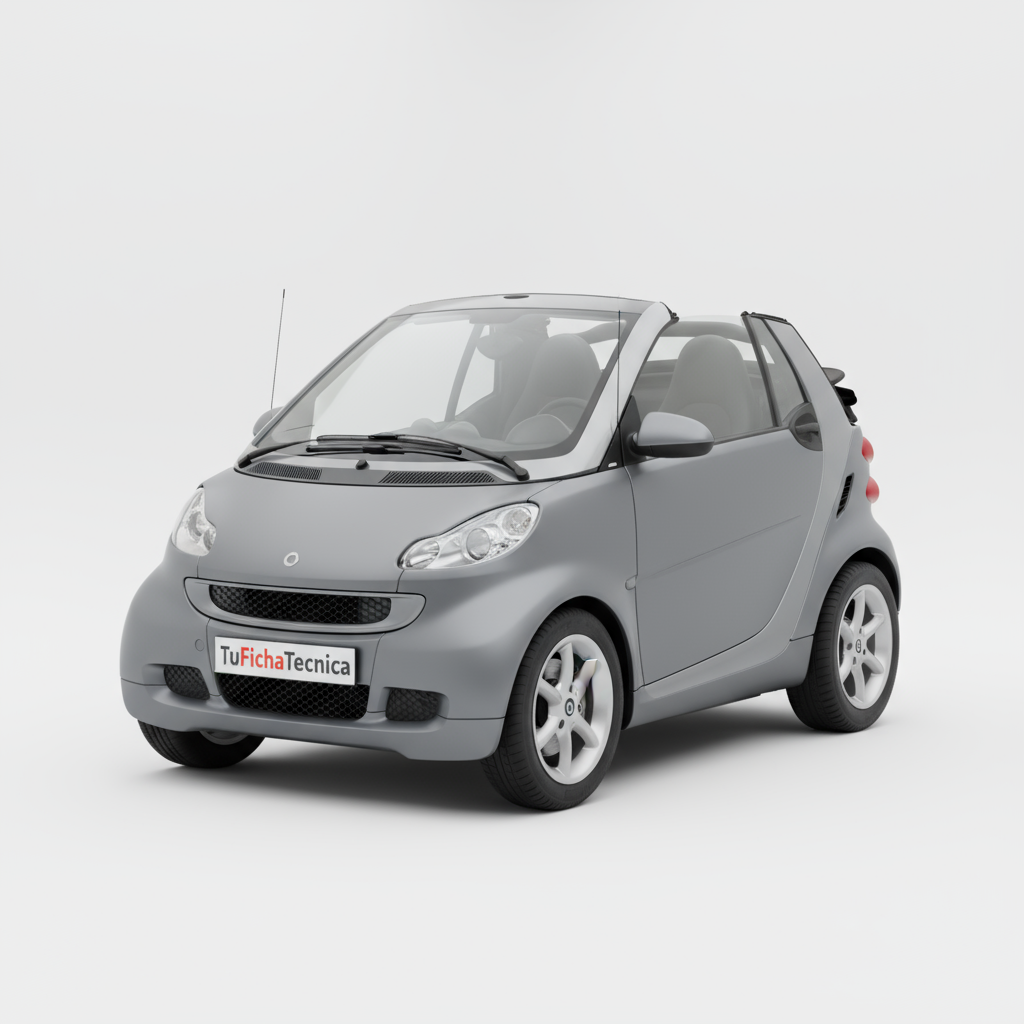
The 2003 Smart Fortwo Cabrio is a vehicle that, despite its compact dimensions, promises a unique and exciting driving experience. With its 0.7-liter, 61 hp gasoline engine, this small convertible is presented as an ideal option for the city, offering agility and ease of parking. Its distinctive design and its ability to open the roof make it a car with personality, perfect for those looking for something different and fun.
Driving experience
Driving the Smart Fortwo Cabrio is an experience that brings a smile to your face. Its small size and agile steering make it incredibly easy to maneuver in urban traffic. The 61 hp engine, while not an abundance of power, offers sufficient response to move around the city with ease. The possibility of opening the roof adds a touch of freedom and enjoyment, allowing you to feel the wind and sun while driving. It is a car that invites fun and carefree driving, ideal for short trips and enjoying good weather. Acceleration from 0 to 100 km/h in 15.5 seconds and a top speed of 135 km/h demonstrate that its natural habitat is the city, where its agility is its greatest virtue.
Design and aesthetics
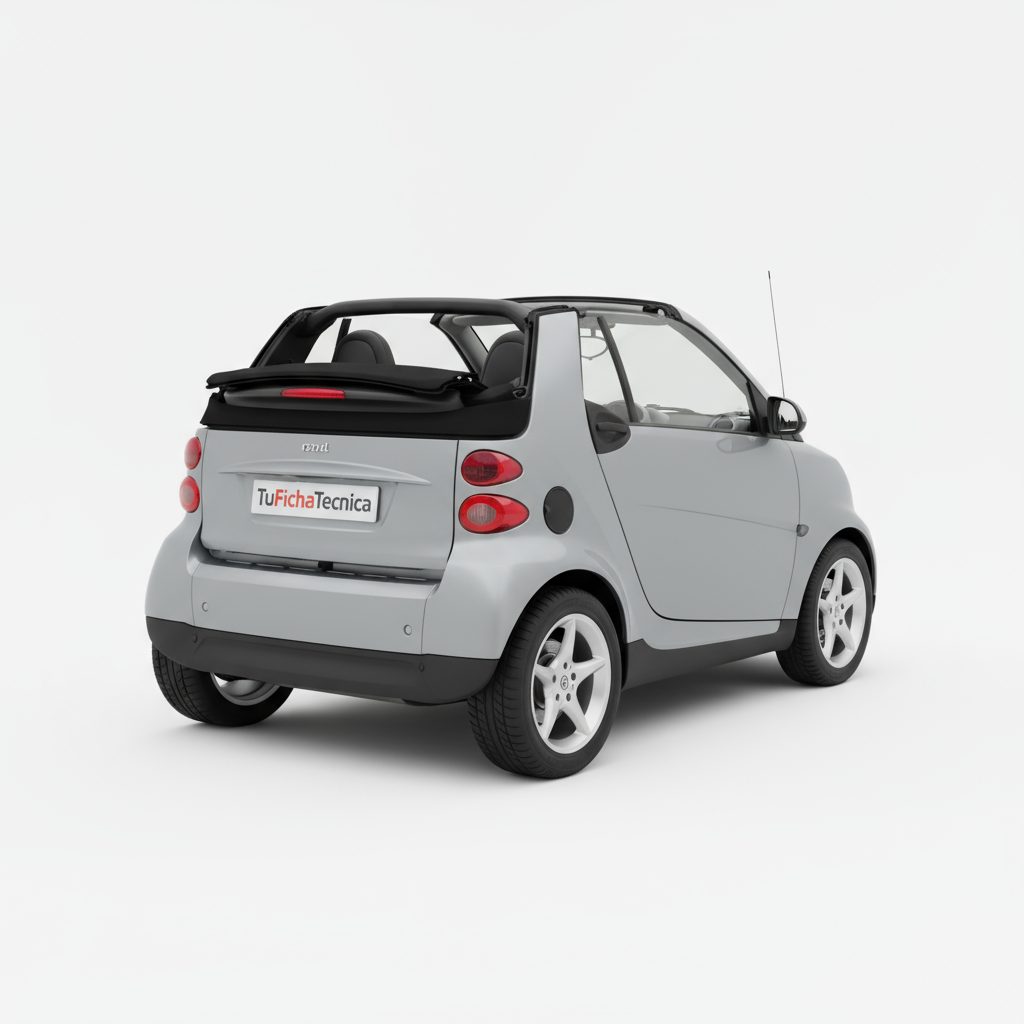
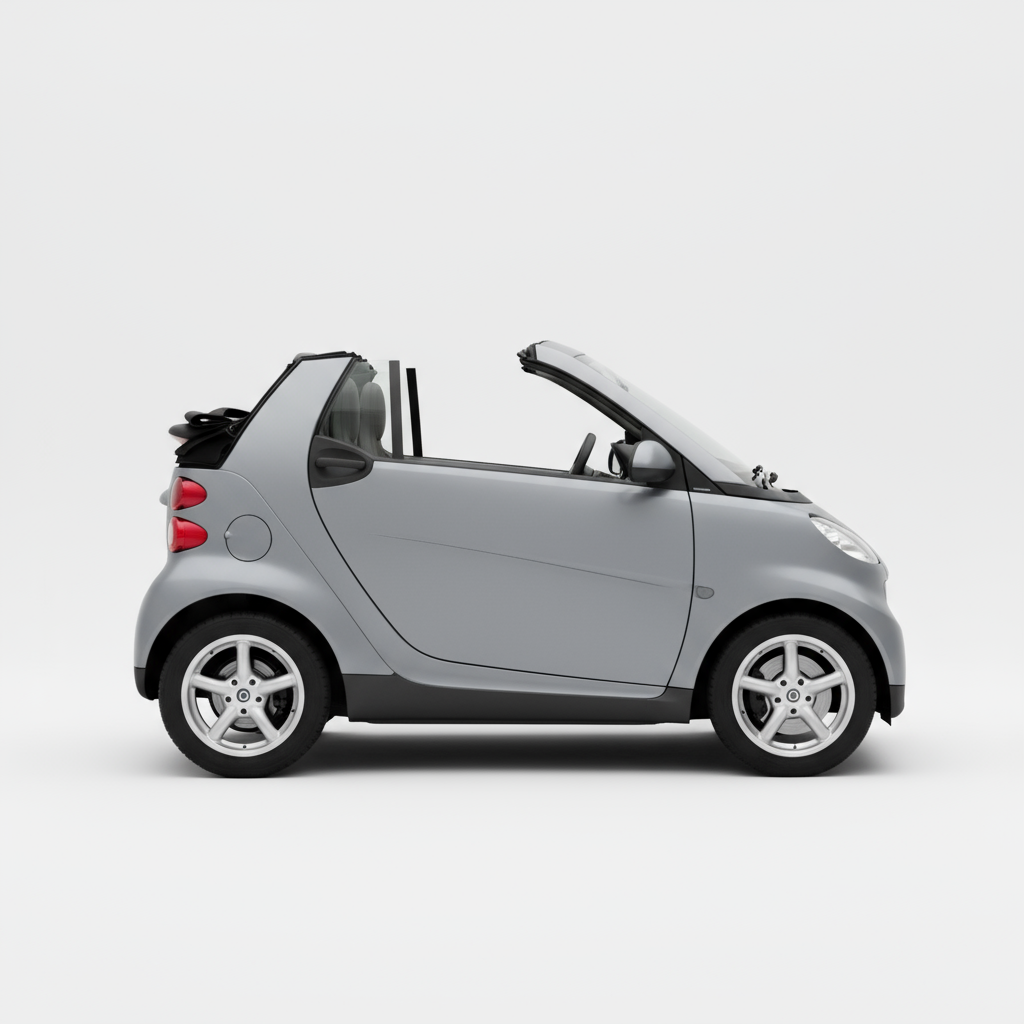
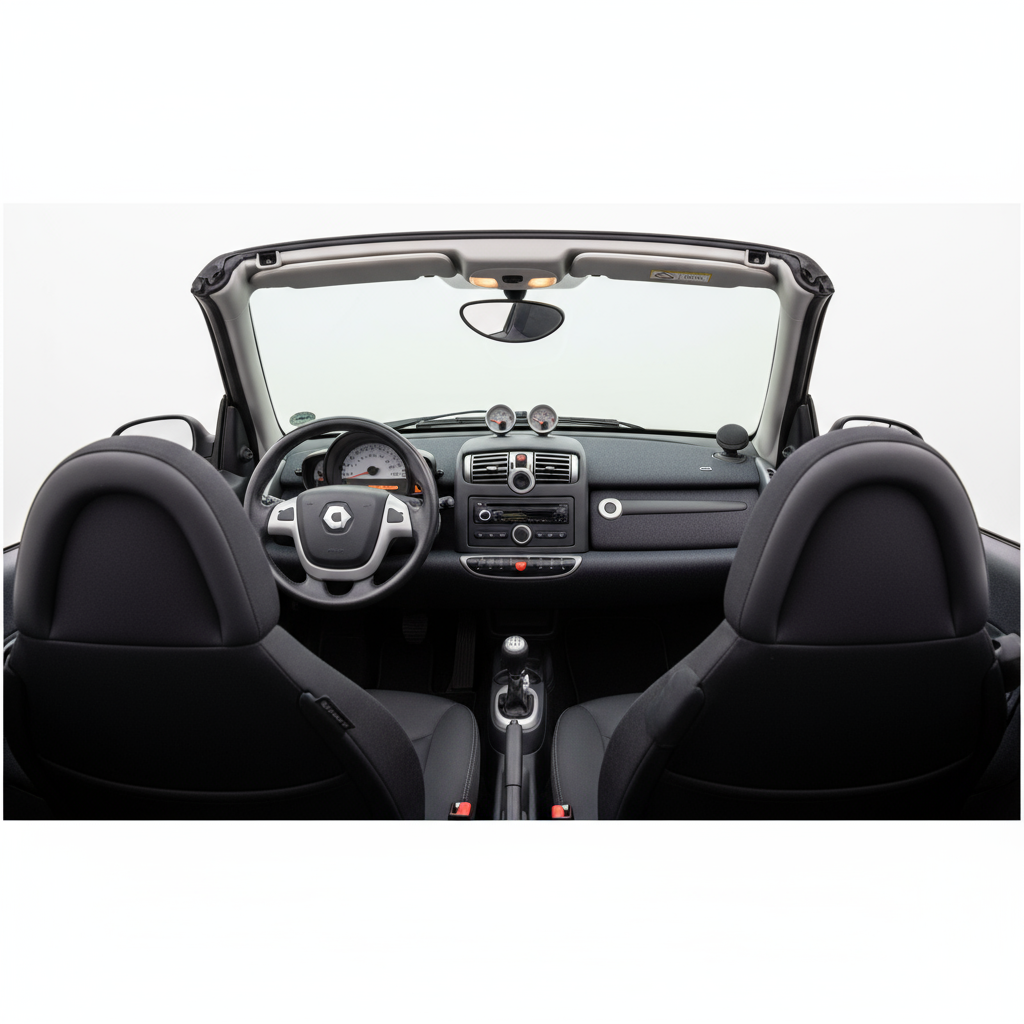
The design of the 2003 Smart Fortwo Cabrio is unmistakable and timeless. Its compact lines and square silhouette, combined with the soft top, give it a playful and modern character. Despite its size, the interior design is well utilized, offering a surprisingly comfortable space for two occupants. Functional details and minimalist aesthetics come together to create a practical and pleasant cabin. It is a car that does not go unnoticed, with an aesthetic that has aged gracefully and continues to attract attention for its originality.
Technology and features
In 2003, the Smart Fortwo Cabrio incorporated technology designed for efficiency and practicality in the city. Its three-cylinder, 698 cc engine, with indirect injection, turbo, and intercooler, was an example of compact and efficient engineering. The 6-speed manual transmission, although with a dry single-disc clutch, offered adequate control for the type of vehicle. In terms of safety, it had front disc brakes and rear drum brakes, and a McPherson front suspension and De Dion rigid rear axle, which provided stable driving. Its combined consumption of 4.7 l/100km was remarkably low for the time, highlighting its focus on fuel economy.
Competition
In its segment, the 2003 Smart Fortwo Cabrio faced few direct rivals that offered the same combination of ultra-compact size and convertible capability. Vehicles like the Toyota iQ or the Fiat 500 C, although later, could be considered competitors in terms of the concept of a stylish urban car. However, the Smart has always maintained a very distinct identity, differentiating itself by its radical design and its purely two-seater approach. Its main rival was, and continues to be, its own proposal for urban mobility, which makes it a category in itself.
Conclusion
The 2003 Smart Fortwo Cabrio is more than a car; it is a statement of intent. It is the perfect choice for those looking for an urban vehicle with personality, fun to drive, and surprisingly practical for two people. Its iconic design, its agility in the city, and the freedom offered by its convertible roof make it an attractive option for those who value experience over raw power. Despite its limitations on the open road, in the urban environment it shines brightly, offering an efficient and charming mobility solution. It is a car that, even today, remains relevant for its concept and its ability to make its occupants smile.