

Especificaciones y análisis del Santana 300
Power
96HP
Torque
132Nm
Consumption
8l/100
Emissions
-g/km
0-100 km/h
-s
Top Speed
150km/h
Weight
1125kg
Price
14,456€
Technical summary
Gasolina
Manual 5v
AWD
4 / 3 doors
- L
42 L
70.6 kW
Current
Technical specifications
Engine
Capacities
Detailed analysis of the Santana 300 Gasolina Lona Lujo · 96 CV (2005-2006)
General description
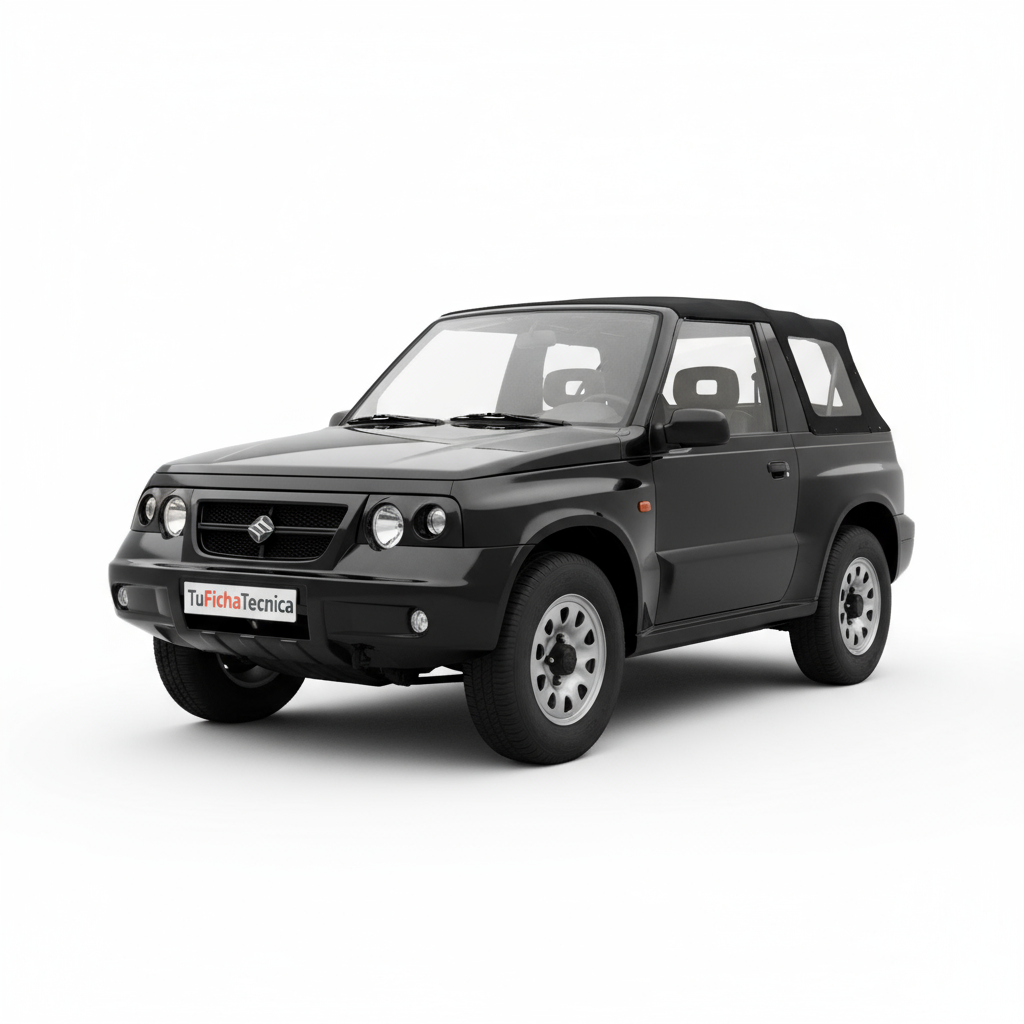
The 2005 Santana 300, in its 3-door canvas top and Lujo trim version, is a vehicle that evokes an era where adventure and functionality merged. With a 1.6-liter gasoline engine and 96 hp, this Spanish off-roader was presented as a robust and unpretentious option for those looking for a reliable companion both in the city and off-road. Its launch price of 14,456 euros positioned it as an accessible alternative in the compact 4x4 segment.
Driving experience
Driving the Santana 300 is an experience that connects you directly with the road and the environment. Its 96 hp engine, although not an overabundance of power, offers the necessary force to move its 1125 kg with ease, especially in low gears. The 5-speed manual transmission invites participatory driving, where every gear change is felt. The suspension, with McPherson in the front and a rigid axle in the rear, along with its all-wheel drive, promises genuine off-road capability, although on the road it may be less refined. The top speed of 150 km/h and the absence of a 0 to 100 km/h acceleration figure suggest that its strength is not pure speed, but versatility and the ability to overcome obstacles. The combined consumption of 8 l/100km is reasonable for a vehicle of these characteristics and its time.
Design and aesthetics
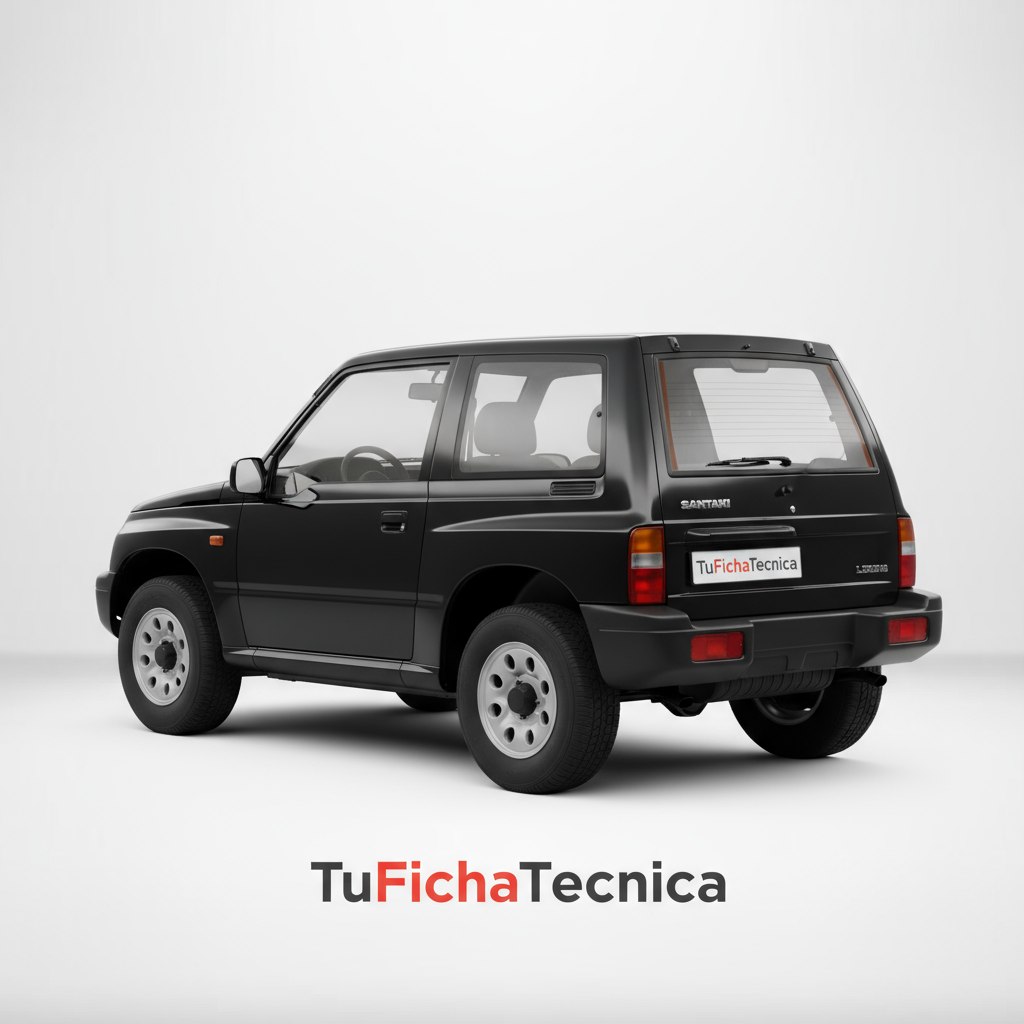
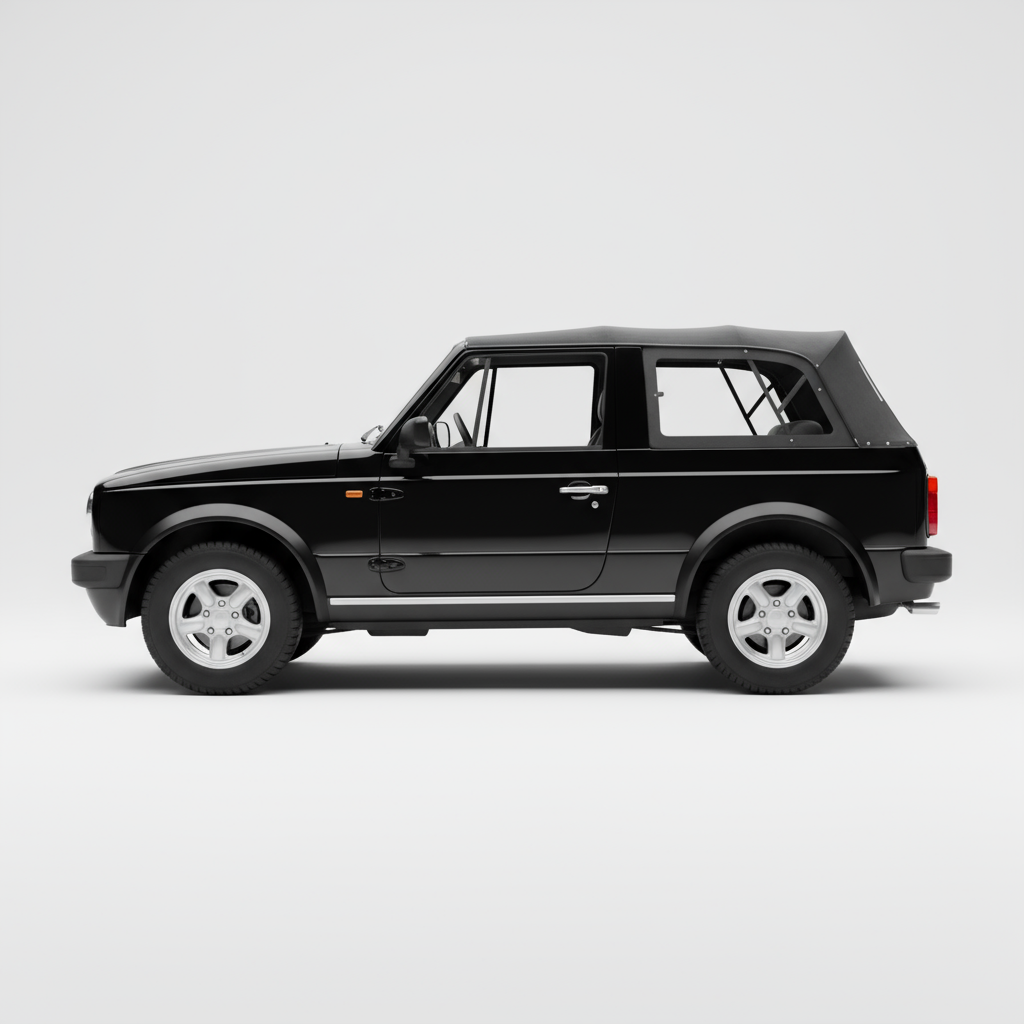
The design of the Santana 300 is purely functional and robust, with lines that reflect its off-road purpose. The 3-door body and the canvas top option give it a casual and adventurous character, ideal for enjoying the outdoors. Its compact dimensions, with 3672 mm long and 1630 mm wide, make it agile in urban environments and manageable on narrow roads. The aesthetic is simple, without great fanfare, but with a presence that denotes durability and resistance. The 15-inch wheels with 205/70 R15 tires reinforce its image as a vehicle prepared for any terrain.
Technology and features
In the Santana 300, technology focuses on functionality and mechanical reliability. Its 1.6-liter gasoline engine with indirect injection and 4 valves per cylinder is a proven and simple mechanism, easy to maintain. The permanent or connectable all-wheel drive, along with a 5-speed manual gearbox, ensures optimal control in various conditions. The recirculating ball steering, although not the most modern, is robust and suitable for an off-roader. The front disc brakes and rear drum brakes fulfill their function, and the suspension is designed to absorb terrain irregularities. Don't expect large screens or advanced driving assistants; here, technology is synonymous with robustness and effectiveness in the field.
Competition
At the time, the Santana 300 competed with other compact and economical off-road vehicles, such as the Suzuki Jimny or the Lada Niva. These vehicles shared a similar philosophy of simplicity, robustness, and off-road capability at an affordable price. Compared to them, the Santana 300 offered an alternative with a Spanish touch, maintaining the essence of a pure off-roader, without the concessions to comfort or urban aesthetics that were beginning to be seen in other SUV segment models.
Conclusion
The 2005 Santana 300 is a vehicle with a soul, an honest off-roader that does not seek to impress with luxuries, but with its ability to take you anywhere. It is a machine designed for adventure, for those who value mechanical simplicity and robustness above all else. Its functional design, reliable engine, and all-wheel drive make it an ideal companion for exploring less traveled paths. It is a car that, despite the years, continues to transmit that feeling of freedom and authenticity that few modern vehicles can match. A gem for lovers of classic and functional off-roaders.