
Especificaciones y análisis del Saab 9-3
Power
185HP
Torque
263Nm
Consumption
8.8l/100
Emissions
-g/km
0-100 km/h
8s
Top Speed
230km/h
Weight
-kg
Price
39,600€
Technical summary
Gasolina
Manual 5v
FWD
5 / 2 doors
295 L
64 L
136 kW
Current
Technical specifications
Engine
Capacities
Detailed analysis of the Saab 9-3 Cabrio 2.0 T Ecopower (185CV) SE · 185 CV (2001-2003)
General description
The 1998 Saab 9-3 Convertible, in its 2.0 T Ecopower SE version, is an automotive gem that encapsulates the essence of the Swedish brand. With its distinctive design and a 185 hp turbocharged engine, this convertible not only promised a journey, but an experience. Launched at a time when Saab still maintained its unique identity, this model positioned itself as a sophisticated and characterful alternative in the premium convertible segment.
Driving experience
Driving the Saab 9-3 Convertible is immersing yourself in an experience of freedom and dynamism. The 2.0 T Ecopower engine, with its 185 hp and a torque of 263 Nm available at low revolutions (2200 rpm), offers an energetic response and an acceleration from 0 to 100 km/h in 8 seconds, allowing you to enjoy safe overtakes and agile driving. The top speed of 230 km/h is a testament to its capability. The suspension, McPherson type at the front and trailing arm with torsional element at the rear, provides a balance between comfort and stability, although the chassis of a convertible of the era may show some flexibility on uneven terrain. The steering, although its type is not specified, is expected to offer good communication with the road, a characteristic of Saab. The canvas top, when folded, transforms the cabin, allowing the wind and sun to be part of the journey, intensifying the sensations behind the wheel. The combined consumption of 8.8 l/100km is reasonable for a turbo engine of its power and era, although in the city it can rise to 12.6 l/100km.
Design and aesthetics
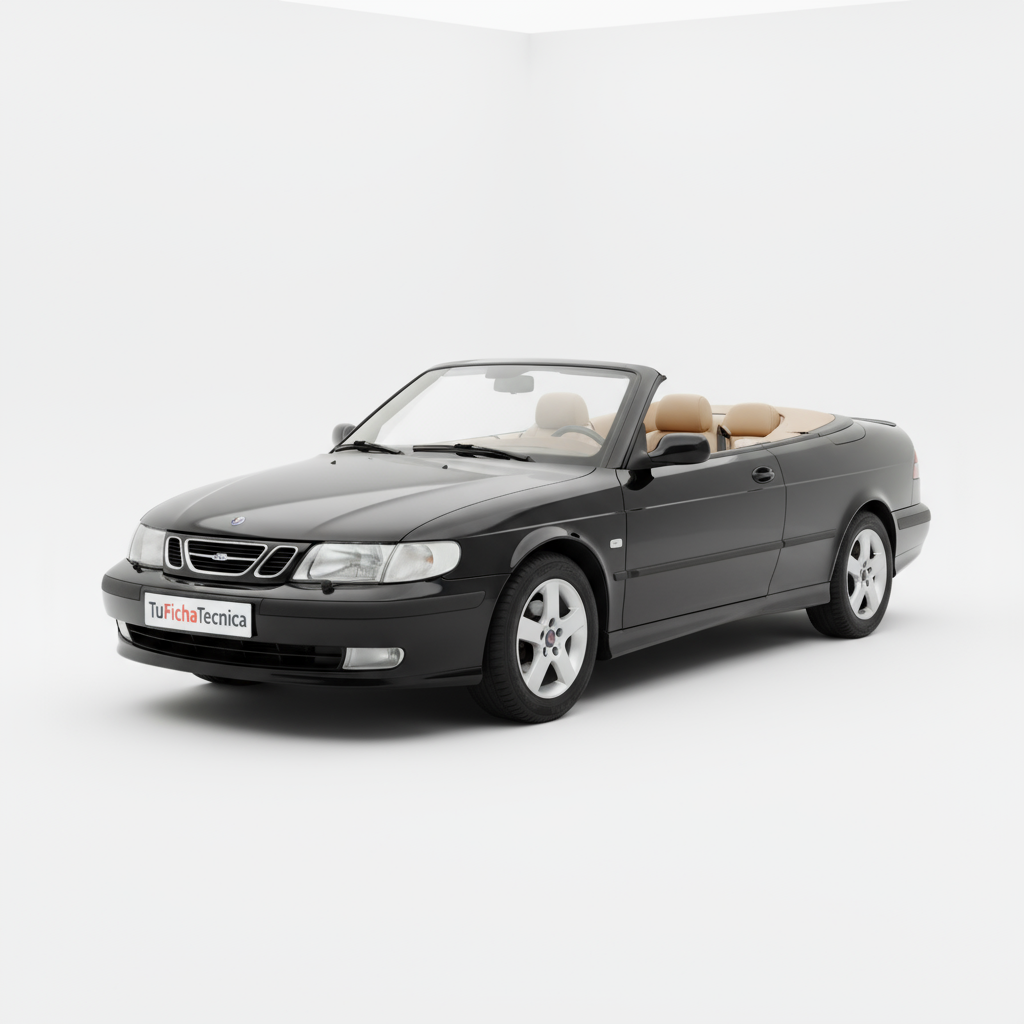
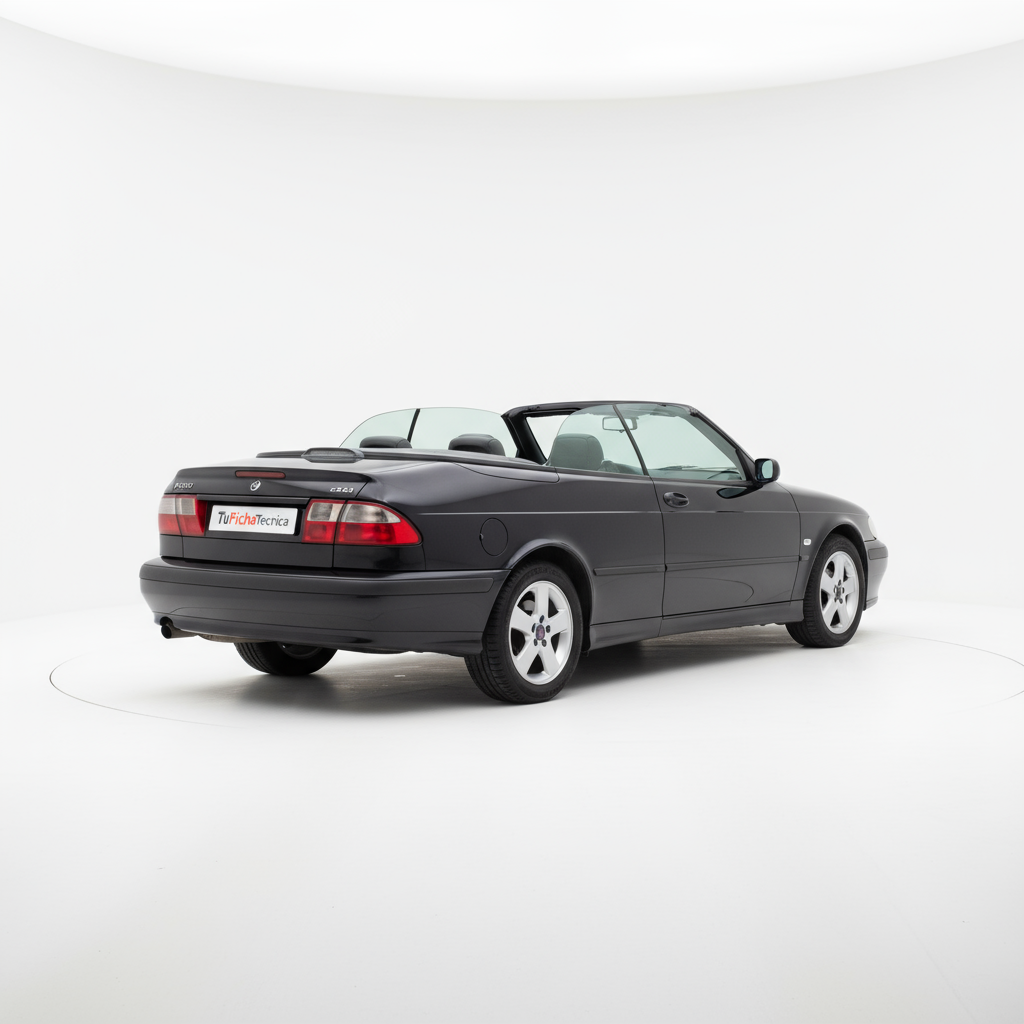
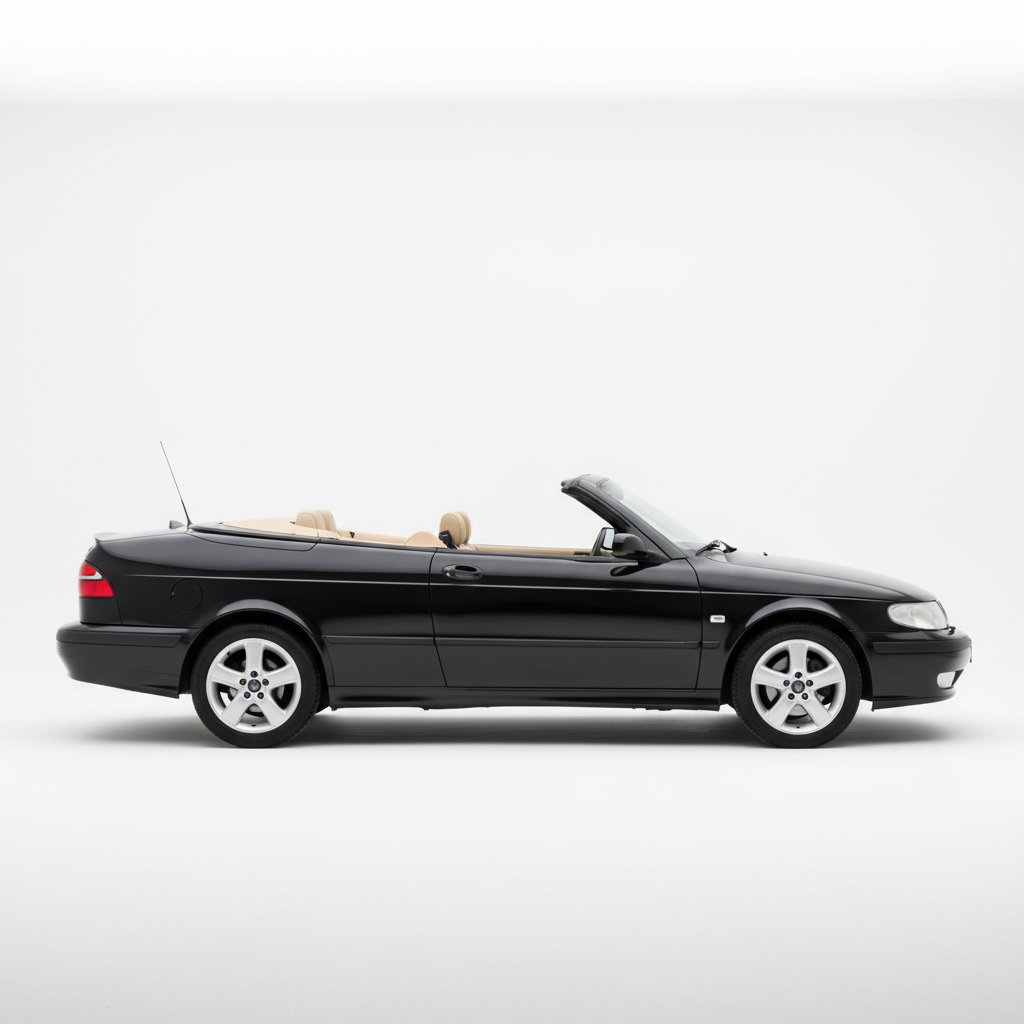
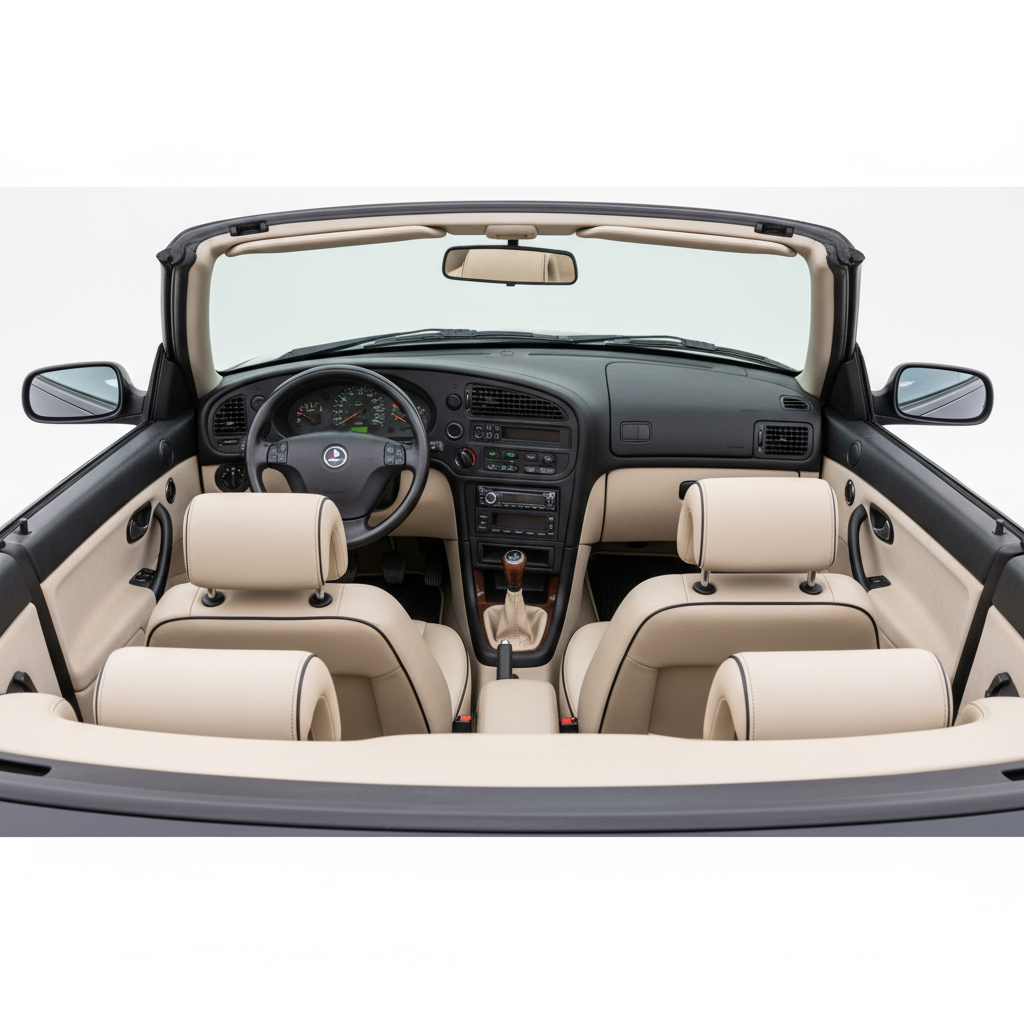
The design of the Saab 9-3 Convertible is unmistakably Saab, with clean lines and an elegant silhouette that remains attractive over time. The convertible version adds a touch of sophistication and sportiness, with a canvas top that integrates harmoniously into the bodywork. The headlights and grille maintain the brand's identity, while the rear, with its characteristic taillights, completes a balanced set. The 16-inch wheels (6.5 x 16) complement the overall aesthetic. The interior, although not detailed, is expected to follow Saab's philosophy of functionality and ergonomics, with quality materials and a driver-oriented control layout. The dimensions, with 4639 mm long and 1711 mm wide, give it a notable presence on the road, while the 295-liter trunk, although not huge, is sufficient for weekend getaways.
Technology and features
In its time, the Saab 9-3 Convertible 2.0 T Ecopower incorporated advanced technology for its segment. The turbocharged engine with indirect injection and intercooler was a hallmark of Saab, offering a combination of power and efficiency. The 5-speed manual transmission allowed precise control over power delivery. Although modern driving assistance systems are not mentioned, Saab's focus on passive safety was notable. The engine construction with an iron block and aluminum cylinder head was common practice for durability. Front-wheel drive (FWD) was standard on most Saab models, providing predictable handling. The convertible top technology, although not detailed, allowed for relatively quick and easy operation to enjoy the open sky.
Competition
In the premium convertible market of the late 90s and early 2000s, the Saab 9-3 Convertible competed with models such as the BMW 3 Series Convertible, the Audi A4 Convertible, and the Mercedes-Benz CLK Convertible. Compared to them, the Saab offered an alternative with a more distinctive character, a focus on safety, and a unique personality, far from the more conventional image of its German rivals. Its turbo engine and Scandinavian design gave it a different touch that attracted an audience looking for more than just a convertible.
Conclusion
The 1998 Saab 9-3 Convertible 2.0 T Ecopower SE is a car that evokes nostalgia and admiration. It represents Saab's golden age, where innovation, design, and safety merged to create vehicles with soul. It is a car for those who appreciate Swedish engineering, the thrill of a turbo engine, and the freedom of open-top driving. Although its consumption and some features may seem outdated today, its charm and its ability to offer a unique driving experience keep it as a desired classic. It is a testament to a brand that, unfortunately, is no longer with us, but whose legacy endures in models like this.