
Especificaciones y análisis del Renault Scenic
Power
110HP
Torque
260Nm
Consumption
4.1l/100
Emissions
105g/km
0-100 km/h
12.5s
Top Speed
180km/h
Weight
1460kg
Price
20,630€
Technical summary
Gasóleo
Manual 6v
FWD
5 / 5 doors
437 L
60 L
81 kW
Current
Technical specifications
Engine
Capacities
Detailed analysis of the Renault Scénic Expression Energy dCi 110 Stop&Start · 110 CV (2012)
General description
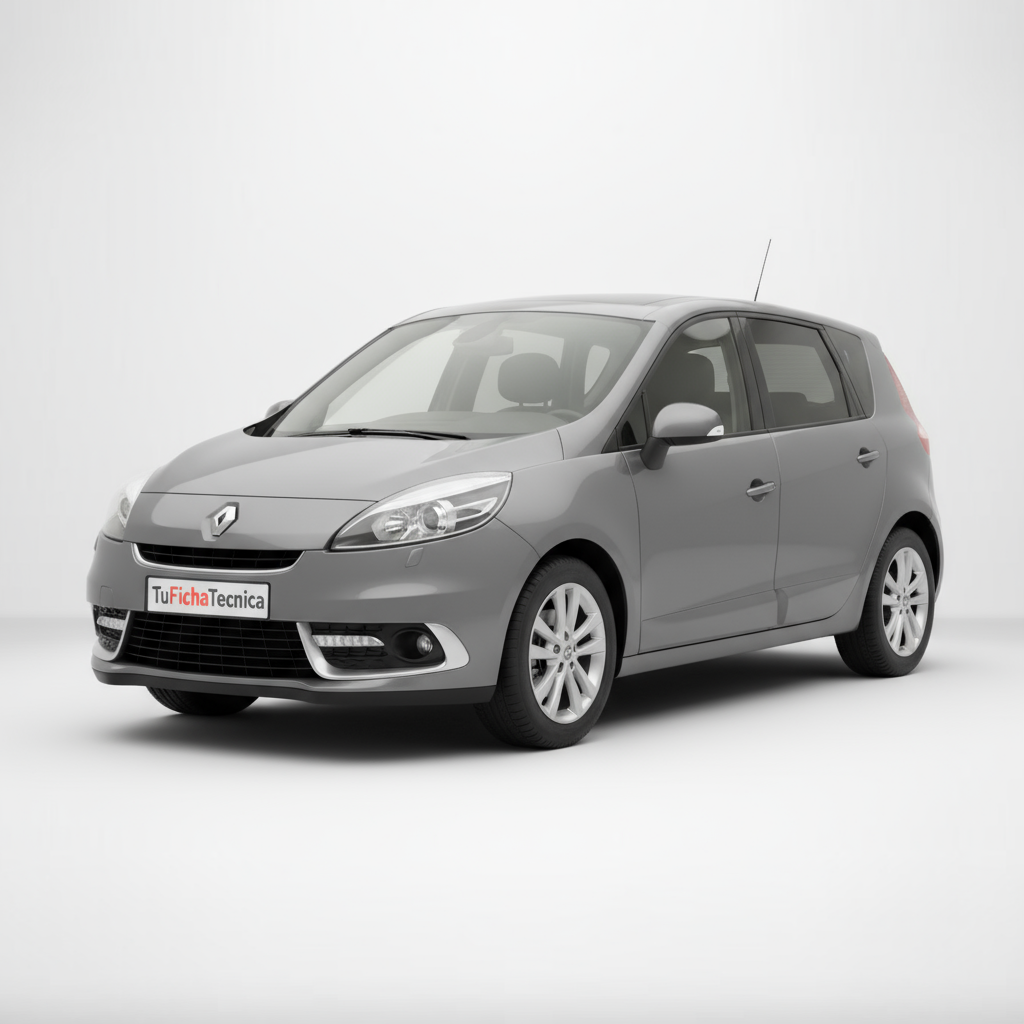
The 2012 Renault Scenic Expression Energy dCi 110 Stop&Start is a minivan that presents itself as a practical and efficient option for families. With its 110 hp diesel engine and Stop&Start technology, it promises adjusted consumption and comfortable driving, ideal for daily use and long journeys. Its design, although functional, seeks to offer a pleasant and modern aesthetic for its time, maintaining the essence of a family vehicle.
Driving experience
Behind the wheel of the Scenic, the predominant feeling is one of comfort and ease. The 110 hp diesel engine, although not an abundance of power, performs competently to move the vehicle, especially in the mid-range of revolutions thanks to its 260 Nm of torque. The 0 to 100 km/h acceleration in 12.5 seconds indicates that it is not a car for rushing, but for relaxed and efficient driving. The electric power steering, sensitive to speed, contributes to agile maneuverability in the city and greater stability on the road. The suspension, McPherson type at the front and trailing arm with torsion element at the rear, is configured to absorb road irregularities, offering a smooth ride for all occupants. The Stop&Start system is an ally in fuel saving in urban environments, providing a sense of modernity and efficiency.
Design and aesthetics
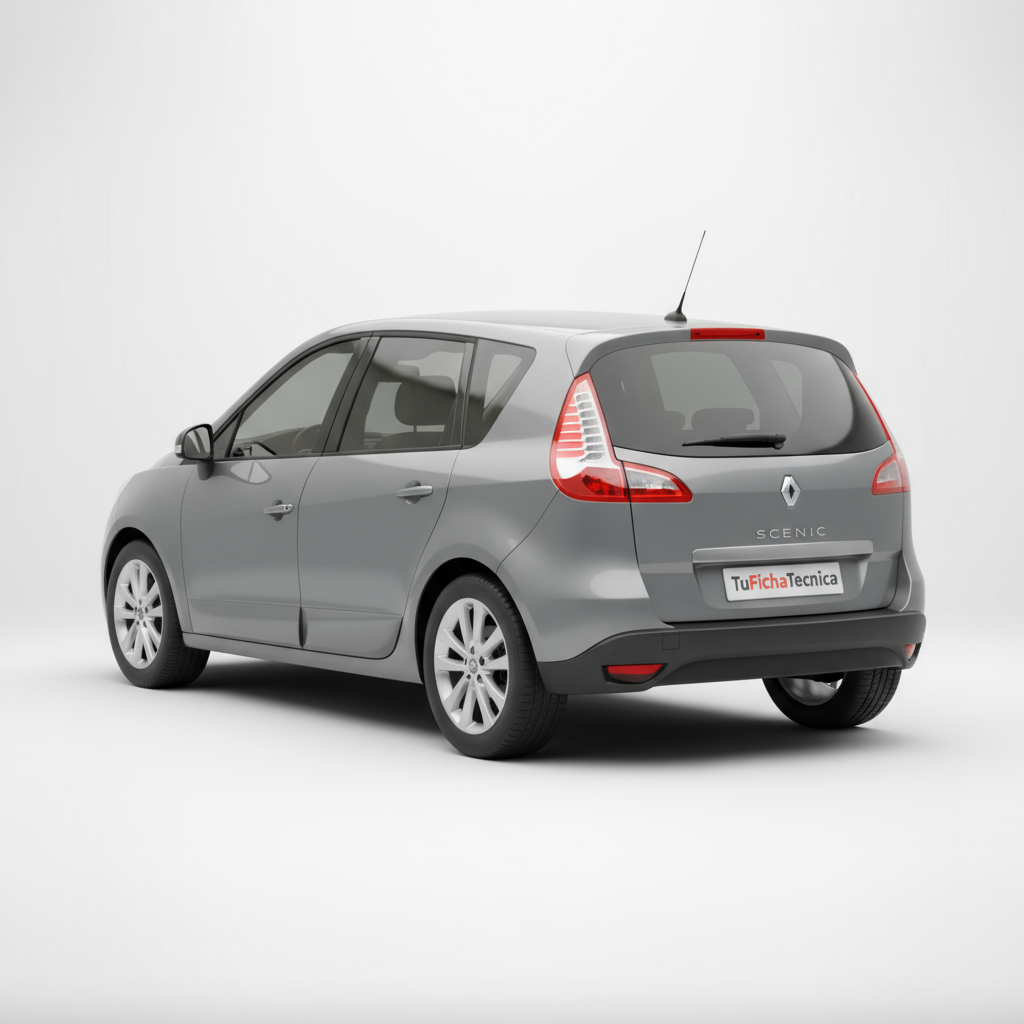
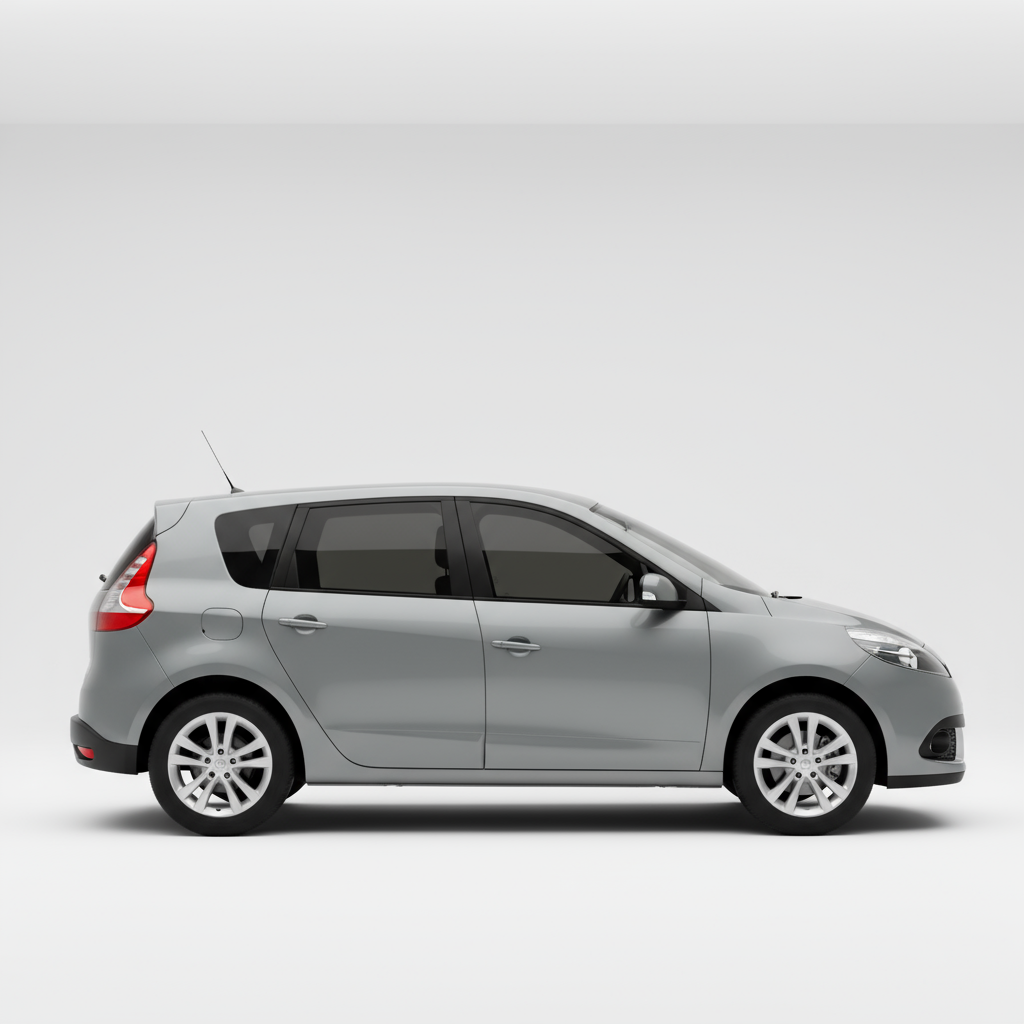
The design of the 2012 Renault Scenic is characterized by its soft and functional lines, designed to maximize interior space and visibility. With a length of 4366 mm, a width of 1845 mm, and a height of 1640 mm, its proportions are typical of a compact minivan, offering a robust but not excessively bulky presence. The five doors facilitate access to a spacious cabin, while the 437-liter trunk is sufficient for a family's needs. The 205/60 R16 tires, mounted on 6.5 x 16 rims, complement a balanced and practical aesthetic, without great fanfare but with a touch of discreet elegance.
Technology and features
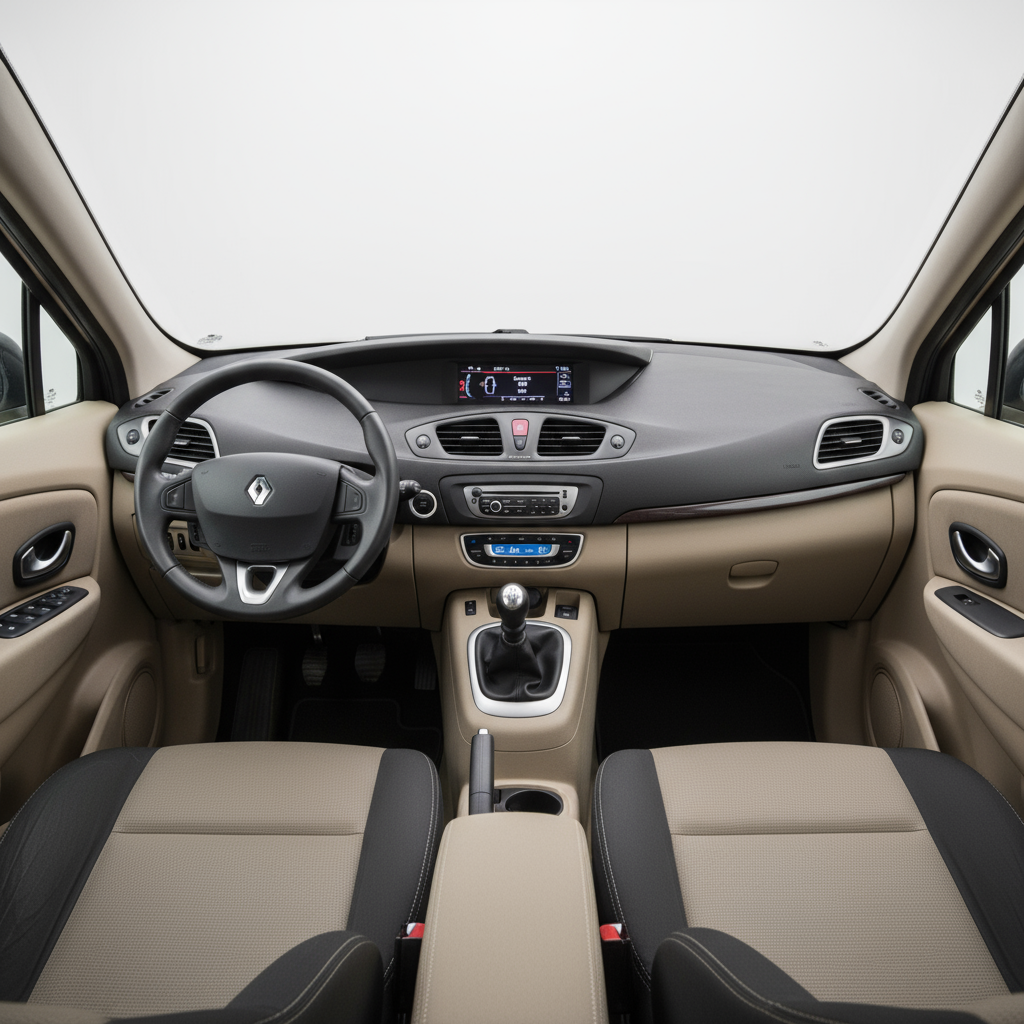
In the technological section, the 2012 Scenic Expression Energy dCi 110 Stop&Start incorporates key elements for efficiency and comfort. The 1.5-liter diesel engine with common rail direct injection, variable geometry turbo, and intercooler, is an example of engineering oriented towards low consumption and low emissions, complying with Euro 5 regulations. The inclusion of the Stop&Start system is a highlight, as it significantly contributes to reducing fuel consumption and CO2 emissions in urban traffic. The electric power steering, sensitive to speed, improves the driving experience, adapting to different situations. Although advanced infotainment systems are not detailed, the Expression version usually includes what is necessary for a pleasant journey.
Competition
In the compact minivan segment, the 2012 Renault Scenic faced competitors such as the Citroën C4 Picasso, the Ford C-Max, the Opel Zafira, and the Volkswagen Touran. Each of them offered their own virtues in terms of space, modularity, design, and equipment. The Scenic stood out for its balance between comfort, efficiency, and a well-resolved interior design, seeking to attract families who valued practicality and contained consumption.
Conclusion
The 2012 Renault Scenic Expression Energy dCi 110 Stop&Start is a minivan that more than meets the expectations of a family looking for a practical, comfortable, and efficient vehicle. Its diesel engine offers a good compromise between performance and consumption, while its interior and exterior design is designed for functionality. It is a car that invites you to enjoy journeys with peace of mind, without sacrificing the necessary technology to make life easier. A sensible and emotionally satisfying option for those who value space and economy of use.