
Especificaciones y análisis del Renault Scenic
Power
136HP
Torque
191Nm
Consumption
8l/100
Emissions
192g/km
0-100 km/h
10.3s
Top Speed
195km/h
Weight
1475kg
Price
20,800€
Technical summary
Gasolina
Manual 6v
FWD
5 / 5 doors
430 L
60 L
100 kW
Current
Technical specifications
Engine
Capacities
Detailed analysis of the Renault Scenic 2.0 16v Confort Dynamique · 136 CV (2003-2006)
General description
The 2003 Renault Scenic 2.0 16v Confort Dynamique is a minivan that marked an era, offering a combination of space, comfort, and versatility. Designed for families, this vehicle was presented as a practical and elegant solution for daily life and long journeys. Its 136 HP gasoline engine promised agile and efficient driving, consolidating Renault's reputation in the compact minivan segment.
Driving experience
Behind the wheel of the 2003 Scenic, the predominant feeling is one of spaciousness and comfort. The elevated driving position offers excellent visibility, while the comfort-oriented suspension effectively filters out road irregularities. The 2.0-liter, 136 HP engine responds smoothly, providing adequate acceleration for most situations, though without sporting pretensions. On the road, it proves stable and predictable, inviting relaxed journeys. In the city, its compact size for a minivan facilitates maneuvers, although urban fuel consumption can be somewhat high. Sound insulation is decent, contributing to a quiet cabin environment.
Design and aesthetics
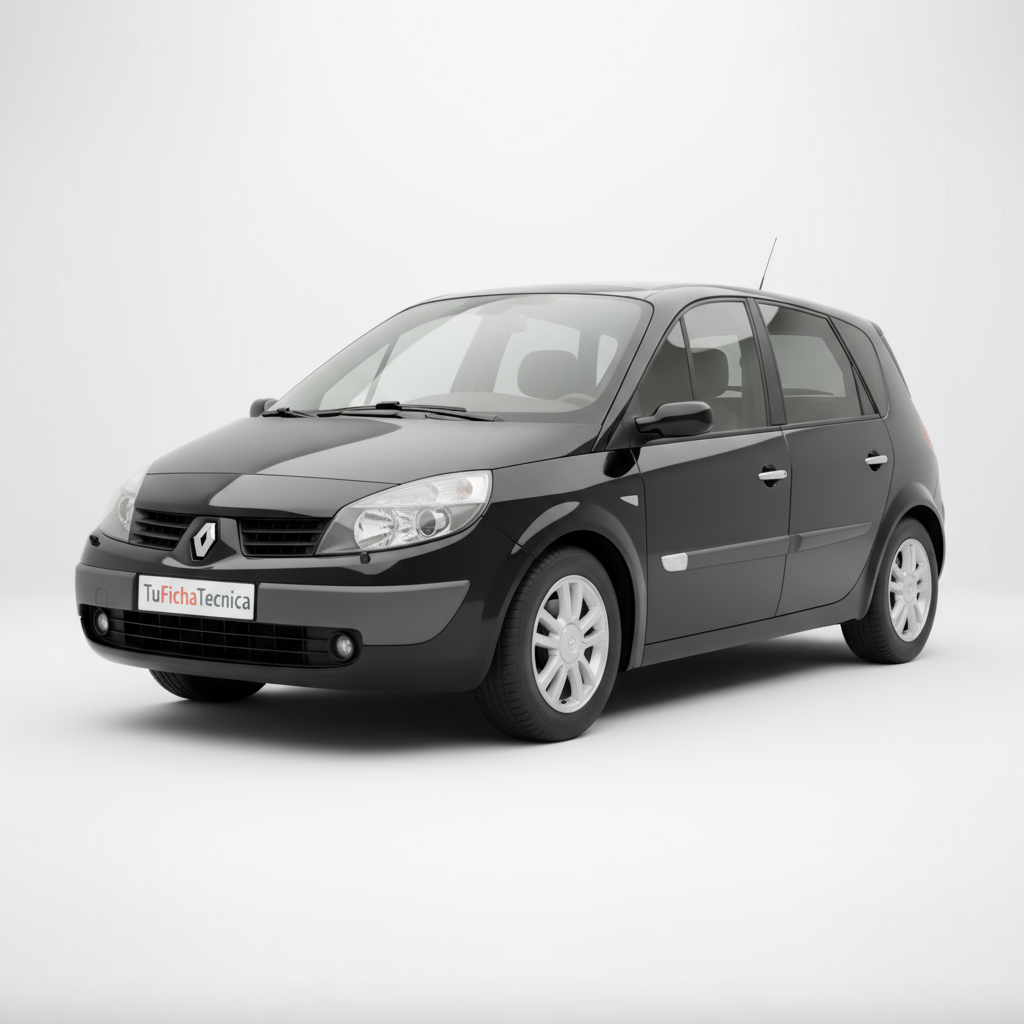
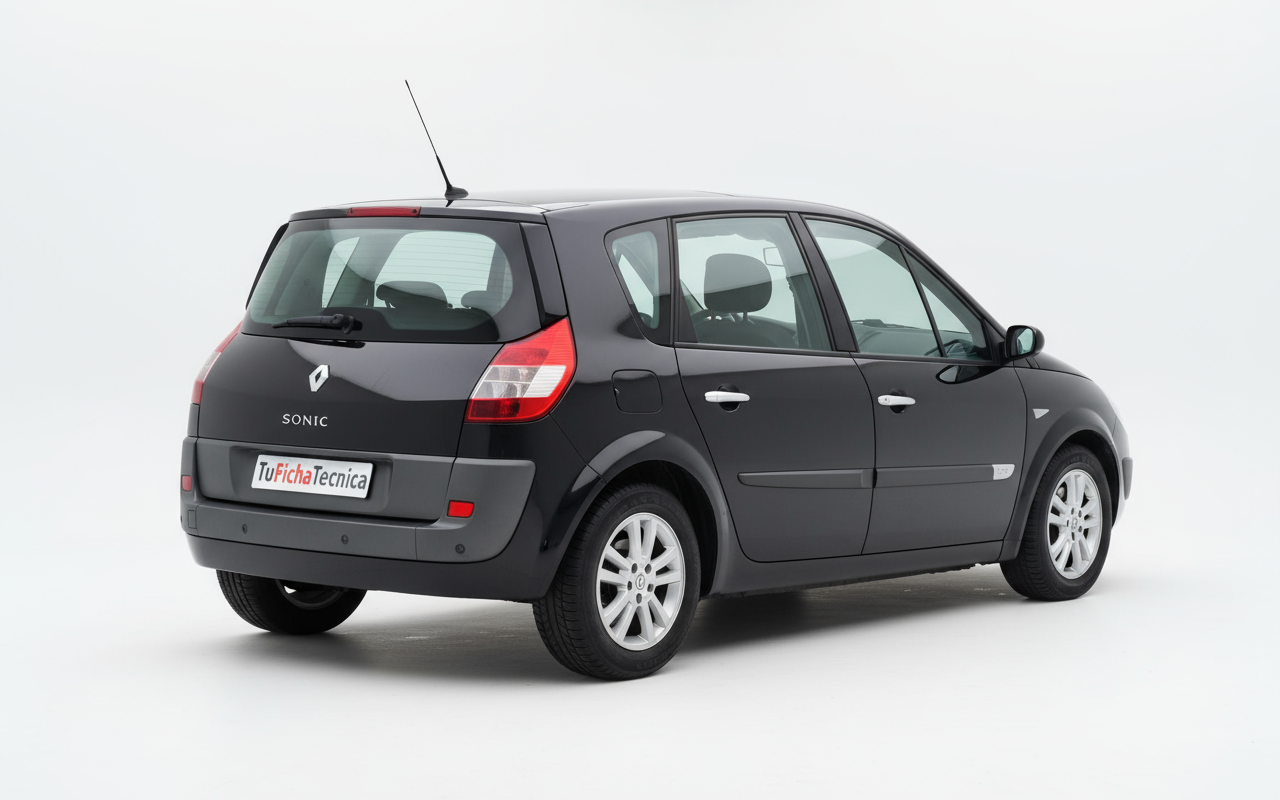
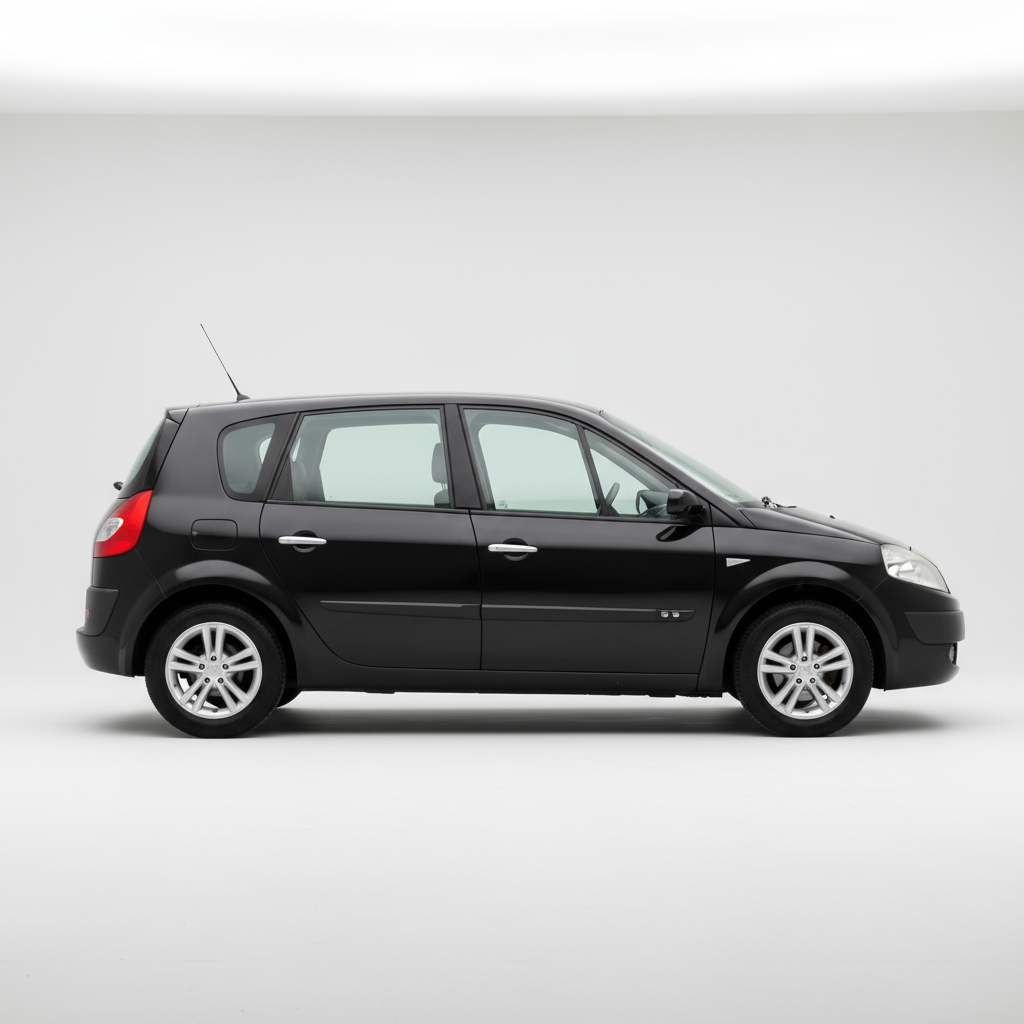
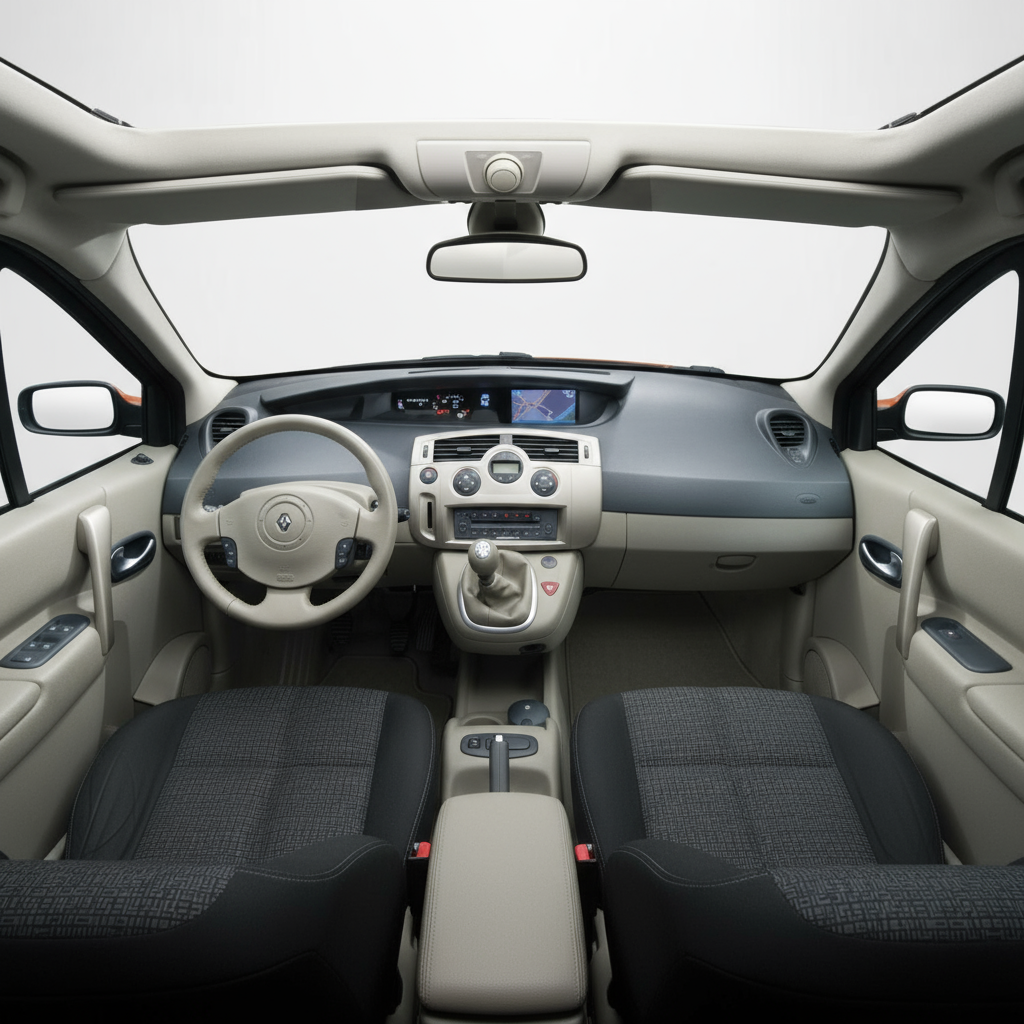
The design of the 2003 Renault Scenic is a clear example of early 2000s aesthetics, with soft, rounded lines that aim to maximize interior space. Its front features large headlights and a discreet grille, while the side profile stands out for its height and generous glazed surface. The rear, with its vertical taillights, contributes to a robust and functional image. Inside, the arrangement of elements is ergonomic, with a dashboard that prioritizes functionality and ease of use. The materials, though not luxurious, are pleasant to the touch and well-fitted, conveying a sense of solidity.
Technology and features
In 2003, the Renault Scenic 2.0 16v Confort Dynamique incorporated technologies that placed it at the forefront of its segment. It featured a 16-valve indirect injection engine, which offered a good balance between performance and efficiency for its time. Electric power steering facilitated low-speed maneuvers, while the braking system with ventilated front discs and rear discs ensured safe stopping. In terms of equipment, it included items such as air conditioning, electric windows, and an audio system, which contributed to the comfort and convenience of the occupants. Passive safety was also a strong point, with multiple airbags and a body structure designed to absorb impacts.
Competition
In the competitive compact minivan segment of 2003, the Renault Scenic faced tough rivals. These included the Citroën Xsara Picasso, known for its original design and great habitability; the Opel Zafira, which offered the versatility of seven seats; and the Volkswagen Touran, which opted for quality finishes and mechanical robustness. Other competitors included the Ford C-MAX and the Peugeot 307 SW, each with its own strengths in terms of design, equipment, or driving dynamics. The Scenic stood out for its overall balance, ride comfort, and focus on interior modularity.
Conclusion
The 2003 Renault Scenic 2.0 16v Confort Dynamique was a vehicle that managed to win over families thanks to its intelligent combination of space, comfort, and functionality. Its practical design, capable engine, and technological equipment made it a very attractive option at the time. Although today its performance and consumption may seem modest, in its context it was a benchmark. It represents a stage in which Renault consolidated its leadership in the minivan segment, offering a car designed for real life, capable of adapting to the changing needs of its users with generally good reliability.