
Especificaciones y análisis del Renault Scenic
Power
113HP
Torque
152Nm
Consumption
8l/100
Emissions
191g/km
0-100 km/h
14.3s
Top Speed
175km/h
Weight
1445kg
Price
20,100€
Technical summary
Gasolina
Automático 4v
FWD
5 / 5 doors
430 L
60 L
83 kW
Current
Technical specifications
Engine
Capacities
Detailed analysis of the Renault Scenic 1.6 16v Confort Expression Aut. · 113 CV (2003-2006)
General description
The 2003 Renault Scenic, in its 1.6 16v Confort Expression Automatic version, is presented as a compact minivan that seeks to offer a balance between functionality, comfort, and a touch of distinction. Priced at 20,100 euros at the time, this vehicle was positioned as an interesting option for families who valued space and comfort in their daily commutes and travels. Its 113 HP gasoline engine, combined with a 4-speed automatic transmission, promised a smooth and uncomplicated drive, ideal for urban environments and roads.
Driving experience
Behind the wheel of the 2003 Scenic, the predominant feeling is one of smoothness and ease. The electric power steering, although lacking the most direct feedback, facilitates maneuvers in the city. The suspension, McPherson type at the front and trailing arm with torsional element at the rear, is clearly comfort-oriented, absorbing road irregularities with remarkable effectiveness. The 1.6 113 HP engine, while not a prodigy of power, fulfills its purpose for family use, offering 0 to 100 km/h acceleration in 14.3 seconds. The 4-speed automatic gearbox, with torque converter, prioritizes fluidity over speed, contributing to a relaxed driving experience. On the road, the Scenic proves stable, although it does not invite sporty driving. The combined consumption of 8 l/100km is reasonable for the time and type of vehicle.
Design and aesthetics
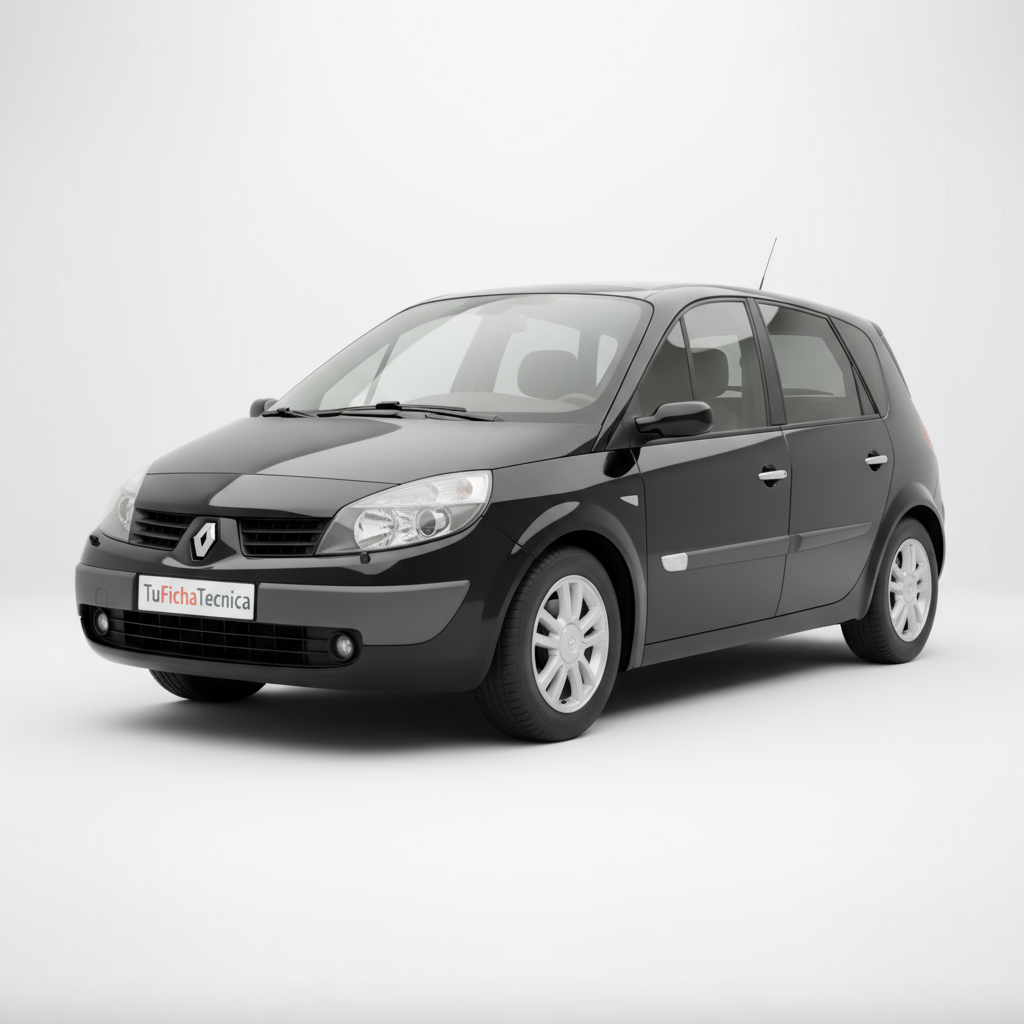
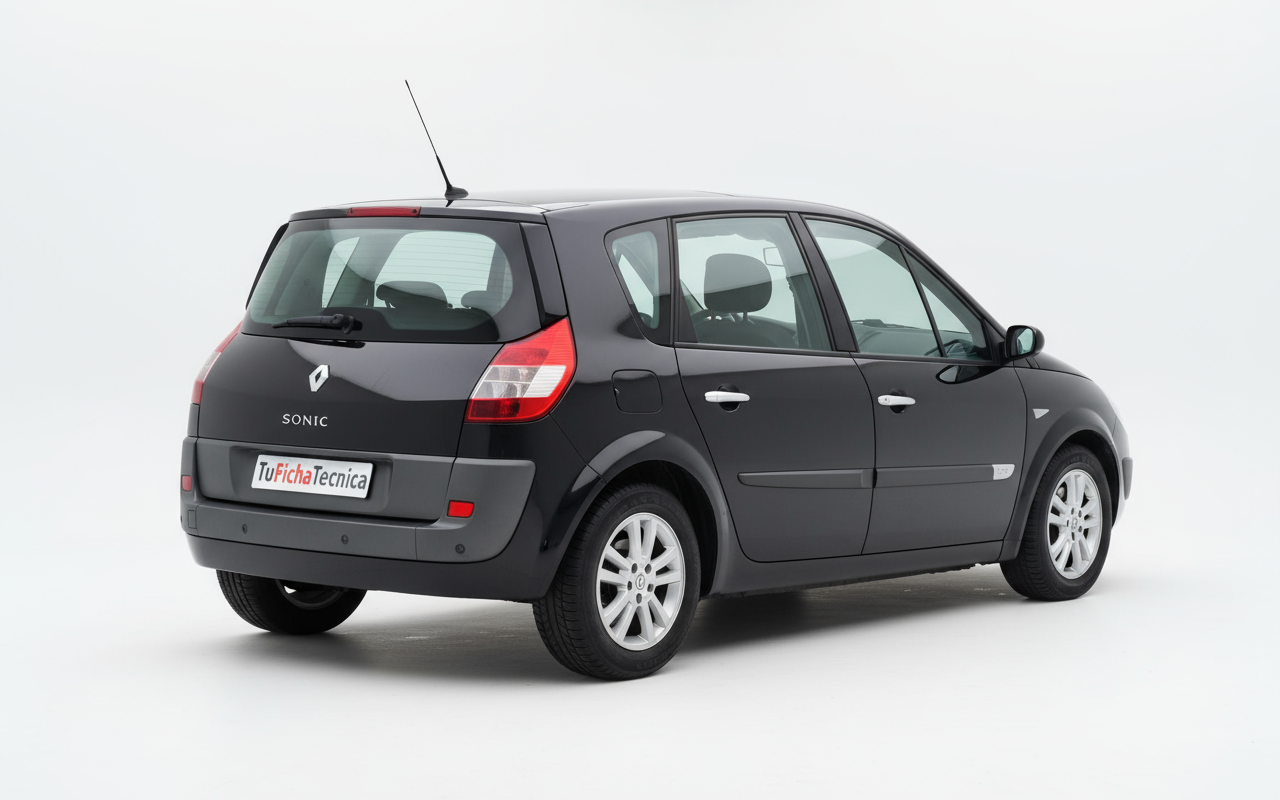
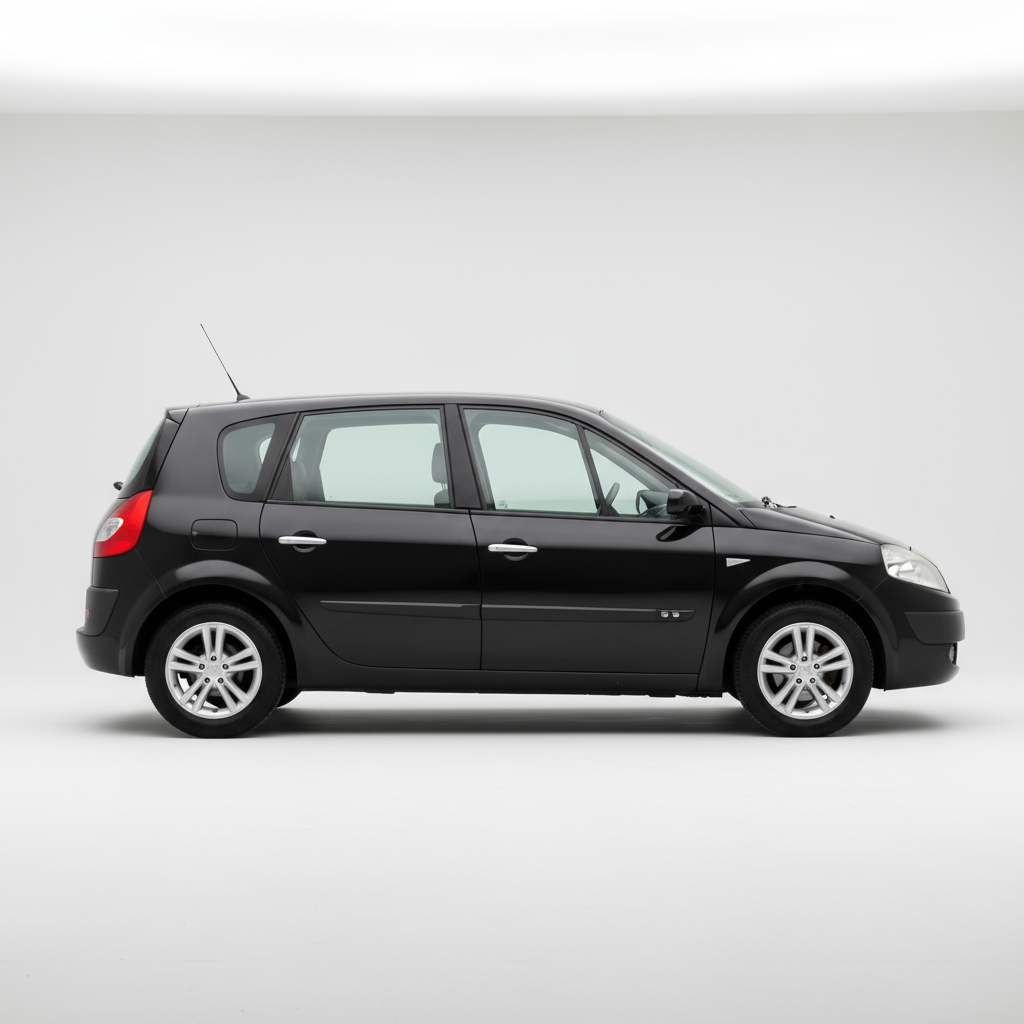
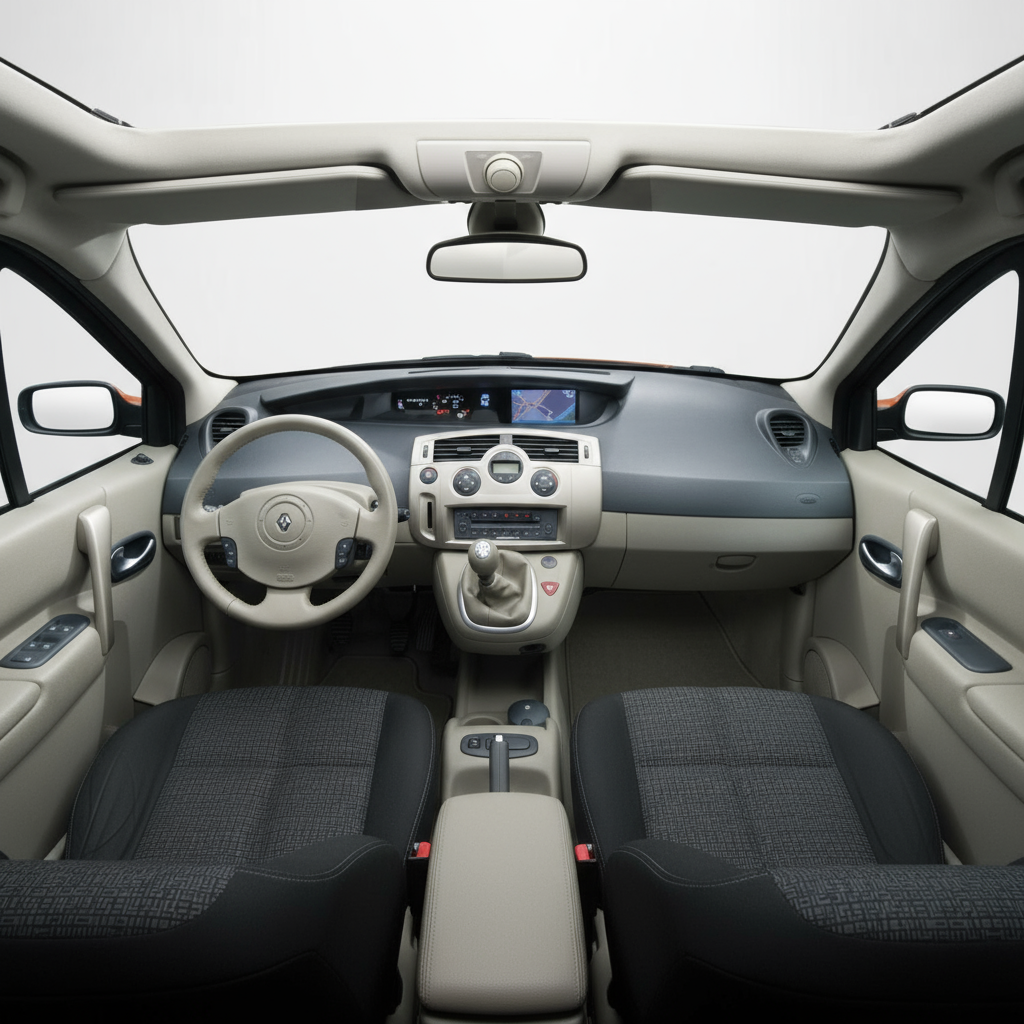
The design of the 2003 Renault Scenic is a clear reflection of the compact minivan trend of the early 2000s. Its lines are soft and rounded, seeking to maximize interior space and luminosity. The 5-door body, with a height of 1621 mm, facilitates access and habitability. The front features a discreet grille and good-sized headlights, while the rear is characterized by a wide tailgate and vertical taillights. Inside, the arrangement of elements is functional, with a dashboard that prioritizes ergonomics and visibility. The materials, although not luxurious, offer a feeling of solidity and durability. The trunk, with 430 liters of capacity, is generous for its segment, and the modularity of the seats allows the space to be adapted to different loading needs.
Technology and features
In terms of technology, the 2003 Renault Scenic incorporated elements that, for its time, were considered advanced and oriented towards comfort and safety. The 4-speed automatic transmission, although it may seem limited today, offered superior driving comfort compared to manual gearboxes. Electric power steering contributed to greater ease of handling. In terms of safety, it had ventilated disc brakes of 280 mm on the front axle and 270 mm discs on the rear, which ensured good braking capacity. Although details on infotainment systems or more modern driving aids are not specified, it is expected that it included basic comfort elements such as air conditioning and electric windows, typical of a 'Confort Expression' trim.
Competition
In the competitive compact minivan segment of 2003, the Renault Scenic faced tough rivals. Among them stood out the Citroën Xsara Picasso, known for its spaciousness and comfort; the Opel Zafira, which offered the versatility of seven seats; and the Ford C-MAX, which promised more agile driving dynamics. Other relevant competitors included the Volkswagen Touran and the Toyota Corolla Verso. The Scenic differentiated itself by its focus on ride comfort, interior modularity, and a design that, although not risky, was pleasant and functional for the family audience it was aimed at.
Conclusion
The 2003 Renault Scenic 1.6 16v Confort Expression Automatic was a minivan that managed to earn a place in the market thanks to its practical and family-oriented approach. It offered generous interior space, remarkable ride comfort, and ease of use that made it an ideal companion for daily life and travel. While its performance was not sporty and its consumption, although reasonable, was not the lowest, its virtues as a family vehicle made it a very attractive option. Its functional design and comfort-oriented equipment consolidated it as one of the benchmarks in its segment, leaving a legacy of versatility and convenience for many families.