
Especificaciones y análisis del Renault Mégane
Power
82HP
Torque
185Nm
Consumption
4.6l/100
Emissions
-g/km
0-100 km/h
14.3s
Top Speed
170km/h
Weight
1270kg
Price
16,445€
Technical summary
Gasóleo
Manual 5v
FWD
5 / 5 doors
330 L
60 L
60 kW
Current
Technical specifications
Engine
Capacities
Detailed analysis of the Renault Megane 5p 1.5 dCi 80 CV Confort Expression (2002-2005)
General description
The 2003 Renault Mégane 5p 1.5 dCi 80 CV Confort Expression presents itself as a balanced and functional option within the compact segment. With its 82 HP diesel engine, this model aimed to offer a combination of efficiency and adequate performance for daily use, maintaining Renault's characteristic comfort and design of that era. It was a car designed for those who valued fuel economy without sacrificing a spacious cabin and reasonable equipment.
Driving experience
Behind the wheel of the 82 HP Mégane 1.5 dCi, the predominant sensation is that of a docile and easy-to-drive car. The diesel engine, although not a powerhouse, delivers its 185 Nm of torque at low revolutions (2000 rpm), which facilitates relaxed city driving and allows for stable cruising on the highway without needing to push it hard. The acceleration from 0 to 100 km/h in 14.3 seconds and a top speed of 170 km/h indicate that it is not a sports car, but a reliable companion for daily commutes. The suspension, McPherson type at the front and torsion beam with a trailing arm at the rear, seeks a balance between comfort and stability, absorbing road irregularities well. The rack-and-pinion steering offers predictable response, contributing to a safe and uneventful driving experience. The combined consumption of 4.6 l/100km is one of its strong points, promising great autonomy thanks to its 60-liter fuel tank.
Design and aesthetics
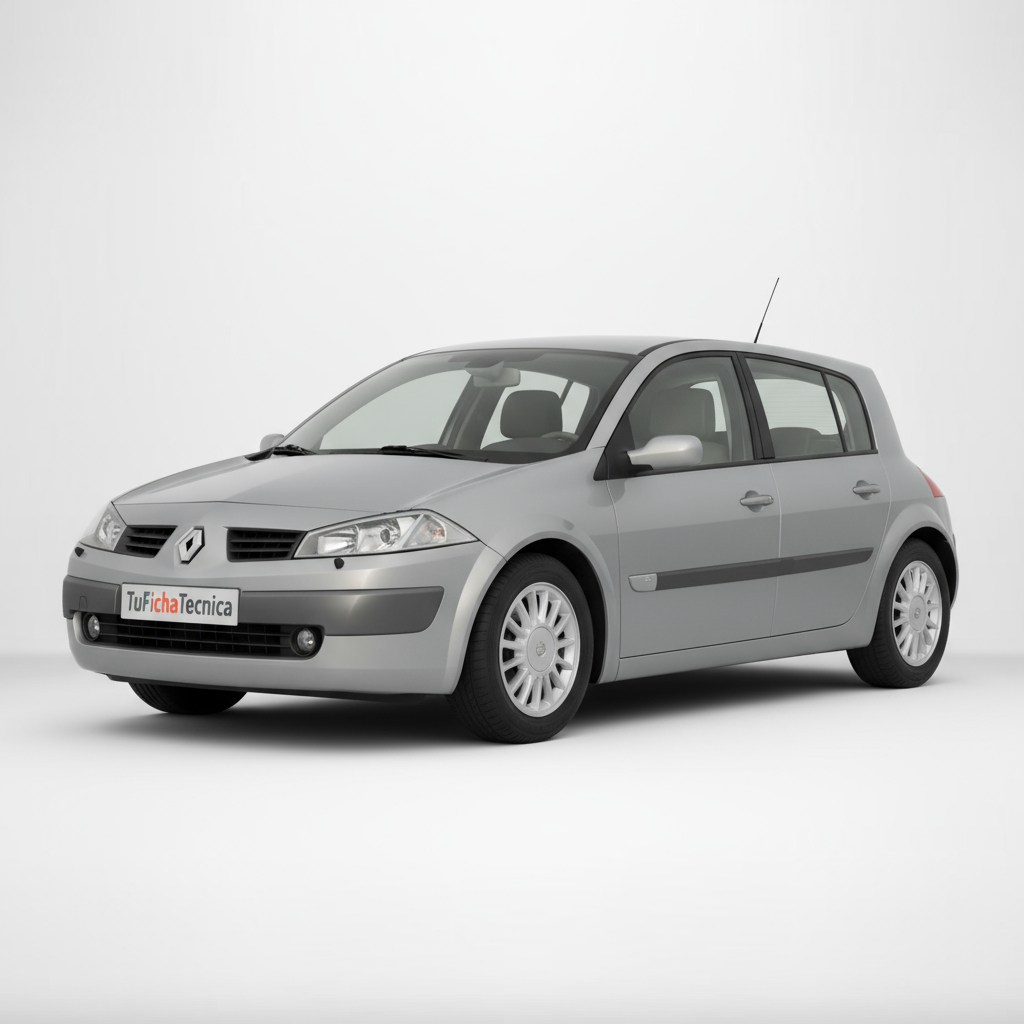
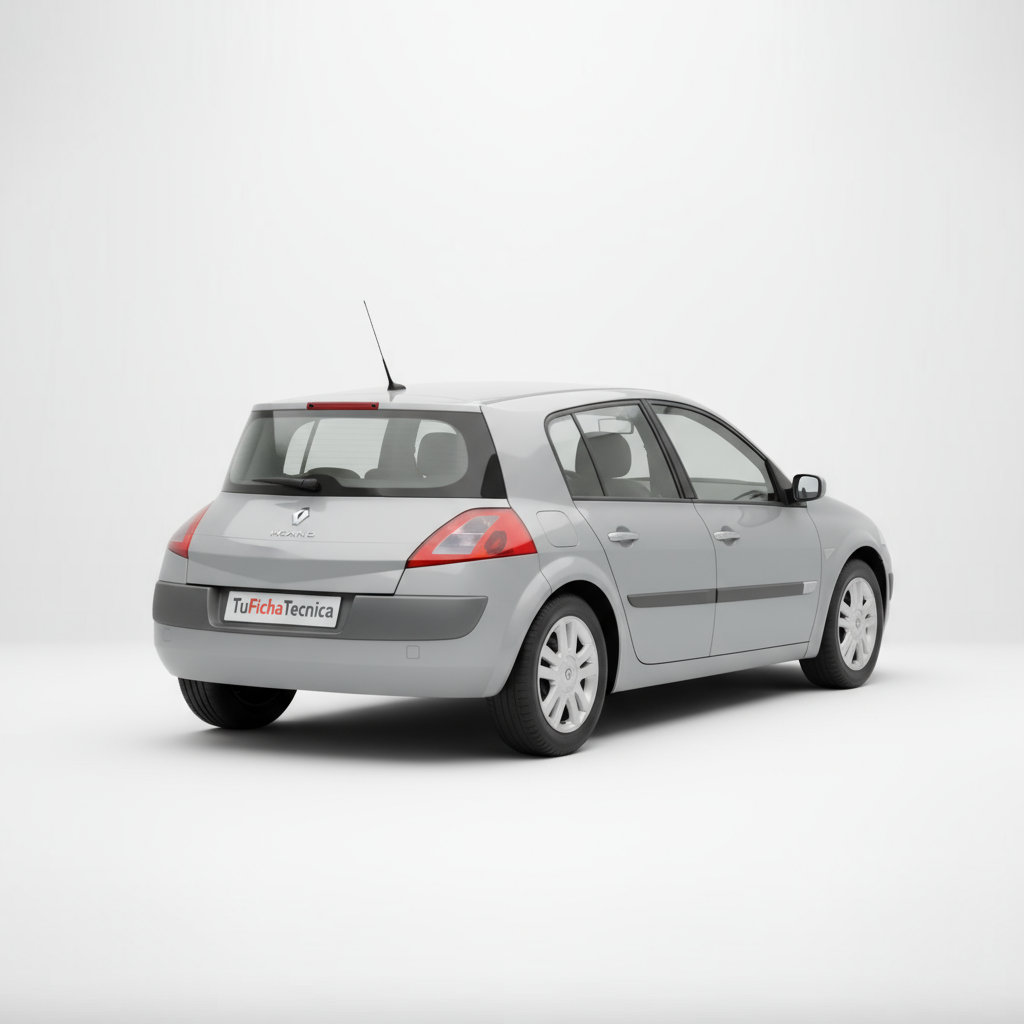
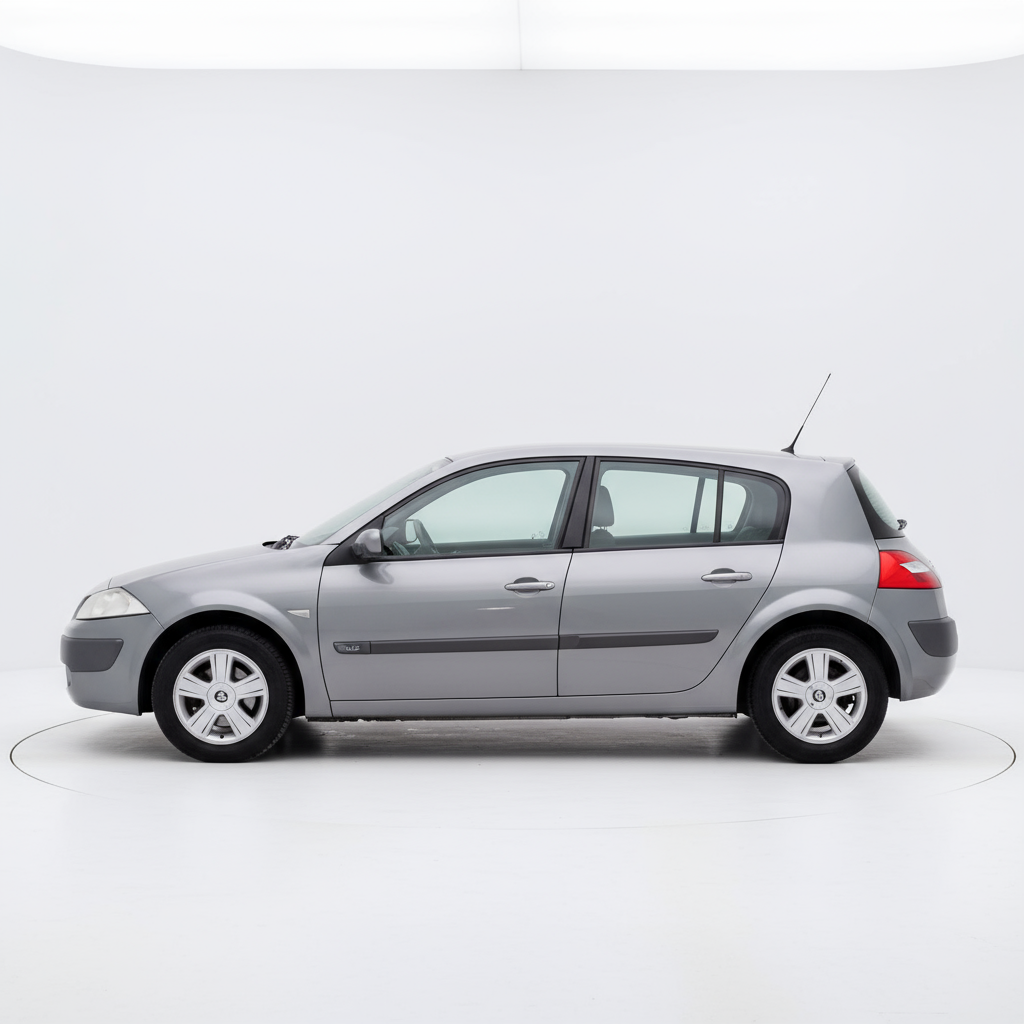
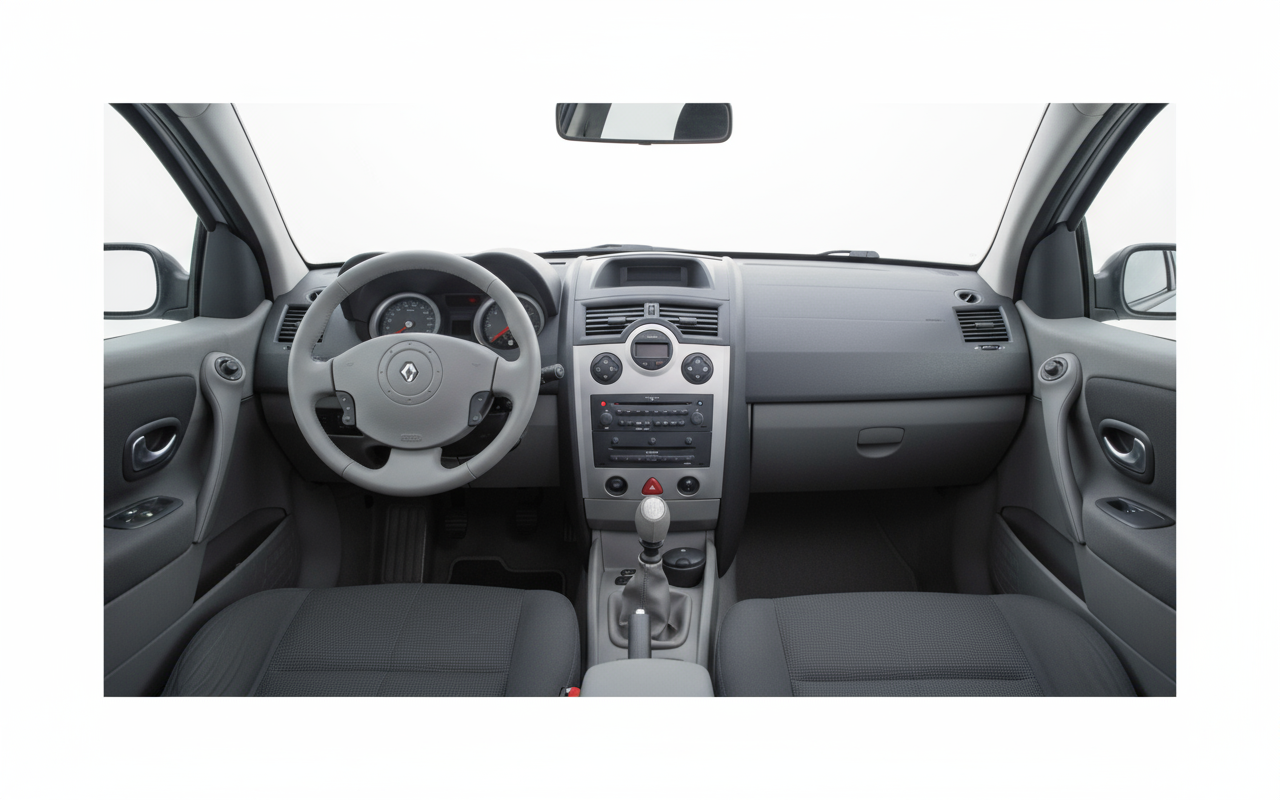
The design of the 2003 Renault Mégane, in its 5-door version, marked a before and after in the brand's aesthetics. It was characterized by its soft and rounded lines, with a distinctive front and a rear that broke with the established norms of the time, especially due to the shape of its tailgate and its taillights. This design, although polarizing for some, gave it a unique personality and clearly differentiated it from its competitors. The interior, with a focus on ergonomics and habitability, offered generous space for occupants and a 330-liter trunk, suitable for the needs of a small family or for daily use. The materials, though not luxurious, were pleasant to the touch and the assembly conveyed a sense of solidity.
Technology and features
In terms of technology, the 2003 Mégane 1.5 dCi incorporated practical solutions for its time. The 1.5-liter diesel engine with common rail direct injection, turbo, and intercooler was an example of efficiency, aiming to optimize fuel consumption and reduce emissions. The 5-speed manual transmission was the standard option, offering simple and direct handling. Regarding safety, although specific equipment details are not mentioned, Renault was already committed to systems such as ventilated front disc brakes and rear disc brakes, as well as anti-roll bars on both axles to improve dynamic behavior. Power steering, although its type is not specified, contributed to ease of handling. Inside, basic but functional comfort equipment was expected, in line with the Confort Expression version.
Competition
In the competitive compact segment, the 2003 Renault Mégane 1.5 dCi faced tough rivals. Models such as the Volkswagen Golf, Ford Focus, Opel Astra, and Peugeot 307 were its main contenders. Each offered its own virtues, whether in terms of finish quality, driving dynamics, or equipment. The Mégane stood out for its bold design, its ride comfort, and, in this diesel version, for its remarkable fuel efficiency, making it an attractive option for those looking for a practical and economical car to maintain.
Conclusion
The 2003 Renault Mégane 5p 1.5 dCi 80 CV Confort Expression was a car that found its place in the market. It did not aim to be the most powerful or the most luxurious, but to offer a solid proposal based on efficiency, comfort, and a distinctive design. Its diesel engine, although modest in power, more than met the demands of daily use, standing out for its low consumption. It was an ideal vehicle for those who prioritized economy of use and comfort in their travels, without giving up a car with personality and a well-designed cabin. A faithful companion for everyday life, which left an important mark on Renault's history.