
Especificaciones y análisis del Renault Mégane
Power
101HP
Torque
200Nm
Consumption
5.8l/100
Emissions
-g/km
0-100 km/h
14.7s
Top Speed
174km/h
Weight
1340kg
Price
18,645€
Technical summary
Gasóleo
Automático 4v
FWD
5 / 5 doors
330 L
60 L
74 kW
Current
Technical specifications
Engine
Capacities
Detailed analysis of the Renault Megane 5p 1.5 dCi 100 CV Confort Expression Aut. (2004-2005)
General description
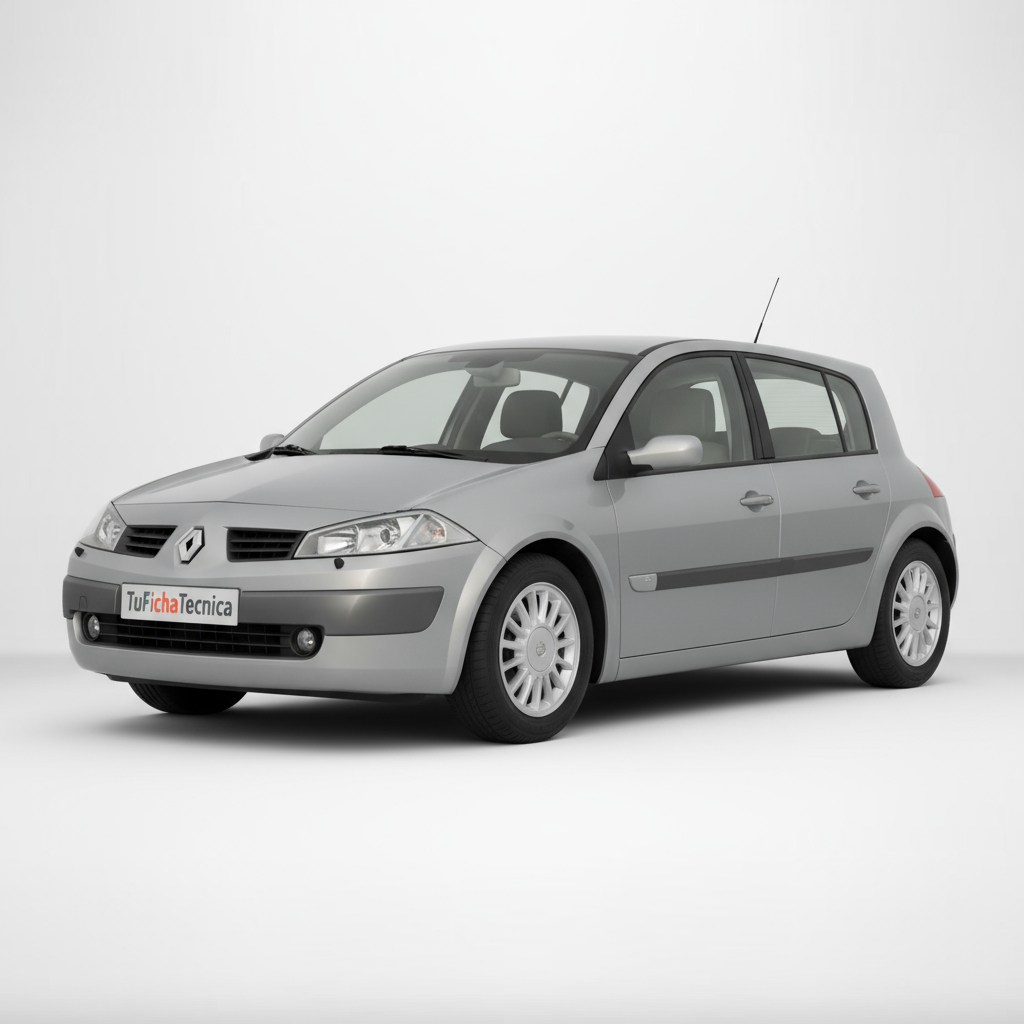
The 2003 Renault Mégane, in its 5-door version with the 1.5 dCi 101 hp engine and automatic transmission, is presented as a balanced option for those seeking comfort and efficiency in a compact car. This model, with its distinctive design and an interior designed for everyday use, promised to be a faithful companion on the road.
Driving experience
Behind the wheel of the Mégane 1.5 dCi, the feeling is one of smoothness and ease. The diesel engine, although not a powerhouse, delivers its 101 hp progressively, supported by 200 Nm of torque that is felt from low revolutions. The 4-speed automatic transmission, while not the fastest, contributes to relaxed driving, ideal for urban traffic and interurban journeys. The suspension, McPherson type at the front and torsion beam at the rear, filters out road irregularities well, offering a comfortable ride. The rack-and-pinion steering provides adequate response, though without sporting pretensions. In general, it is a car that invites calm, to enjoy the journey without haste, with a combined consumption of 5.8 l/100km that eases the wallet.
Design and aesthetics
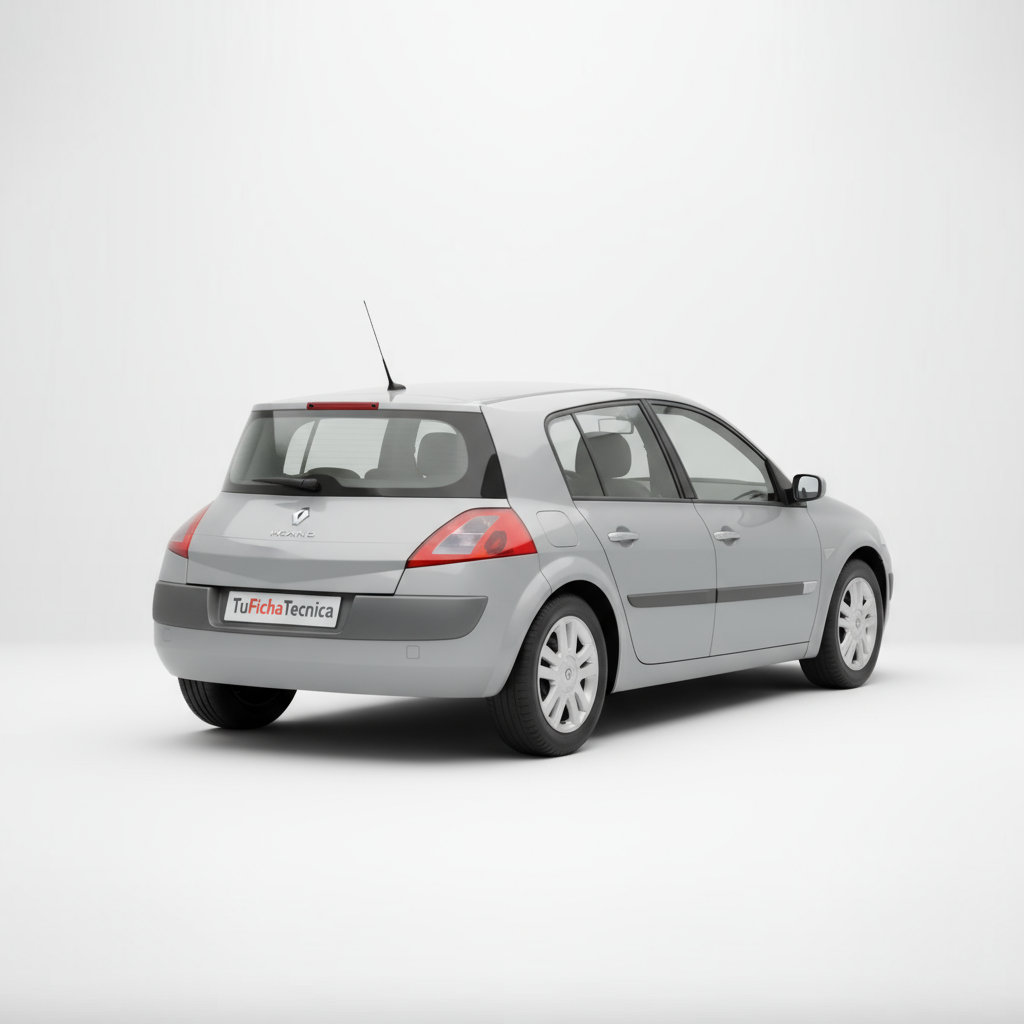
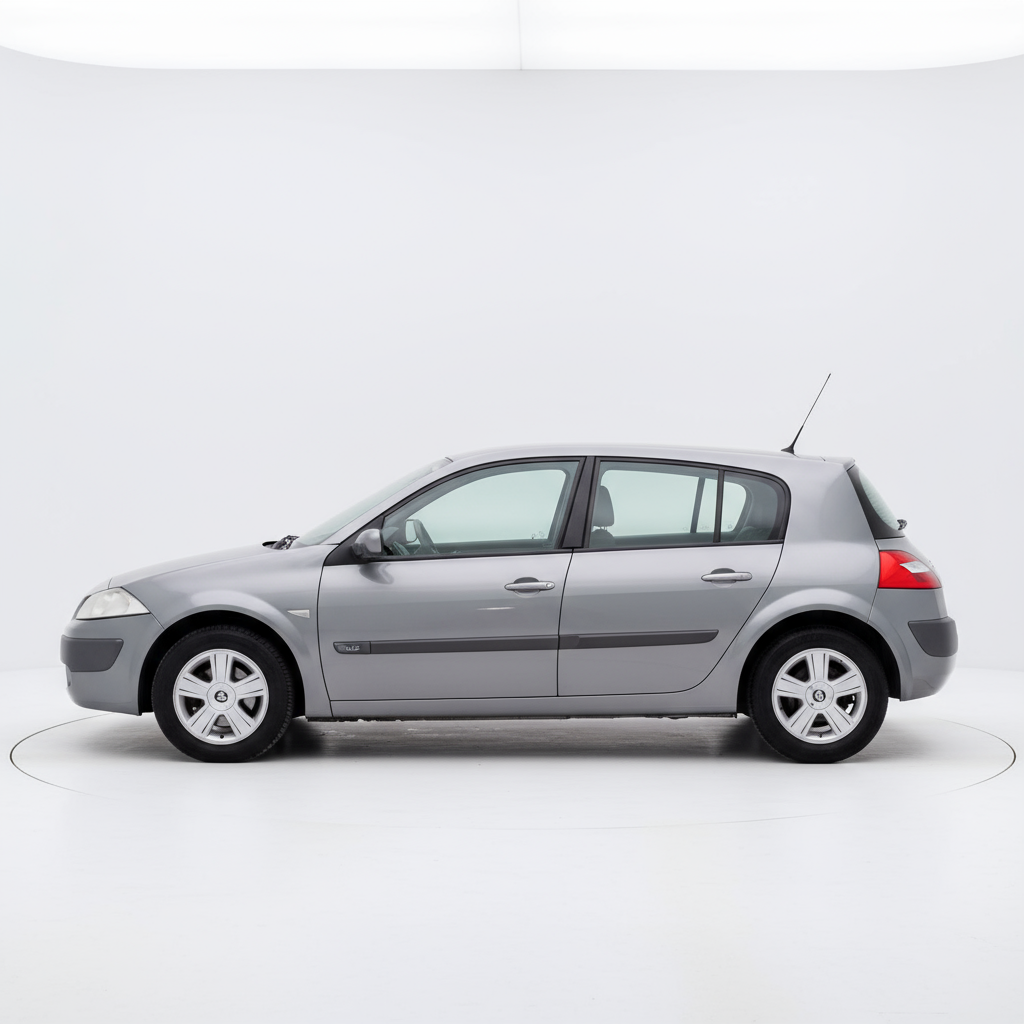
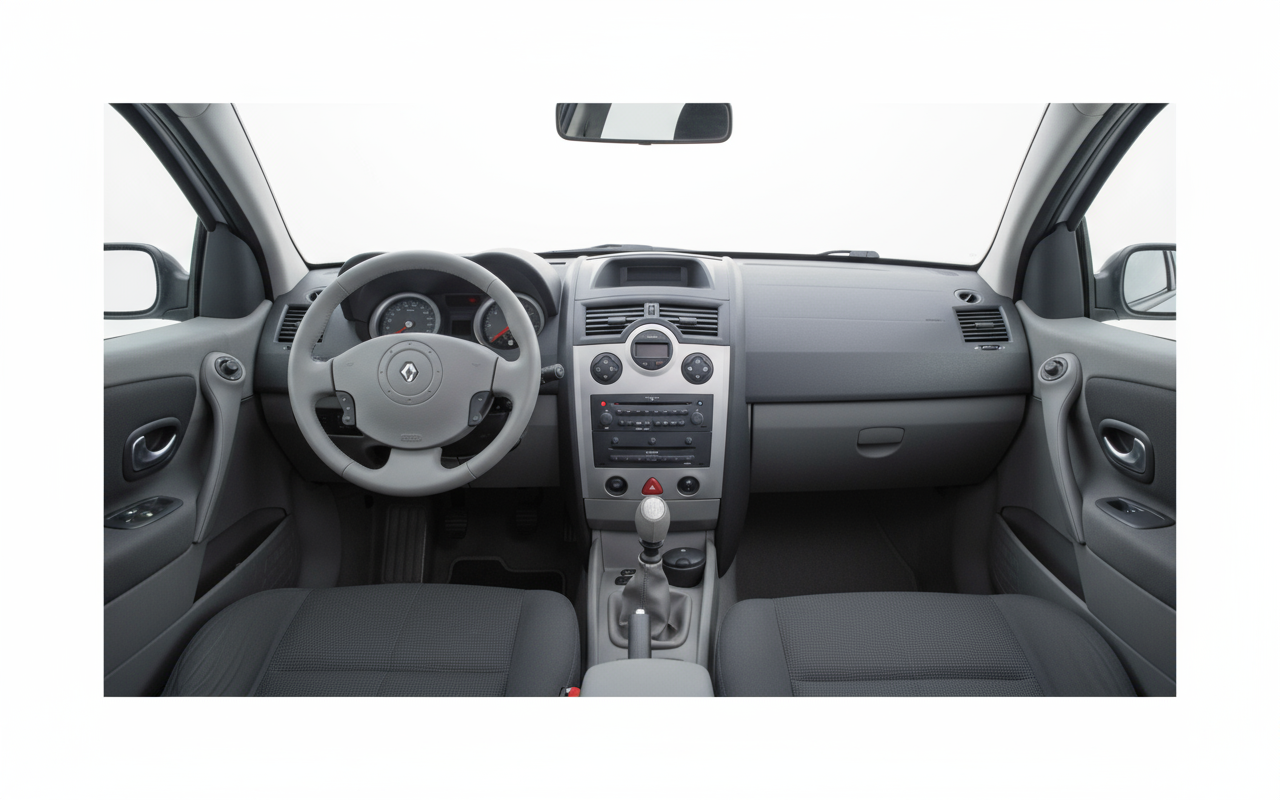
The design of the 2003 Renault Mégane was, without a doubt, one of its most distinctive and controversial points. Its 5-door silhouette, with a raised rear and an almost vertical tailgate, broke with the traditional lines of compact cars of the time. The large, expressive headlights, along with a discreet grille, gave it a unique personality. Inside, the commitment to originality continued with a fluid dashboard and digital instrumentation that, for many, was ahead of its time. The materials, though not luxurious, were pleasant to the touch and the assembly conveyed solidity. It was a car that did not leave anyone indifferent, loved by some and criticized by others, but always recognizable.
Technology and features
At the time, the Renault Mégane incorporated interesting technological solutions. The 1.5 dCi engine with common rail direct injection, variable geometry turbo, and intercooler, was an example of diesel efficiency. The 4-speed automatic transmission, although basic by current standards, offered driving comfort. In the cabin, the digital instrumentation and the hands-free card for starting (depending on the equipment level) were details that differentiated it from its competitors. In terms of safety, it had disc brakes on both axles (ventilated at the front) and a structure designed to protect occupants, which earned it good scores in crash tests of the time.
Competition
In the competitive compact segment, the 2003 Renault Mégane faced tough rivals. Among them stood out the Volkswagen Golf, with its reputation for solidity and quality; the Ford Focus, known for its driving dynamics; the Opel Astra, which offered a good balance between comfort and equipment; and the Peugeot 307, with its elegant design and spacious interior. Each of them presented their own strengths, but the Mégane stood out with its bold design and a focus on user comfort and technology.
Conclusion
The 2003 Renault Mégane 5p 1.5 dCi was a car that marked an era for Renault, daring with a groundbreaking design and offering a balance between comfort, efficiency, and technology. Although its performance was not the sportiest, its smooth ride and low consumption made it a very attractive option for everyday use. A vehicle that, despite the years, remains a testament to Renault's audacity in design and engineering.