
Especificaciones y análisis del Renault Mégane
Power
86HP
Torque
200Nm
Consumption
4.6l/100
Emissions
-g/km
0-100 km/h
14.3s
Top Speed
170km/h
Weight
1250kg
Price
16,145€
Technical summary
Gasóleo
Manual 5v
FWD
5 / 3 doors
330 L
60 L
63 kW
Current
Technical specifications
Engine
Capacities
Detailed analysis of the Renault Megane 3p 1.5 dCi 85 CV Confort Expression (2005-2006)
General description
The 2003 Renault Mégane, in its 3-door version with the 1.5 dCi 86 hp engine, was presented as an attractive and balanced option in the compact segment. With a price of 16,145 euros at its launch, this model sought to conquer a public that valued efficiency and a distinctive design. Its diesel engine, known for its low consumption, made it an ideal companion for everyday use, offering a comfortable and economical driving experience.
Driving experience
Behind the wheel of the Mégane 1.5 dCi 86 hp, the predominant sensation was one of smoothness and efficiency. The engine, although not outstanding for overwhelming power, offered an adequate response for urban and road driving, with a torque of 200 Nm available at low revolutions, facilitating overtakes and recoveries. The suspension, McPherson type on the front axle and trailing arm with torsional element on the rear, provided a good balance between comfort and stability, absorbing road irregularities with solvency. The rack-and-pinion steering offered assistance that, without being excessively direct, allowed for easy maneuvering. In general, the driving experience was relaxed and predictable, ideal for those looking for a practical car without great sporting pretensions.
Design and aesthetics
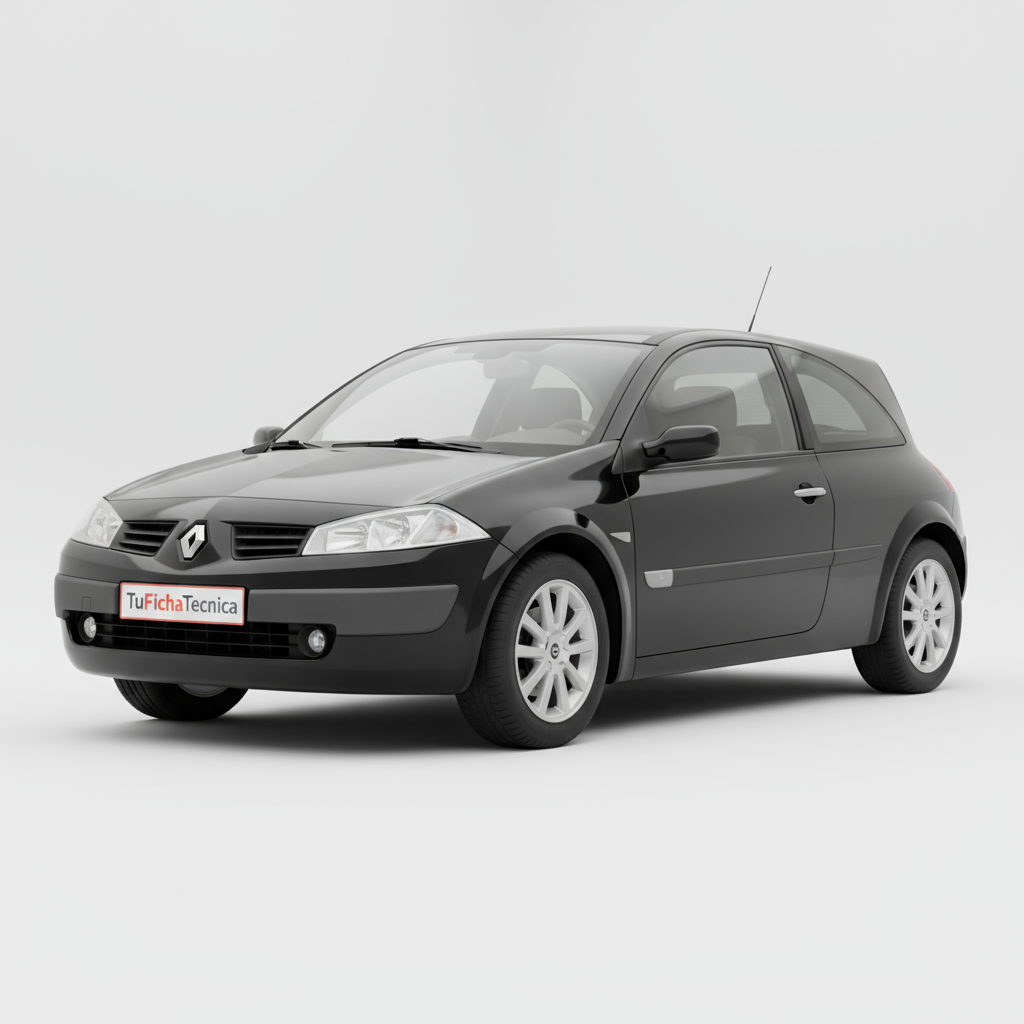
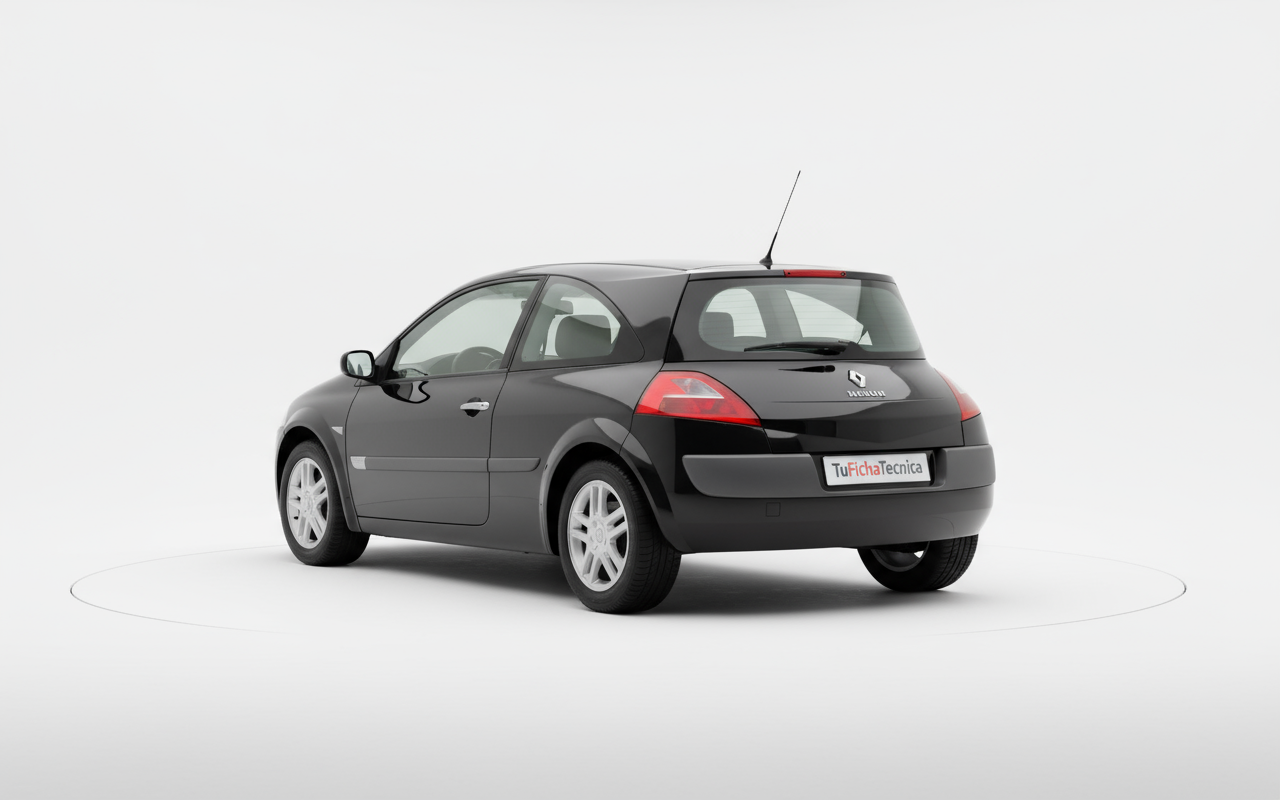
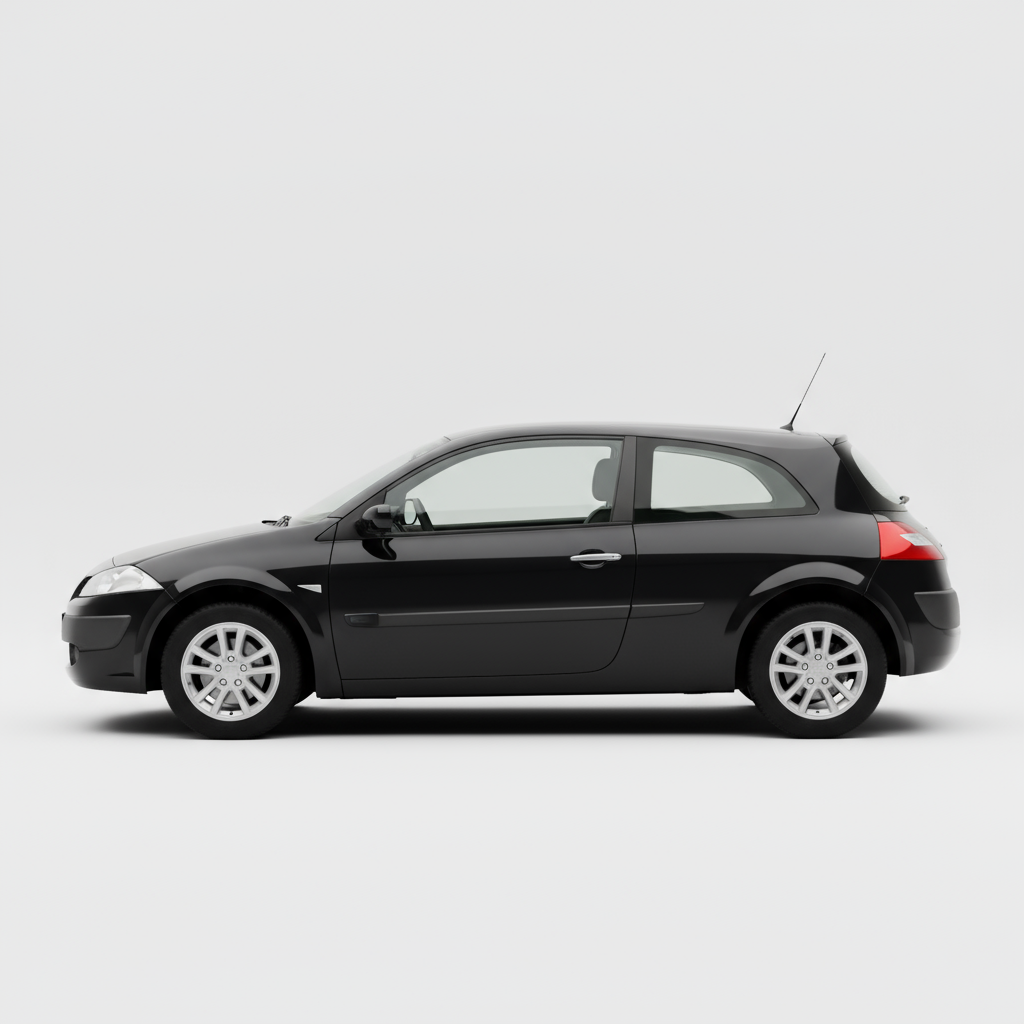
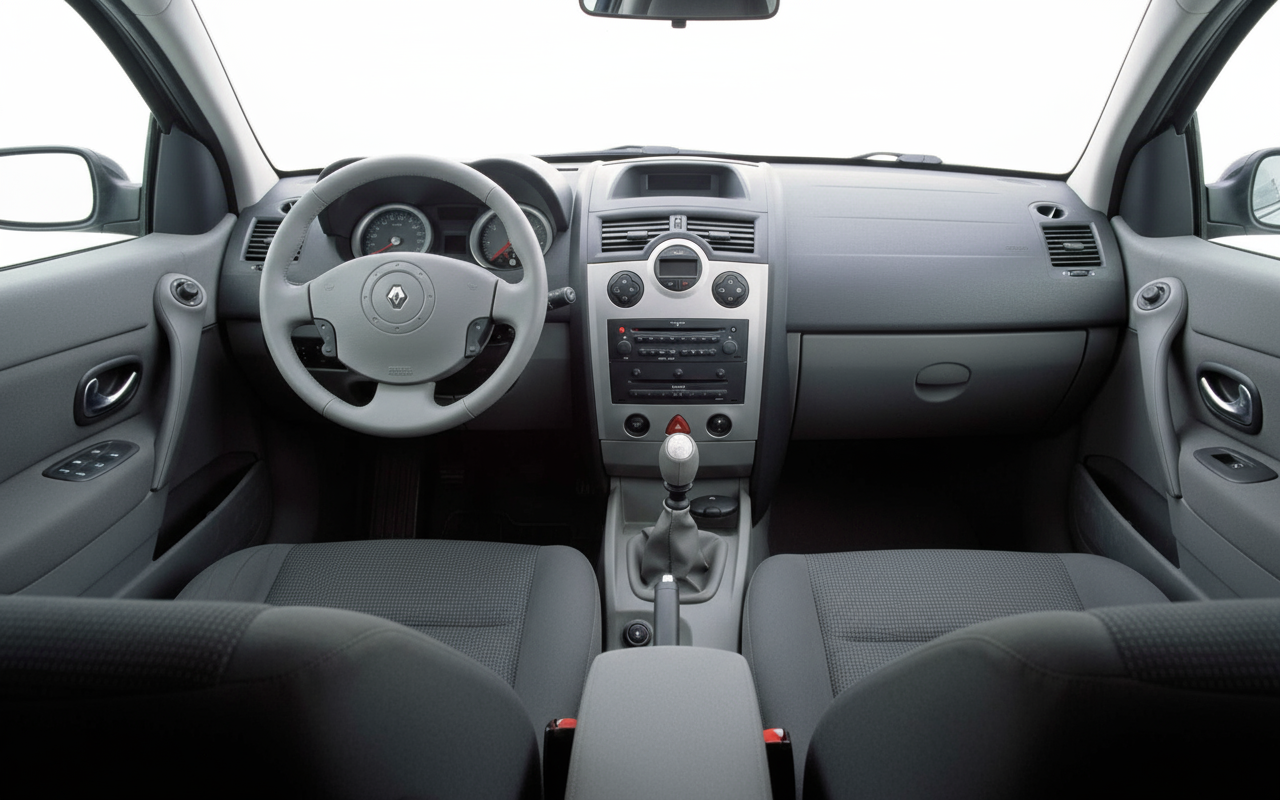
The design of the 2003 Renault Mégane was, without a doubt, one of its most controversial and at the same time distinctive points. The 3-door version further accentuated its 'duck tail' silhouette, with a raised rear and a very marked tailgate that broke with what was established in the segment. The large, organically shaped headlights were integrated into a front that conveyed modernity. Inside, the design was functional and ergonomic, with a dashboard of soft lines and clear instrumentation. The materials, although not luxurious, offered a good perceived quality and the adjustments were correct, creating a cozy and practical environment for the occupants.
Technology and features
In terms of technology, the 2003 Mégane incorporated solutions that, for its time, were quite advanced. The 1.5 dCi engine stood out for its common rail direct injection, turbo, and intercooler, which allowed it to offer good performance with adjusted consumption. In terms of safety, it had 280 mm ventilated disc brakes on the front axle and 240 mm discs on the rear, guaranteeing effective braking. Although details on driving assistance systems are not specified, Renault was already betting on elements such as ABS and multiple airbags in its models. The 5-speed manual transmission was precise and contributed to the overall efficiency of the vehicle.
Competition
The Renault Mégane 1.5 dCi 86 hp faced tough competition in the compact segment. Among its main rivals were models such as the Volkswagen Golf, Ford Focus, Opel Astra, Peugeot 307, and Citroën C4. Each of them offered their own virtues, whether in design, performance, or equipment. The Mégane differentiated itself by its daring design, its ride comfort, and the efficiency of its diesel engine, seeking a niche among those who valued originality and low running costs.
Conclusion
The 2003 Renault Mégane in its 1.5 dCi 86 hp version was a car that left its mark. Its polarizing design, ride comfort, and efficient diesel engine made it a very interesting option for a wide range of drivers. Although its 0 to 100 km/h acceleration in 14.3 seconds did not make it a speed demon, its combined consumption of 4.6 l/100km and its top speed of 170 km/h positioned it as a practical and economical vehicle for daily use and long journeys. It was a car that, despite its aesthetic peculiarities, managed to win the hearts of many for its balance and functionality.