
Especificaciones y análisis del Renault Grand Scénic
Power
101HP
Torque
200Nm
Consumption
5.3l/100
Emissions
-g/km
0-100 km/h
14.3s
Top Speed
172km/h
Weight
1540kg
Price
23,030€
Technical summary
Gasóleo
Manual 5v
FWD
7 / 5 doors
409 L
60 L
74 kW
Current
Technical specifications
Engine
Capacities
Detailed analysis of the Renault Grand Scenic 1.5 dCi 100CV Luxe Dynamique (2004-2005)
General description
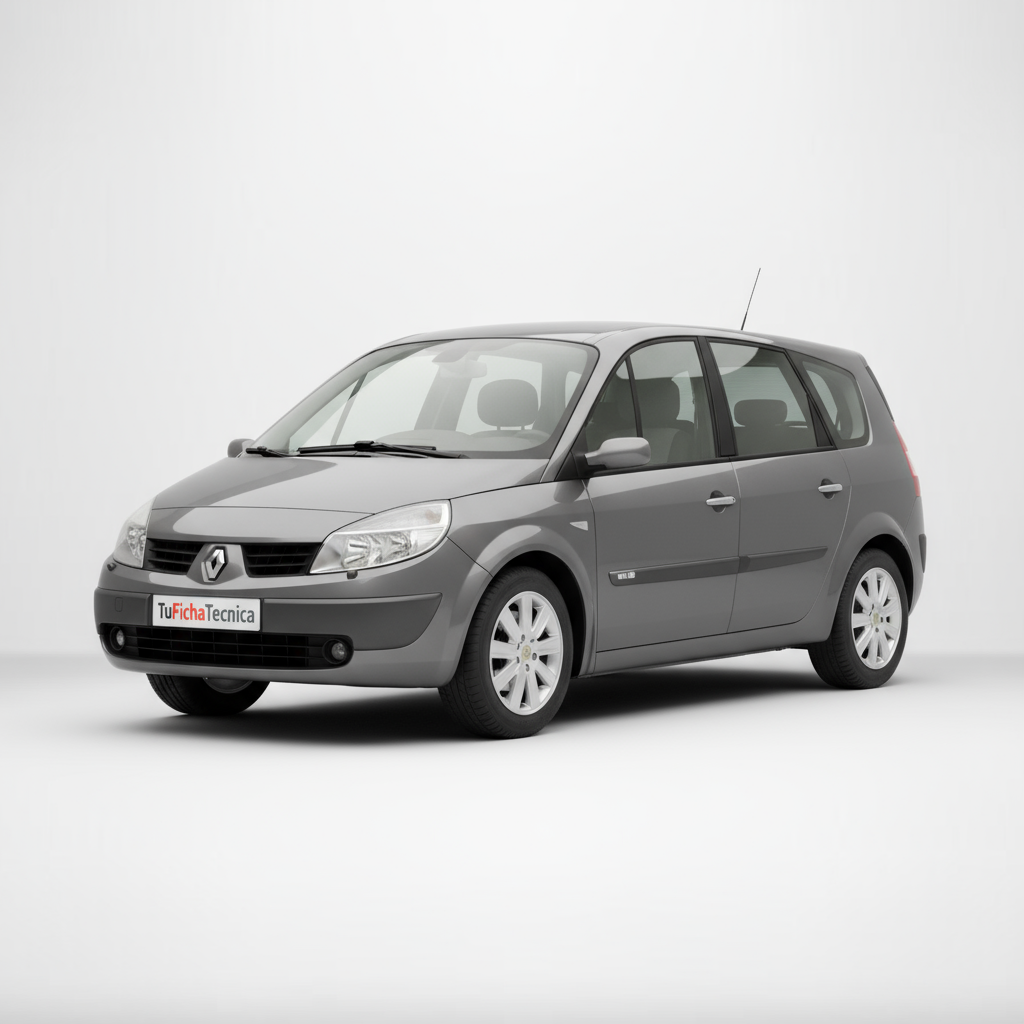
The 2004 Renault Grand Scénic, in its 1.5 dCi 100 HP Luxe Dynamique version, is presented as a family minivan that seeks to combine functionality with a touch of distinction. With a price of €23,030, this vehicle was positioned as an attractive option for families who needed space and versatility, without giving up complete equipment and an efficient diesel engine for its time.
Driving experience
Behind the wheel of the Grand Scénic, the predominant feeling is one of comfort and ease of handling. Its 101 HP 1.5 dCi engine, although not an outpouring of power, offers an adequate response for daily use and family trips, with a torque of 200 Nm that is felt from low revolutions. Acceleration from 0 to 100 km/h in 14.3 seconds and a top speed of 172 km/h place it in an acceptable range for its segment. The suspension, McPherson type at the front and trailing arm with torsion element at the rear, is designed to absorb road irregularities, providing a smooth ride for all occupants. Electric power steering contributes to light and comfortable driving, ideal for maneuvering in the city. The combined consumption of 5.3 l/100km is a strong point, promising good autonomy and contained running costs.
Design and aesthetics
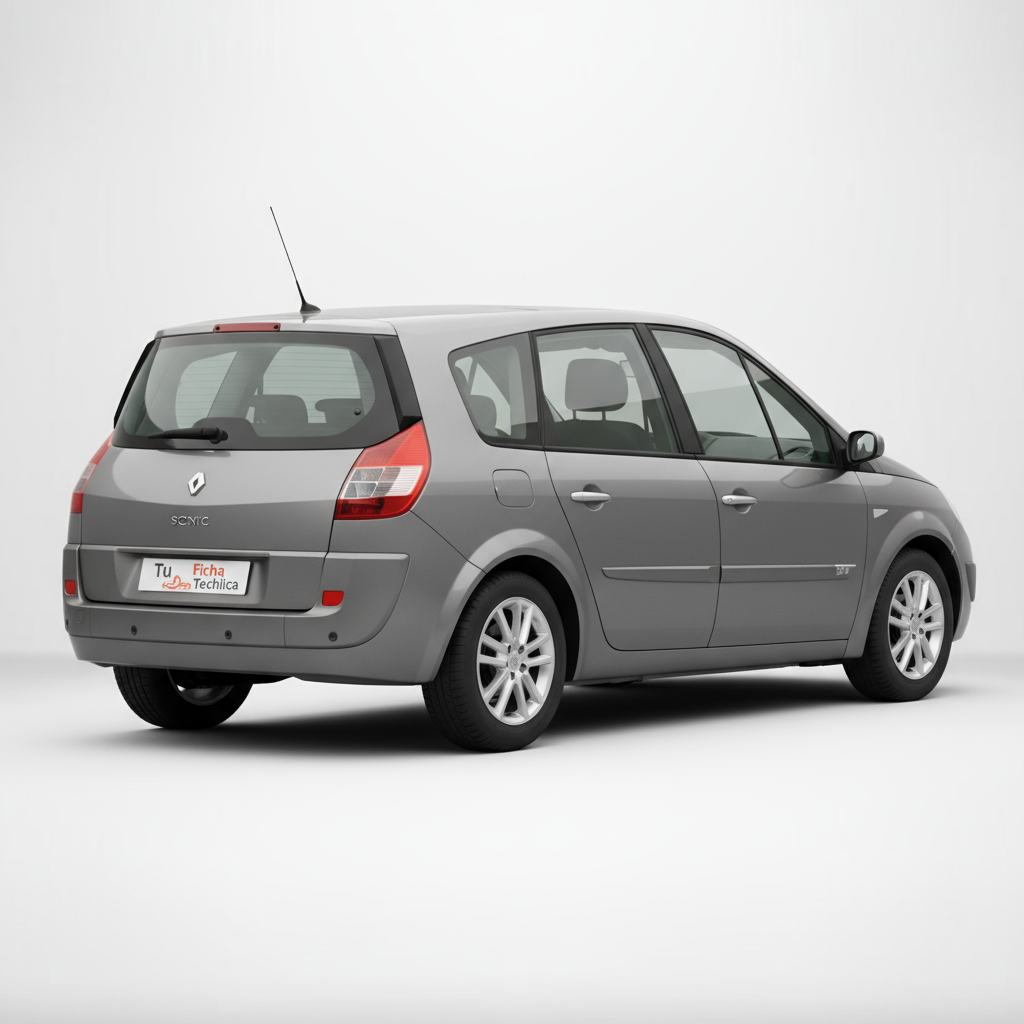
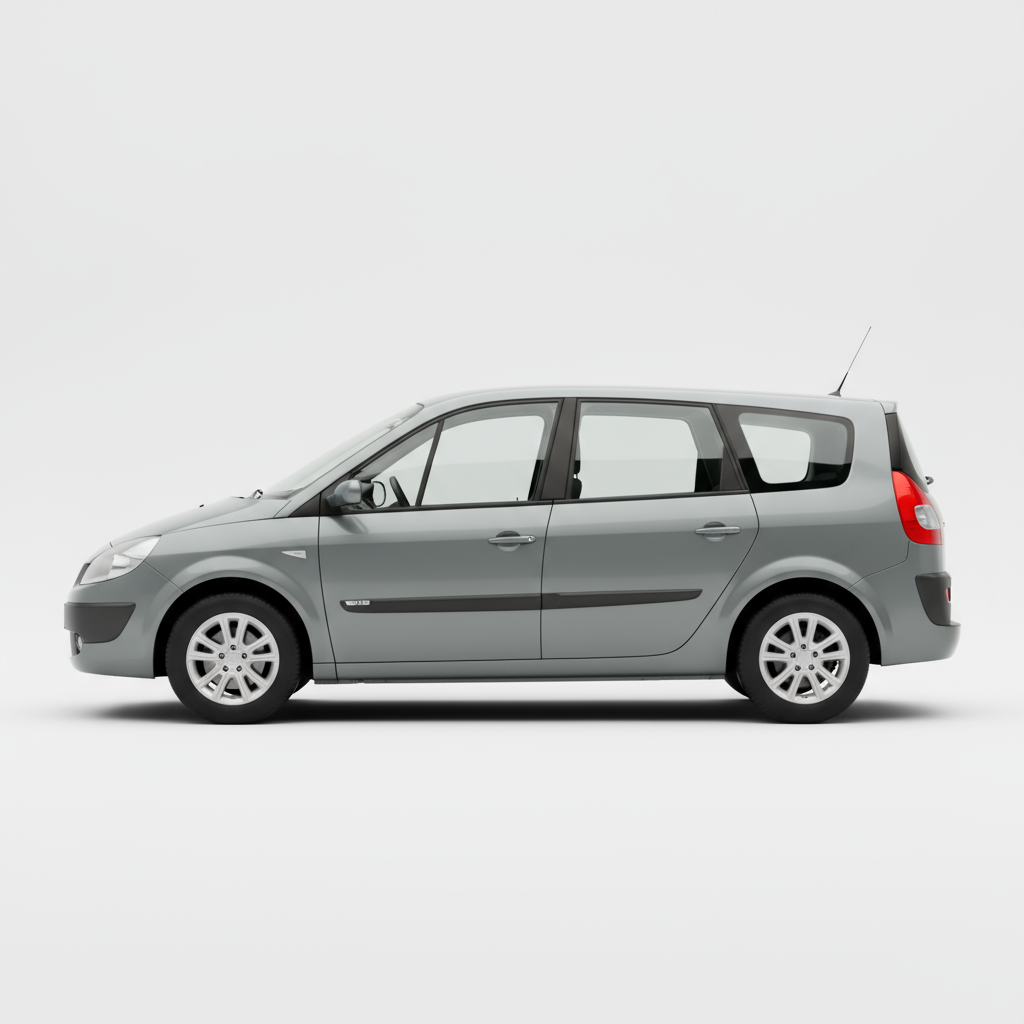
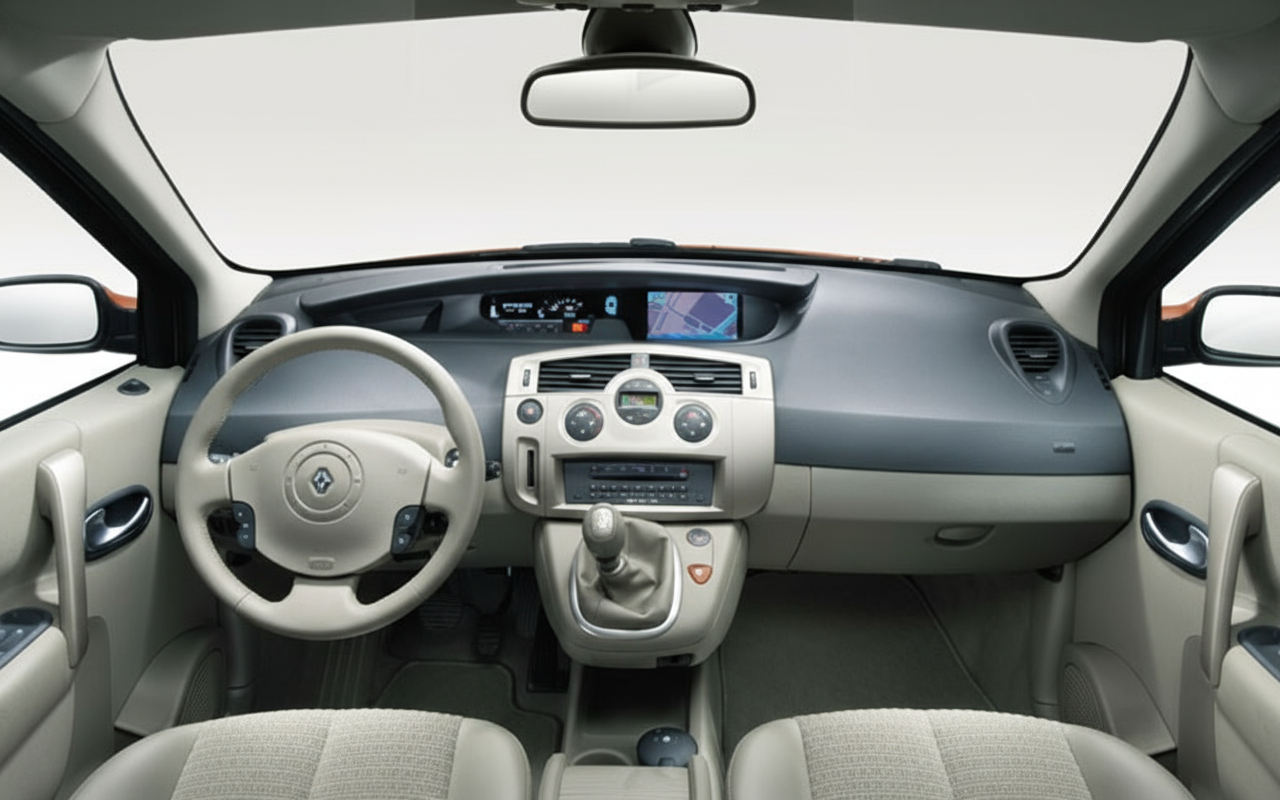
The design of the 2004 Renault Grand Scénic is characterized by its soft and rounded lines, typical of minivans of the era, but with an extended length of 4493 mm that gives it a more imposing presence. Its 5 doors and 7 seats make it an eminently practical vehicle. The interior, with its 7-seat configuration, is designed to maximize space and modularity, offering a 409-liter trunk that can be expanded by folding down the seats. The exterior aesthetic, although functional, seeks a balance with details that give it its own personality, such as its headlights and the shape of its bodywork, which prioritize habitability and visibility.
Technology and features
In the technological section, the 2004 Grand Scénic incorporated practical solutions for its time. Its 1.5 dCi engine with common rail direct injection, variable geometry turbo, and intercooler was an example of diesel efficiency. The 5-speed manual transmission, together with the dry single-disc clutch, offered reliable operation. In terms of safety, it had ventilated disc brakes of 300 mm at the front and 274 mm discs at the rear, guaranteeing adequate braking capacity. Electric power steering was an advance that improved the driving experience. Although it did not have the latest innovations in connectivity or driving assistants that we see today, its equipment was focused on the comfort and safety of the occupants.
Competition
In the competitive segment of 7-seater compact minivans, the 2004 Renault Grand Scénic faced tough rivals such as the Citroën Grand C4 Picasso, the Opel Zafira, or the Ford Grand C-MAX. Each of them offered their own virtues in terms of space, modularity, and equipment, but the Grand Scénic stood out for its ride comfort, its efficient diesel engine, and its interior design focused on family versatility.
Conclusion
The 2004 Renault Grand Scénic 1.5 dCi 100HP Luxe Dynamique was a vehicle that managed to win over families looking for a spacious, comfortable car with reasonable running costs. Its balance between functionality, comfort, and efficiency made it a very attractive option in its segment. Although years have passed, its concept of a family minivan is still relevant for those who value space and practicality above all else.