
Especificaciones y análisis del Renault Grand Espace
Power
173HP
Torque
360Nm
Consumption
7.3l/100
Emissions
193g/km
0-100 km/h
9.8s
Top Speed
204km/h
Weight
1855kg
Price
39,600€
Technical summary
Gasóleo
Manual 6v
FWD
6 / 5 doors
456 L
83 L
127 kW
Current
Technical specifications
Engine
Capacities
Detailed analysis of the Renault Grand Espace Exception 2.0 dCi 175 CV FAP (2008-2010)
General description
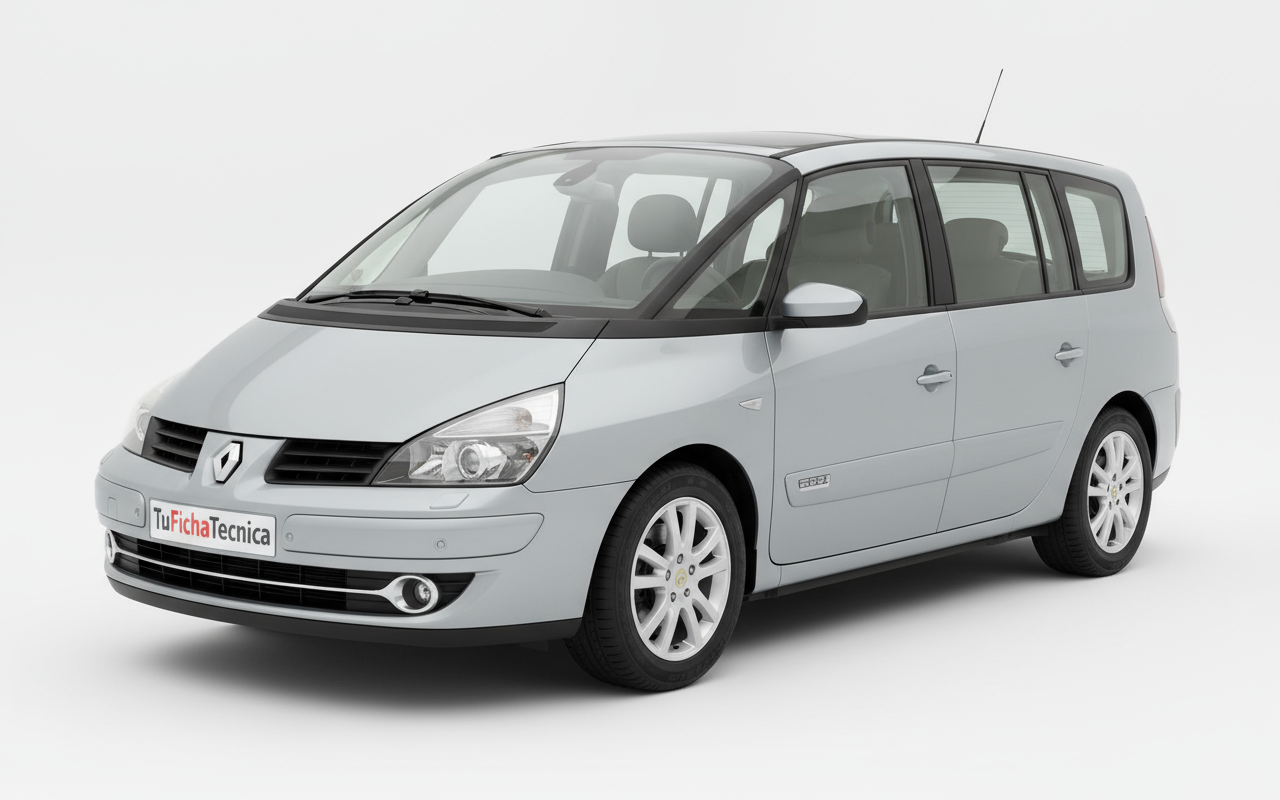
The 2006 Renault Grand Espace, in its Exception 2.0 dCi 175 hp version, is presented as a family minivan that seeks to combine space, comfort, and a touch of distinction. Priced at 39,600 euros at the time, this vehicle positioned itself as an interesting option for families who needed ample space and versatility without sacrificing a powerful and efficient diesel engine.
Driving experience
Behind the wheel of the Grand Espace, the predominant sensation is one of poise and comfort. The 2.0 dCi 173 hp engine, with its generous torque of 360 Nm from low revolutions, offers an energetic and smooth response, ideal for long journeys and safe overtakes. The 6-speed manual gearbox allows precise control, although its feel may not be the sportiest. The suspension, McPherson type at the front and rigid axle at the rear, is comfort-oriented, absorbing terrain irregularities well, which translates into a pleasant ride for all occupants. The rack-and-pinion steering performs its function without standing out for great precision, but it is adequate for a vehicle of these characteristics. In general, the driving experience is relaxed and safe, inviting you to devour kilometers with peace of mind.
Design and aesthetics
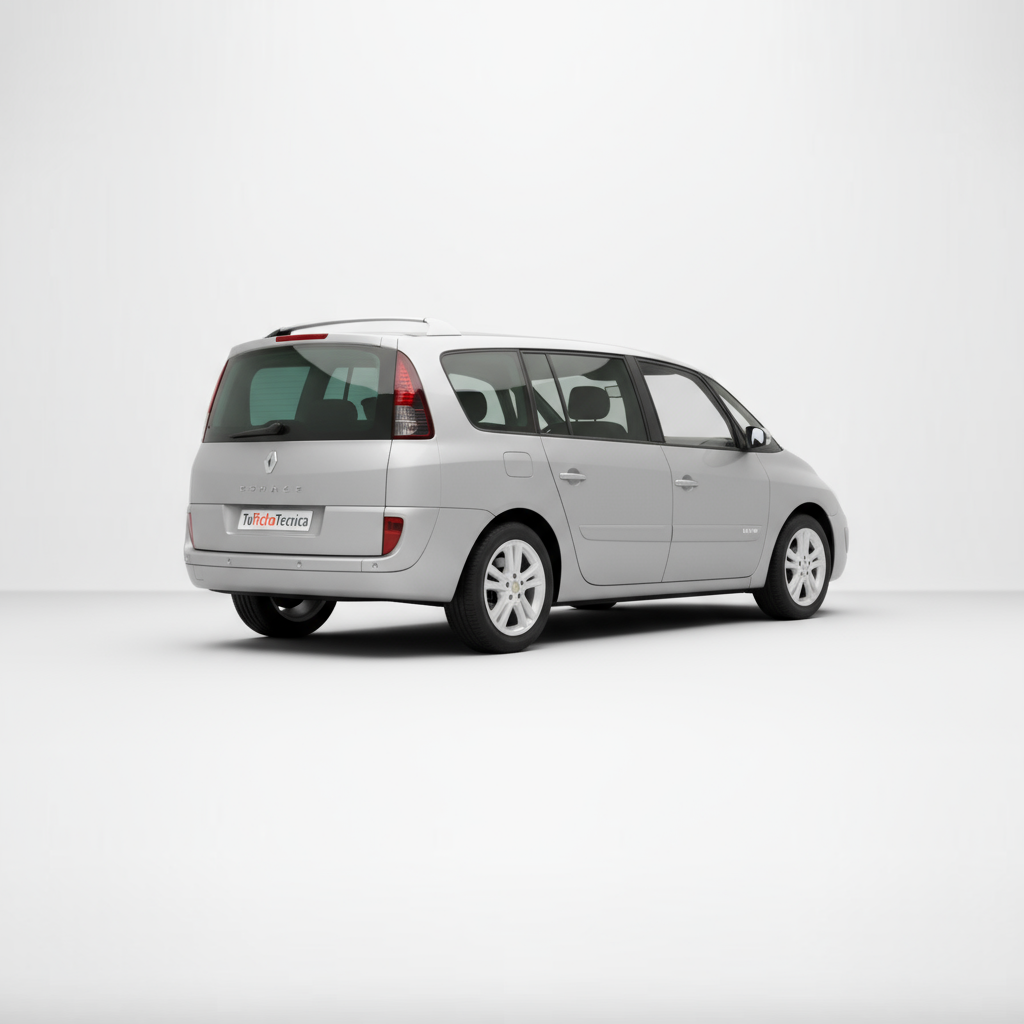
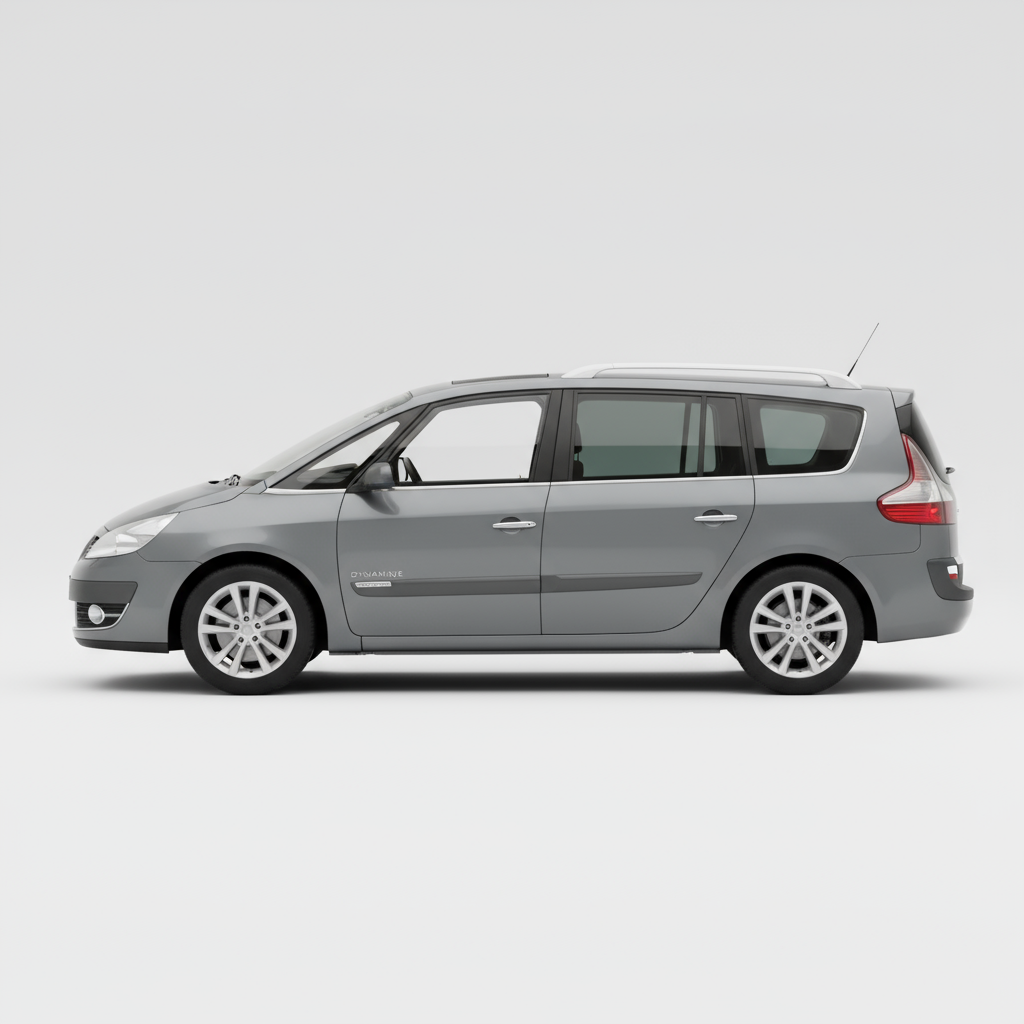
The design of the 2006 Renault Grand Espace maintains the essence of the Espace family, with a silhouette that prioritizes interior space and functionality. Its 4,856 mm length and 1,860 mm width give it an imposing presence on the road. The lines are fluid and rounded, seeking a modern and timeless aesthetic. Inside, the seating arrangement, with capacity for 6 occupants, is modular and allows multiple configurations, adapting to the needs of each moment. The trunk, with 456 liters, is spacious and functional. Visibility is excellent thanks to its large glazed surface, which contributes to a feeling of light and spaciousness in the cabin. Although it is not a design that seeks sportiness, its discreet elegance and practical approach make it attractive to its target audience.
Technology and features
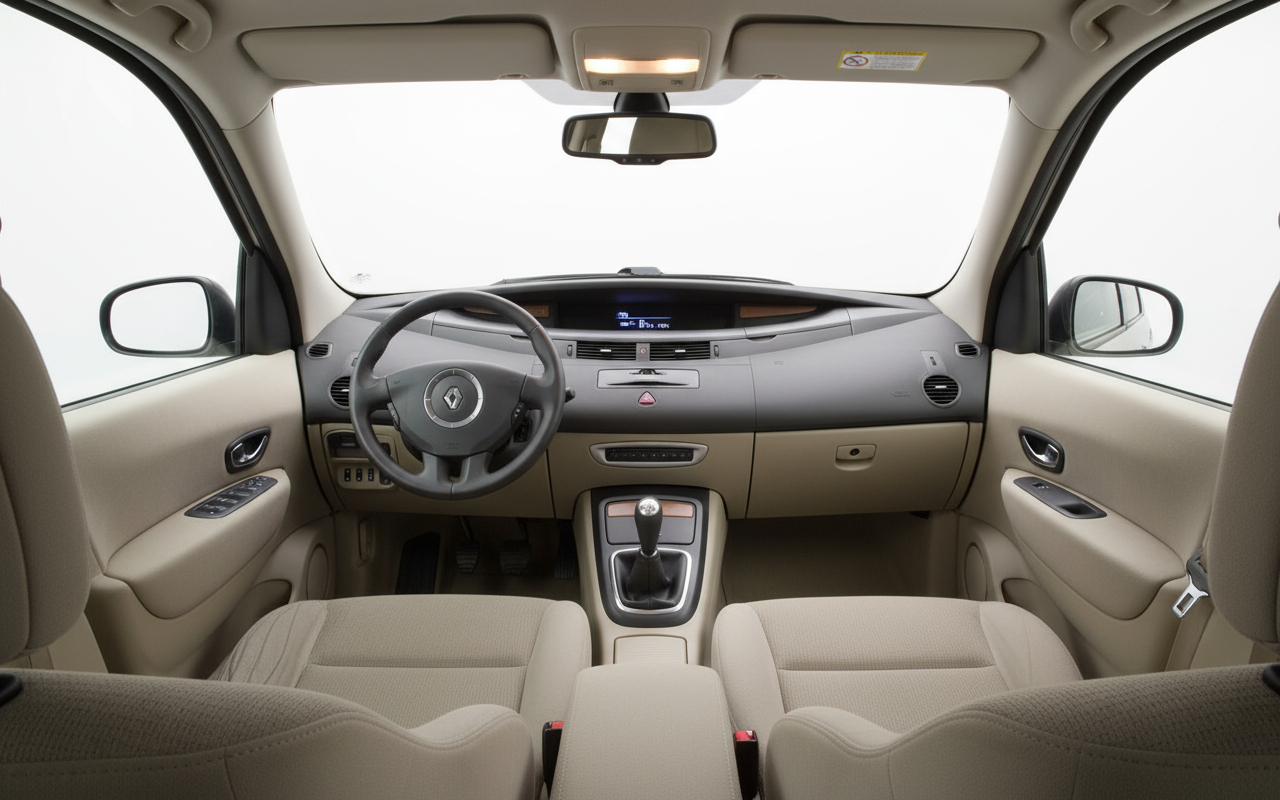
In terms of technology, the 2006 Grand Espace incorporated solutions that sought to improve safety and comfort. The 2.0 dCi 173 hp engine with common rail direct injection, variable geometry turbo, and intercooler, was an advanced powertrain for its time, offering a good balance between performance and consumption. The presence of a particulate filter (FAP) demonstrated a commitment to emission regulations. In terms of safety, it had ventilated disc brakes of 324 mm at the front and 300 mm discs at the rear, ensuring good braking capacity. Although advanced driving assistance systems are not specified, it was expected to include the usual active and passive safety elements in vehicles of its category and price at that time. The instrumentation, although digital, was clear and functional, and the infotainment system, although not as sophisticated as current ones, met the expectations of the era.
Competition
In the segment of large minivans, the Renault Grand Espace competed with models such as the Ford Galaxy, the Volkswagen Sharan, the Chrysler Grand Voyager, or the Lancia Phedra. Each of them offered their own virtues, but the Grand Espace stood out for its distinctive design, its ride comfort, and the modularity of its interior. Compared to its rivals, the Espace offered a balanced proposal, with a powerful diesel engine and a spacious and well-finished cabin, although perhaps not as dynamic as some of its German competitors.
Conclusion
The 2006 Renault Grand Espace Exception 2.0 dCi 175 hp is a minivan that more than fulfills its purpose: to offer comfortable, spacious, and safe family transport. Its diesel engine is a success, providing the necessary power to move its 1,855 kg weight with ease, with a combined consumption of 7.3 l/100km which, for its size and era, is reasonable. Its design, although not risky, is functional and elegant, and its interior stands out for its versatility and comfort. It is a car designed to enjoy family trips, where space and tranquility are priorities. Despite its age, it remains an interesting option in the used car market for those looking for a robust and reliable family vehicle.