
Especificaciones y análisis del Renault Grand Espace
Power
150HP
Torque
340Nm
Consumption
7.2l/100
Emissions
190g/km
0-100 km/h
10.6s
Top Speed
194km/h
Weight
1832kg
Price
37,400€
Technical summary
Gasóleo
Manual 6v
FWD
6 / 5 doors
456 L
83 L
110 kW
Current
Technical specifications
Engine
Capacities
Detailed analysis of the Renault Grand Espace Exception 2.0 dCi 150 CV (2008-2010)
General description
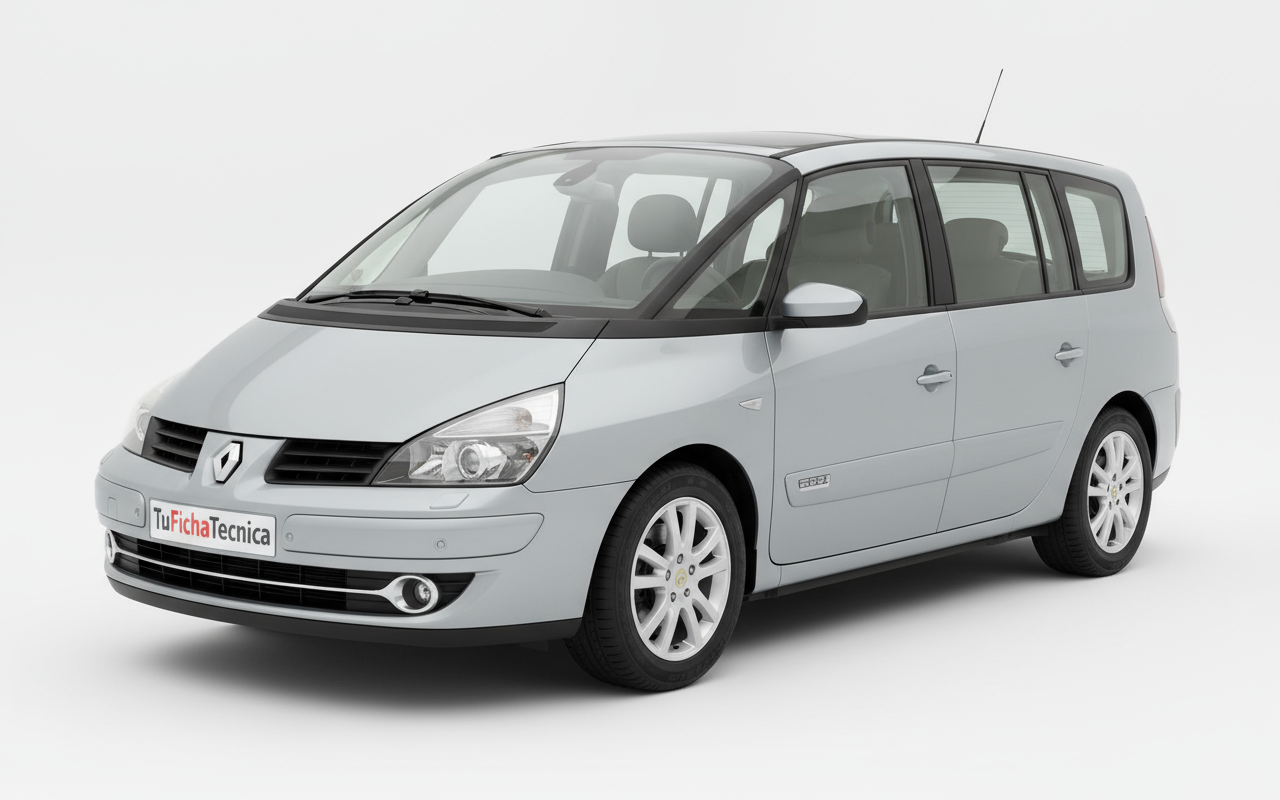
The 2006 Renault Grand Espace, in its Exception 2.0 dCi 150 hp version, is presented as a family minivan that seeks to combine space, comfort, and a touch of distinction. With its generous dimensions and an efficient diesel engine, this vehicle is positioned as an interesting option for those who need spaciousness without giving up a certain dynamism in driving. Its design, although already a few years old, still projects a robust and functional image, designed for family life and long journeys.
Driving experience
Behind the wheel of the Grand Espace, the predominant feeling is one of spaciousness and comfort. The 150 hp 2.0 dCi engine offers an adequate response to move its almost two tons of weight with ease, especially on the road. The 6-speed manual gearbox allows precise control of power, although it is not a car that invites sporty driving. The suspension, McPherson type at the front and rigid axle at the rear, is oriented towards comfort, absorbing road irregularities well. In curves, its size and height are noticeable, but overall stability is good. The rack-and-pinion steering, although without variable assistance, fulfills its function, offering a relaxed and safe driving experience, ideal for long family trips.
Design and aesthetics
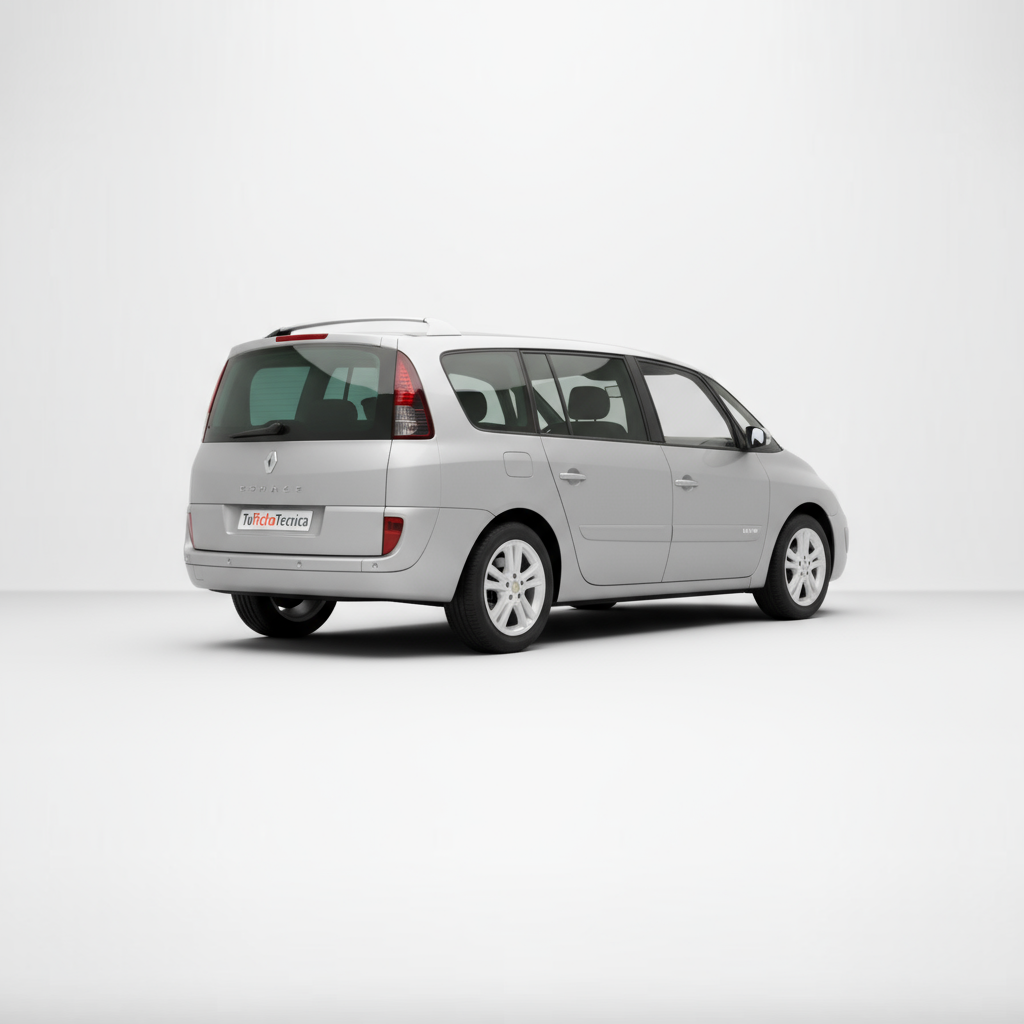
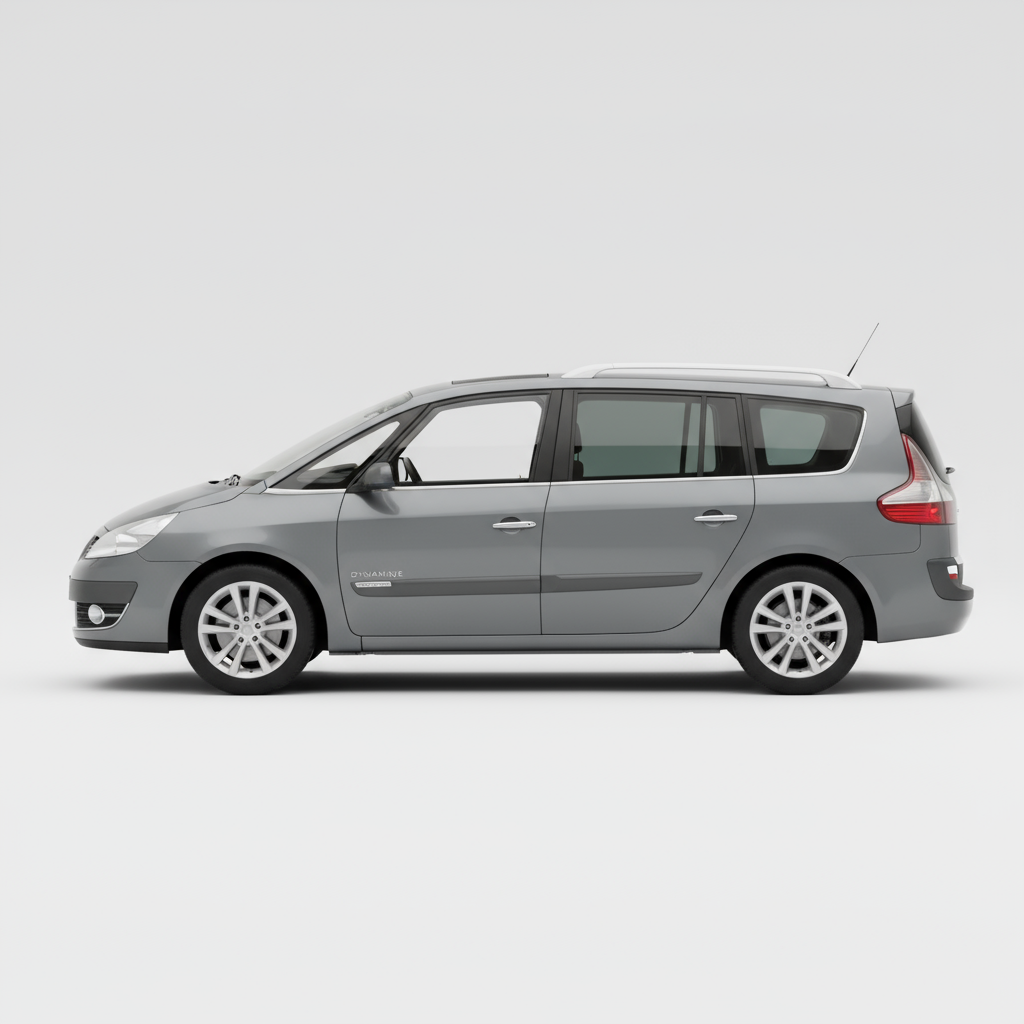
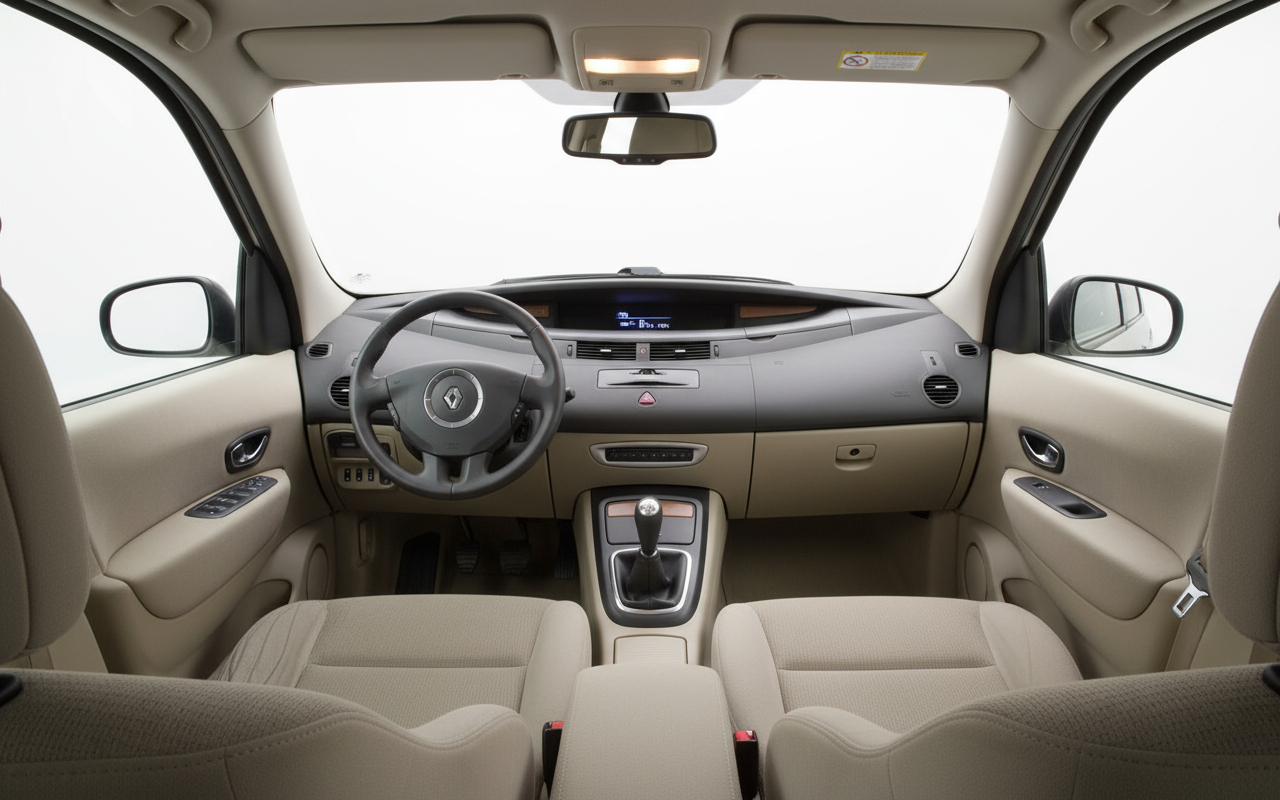
The design of the 2006 Renault Grand Espace is a clear example of the minivan aesthetic of the era, with soft lines and a silhouette that prioritizes interior space. Its 4.86 meters in length and 1.86 meters in width give it an imposing presence on the road. The large glazed surfaces contribute to a feeling of luminosity in the cabin. Although it is not a design that seeks aggressiveness, its front with elongated headlights and the characteristic Renault grille give it a recognizable personality. The 17-inch wheels with 225/55 R17 tires complement its image, adding a touch of robustness. Inside, the seat arrangement and modularity are key, with capacity for 6 occupants and a 456-liter trunk, expandable by folding down the seats.
Technology and features
In terms of technology, the 2006 Grand Espace incorporates elements that, for its time, were quite advanced. The 150 hp 2.0 dCi engine features common rail direct injection, variable geometry turbo, and intercooler, which allows it to offer a good balance between performance and consumption. The 6-speed manual transmission is a standard in vehicles of this segment. In terms of safety, it has ventilated disc brakes of 324 mm at the front and 300 mm discs at the rear, guaranteeing good braking capacity. Although modern driving assistance systems are not specified, it is expected that it would have the usual active and passive safety systems in vehicles of its category and price at that time. Its environmental label B reflects its diesel technology of the era.
Competition
In the competitive segment of large minivans, the 2006 Renault Grand Espace faced tough rivals such as the Ford Galaxy, the Volkswagen Sharan, the SEAT Alhambra, or the Chrysler Grand Voyager. Each of them offered its own virtues, whether in modularity, equipment, or price. The Grand Espace stood out for its ride comfort, its innovative interior design, and its 150 hp diesel engine, which offered a good compromise between performance and efficiency. Compared to its competitors, the Grand Espace sought to differentiate itself with a focus more on occupant well-being and a distinctive aesthetic, although perhaps not as conservative as some of its German rivals.
Conclusion
The 2006 Renault Grand Espace Exception 2.0 dCi 150 hp is a minivan that, despite the passage of time, remains an option to consider for families who value space, comfort, and versatility. Its diesel engine offers adequate performance and reasonable consumption for its size, while its interior design is designed to maximize habitability. Although it is not a car for strong emotions, its driving is pleasant and safe, ideal for long journeys. It represents an era when minivans were the kings of the road for families, offering practical solutions and a welcoming environment for all its occupants.