

Especificaciones y análisis del Renault Clio
Power
75HP
Torque
105Nm
Consumption
6.2l/100
Emissions
-g/km
0-100 km/h
12.1s
Top Speed
170km/h
Weight
930kg
Price
10,550€
Technical summary
Gasolina
Manual 5v
FWD
5 / 5 doors
255 L
50 L
55 kW
Current
Technical specifications
Engine
Capacities
Detailed analysis of the Renault Clio 5p 1.2 16v Tech Far · 75 CV (2001)
General description
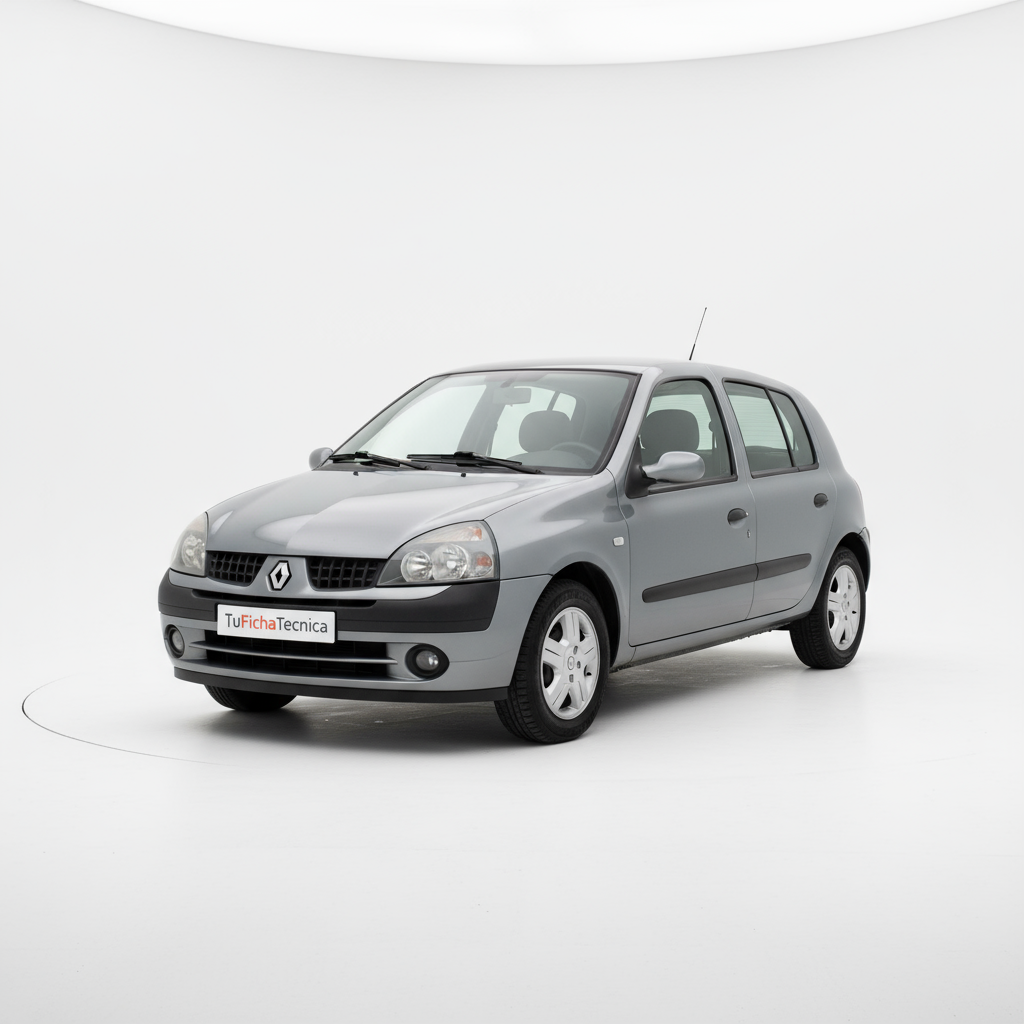
The 1998 Renault Clio, in its 5-door version with the 1.2 16v Tech Far engine, is presented as a compact utility vehicle that, despite its size, seeks to offer a balanced and functional driving experience. Priced at €10,550 at its launch in 2001, this model was positioned as an accessible option for those looking for an urban vehicle with the versatility of five doors.
Driving experience
Behind the wheel of the Clio 1.2 16v, the sensation is one of agility in the urban environment. Its 75 HP, extracted from a 1,149 cc engine, allow for an acceleration from 0 to 100 km/h in 12.1 seconds and a top speed of 170 km/h, adequate figures for daily use. The rack-and-pinion steering, although without variable assistance, offers a direct response. The suspension, McPherson type at the front and trailing arm with torsional element at the rear, seeks a compromise between comfort and stability, absorbing road irregularities without sacrificing too much composure on the road. The combined consumption of 6.2 l/100km makes it an economical companion for the routine.
Design and aesthetics
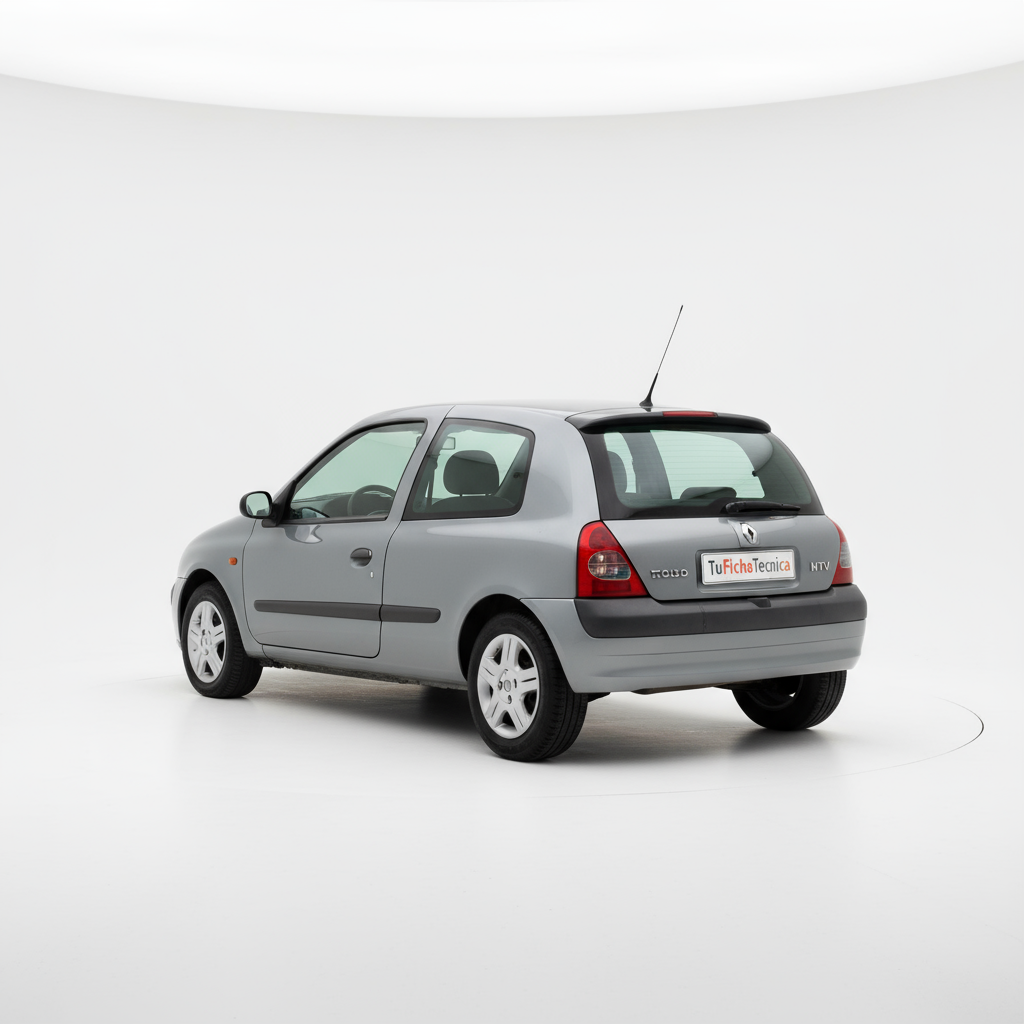
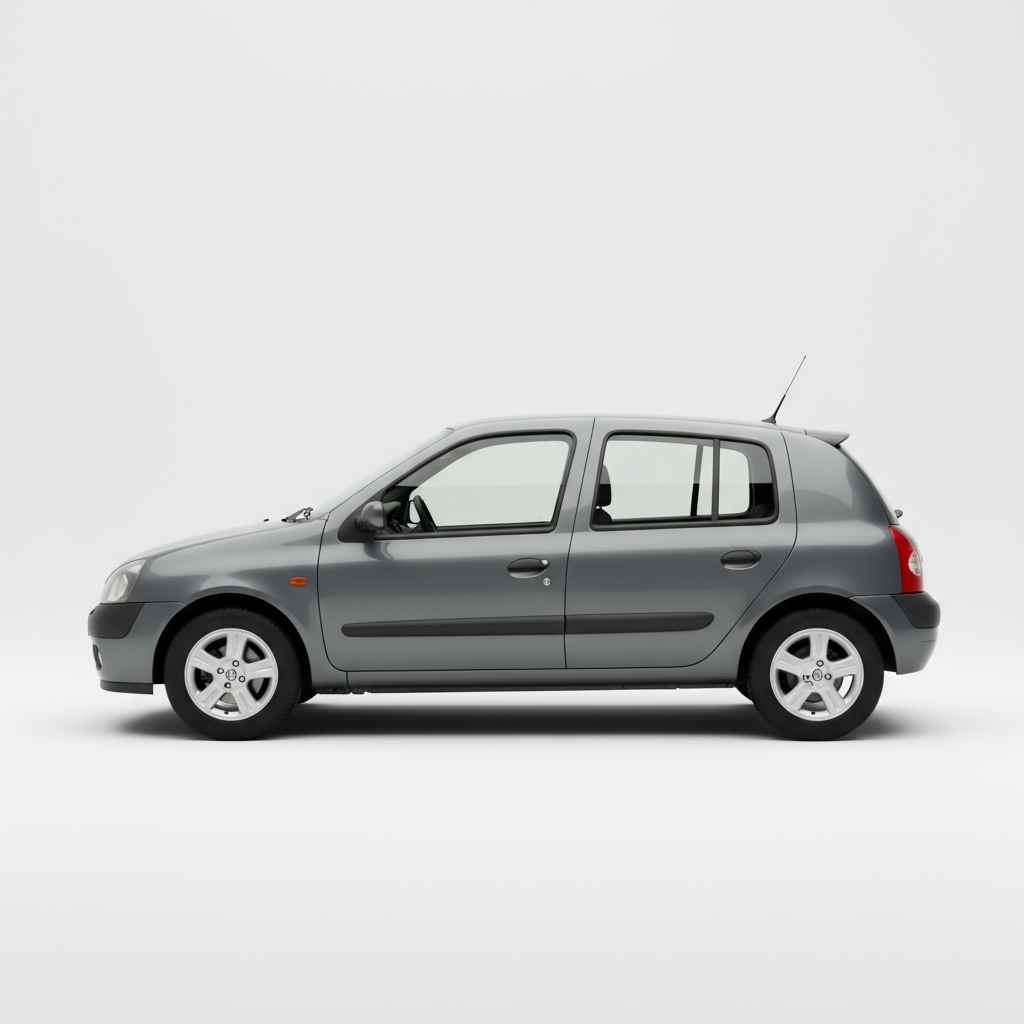
The design of the 1998 Renault Clio is a reflection of the late 90s and early 2000s aesthetic. Its lines are soft and rounded, with a compact silhouette that emphasizes its urban character. The five doors give it remarkable practicality, facilitating access to the rear seats and the 255-liter trunk. Its dimensions, with 3,773 mm long, 1,639 mm wide, and 1,417 mm high, make it manageable in the city, while its 2,472 mm wheelbase contributes to a reasonably spacious cabin for its segment. The 14-inch wheels with 175/60 R14 tires complete a simple but functional image.
Technology and features
In terms of technology, the 2001 Clio 1.2 16v Tech Far adheres to the essentials for the era. Its 4-cylinder, 16-valve gasoline engine, with indirect injection, prioritizes efficiency and reliability. The 5-speed manual transmission is a standard in its category, offering direct control over power. In terms of safety, it features front disc brakes and rear drum brakes, a common configuration for vehicles in its segment and year. The absence of advanced driving assistance systems is expected, reflecting the technology available at the time.
Competition
In the competitive utility vehicle segment, the Renault Clio 1.2 16v Tech Far faced tough rivals such as the Peugeot 206, the Volkswagen Polo, and the Opel Corsa. Each of them offered their own virtues in terms of design, equipment, and driving dynamics, which forced the Clio to stand out for its overall balance, practicality, and value for money. Its 75 HP engine placed it in an intermediate position, offering sufficient performance without significantly increasing consumption.
Conclusion
The 1998 Renault Clio 1.2 16v Tech Far is a car that, despite the passage of time, remains an example of a well-conceived utility vehicle. Its combination of an efficient engine, a practical five-door design, and compact dimensions make it a sensible option for urban mobility. Although it lacks the technological sophistication of current models, its mechanical simplicity and proven reliability make it attractive for those looking for a vehicle without great pretensions, but one that fulfills its purpose effectively and economically. It is a car that evokes the nostalgia of an era where functionality and accessibility were priorities.