


Especificaciones y análisis del Porsche 911
Power
320HP
Torque
370Nm
Consumption
11.1l/100
Emissions
-g/km
0-100 km/h
5.2s
Top Speed
285km/h
Weight
1490kg
Price
91,528€
Technical summary
Gasolina
Manual 6v
RWD
4 / 2 doors
130 L
64 L
235 kW
Current
Technical specifications
Engine
Capacities
Detailed analysis of the Porsche 911 Carrera Targa · 320 CV (2001-2004)
General description
The 2002 Porsche 911 Targa is an automotive gem that combines the sporty essence of the 911 with the versatility of a retractable roof. With its 3.6-liter, 320 hp engine, this model promises an exciting driving experience and unmistakable style. It's a car that, even two decades later, continues to capture glances and hearts, offering a blend of tradition and performance that few can match.
Driving experience
Getting behind the wheel of the 911 Targa is an experience that awakens all the senses. The six-cylinder boxer engine, located at the rear, emits a guttural sound that is pure symphony for speed lovers. The 0 to 100 km/h acceleration in 5.2 seconds pins you to the seat, while the top speed of 285 km/h reminds you that you are in a true sports car. The steering is precise, the front McPherson and rear deformable parallelogram suspension keeps you glued to the asphalt, and the ventilated disc brakes offer impressive stopping power. With the roof open, the connection with the environment intensifies, allowing the wind and the sound of the engine to envelop you in a dance of pure adrenaline. It's a car that makes you feel alive, that challenges you at every turn and rewards you with a smile.
Design and aesthetics
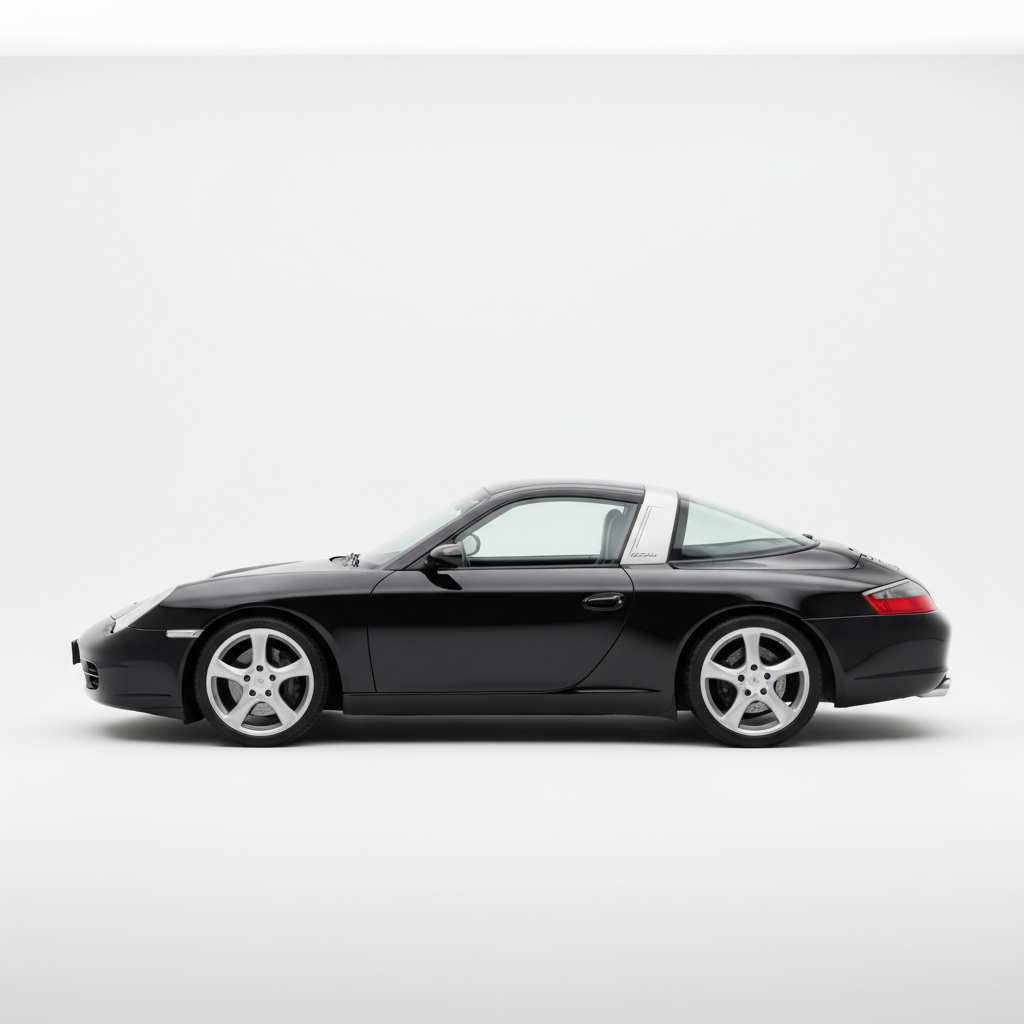
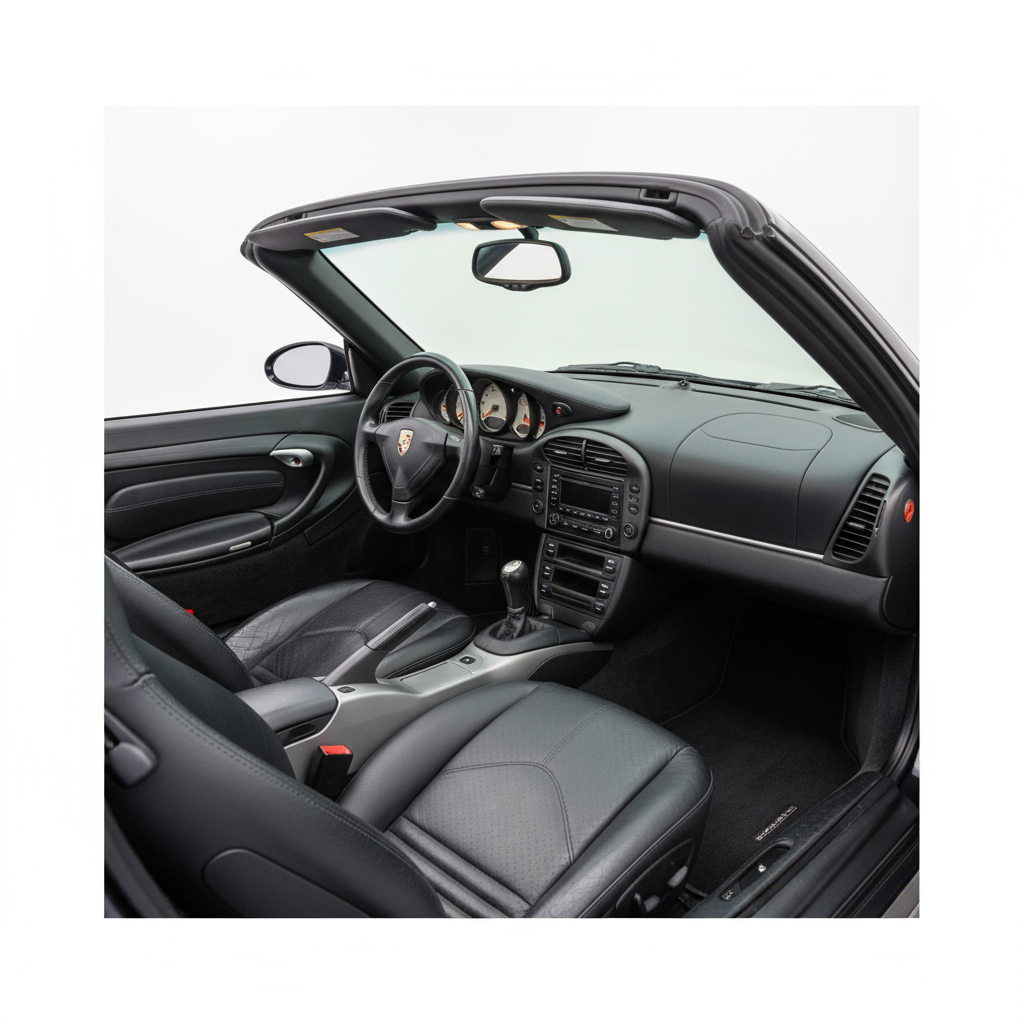
The design of the 2002 Porsche 911 Targa is an elegant evolution of the iconic 911 silhouette. Its fluid and timeless lines, with a length of 4430 mm and a width of 1770 mm, give it an imposing yet refined presence. The most distinctive feature is, without a doubt, its retractable glass roof, which slides smoothly to offer an open-air driving experience without compromising structural rigidity. The 17-inch wheels, with 205/50 R17 Z tires at the front and 255/40 R17 Z at the rear, not only contribute to its sporty aesthetic but also ensure exceptional grip. The interior, although with a design that denotes its era, is functional and driver-focused, with sports seats that offer excellent support. It is a design that has stood the test of time, maintaining its appeal and its status as an automotive icon.
Technology and features
Although the 2002 Porsche 911 Targa does not feature the latest technological innovations of today, for its time, it represented the cutting edge in sports engineering. Its 3.6-liter gasoline engine, with indirect injection and variable intake, is a masterpiece of mechanics, offering 320 hp of power and 370 Nm of torque. The 6-speed manual transmission is precise and robust, allowing the driver to fully exploit the engine's potential. The chassis, with independent suspension on both axles and stabilizer bars, guarantees exceptional dynamic behavior. The ventilated disc brakes, both front and rear, provide powerful and safe braking capability. Although it lacks modern driving assistance systems, its technology focuses on the pure driving experience, on the connection between man and machine.
Competition
At the time, the 2002 Porsche 911 Targa faced tough competition in the luxury sports car segment. Rivals such as the BMW M3, with its inline six-cylinder engine and its more balanced approach between sportiness and comfort, or the Mercedes-Benz SLK, which offered a convertible experience with a more luxurious touch, were contenders to consider. Other sports cars like the Audi TT or even some Ferrari and Maserati models, although in a higher price bracket, could also be considered alternatives for those seeking strong emotions and distinctive design. However, the 911 Targa has always maintained its own identity, offering a unique combination of performance, iconic design, and the versatility of its retractable roof that clearly differentiated it from its competitors.
Conclusion
The 2002 Porsche 911 Targa is more than a car; it is a statement of intent. It is a vehicle that embodies the passion for driving, precision engineering, and a design that transcends time. Its powerful engine, agile handling, and the possibility of enjoying the open sky make it an irresistible option for those seeking a sports car with character and versatility. Although its combined consumption of 11.1 l/100km may seem high by today's standards, it is a small price to pay for the emotion it offers. It is a car that invites you to drive, to feel every curve, every acceleration, and to enjoy the road like never before. A modern classic that remains as relevant and desirable today as it was at its launch.