


Especificaciones y análisis del Peugeot Rifter
Power
99HP
Torque
250Nm
Consumption
5.7l/100
Emissions
149g/km
0-100 km/h
-s
Top Speed
175km/h
Weight
1583kg
Price
21,217€
Technical summary
Gasóleo
Manual 5v
FWD
7 / 5 doors
597 L
50 L
73 kW
Current
Technical specifications
Engine
Capacities
Detailed analysis of the Peugeot Rifter NAV+ Standard BlueHDi 100 7 plazas · 99 CV (2019-2021)
General description
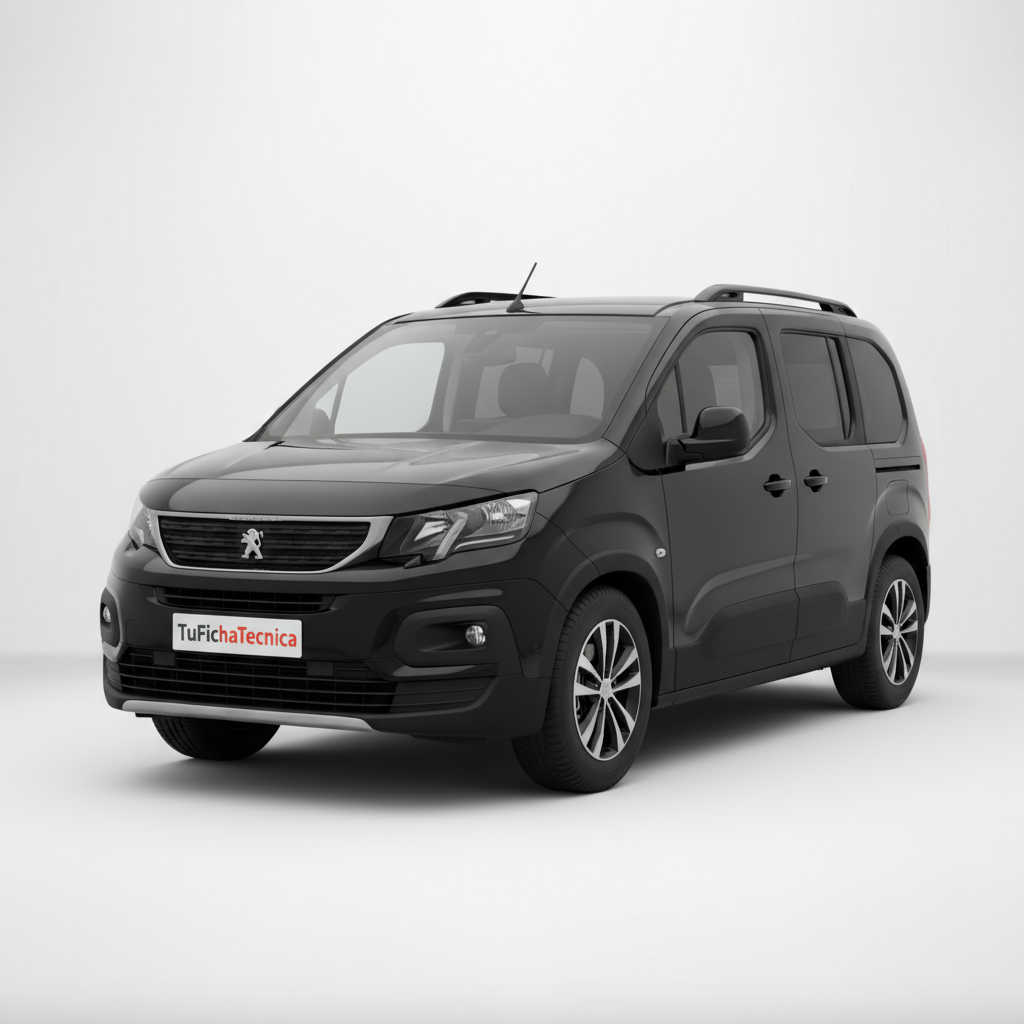
The 2019 Peugeot Rifter NAV+ Standard BlueHDi 100 7-seater model is a vehicle that redefines the concept of a passenger van, transforming it into a versatile and family-friendly travel companion. With its 99 HP diesel engine and 7-seat configuration, this Rifter presents itself as a practical and spacious solution for those seeking functionality without sacrificing a touch of style.
Driving experience
Behind the wheel of the Rifter, the feeling is one of control and comfort. Its 99 HP diesel engine, while not an abundance of power, offers adequate response for daily use and family trips, with a torque of 250 Nm that facilitates overtaking and highway driving. The 5-speed manual gearbox is smooth and precise, contributing to a relaxed driving experience. The suspension, McPherson type at the front and trailing arm with torsional element at the rear, absorbs road irregularities well, providing a comfortable ride for all occupants. The electric power steering is light and facilitates maneuvers in the city, while on the road it offers the necessary stability. Despite its size, the Rifter feels agile and easy to handle, with a turning circle of 10.9 meters that is surprisingly positive.
Design and aesthetics
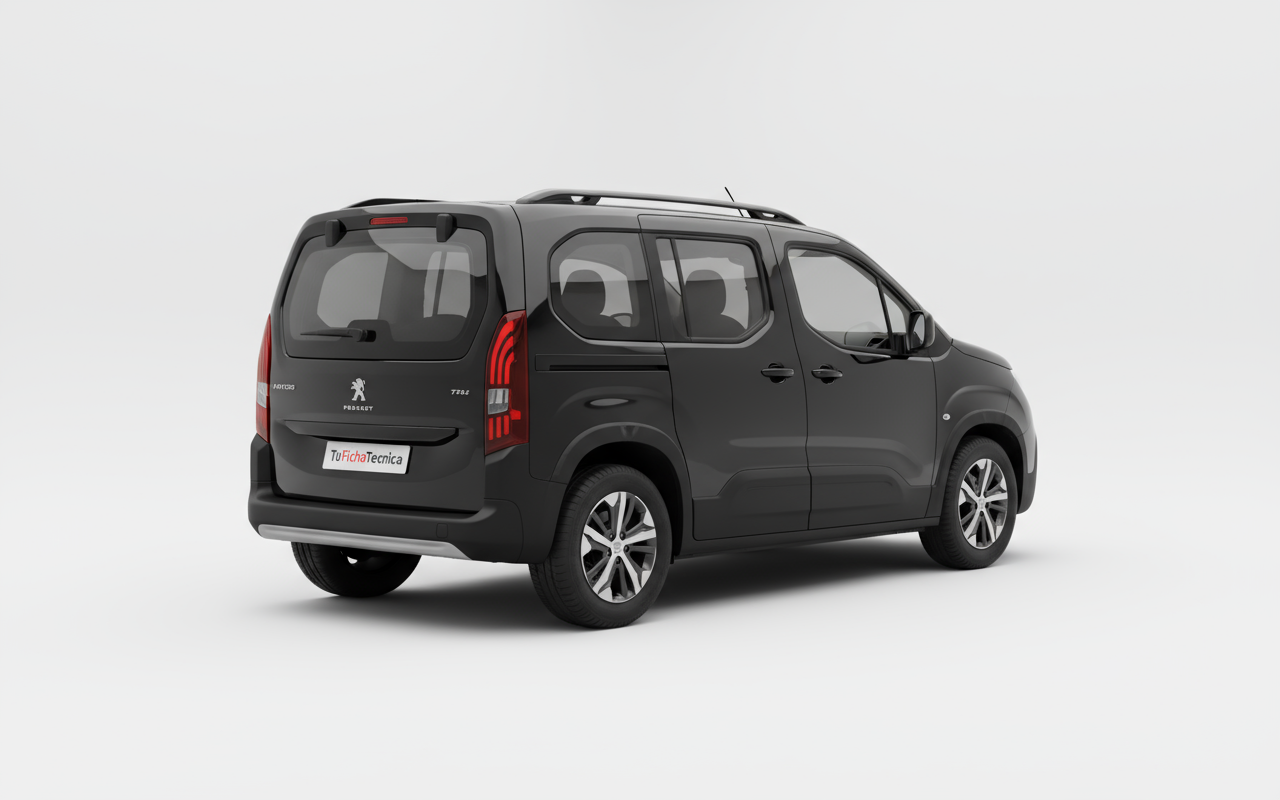
The design of the Peugeot Rifter breaks with the traditional aesthetics of vans, adopting a more robust and adventurous image, inspired by SUVs. Its imposing front, with the characteristic Peugeot grille and LED daytime running lights, gives it a distinctive personality. The side lines are clean and functional, highlighting the sliding doors that facilitate access to the rear seats, especially in confined spaces. The rear is more conventional but maintains aesthetic coherence with the rest of the vehicle. Inside, Peugeot's i-Cockpit design is present, with a compact steering wheel and a raised instrument cluster that improves visibility. The materials, although functional, convey a sense of durability and are well assembled. The 7-seat configuration is a key point, offering great versatility to adapt to different transport needs.
Technology and features
In terms of technology, the Peugeot Rifter NAV+ Standard BlueHDi 100 7-seater incorporates elements that enhance the on-board experience. The NAV+ infotainment system offers navigation, connectivity, and access to various vehicle functions, all managed from a touchscreen. Although details on Apple CarPlay or Android Auto compatibility are not specified, it is expected to have basic connectivity options. The 1.5-liter 99 HP diesel engine incorporates common rail direct injection, variable geometry turbo, and intercooler, optimizing its performance and efficiency. The inclusion of the Stop&Start system helps reduce fuel consumption and emissions in urban environments. Regarding safety, although specific systems are not detailed, it is expected to have basic active and passive safety elements, such as ABS, ESP, and multiple airbags, to protect occupants.
Competition
The Peugeot Rifter NAV+ Standard BlueHDi 100 7-seater competes in a highly contested segment of family vehicles and passenger vans. Its main rivals include models such as the Citroën Berlingo, Opel Combo Life, Toyota Proace City Verso, and Renault Kangoo. Compared to them, the Rifter stands out for its more adventurous design and its i-Cockpit interior, which gives it its own personality. In terms of space and versatility, all offer similar solutions, but the Rifter seeks to differentiate itself with a more SUV-like approach in its aesthetics and a more refined driving experience than some of its more purely commercial alternatives.
Conclusion
The Peugeot Rifter NAV+ Standard BlueHDi 100 7-seater is a vehicle that more than fulfills its purpose: to offer spacious, versatile, and comfortable family transport. Its attractive design, functional interior, and efficient diesel engine make it a very interesting option for large families or for those who need a large cargo space with the possibility of transporting more passengers. Although it is not a high-performance car, its performance is more than sufficient for daily use and long trips. It is a reliable and practical companion that adapts to the demands of modern life, combining the robustness of a van with the comfort of a passenger car.