

Especificaciones y análisis del Peugeot 407
Power
140HP
Torque
200Nm
Consumption
8.1l/100
Emissions
192g/km
0-100 km/h
9.1s
Top Speed
213km/h
Weight
1502kg
Price
25,400€
Technical summary
Gasolina
Manual 5v
FWD
5 / 4 doors
407 L
66 L
103 kW
Current
Technical specifications
Engine
Capacities
Detailed analysis of the Peugeot 407 ST Confort Pack 2.0 · 140 CV (2004-2007)
General description
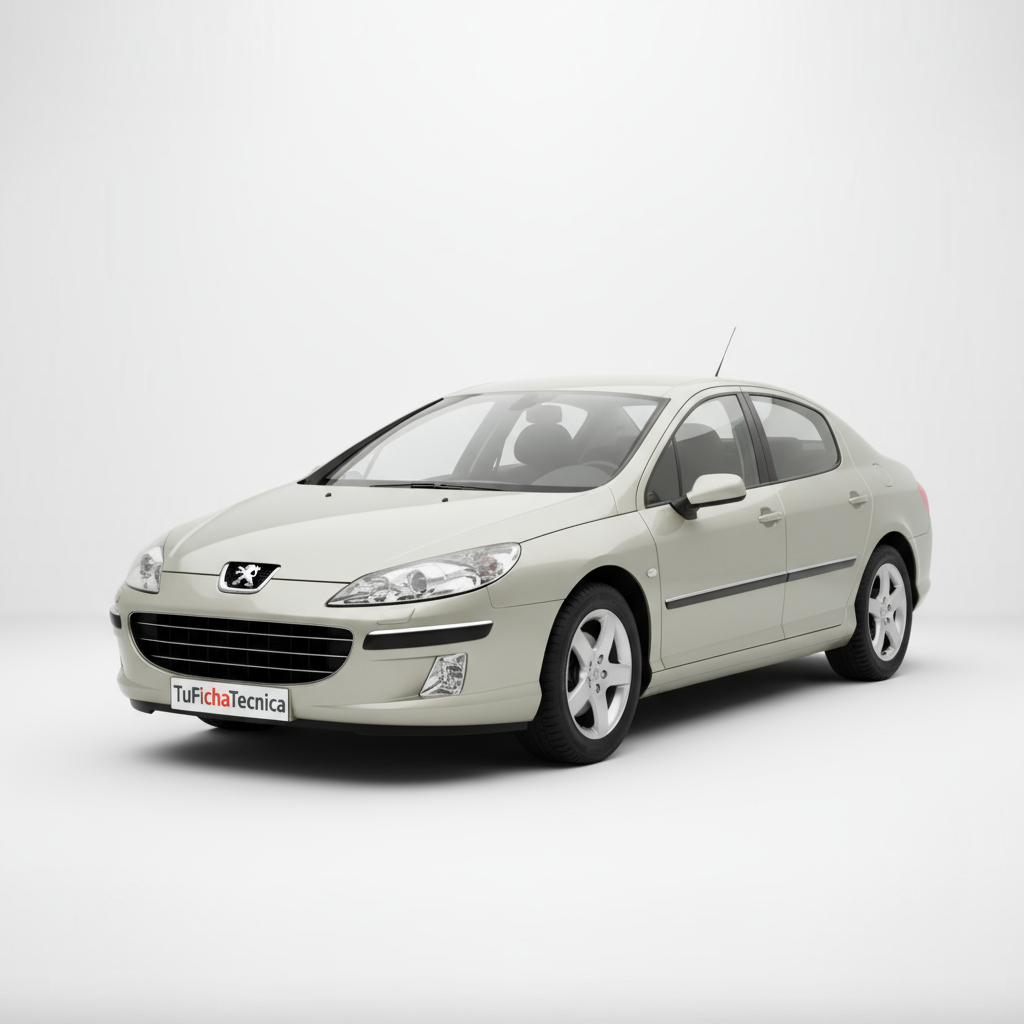
The Peugeot 407, in its 2004 sedan version with a 2.0 petrol engine and 140 hp, was presented as a bold and elegant proposal in the mid-size sedan segment. With a design that broke molds and a clear commitment to comfort, this model sought to win over those who valued distinction and a pleasant driving experience. Its arrival on the market generated anticipation, promising a combination of French style and balanced performance.
Driving experience
Behind the wheel of the Peugeot 407, the predominant sensation is one of smoothness and composure. The 140 hp engine, although not an excess of power, offers an adequate response for most situations, allowing acceleration from 0 to 100 km/h in 9.1 seconds and a top speed of 213 km/h. The suspension, with deformable parallelogram both front and rear, effectively filters out road irregularities, providing remarkable ride comfort. The rack-and-pinion steering contributes to relaxed driving, although it may lack the immediacy sought by enthusiasts. In the city, its size can be a factor to consider, but on the open road, the 407 performs with stability that inspires confidence, making long journeys a pleasant experience.
Design and aesthetics
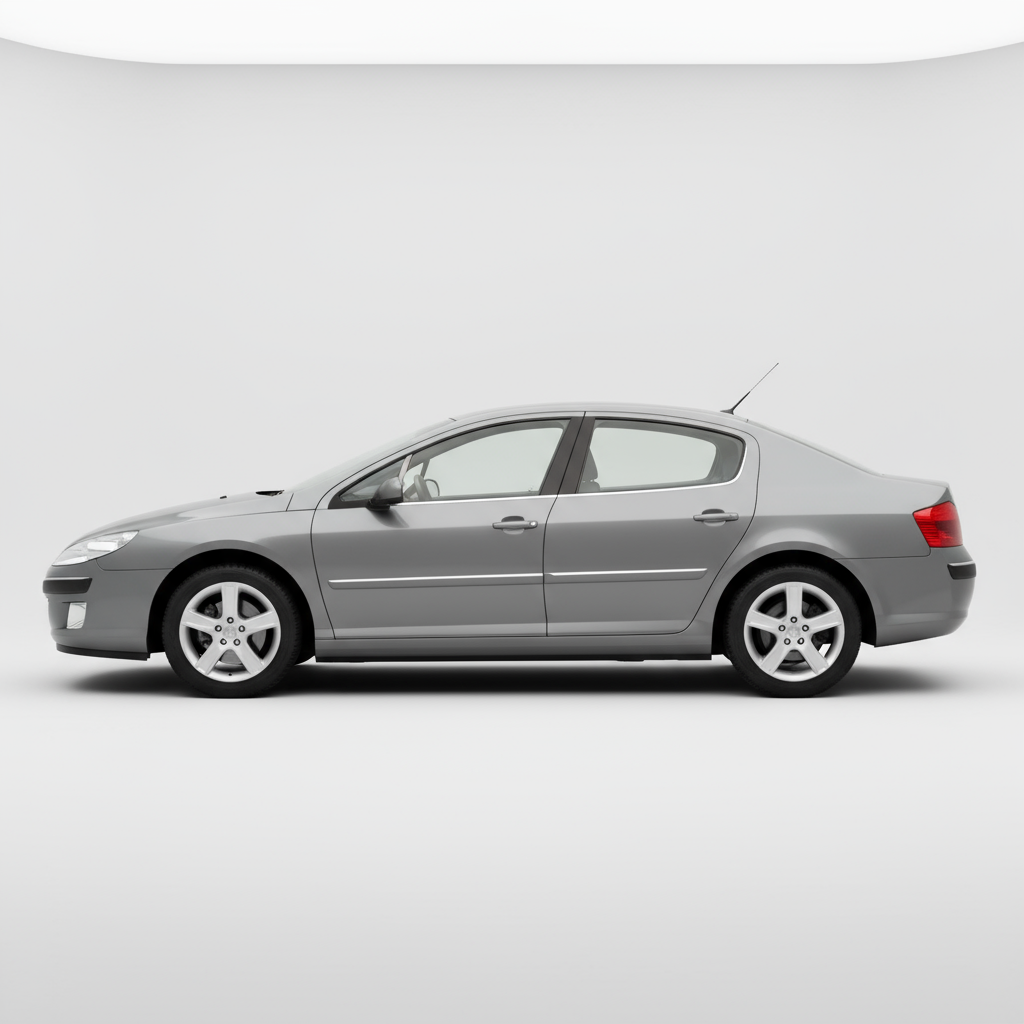
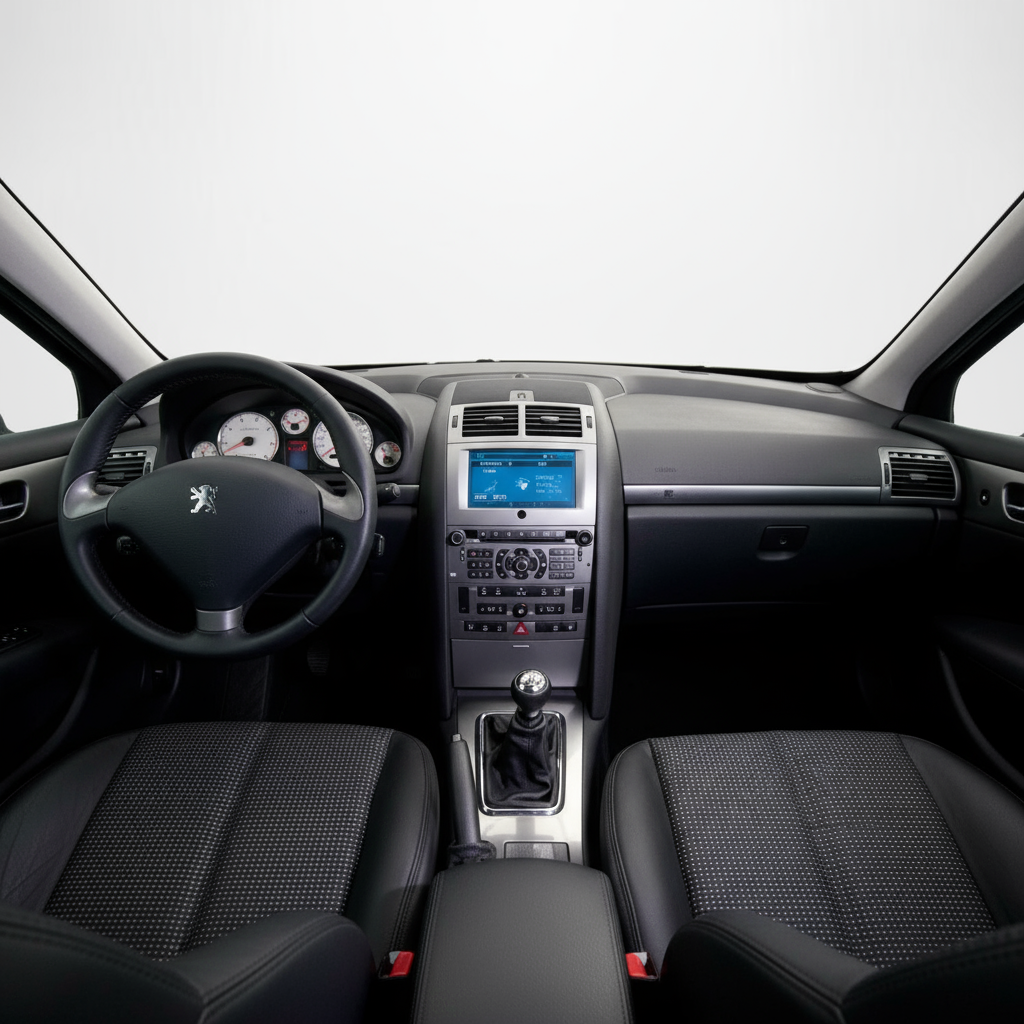
The design of the Peugeot 407 was, without a doubt, one of its most distinctive and controversial points. Its front, with a prominent grille and elongated headlights that extended towards the windshield, gave it a unique personality and a feline air. The silhouette, with a long hood and a more compact rear, created a dynamic and elegant image. The dimensions, with 4676 mm long and 1811 mm wide, gave it an imposing presence on the road. The interior, although not as revolutionary as the exterior, offered a cozy and well-finished environment, with quality materials and a functional design that prioritized ergonomics and occupant comfort.
Technology and features
In the technological section, the 2004 Peugeot 407 incorporated elements that, for its time, were quite complete. It had a 1997 cc petrol engine, with indirect injection and aluminum cylinder head and block, which delivered 140 hp at 6000 rpm and a torque of 200 Nm at 4000 rpm. The 5-speed manual transmission was responsible for sending power to the front wheels. In terms of safety, it had ventilated disc brakes at the front and solid discs at the rear, complemented by driving assistance systems. Comfort equipment included elements such as air conditioning, electric windows and a sound system, seeking to offer the most pleasant on-board experience possible.
Competition
In the competitive mid-size sedan segment, the Peugeot 407 faced tough rivals such as the Ford Mondeo, the Renault Laguna, the Opel Vectra or the Volkswagen Passat. Each of them offered their own virtues, whether in terms of space, dynamism or equipment. The 407 stood out for its bold design and its focus on ride comfort, seeking to attract an audience that valued aesthetics and a more relaxed and sophisticated driving experience, with a touch of French distinction.
Conclusion
The 2004 Peugeot 407 sedan 2.0 with 140 hp was a car that left no one indifferent. Its avant-garde design and its commitment to comfort made it an attractive option for those looking for something different in the sedan segment. While its combined consumption of 8.1 l/100km and its emissions of 192 g/km of CO2 were figures to consider, its smooth ride and its habitability made it an ideal companion for long journeys. Despite strong competition, the 407 managed to carve out a niche, offering a distinctive driving experience and an unmistakable style that is still recognizable today.