
Especificaciones y análisis del Opel Zafira
Power
101HP
Torque
150Nm
Consumption
8.3l/100
Emissions
-g/km
0-100 km/h
13.5s
Top Speed
176km/h
Weight
1325kg
Price
15,921€
Technical summary
Gasolina
Manual 5v
FWD
7 / 5 doors
600 L
58 L
74 kW
Current
Technical specifications
Engine
Capacities
Detailed analysis of the Opel Zafira Comfort 1.6 16v · 101 CV (1999-2000)
General description
The 1999 Opel Zafira, in its Comfort 1.6 16v version, was presented as an innovative and versatile family solution. Priced at €15,921, this 7-seater minivan aimed to conquer families who needed space and functionality without sacrificing an attractive design for the time. Its 101 hp gasoline engine, combined with a 5-speed manual gearbox, promised a balance between performance and efficiency for everyday use.
Driving experience
Behind the wheel of the Zafira, the predominant feeling was one of spaciousness and comfort. The elevated driving position offered good visibility, while the suspension, McPherson type at the front and torsion beam with trailing arm at the rear, absorbed road irregularities with ease, providing a smooth ride. Although its 101 hp did not make it a speed demon, the acceleration from 0 to 100 km/h in 13.5 seconds was sufficient for agile urban traffic and road trips without great sporting pretensions. The combined consumption of 8.3 l/100km was reasonable for a vehicle of its size and era, although in the city it could rise to 10.9 l/100km. The rack-and-pinion steering, although lacking the precision of more sporty models, performed its function smoothly.
Design and aesthetics
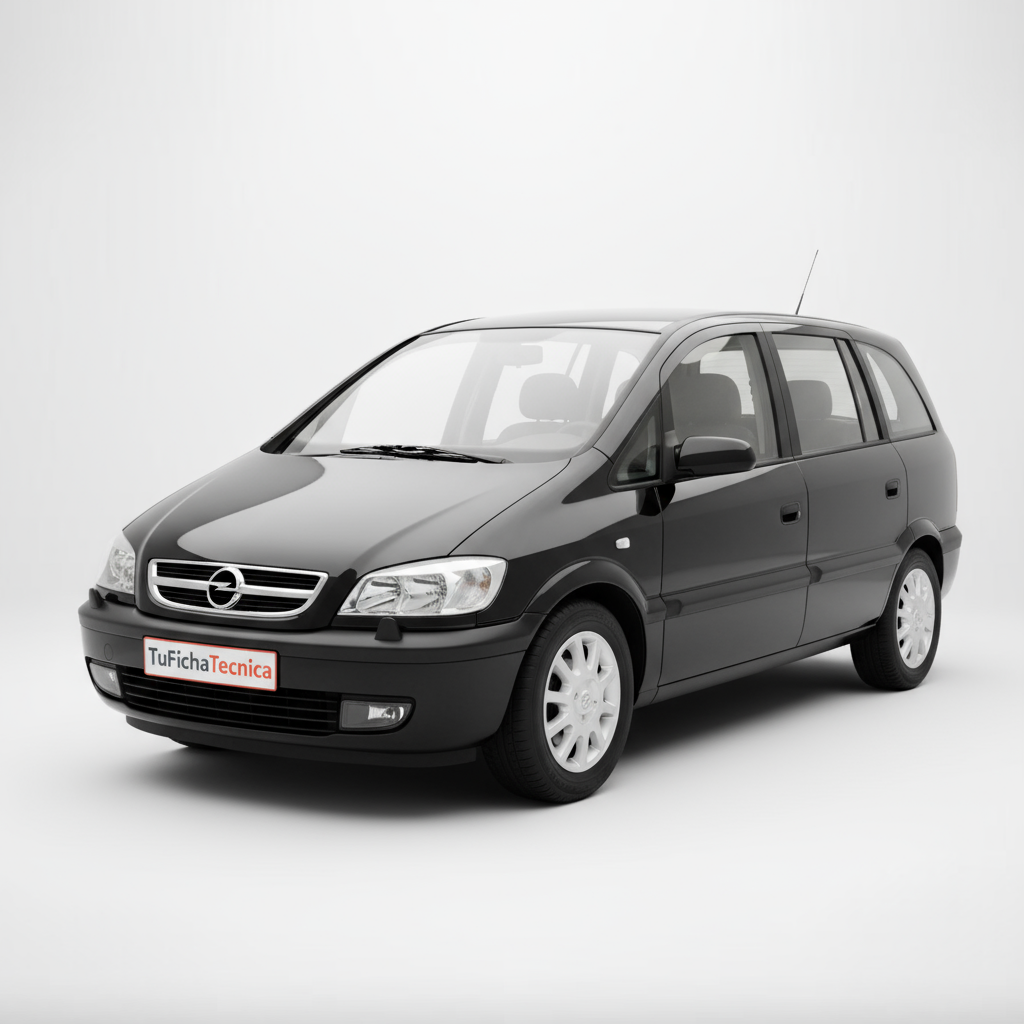
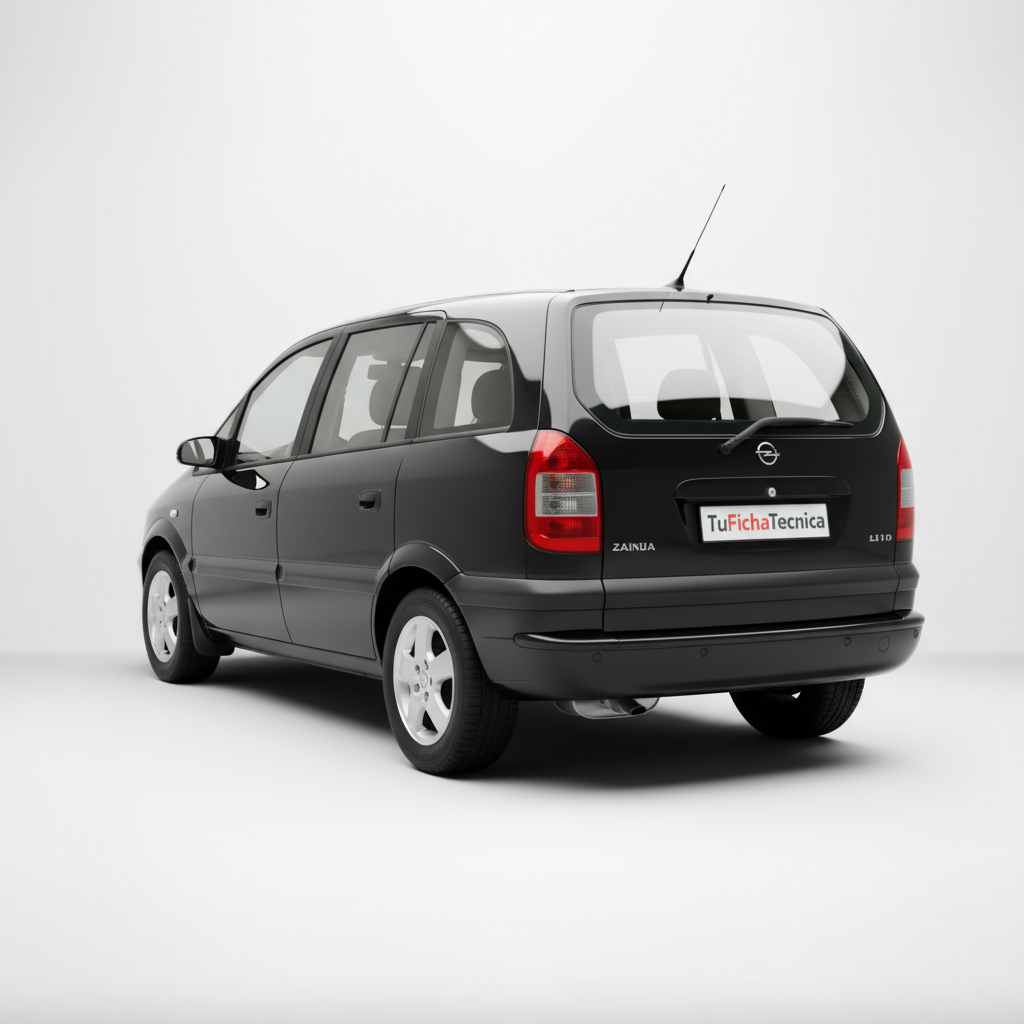
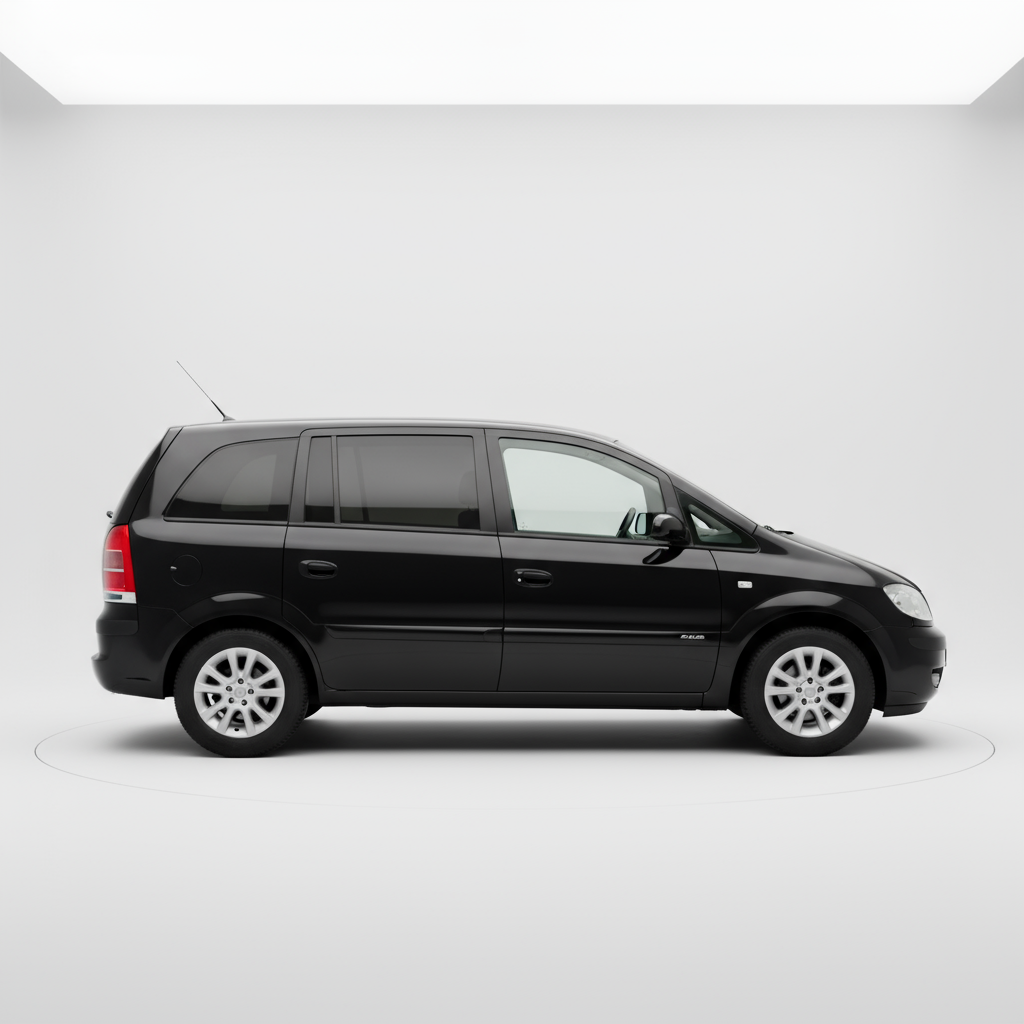
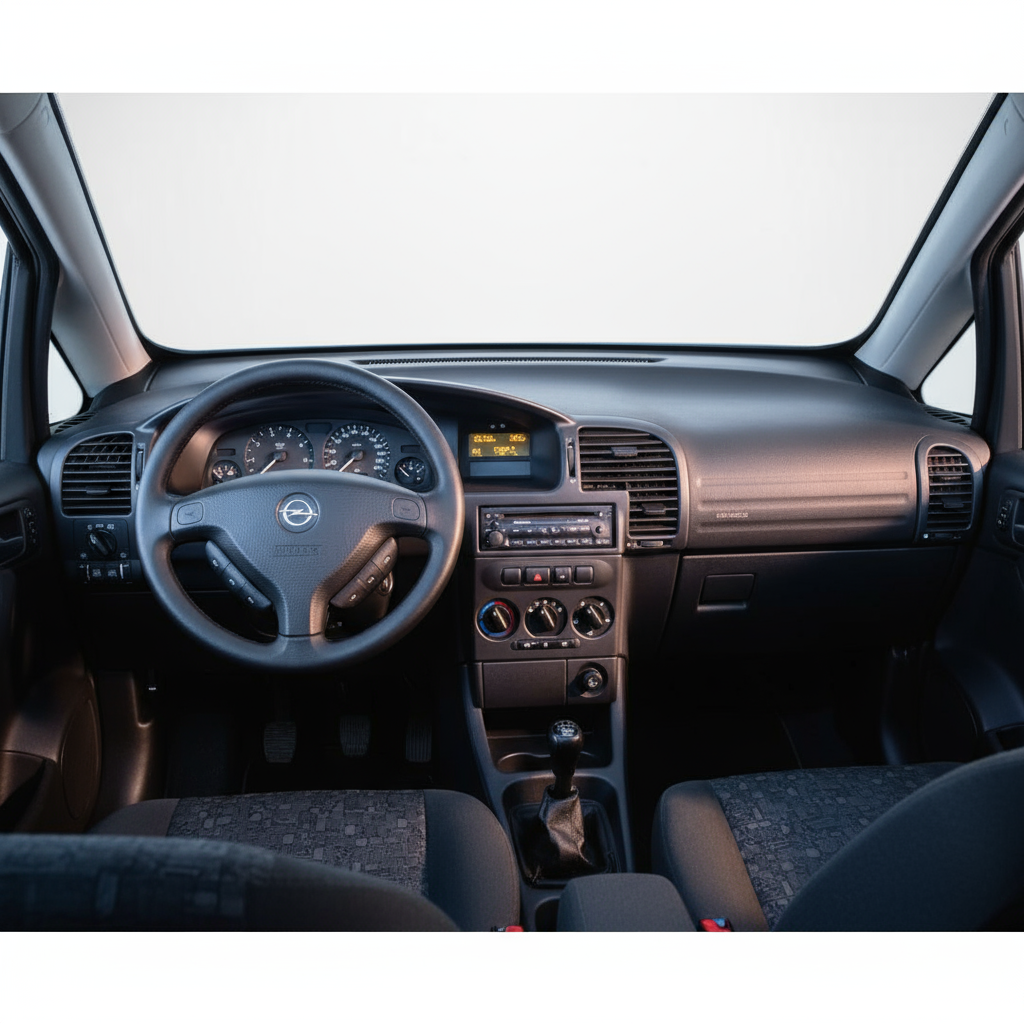
The design of the 1999 Opel Zafira stood out for its functionality and clean lines. With a length of 4317 mm and a height of 1684 mm, its 5-door body offered a classic minivan silhouette, designed to maximize interior space. The generously sized headlights were harmoniously integrated with the grille, while the rear, with a wide tailgate, facilitated access to the trunk. The 15-inch wheels with 195/65 R15 H tires contributed to a balanced and functional aesthetic. The interior, although sober, was designed to be practical, with durable materials and an intuitive layout of controls.
Technology and features
In terms of technology, the 1999 Opel Zafira offered what was expected for its segment and year. Its 1.6-liter 16-valve gasoline engine, with indirect injection, delivered 101 hp at 6000 rpm and a torque of 150 Nm at 3600 rpm, which guaranteed adequate response for family use. The 5-speed manual transmission was the standard option. In terms of safety, it had ventilated disc brakes on the front axle and drums on the rear, a common configuration at the time. The rack-and-pinion steering, although without variable assistance, facilitated maneuvers. It did not have technologies such as Stop&Start, nor electric propulsion systems, being a purely internal combustion vehicle.
Competition
In the compact minivan market of the late 90s, the Opel Zafira faced competitors such as the Renault Scénic, the Citroën Xsara Picasso, and the Fiat Multipla. Each offered its own interpretation of family versatility, but the Zafira stood out for its Flex7 seating system, which allowed great modularity and the possibility of transforming the vehicle from 5 to 7 seats easily, a strong point that differentiated it from many of its direct rivals.
Conclusion
The 1999 Opel Zafira Comfort 1.6 16v was a vehicle that managed to earn a place in the hearts of many families. Its combination of space, versatility, and a competitive price made it a very attractive option for those looking for a practical and functional car. Although it did not stand out for its sporty performance or its cutting-edge technological equipment, its reliability and its ability to adapt to different needs made it a faithful and efficient travel companion. A car that, without great fanfare, more than fulfilled its promise of family mobility.