
Especificaciones y análisis del Opel Meriva
Power
110HP
Torque
280Nm
Consumption
6.1l/100
Emissions
160g/km
0-100 km/h
12.9s
Top Speed
178km/h
Weight
-kg
Price
21,783€
Technical summary
Gasóleo
Automático 6v
FWD
5 / 5 doors
400 L
54 L
81 kW
Current
Technical specifications
Engine
Capacities
Detailed analysis of the Opel Meriva Excellence 1.7 CDTI 110 CV Aut. (2012-2013)
General description
The Opel Meriva Excellence 1.7 CDTI 110 hp with automatic transmission, manufactured between 2012 and 2013, is presented as a compact and versatile family option. Priced at €21,783, this diesel minivan aims to offer a balance between functionality, comfort, and efficiency for everyday use.
Driving experience
Behind the wheel of the Meriva, the feeling is of a practical and easy-to-handle car. Its 110 hp diesel engine, although not a powerhouse, performs adequately for most situations, especially in urban and suburban environments. The 6-speed automatic transmission provides driving comfort, smoothing shifts and reducing fatigue on long journeys or in traffic. The suspension, McPherson type at the front and torsion beam with trailing arm at the rear, is comfort-oriented, absorbing road irregularities well. However, don't expect sporty agility; its electric power steering, though precise, doesn't transmit the purest road feel. Acceleration from 0 to 100 km/h in 12.9 seconds and a top speed of 178 km/h place it in an adequate range for a family vehicle in its segment, without great sporting pretensions.
Design and aesthetics
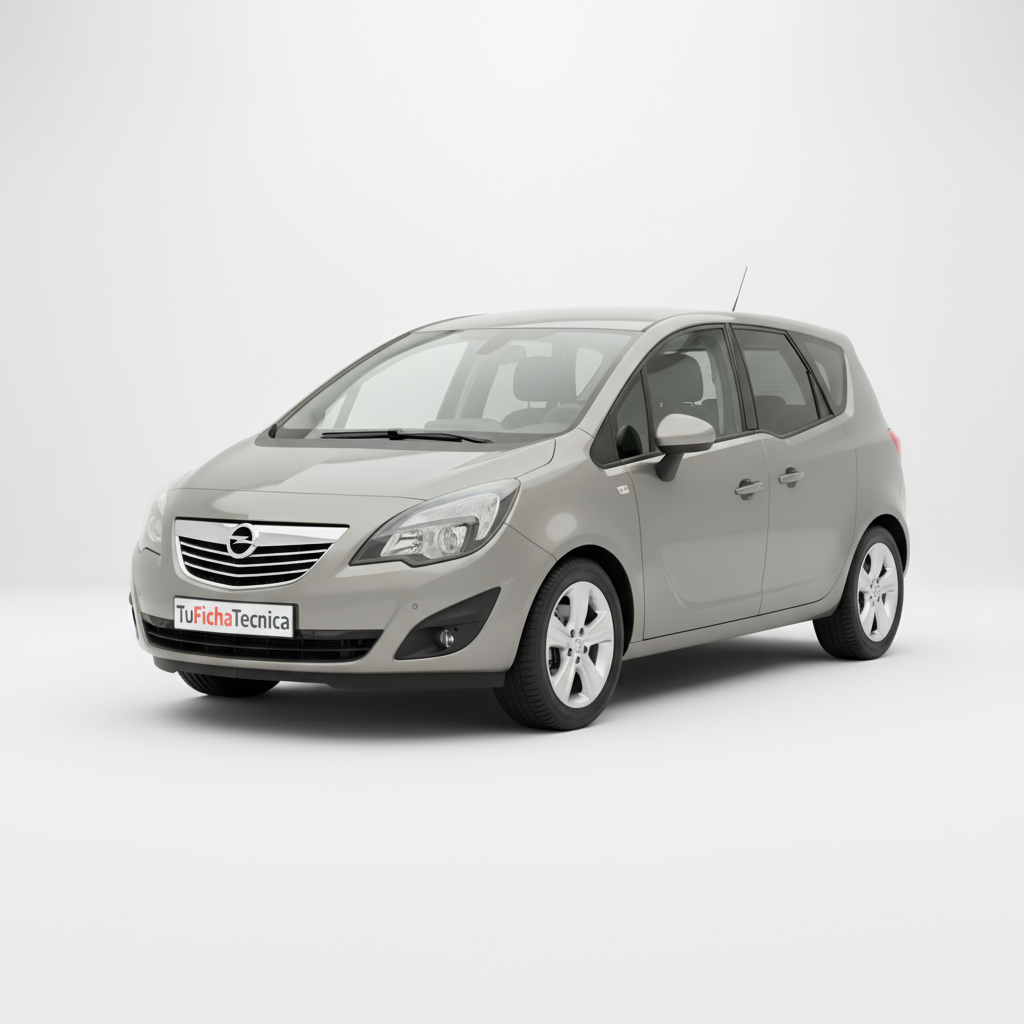
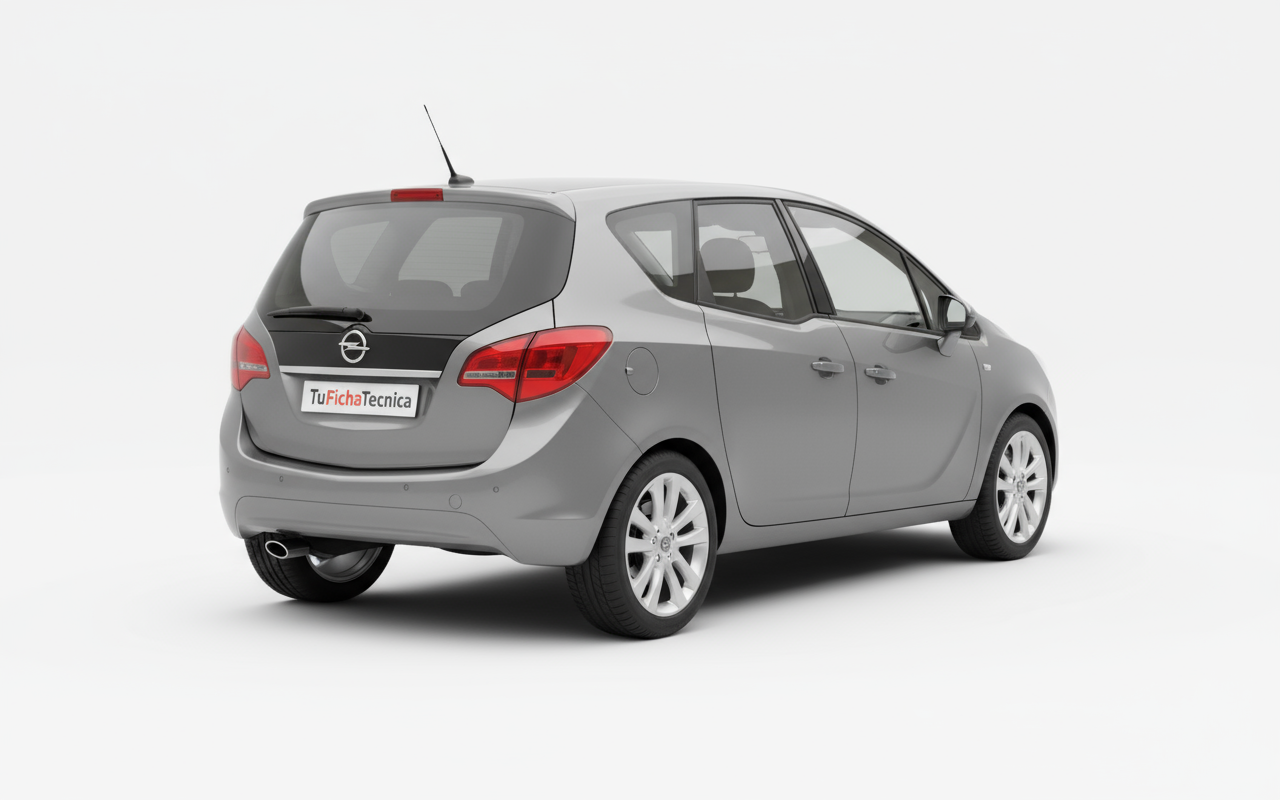
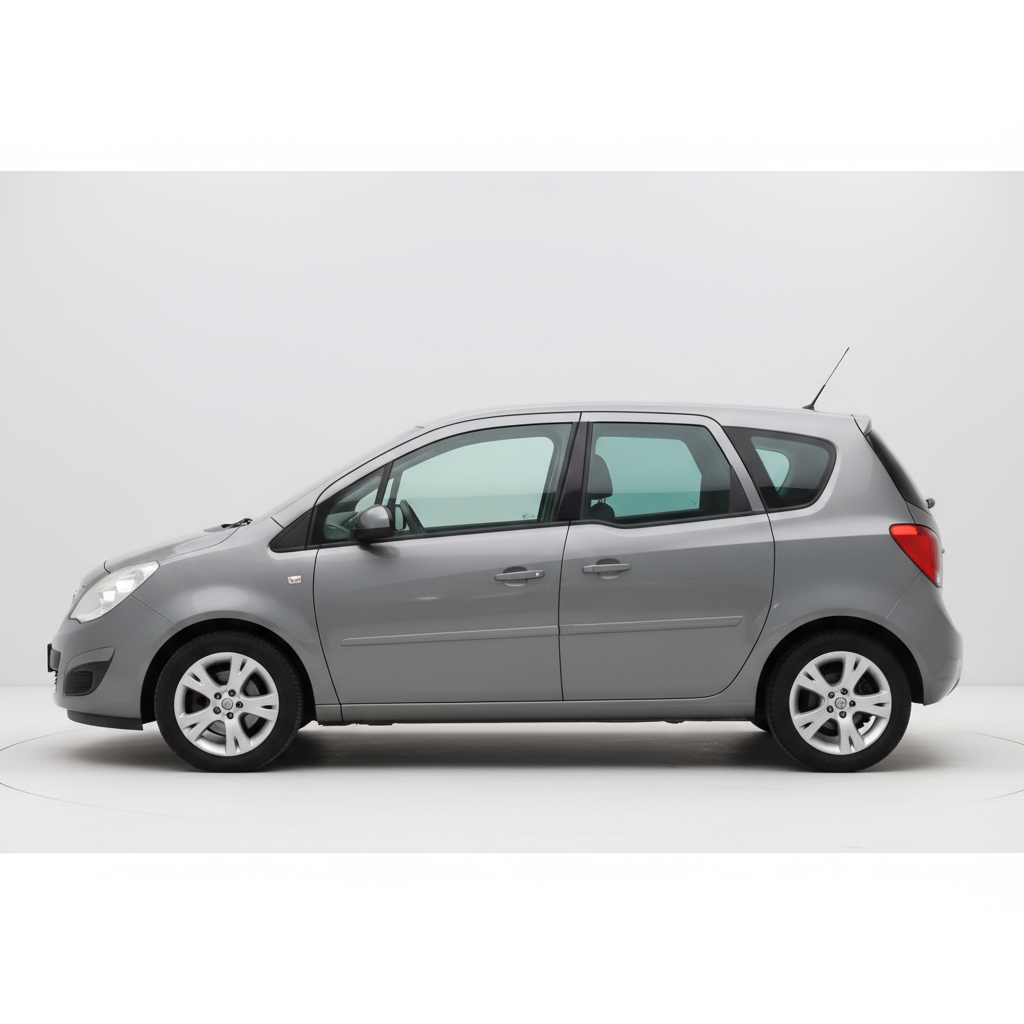
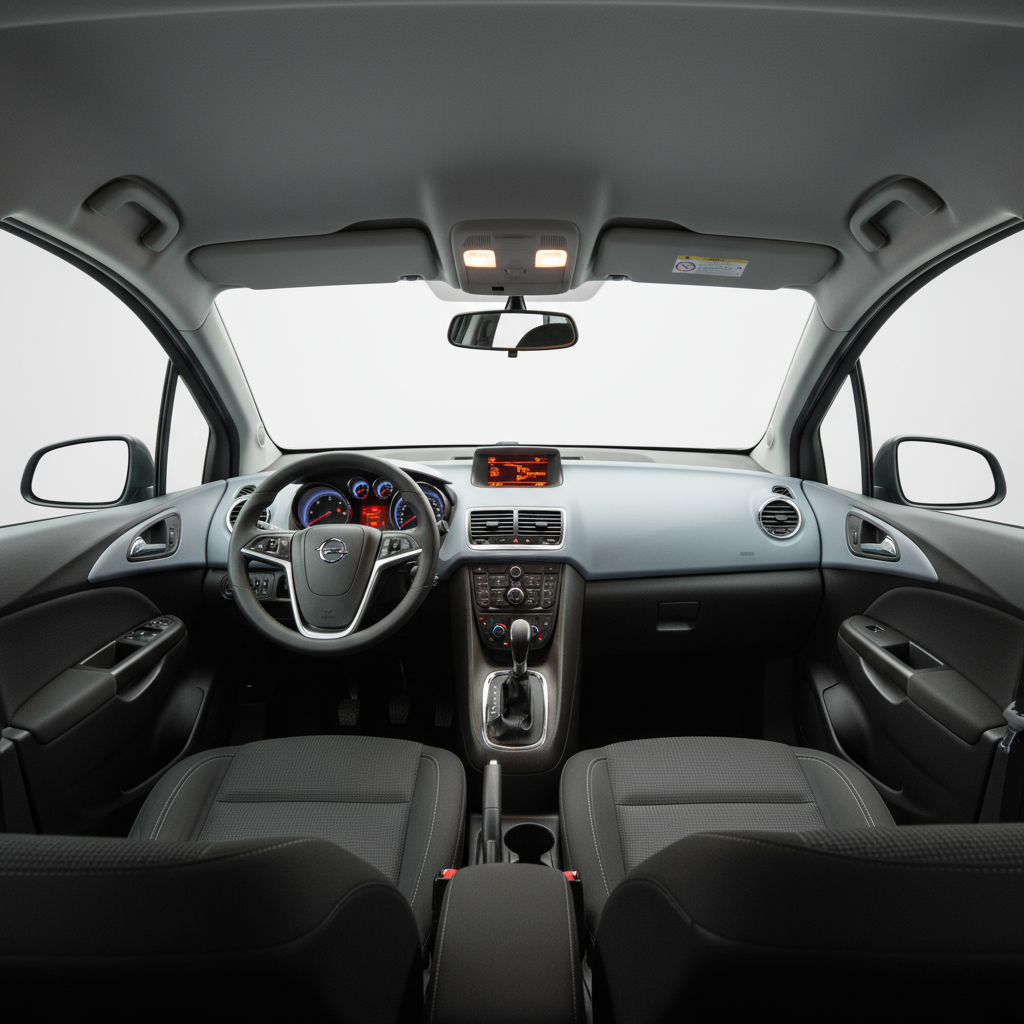
The design of the 2010 Opel Meriva is characterized by its soft lines and a silhouette that prioritizes interior space. With a length of 4288 mm, a width of 1812 mm, and a height of 1615 mm, its proportions are those of a compact minivan. Its reverse-opening rear doors, known as 'FlexDoors', stand out, facilitating access to the cabin, a distinctive and functional detail. The front features the characteristic Opel grille of the era, with good-sized headlights integrated into the overall design. Inside, the layout of the controls is logical, and the materials, though not luxurious, are robust and designed to withstand family use. The 400-liter trunk is sufficient for a small family's luggage, and the versatility of the seats allows this capacity to be expanded when necessary.
Technology and features
In terms of technology, the 2012-2013 Opel Meriva Excellence 1.7 CDTI incorporates elements that, for its time, were adequate for a family vehicle. Its 1.686 cc diesel engine, with common rail direct injection, variable geometry turbo, and intercooler, aims to optimize consumption and emissions, complying with Euro 5 regulations. The 6-speed automatic transmission is a key point for comfort. In terms of safety, it features 308 mm ventilated disc brakes at the front and 264 mm discs at the rear, ensuring good braking capability. Electric power steering contributes to smoother and more efficient driving. Although it does not incorporate the latest innovations in connectivity or driving assistance that we see today, it offers the essentials for a safe and comfortable journey.
Competition
In the compact minivan segment, the Opel Meriva faced competitors such as the Citroën C3 Picasso, the Renault Grand Modus, the Ford B-MAX, or the Kia Venga. Each of them offered their own advantages, whether in design, interior modularity, or equipment. The Meriva stood out for its innovative FlexDoors and its overall balance as a family vehicle.
Conclusion
The Opel Meriva Excellence 1.7 CDTI 110 hp automatic is a car that more than fulfills its purpose as a family vehicle. It offers generous interior space, good modularity, and comfortable driving, especially in urban environments. Its diesel engine, although not the most powerful, is efficient, and the automatic transmission adds an extra touch of comfort. It is a sensible option for those looking for a practical, reliable car with a functional design, ideal for daily use and family getaways. Its price at the time, along with its features, made it an attractive proposition within its segment.