
Especificaciones y análisis del Opel Corsa
Power
69HP
Torque
170Nm
Consumption
4.5l/100
Emissions
-g/km
0-100 km/h
14.5s
Top Speed
165km/h
Weight
1110kg
Price
12,250€
Technical summary
Gasóleo
Manual 5v
FWD
5 / 3 doors
260 L
44 L
51 kW
Current
Technical specifications
Engine
Capacities
Detailed analysis of the Opel Corsa 3p Línea Blu 1.3 CDTI · 69 CV (2004-2005)
General description
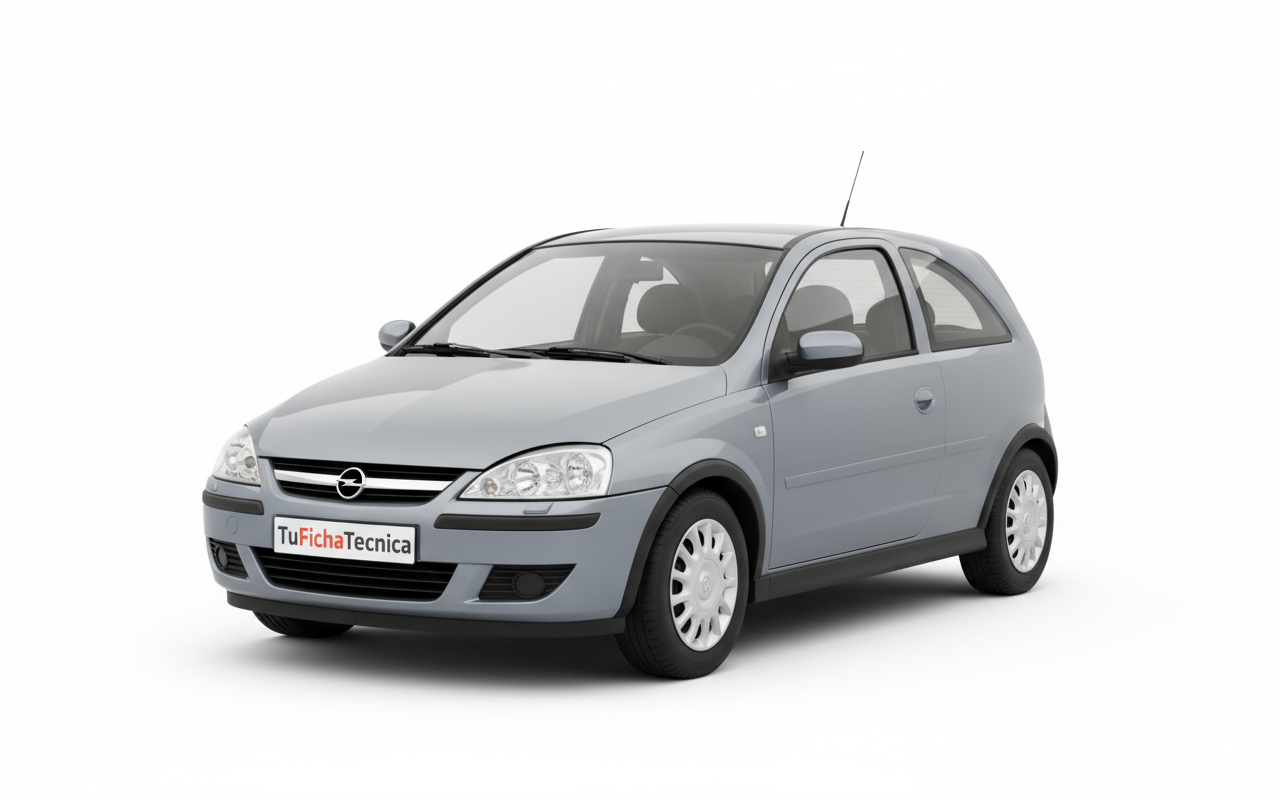
The 2004 Opel Corsa 3-door Line Blu 1.3 CDTI is a vehicle that, despite its age, still evokes a sense of practicality and efficiency. With its 69 hp diesel engine, it presented itself as an economical and functional option for daily use, ideal for the city and short trips. Its compact design and focus on fuel economy made it a faithful companion for those looking for a car without great pretensions, but one that more than fulfilled its purpose.
Driving experience
Behind the wheel of the Corsa 1.3 CDTI, the predominant feeling is that of an honest and unpretentious car. The 69 hp of its diesel engine offer an adequate response for urban driving, with a torque of 170 Nm available from 1750 rpm, facilitating starts and accelerations in traffic. Acceleration from 0 to 100 km/h in 14.5 seconds and a top speed of 165 km/h do not make it a speed demon, but it is a vehicle capable of keeping pace on the road. The electric power steering contributes to agile driving in the city, while the suspension, McPherson type at the front and torsion beam with trailing arm at the rear, offers a balance between comfort and stability. The combined consumption of 4.5 l/100km is, without a doubt, one of its strong points, inviting you to drive many kilometers without worrying excessively about refueling.
Design and aesthetics
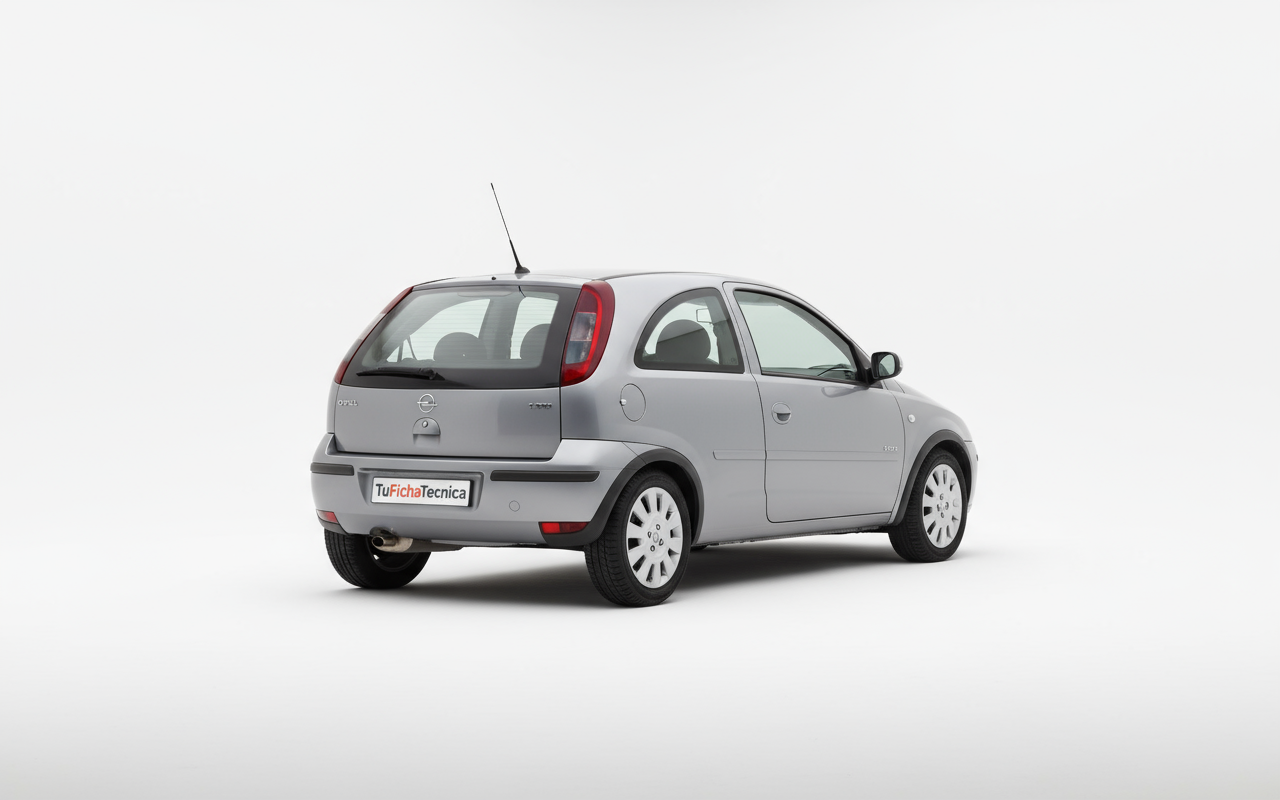
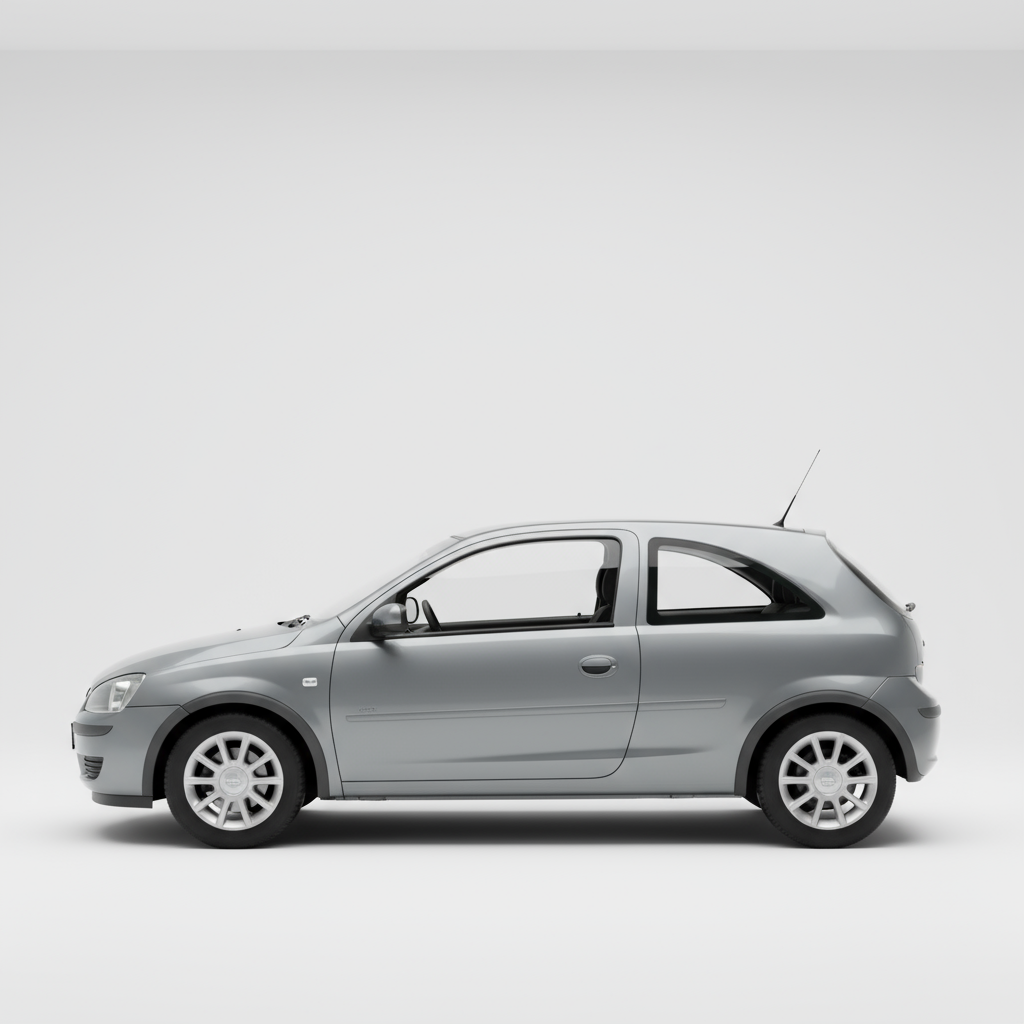
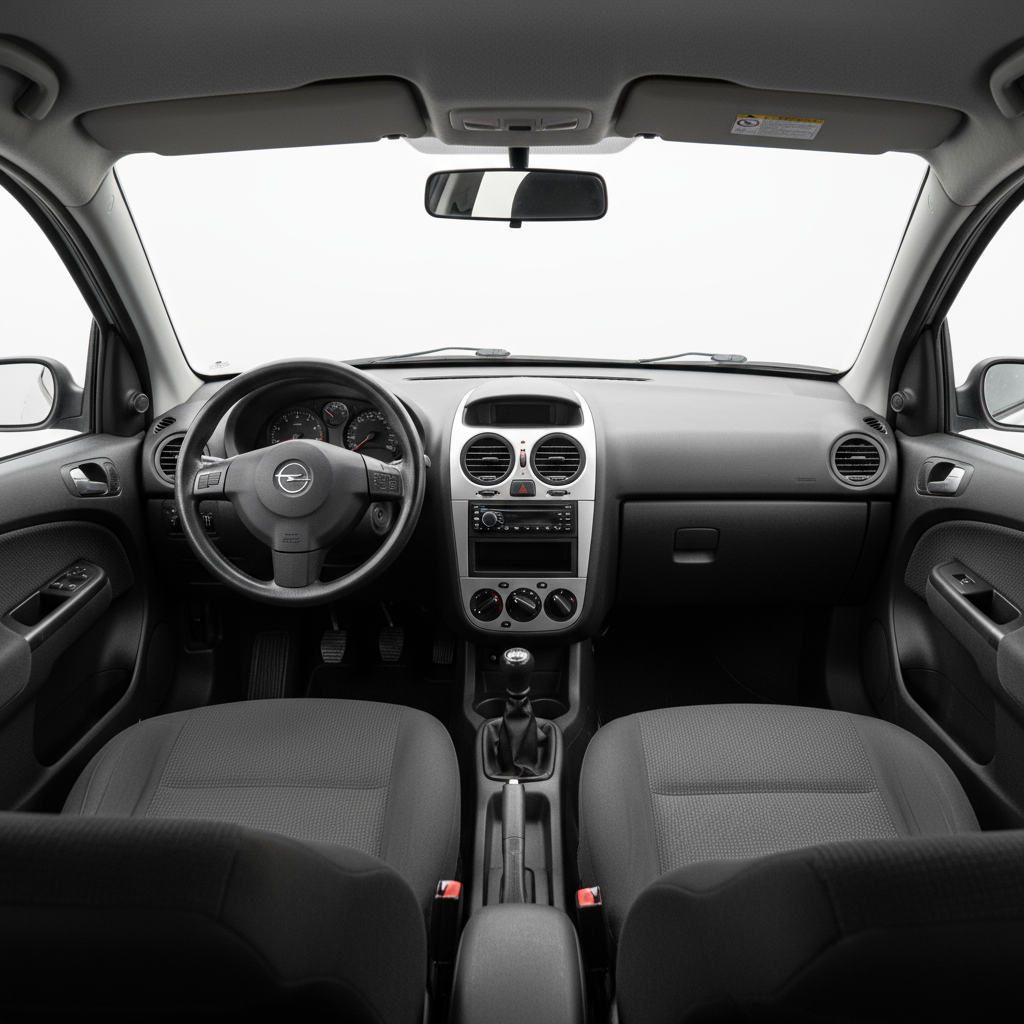
The design of the 2004 Opel Corsa, in its 3-door version, is a reflection of the aesthetics of the early 2000s: soft lines, rounded shapes, and a compact silhouette. The 'Línea Blu' version probably added some distinctive detail, although the essence remained. With a length of 3839 mm, a width of 1646 mm, and a height of 1440 mm, its dimensions made it manageable in urban environments. The interior, although functional, did not stand out for luxury, but for its practicality and the logical arrangement of controls. The 260-liter trunk offered reasonable space for shopping or weekend luggage, in line with its segment.
Technology and features
In 2004, the technology of the Opel Corsa 1.3 CDTI focused on efficiency and mechanical reliability. Its 1248 cc diesel engine, with common rail direct injection, turbo, and intercooler, was an example of the engineering of the time to optimize fuel consumption. The 5-speed manual gearbox, along with the dry single-disc clutch, offered simple and effective power transmission. Electric power steering was an advance that improved maneuverability. In terms of safety, it had ventilated front disc brakes and rear drum brakes, a standard configuration for vehicles in its category at that time. No advanced driving assistance systems are mentioned, which was common in cars of this segment and year.
Competition
In the 2004 market, the Opel Corsa 3-door Line Blu 1.3 CDTI faced fierce competition in the diesel utility vehicle segment. Its main rivals included models such as the Ford Fiesta, the Volkswagen Polo, the Renault Clio, the Peugeot 206, and the SEAT Ibiza. All of them offered diesel versions with similar power and a focus on fuel economy and urban practicality. The Corsa stood out for its 1.3 CDTI engine, known for its efficiency, and for a reputation for robustness that Opel had cultivated over the years. The choice between one or the other often depended on personal preferences regarding design, driving sensations, and the equipment offered at the time.
Conclusion
The 2004 Opel Corsa 3-door Line Blu 1.3 CDTI is a car that, despite its age, remains a testament to practical and efficient engineering. Its diesel engine, compact design, and focus on economy make it a sensible choice for those looking for a reliable and fuel-efficient vehicle. It is not a car to excite with sporty performance, but to fulfill its function of daily transport in a competent and economical way. It is a faithful companion that, with proper maintenance, can still offer many kilometers of service, demonstrating that simplicity and efficiency can be lasting virtues.