
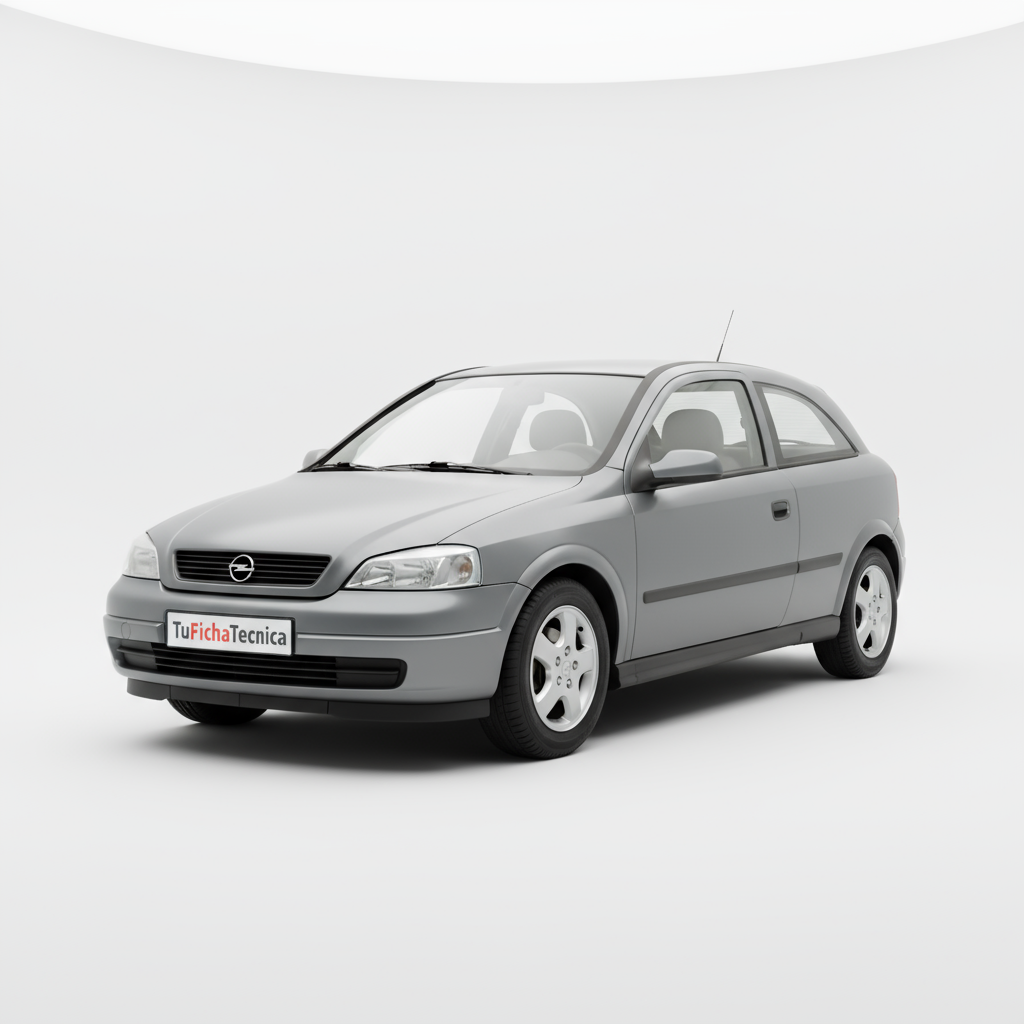
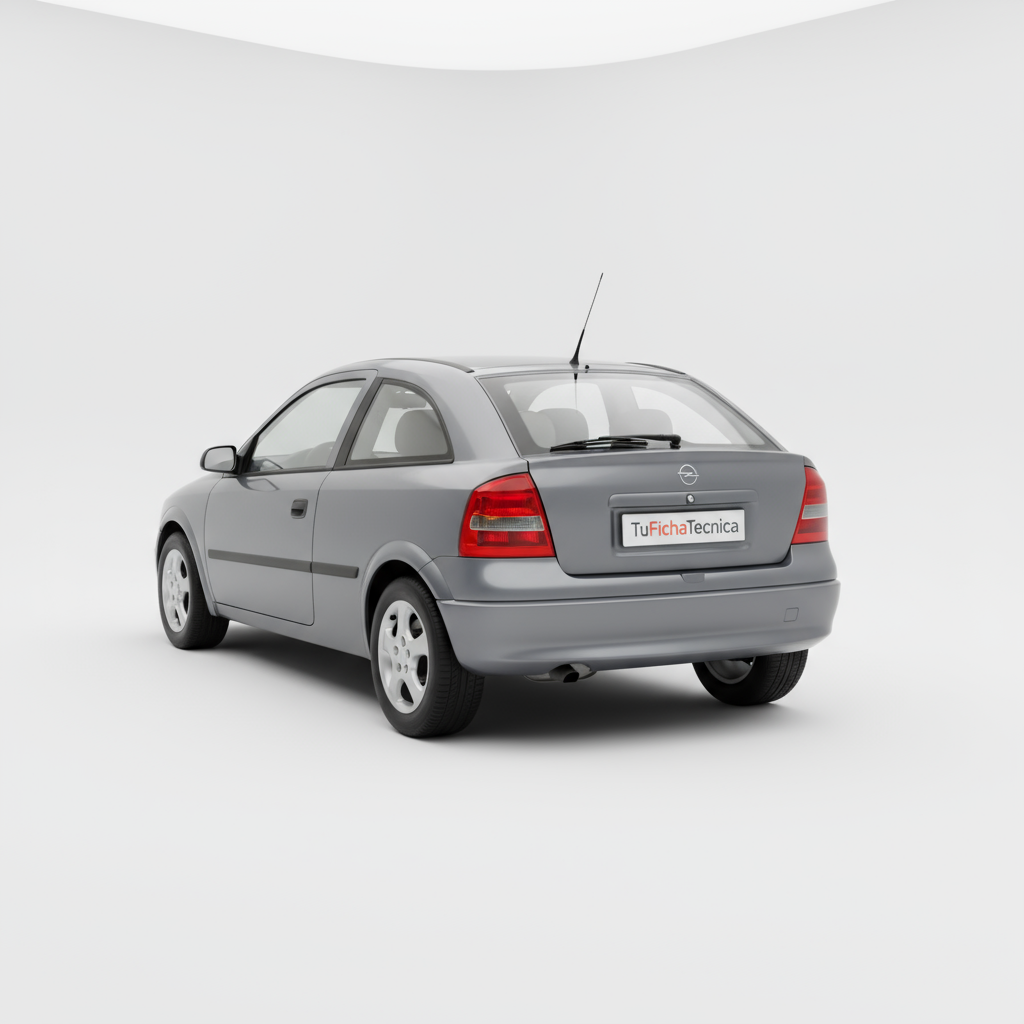
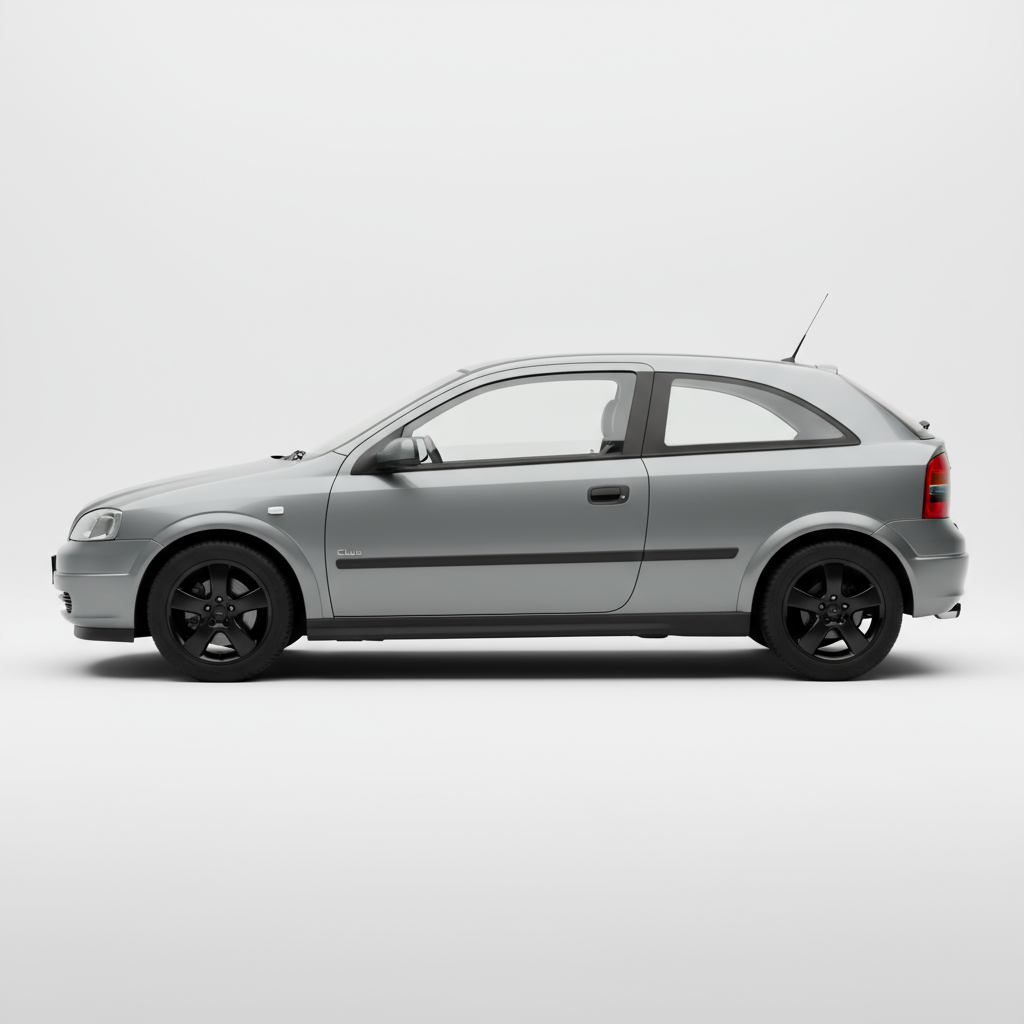
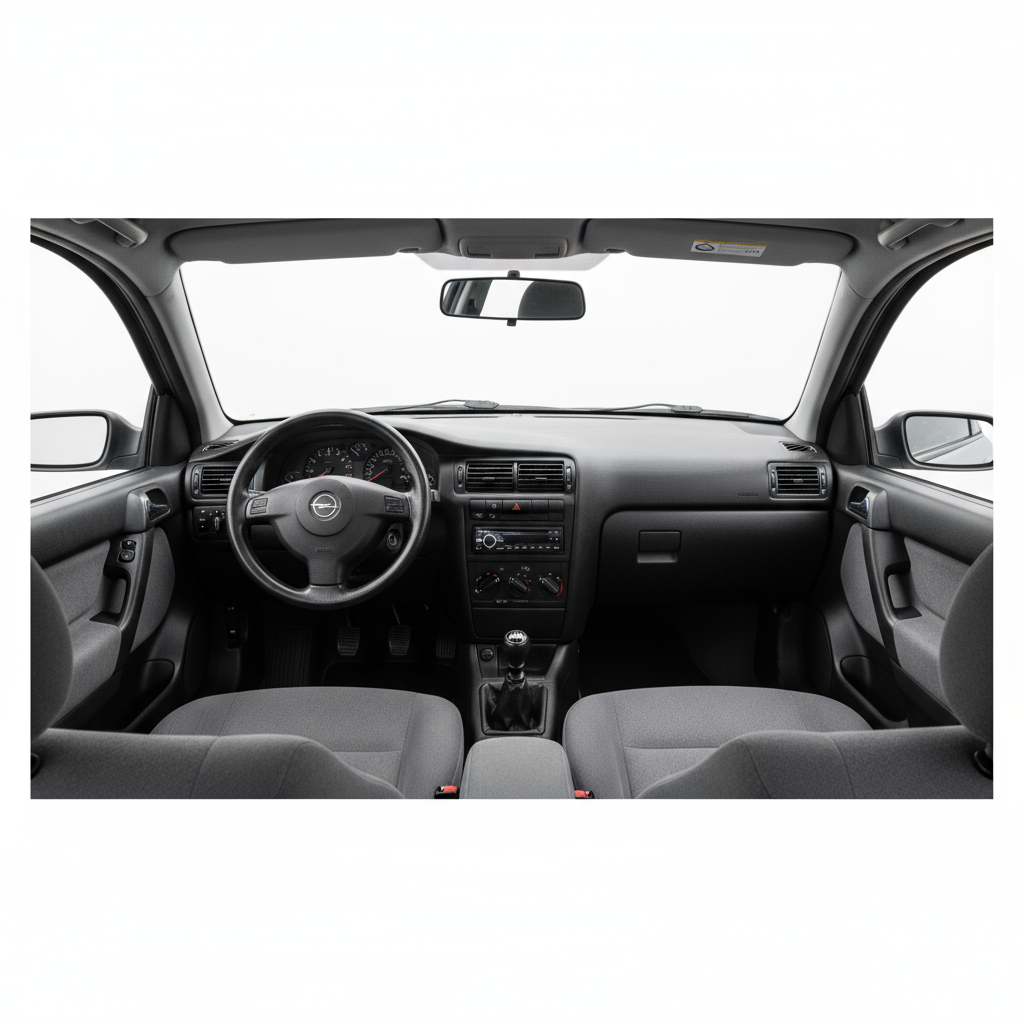
Especificaciones y análisis del Opel Astra
Power
125HP
Torque
280Nm
Consumption
6.3l/100
Emissions
-g/km
0-100 km/h
9.9s
Top Speed
203km/h
Weight
1310kg
Price
21,159€
Technical summary
Gasóleo
Manual 5v
FWD
5 / 3 doors
370 L
52 L
92 kW
Current
Technical specifications
Engine
Capacities
Detailed analysis of the Opel Astra 3p Sport 2.2 DTi 16V · 125 CV (2002-2004)
General description
The Opel Astra 3p Sport 2.2 DTi 16V, manufactured between 2002 and 2004, is a compact car that, despite its age, still evokes a sense of robustness and reliability. With its 125 hp diesel engine, it promised a balance between performance and efficiency, ideal for those looking for a practical car with a sporty touch. Its price of €21,159 at the time positioned it as an attractive option in its segment.
Driving experience
Behind the wheel of this Astra, the feeling is one of solidity. The 2.2 DTi engine, with its 125 hp and a torque of 280 Nm at just 1500 rpm, offers a strong response from low revs, which translates into 0 to 100 km/h acceleration in 9.9 seconds and a top speed of 203 km/h. The suspension, McPherson type at the front and trailing arm with torsional element at the rear, provides a good compromise between comfort and stability, although without reaching the agility of other sports cars of the era. The rack-and-pinion steering, although lacking variable assistance, transmits a decent connection to the road. The combined consumption of 6.3 l/100km was quite good for its time, allowing long journeys without too many stops at the gas station. Overall, it is a car that invites relaxed driving but does not shy away if a little more is demanded of it.
Design and aesthetics
The design of the 1998 Opel Astra, in its 3-door version, is a reflection of the aesthetics of the late 90s and early 2000s. Its lines are clean and functional, with a compact silhouette and a sporty air that is accentuated in the Sport version. The front headlights are large and wraparound, and the front grille prominently incorporates the Opel logo. The 16-inch wheels with 205/50 R16 V tires give it a more robust presence. Inside, functionality takes precedence over luxury, with a well-organized dashboard and durable materials. Despite its age, the design remains recognizable and, for some, even timeless within its segment.
Technology and features
In terms of technology, the Opel Astra 3p Sport 2.2 DTi 16V of this generation is at an intermediate point. Its direct injection diesel engine with variable geometry turbo and intercooler was advanced technology for its time, offering a good combination of power and efficiency. The 5-speed manual transmission is robust and reliable. In terms of safety, it had ventilated disc brakes of 280 mm at the front and 264 mm discs at the rear, which guaranteed effective braking. However, it lacked many of the driving aids and infotainment systems that we now consider standard. Its technology focused on mechanics and durability, rather than connectivity or digitalization.
Competition
At the time, the Opel Astra 3p Sport 2.2 DTi 16V faced tough competitors in the sporty diesel compact segment. Its main rivals included the Volkswagen Golf TDI, the Ford Focus TDCi, and the Peugeot 307 HDi. Each offered its own virtues: the Golf stood out for its build quality and premium image, the Focus for its driving dynamics, and the 307 for its comfort and interior space. The Astra positioned itself as a balanced option, with a powerful and efficient diesel engine, an attractive design, and a reputation for reliability that made it very competitive in the market.
Conclusion
The Opel Astra 3p Sport 2.2 DTi 16V is a car that, despite its age, remains a testament to Opel's engineering from the turn of the century. It offers a robust and well-performing diesel engine, a functional design, and a reliability that has kept it on the roads for a long time. It is an honest car, without great pretensions of luxury, but one that more than fulfills its function of daily transport with a touch of sportiness. For those looking for a modern classic, with relatively simple maintenance and low consumption, this Astra is still an option to consider.