
Especificaciones y análisis del Mazda MX-30
Power
145HP
Torque
271Nm
Consumption
17.9l/100
Emissions
-g/km
0-100 km/h
9.7s
Top Speed
140km/h
Weight
1720kg
Price
36,050€
Technical summary
Eléctrico
Automático 1v
FWD
5 / 5 doors
366 L
- L
107 kW
Current
Technical specifications
Engine
Capacities
Detailed analysis of the Mazda MX-30 e-Skyactiv EV Advantage · 145 CV (2022-2024)
General description
The Mazda MX-30 is an electric SUV that bursts onto the market with a bold proposal and a design that leaves no one indifferent. Launched in 2020, this model seeks to offer a different driving experience, combining Mazda's philosophy with electric mobility. Its price of €36,050 positions it in a competitive segment, seeking to attract those who value aesthetics and a pleasant driving experience above maximum range.
Driving experience
Behind the wheel of the MX-30, the sensation is one of agility and control. Its 145 HP and 271 Nm of torque, along with an acceleration from 0 to 100 km/h in 9.7 seconds, offer an adequate response for daily use. The steering is precise and the suspension, McPherson type at the front and torsion beam at the rear, provides a good balance between comfort and dynamism. The top speed of 140 km/h is sufficient for most scenarios, although its 200 km WLTP range can generate some anxiety on long journeys. The 35.5 kWh battery, centrally located, contributes to a low center of gravity, improving stability.
Design and aesthetics
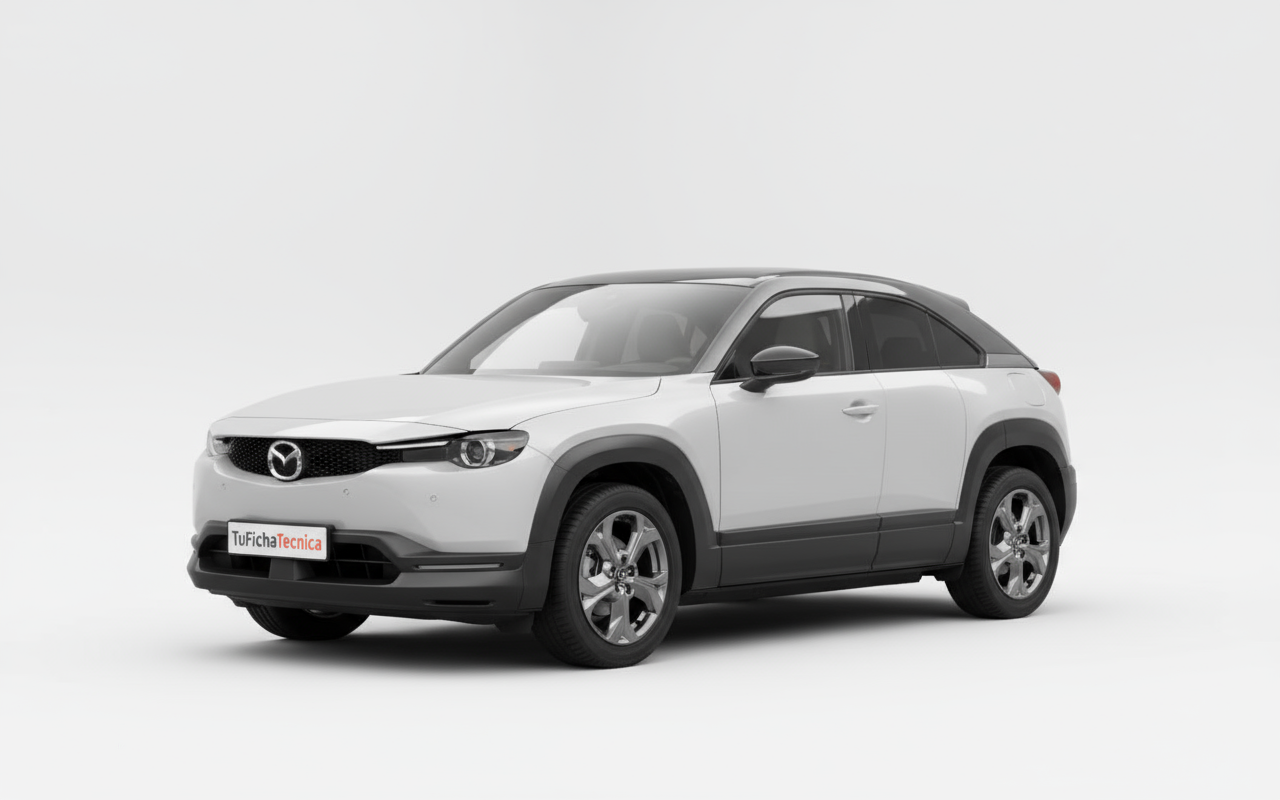
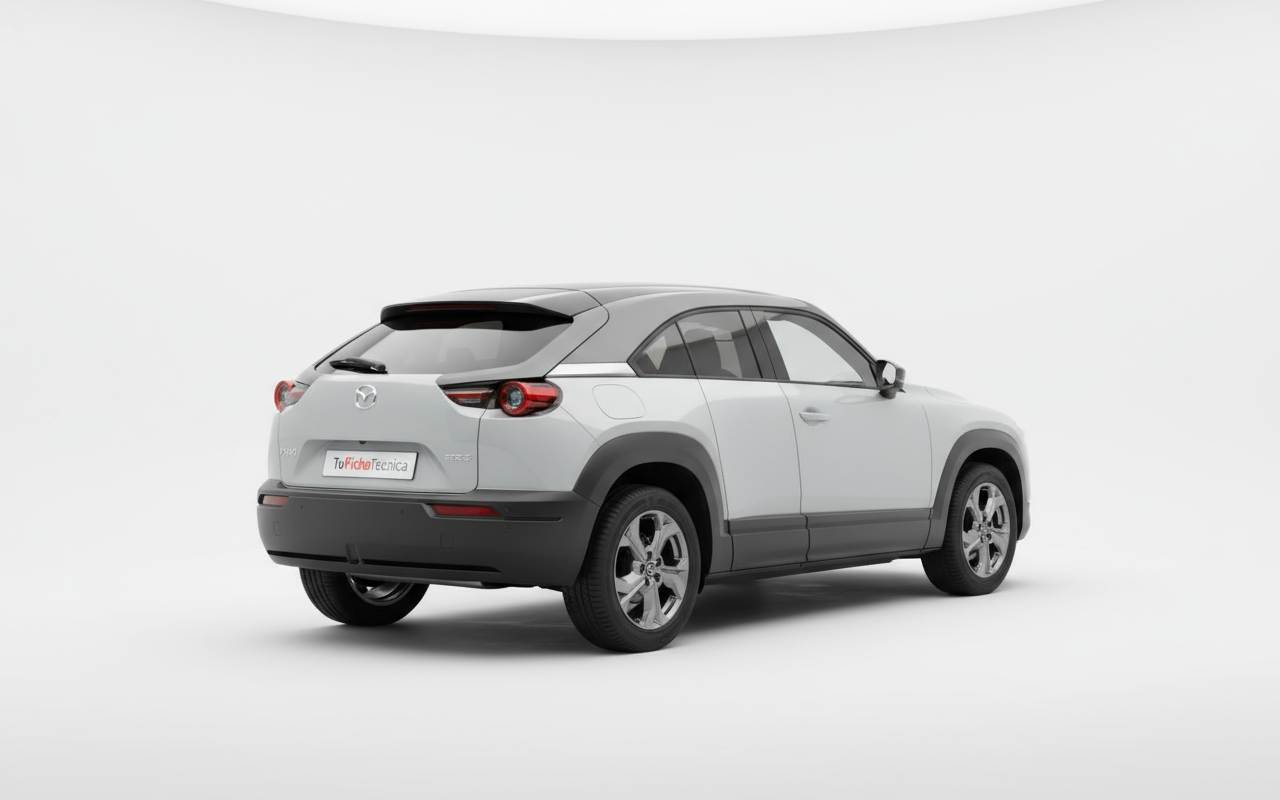
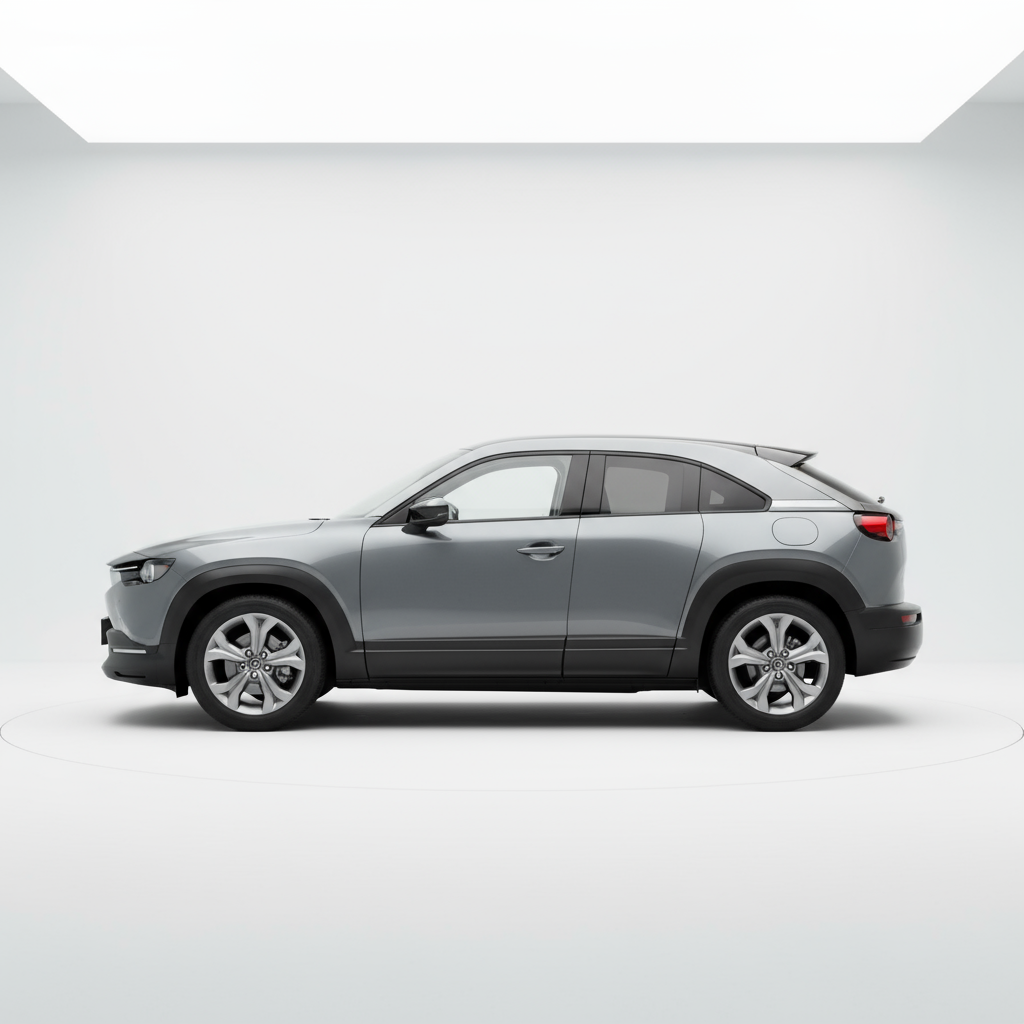
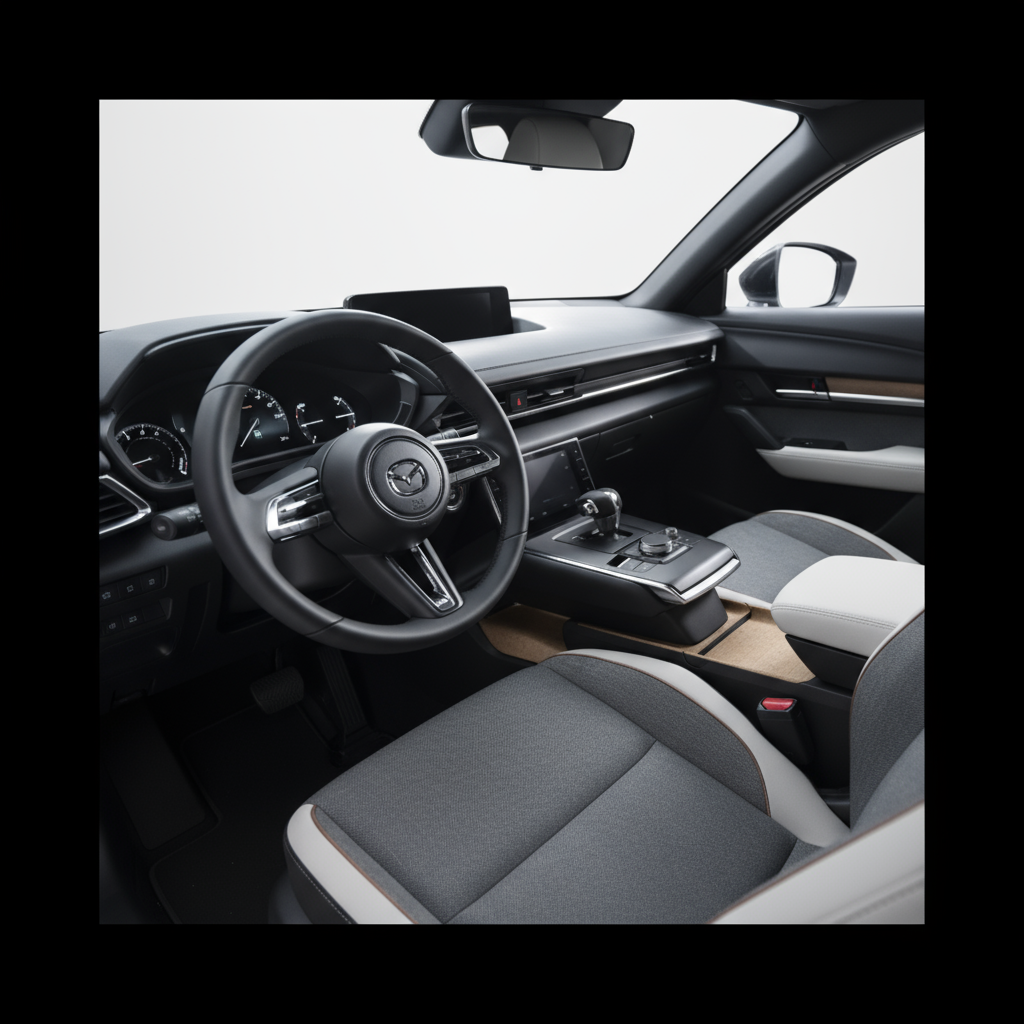
The design of the Mazda MX-30 is, without a doubt, one of its strongest and most distinctive points. With a length of 4395 mm, a width of 1795 mm, and a height of 1555 mm, it presents compact and robust proportions. The reverse-opening rear doors, 'freestyle' style like in the RX-8, are a differentiating element that adds a touch of originality and facilitates access to the cabin, although they may be less practical in confined spaces. The interior, with sustainable materials and a minimalist design, creates a cozy and modern atmosphere. The absence of a B-pillar in the rear doors is an aesthetic detail that enhances its uniqueness.
Technology and features
The MX-30 incorporates electric technology with a 35.5 kWh battery and a 145 HP motor. DC fast charging up to 50 kW allows recharging from 10% to 80% in approximately 26 minutes, while 11 kW AC charging is ideal for home use. Although its 200 km WLTP range is modest compared to some rivals, Mazda has prioritized a smaller battery to reduce environmental impact and vehicle weight. The infotainment system is intuitive and connectivity is up to par with what is expected in a modern car.
Competition
In the competitive segment of electric SUVs, the Mazda MX-30 faces models such as the Hyundai Kona Electric, the Kia e-Niro, or the Peugeot e-2008. These rivals usually offer greater ranges, which can be a decisive factor for some buyers. However, the MX-30 stands out for its unique design, its focus on the driving experience, and the quality of its finishes, appealing to an audience that seeks something different and values aesthetics and driving feel above pure range.
Conclusion
The Mazda MX-30 is a car bought with the heart. Its bold design, carefully crafted interior, and pleasant driving dynamics make it an attractive option for those looking for an electric SUV with personality. While its 200 km range may be a limitation for long journeys, it is more than sufficient for daily use in urban and suburban environments. It is a car to enjoy, for those who value aesthetics and the driving experience above pure range figures. It is a statement of Mazda's intentions in the electric world, maintaining its 'Jinba Ittai' essence.