
Especificaciones y análisis del Lotus Elise
Power
120HP
Torque
168Nm
Consumption
7.3l/100
Emissions
-g/km
0-100 km/h
5.7s
Top Speed
200km/h
Weight
831kg
Price
39,293€
Technical summary
Gasolina
Manual 5v
RWD
2 / 2 doors
115 L
38 L
88 kW
Current
Technical specifications
Engine
Capacities
Detailed analysis of the Lotus Elise · 120 CV (2004-2006)
General description
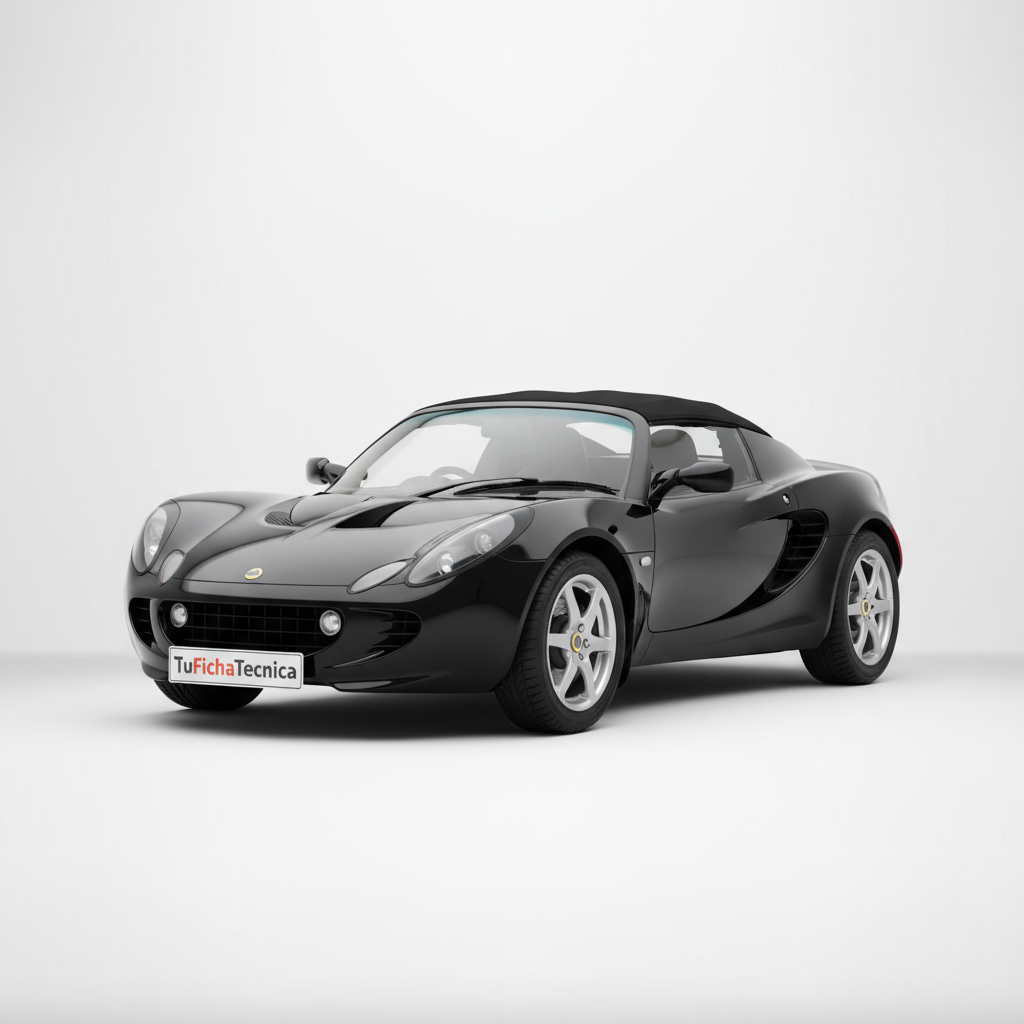
The 2000 Lotus Elise is a pure sports car, a machine designed to offer unparalleled driving sensations. With its extreme lightness and minimalist approach, this car does not seek comfort, but rather a direct connection between the driver and the road. It is a vehicle that invites you to feel every curve, every acceleration, turning every journey into an exciting adventure. Its price of €39,293 at the time positioned it as an attractive option for enthusiasts looking for an uncompromising sports car.
Driving experience
Driving the Lotus Elise is a visceral experience. Its 120 hp may seem modest, but combined with a weight of only 831 kg, the Elise accelerates from 0 to 100 km/h in an impressive 5.7 seconds. The steering is direct and unassisted, allowing you to feel every imperfection of the asphalt. The double wishbone suspension on both axles, without anti-roll bars, guarantees exceptional agility and immediate response to every steering wheel movement. The 1.8-liter transverse mid-engine, with 168 Nm of torque, delivers its power linearly, inviting you to push every gear of its 5-speed manual gearbox. It is a car that demands and rewards you with one of the purest driving experiences available.
Design and aesthetics
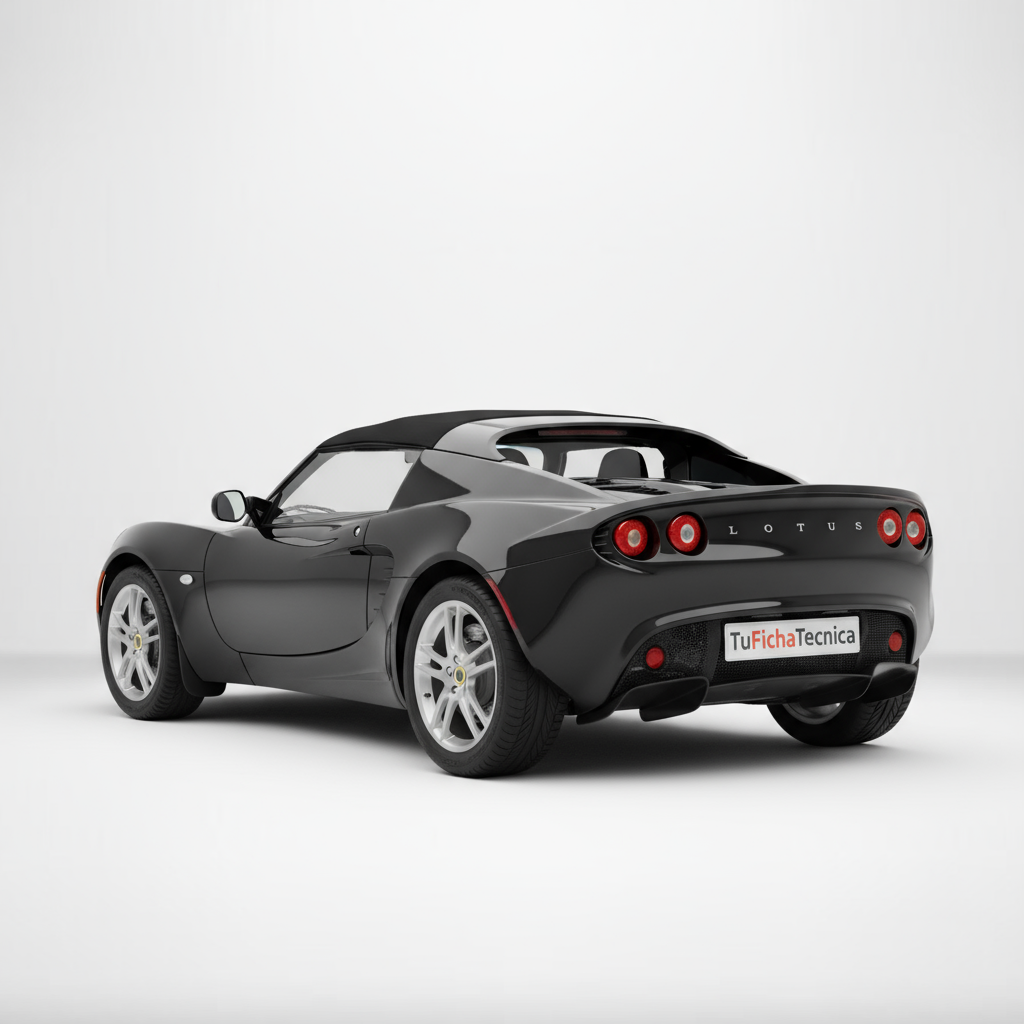
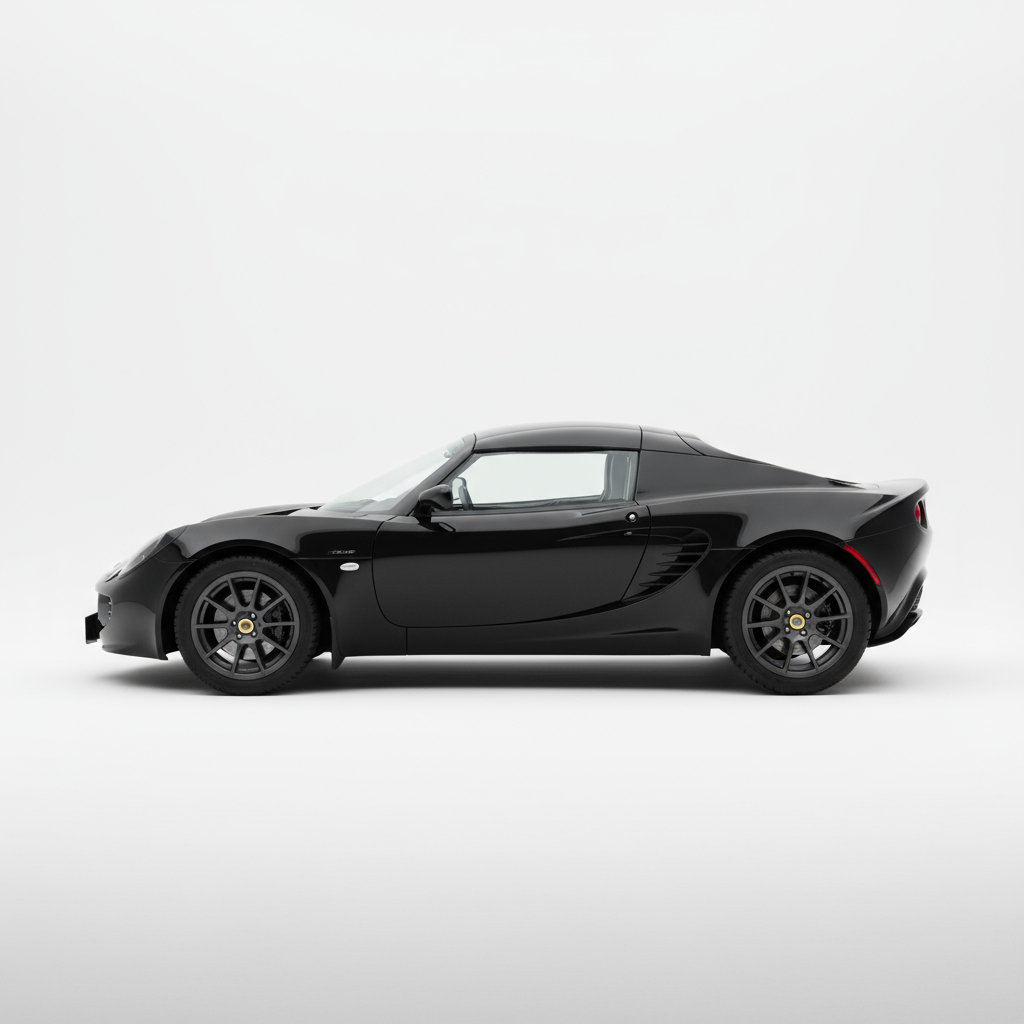
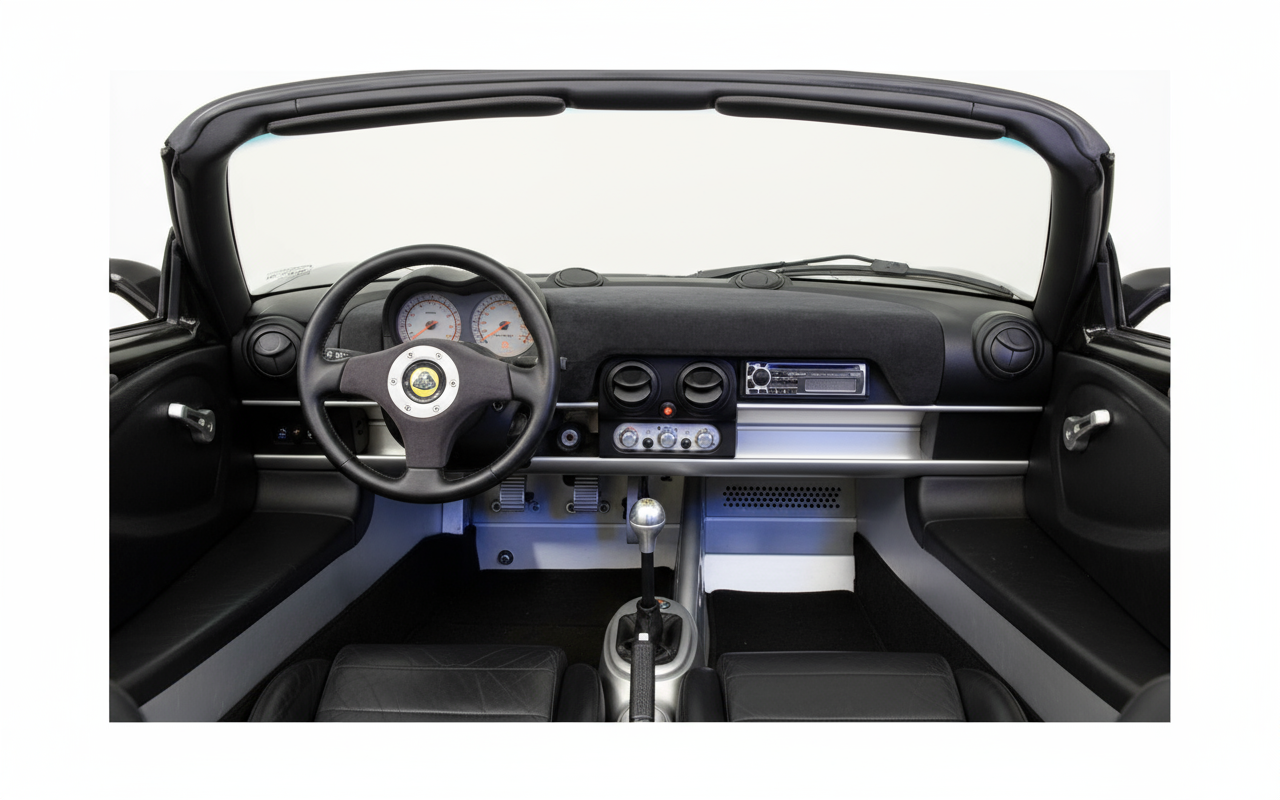
The design of the Lotus Elise is timeless and functional. Its fluid lines and low silhouette are not only aesthetically appealing but also contribute to its excellent aerodynamics and lightness. With a length of 3785 mm, a width of 1719 mm, and a height of only 1143 mm, the Elise is compact and muscular. The 16-inch front and 17-inch rear wheels, with different tire sizes (175/55 R16 and 225/45 R17), accentuate its sporty stance. The interior is spartan, driver-focused, with just enough elements not to distract from the driving experience. Every detail is designed to reduce weight and improve performance.
Technology and features
The technology of the Lotus Elise focuses on lightness and mechanical efficiency. Its extruded aluminum chassis, an innovation at the time, is the key to its low weight and torsional rigidity. The 1795 cc gasoline engine, with 4 cylinders and 16 valves, uses indirect injection and has a compression ratio of 10.5. The 282 mm ventilated disc brakes on both axles ensure exceptional braking capability. Although it lacks many modern electronic aids, its technology lies in pure engineering and the optimization of each component for performance. Its combined consumption of 7.3 l/100km is remarkable for a sports car of its caliber.
Competition
In its time, the Lotus Elise competed with lightweight sports cars focused on pure driving. Its main rivals might include models like the Porsche Boxster, although the Elise offered a much rawer and less filtered experience. Other possible competitors would be the Honda S2000 or even some more powerful roadsters, but none matched the Elise's philosophy of extreme lightness and connection to the road. Its proposal was unique, attracting an audience that valued driving purity above brute power or luxury.
Conclusion
The 2000 Lotus Elise is more than a car; it is a statement of intent. It represents the essence of sports driving, where lightness and agility are the true protagonists. It is a vehicle for those who seek strong emotions, who enjoy every curve, and who appreciate engineering focused on performance. Although it is not the most practical or comfortable car, its ability to bring smiles and offer an unforgettable driving experience makes it an instant classic and an object of desire for purists. Its legacy endures as one of the most influential and beloved sports cars of its time.