
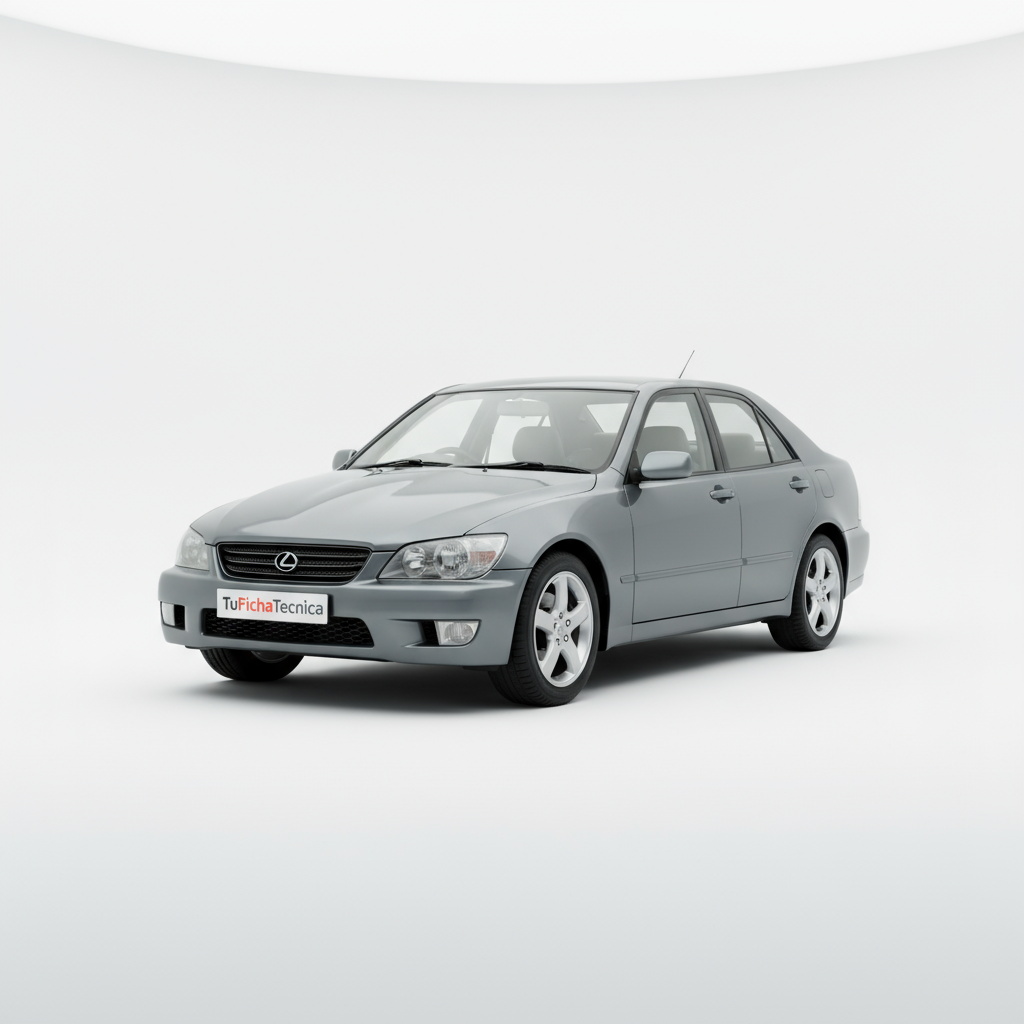
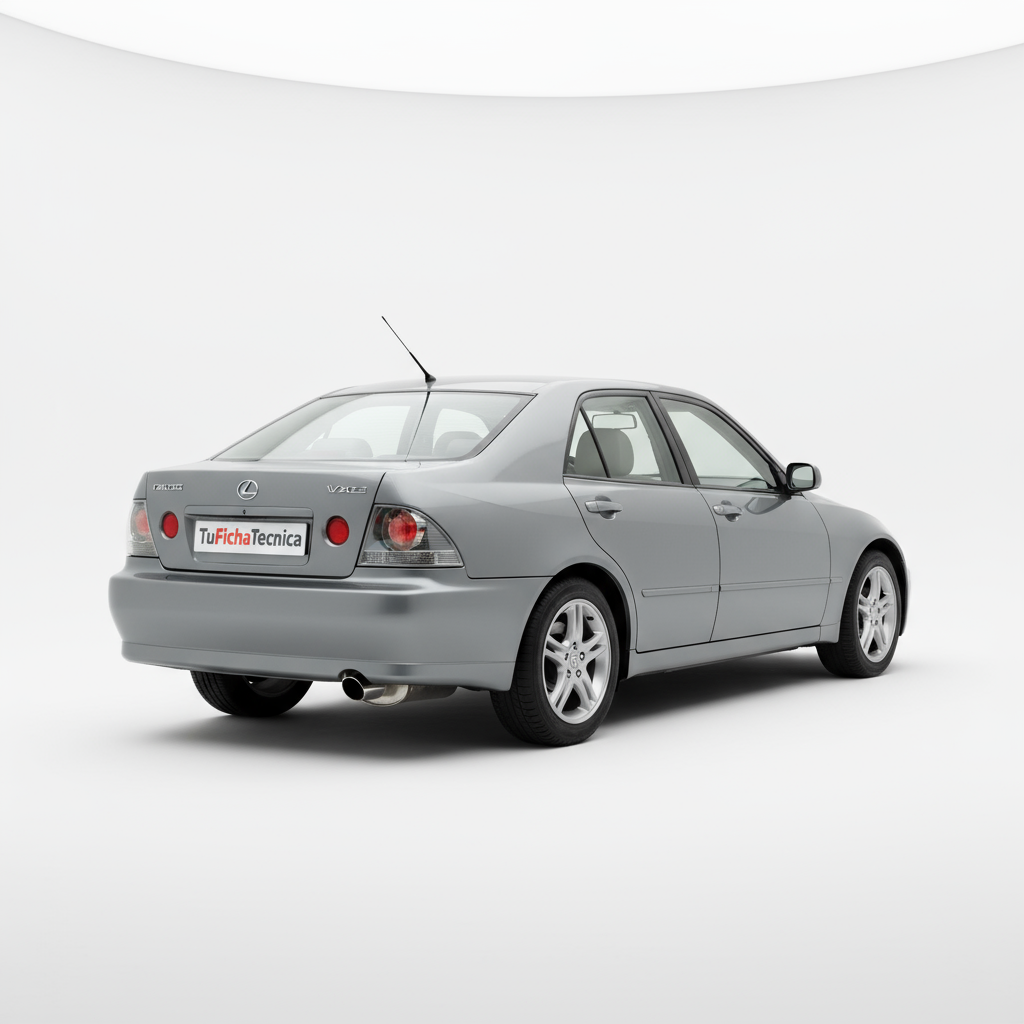
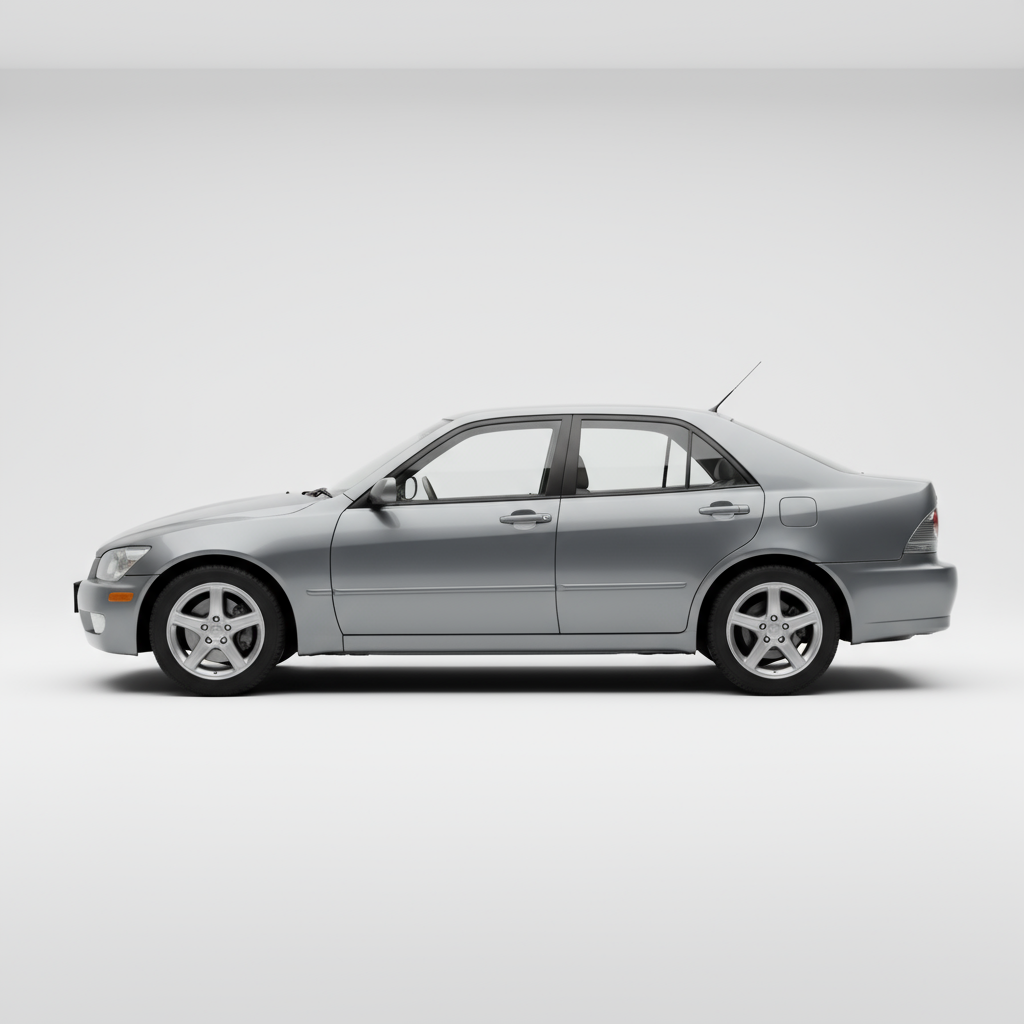
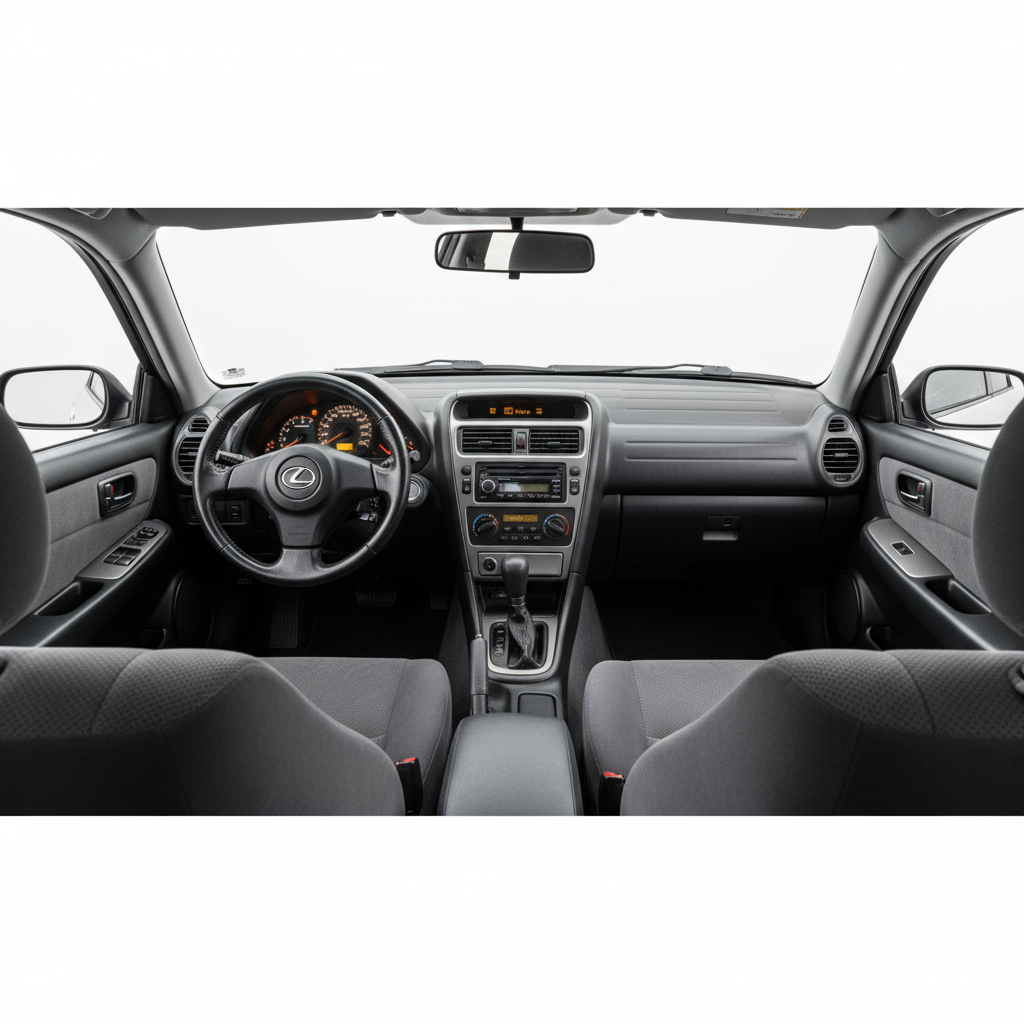
Especificaciones y análisis del Lexus IS
Power
155HP
Torque
195Nm
Consumption
-l/100
Emissions
-g/km
0-100 km/h
11.2s
Top Speed
205km/h
Weight
1440kg
Price
29,483€
Technical summary
Gasolina
Automático 4v
RWD
5 / 4 doors
400 L
70 L
114 kW
Current
Technical specifications
Engine
Capacities
Detailed analysis of the Lexus IS-200 Automático · 155 CV (1999-2000)
General description
The 1999 Lexus IS 200 was a statement of intent, Lexus's bold entry into the competitive ring of European premium compact sedans. It didn't come to imitate, but to offer an alternative with a Japanese soul, an intoxicating mix of refinement, quality, and a unique character that challenged the German status quo.
Driving experience
Driving this car is an experience that caresses the senses. Its heart is its inline 6-cylinder engine, a 2.0-liter gem that sings with a heavenly smoothness as it revs up. It's not an explosive sprinter, but its power delivery is so linear and refined that you fall in love with it. The rear-wheel drive provides a delightful balance in corners, conveying confidence and a pure connection to the asphalt. The 4-speed automatic gearbox, while not the fastest, aligns perfectly with the car's philosophy: a serene and pleasant journey, where fluidity matters more than abruptness.
Design and aesthetics
Its design was a breath of fresh air that has aged with exceptional grace. The most iconic detail is its instrument cluster, inspired by a high-end chronograph, a piece that makes you feel you're in something truly special every time you look at it. On the outside, its clear taillights started a trend that defined an era. Its proportions are compact and athletic, a silhouette that still turns heads for its elegance and distinctive personality.
Technology and features
For its time, the IS 200 was a showcase of meticulous Japanese engineering. The engine, with its iron block and aluminum head, along with variable intake, was a work of art in pursuit of maximum smoothness and reliability. Although the four-speed automatic transmission may seem simple today, it represented the comfort and luxury of the late 90s. Everything in the car, from the chassis to the interior fittings, was focused on delivering outstanding build quality and durability.
Competition
The target was clear: the German triumvirate. It fearlessly faced the BMW 3 Series, the Mercedes-Benz C-Class, and the Audi A4 of the time. While the Germans offered their proven formula of engineering and prestige, the Lexus IS 200 countered with a groundbreaking design, legendary reliability, and a driving experience that prioritized harmony and refinement over raw sportiness. It was the choice for the connoisseur looking for something different.
Conclusion
The Lexus IS 200 Automatic is not just a car, it's an experience. It's proof that a premium sedan can be built with a different approach, one that appeals to emotion through smoothness, detail, and quality. It represents a golden age of Japanese engineering, a future classic that feels as special today as the day it left the dealership. A car with a soul that endures over time.