
Especificaciones y análisis del KIA Carnival
Power
145HP
Torque
310Nm
Consumption
8.2l/100
Emissions
-g/km
0-100 km/h
15.2s
Top Speed
168km/h
Weight
2090kg
Price
26,696€
Technical summary
Gasóleo
Manual 5v
FWD
7 / 5 doors
1059 L
75 L
106.3 kW
Current
Technical specifications
Engine
Capacities
Detailed analysis of the KIA Carnival 2.9 CRDI EX 7 plazas · 145 CV (2001-2006)
General description
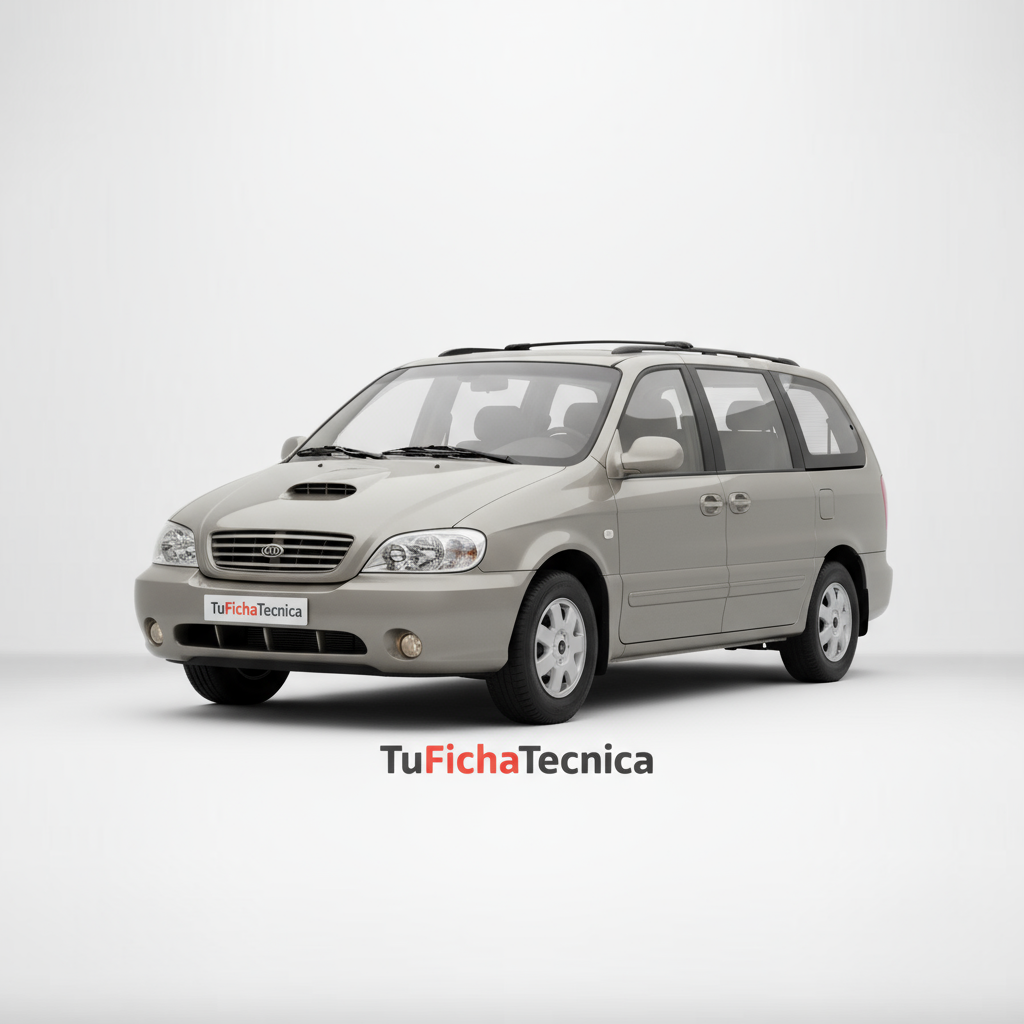
The 2001 KIA Carnival burst onto the market as a promise of space and freedom for large families. In an era when minivans were the kings of the road, this Korean giant offered an honest and affordable solution, a vehicle designed not to impress, but to serve faithfully in daily life and on great family adventures.
Driving experience
Getting behind the wheel of the Carnival is an experience of pure functionality. Its 145-horsepower 2.9 CRDI diesel engine doesn't seek acceleration records, but rather to capably move its more than two tons of weight thanks to generous torque from low revs. The ride is calm and comfortable, ideal for long highway trips where the suspension filters out irregularities well. In corners, its size and weight are noticeable, encouraging a calm and anticipatory driving style. It's the sound of a robust engine and the feeling of commanding the road from an elevated position that defines its character.
Design and aesthetics
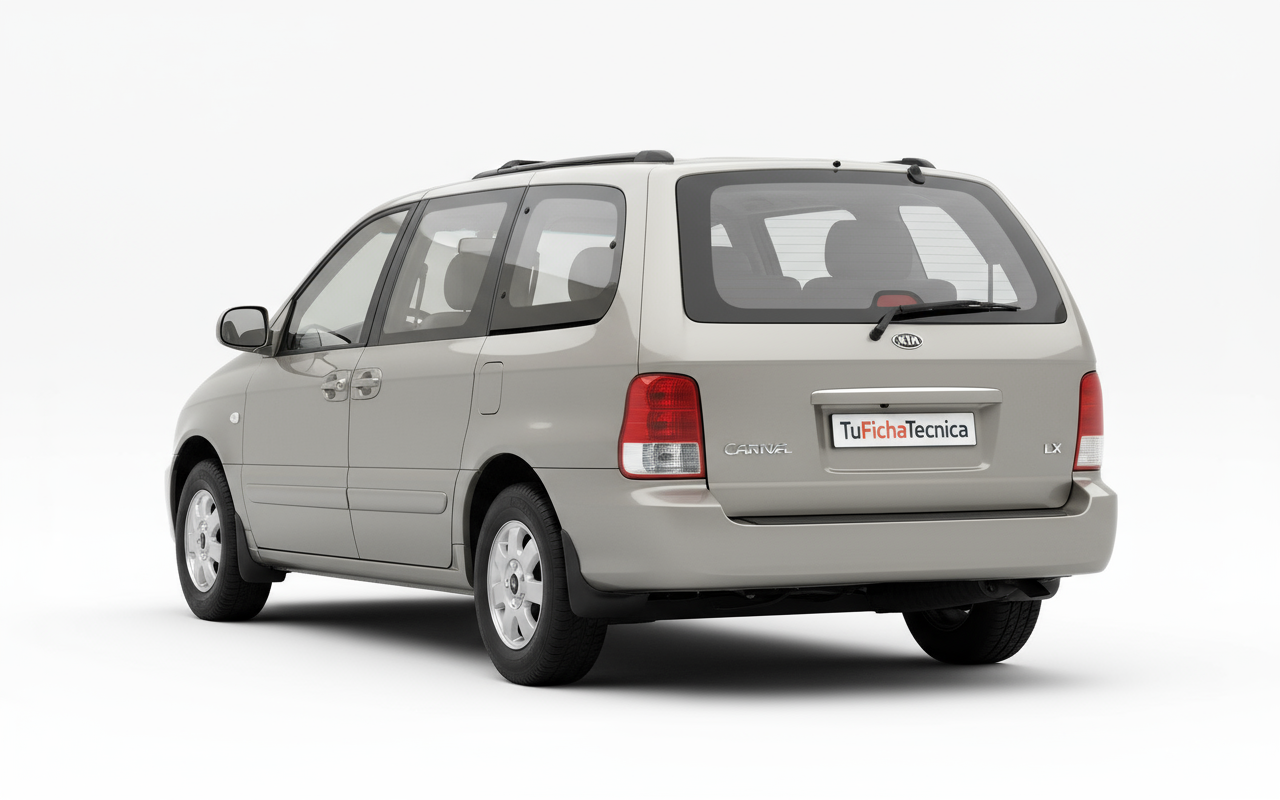
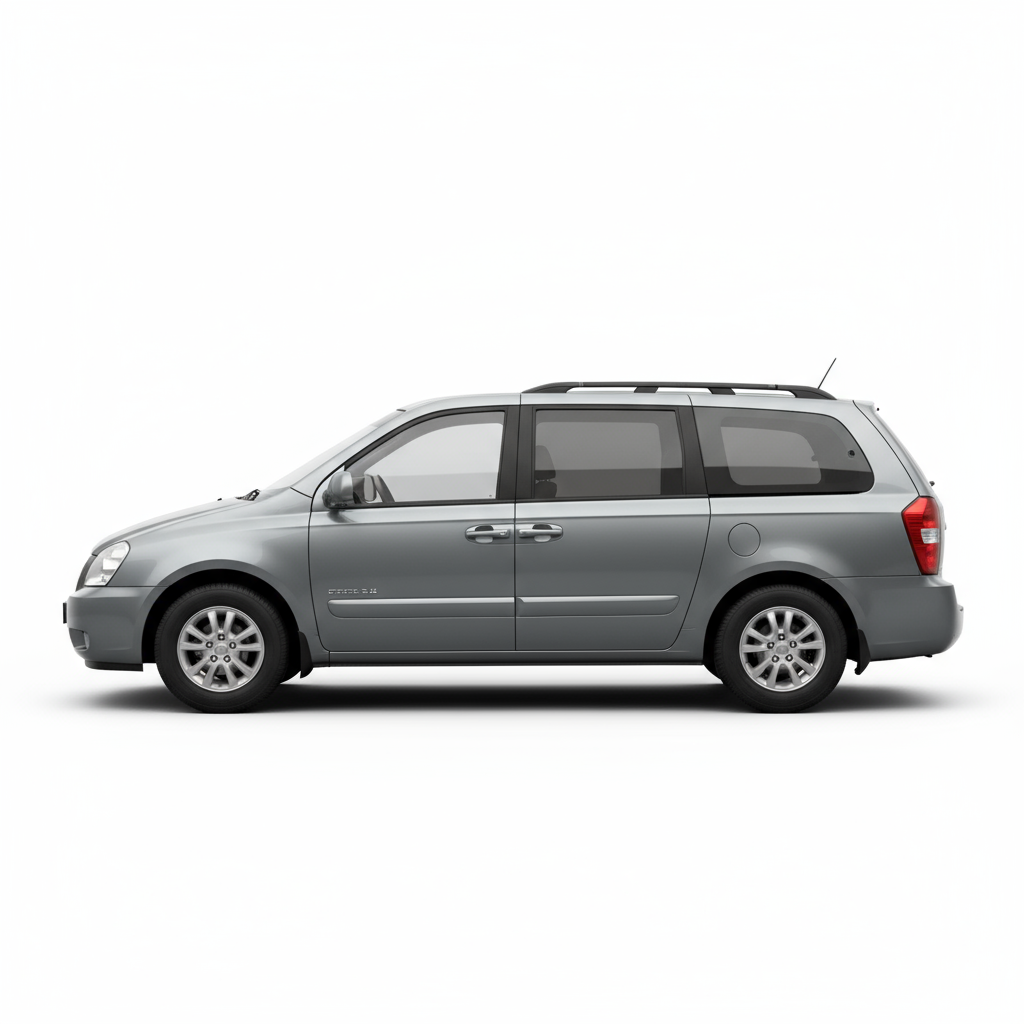
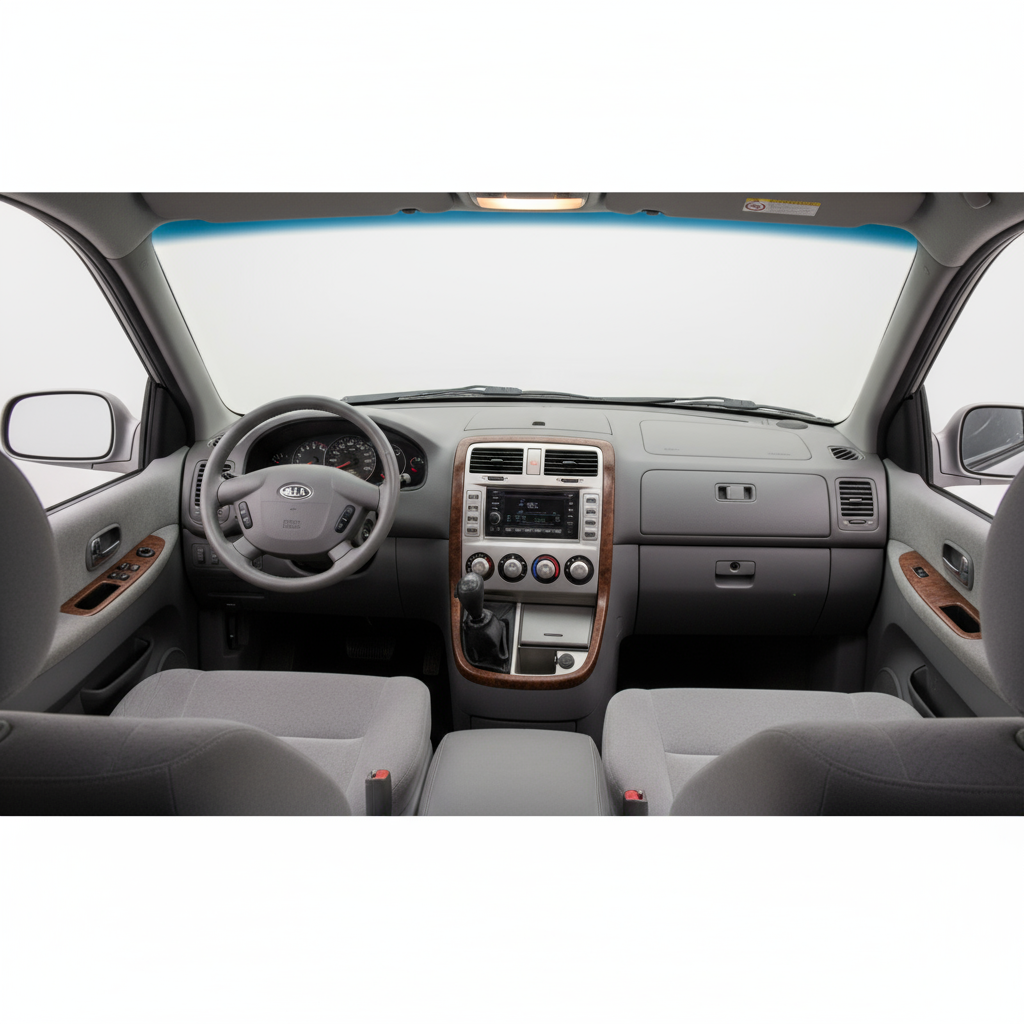
The design of the KIA Carnival is an ode to practicality. Its almost cubic shapes, without superfluous adornments, serve a clear objective: to maximize interior space. At almost five meters long and with sliding rear doors, access to its cavernous seven-seater cabin is extraordinarily convenient. Inside, the materials are simple and durable, designed to withstand the demanding treatment of a family. It doesn't win you over with its beauty, but with its functional intelligence and imposing presence.
Technology and features
Technologically, the Carnival was a car of its time. Its greatest advancement was the common-rail direct injection engine, which provided reasonable performance and fuel consumption for its size. The comfort equipment met the essentials, but its budget positioning was noticeable in safety, with a simple braking system of front discs and rear drums and the absence of the electronic aids that were beginning to become popular. It was a vehicle with proven mechanics, where robustness took precedence over digital sophistication.
Competition
In the competitive large minivan segment, the Carnival faced titans like the Chrysler Voyager, the Renault Espace, or the trio of the Peugeot 807, Citroën C8, and Fiat Ulysse. While its European rivals often offered more refinement and technology, the KIA Carnival played its best card: an unbeatable relationship between space, versatility, and price. It was the smart buy for anyone who needed seven seats and a gigantic trunk without breaking the bank.
Conclusion
The first-generation KIA Carnival is more than just a vehicle; it's the memory of family trips, of back seats filled with laughter, and of a trunk capable of swallowing everything needed for a vacation. It was a loyal and hardworking companion, an unpretentious vehicle that more than fulfilled its mission of transporting those we love most. Its legacy lies not in speed or luxury, but in the miles of shared life it made possible.