
Especificaciones y análisis del Jeep Wrangler
Power
177HP
Torque
296Nm
Consumption
13l/100
Emissions
321g/km
0-100 km/h
10.6s
Top Speed
172km/h
Weight
1640kg
Price
28,050€
Technical summary
Gasolina
Automático 4v
AWD
4 / 3 doors
252 L
72 L
130 kW
Current
Technical specifications
Engine
Capacities
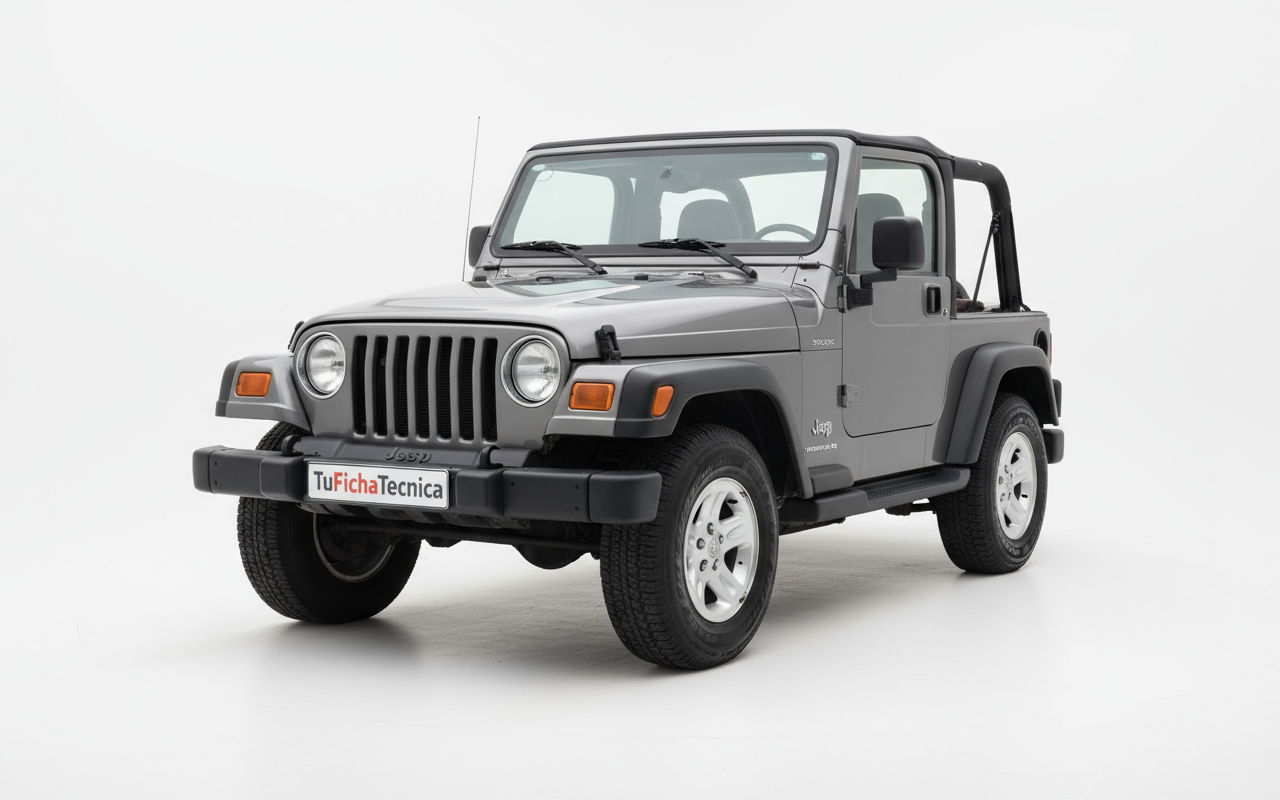
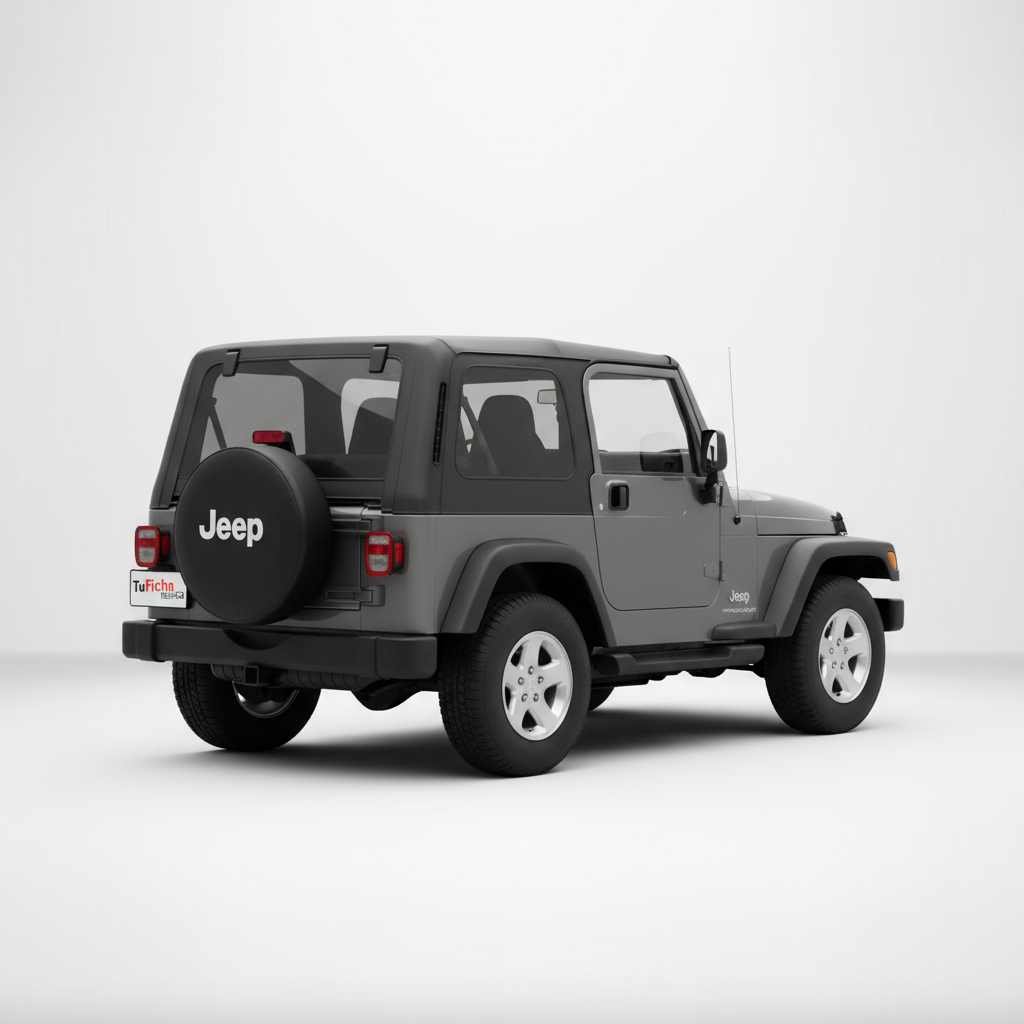
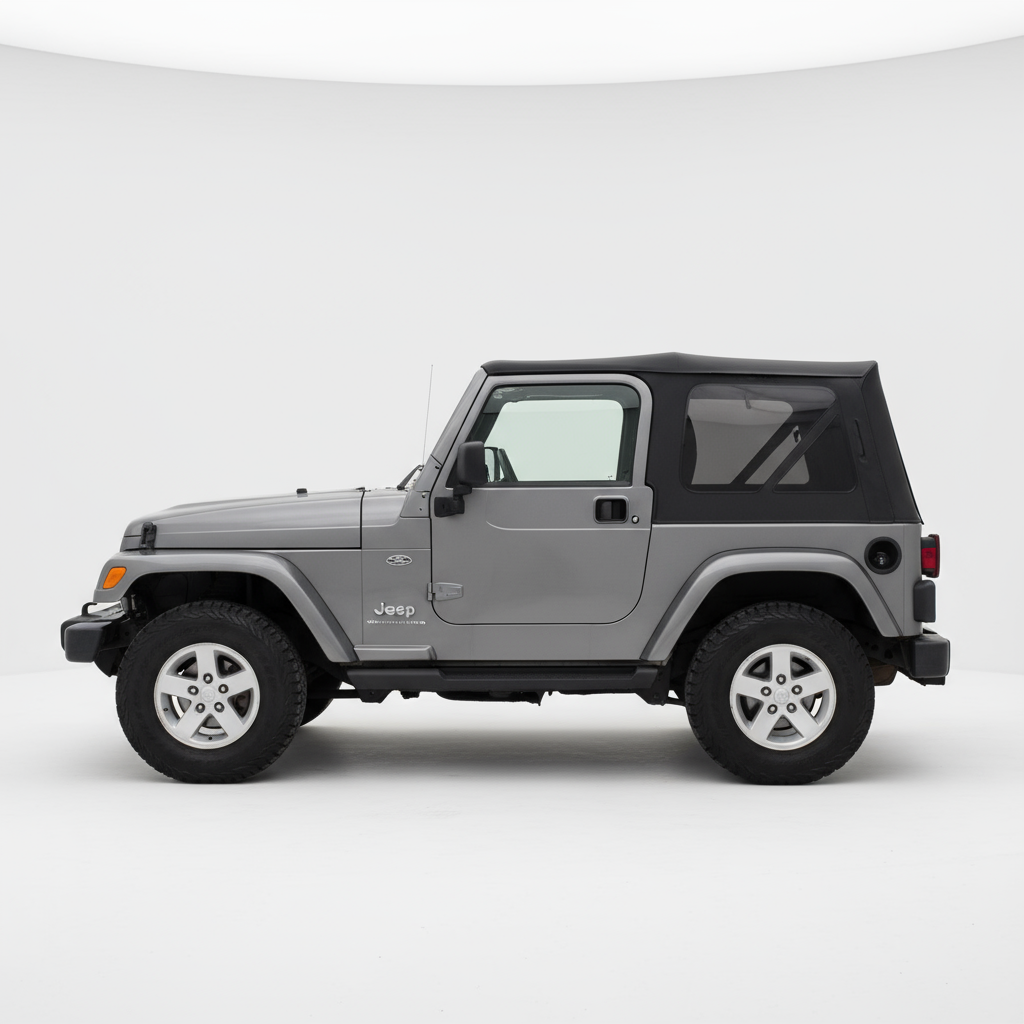
Detailed analysis of the Jeep Wrangler Sport 4.0 Techo Duro Aut. · 177 CV (2002-2006)
General description
The Jeep Wrangler is not just a car; it's a statement of intent, a timeless icon that evokes freedom and adventure in its purest form. This model, a direct heir to a lineage of military vehicles, transports you to an era when the connection with the machine and the environment was everything. Getting into it is to feel the call of the wild, a promise to escape the routine and conquer any terrain that lies ahead.
Driving experience
Driving this Wrangler is a visceral and authentic experience. The heart of the beast, a robust 4.0-liter 6-cylinder engine, delivers generous torque that pushes you with raw, honest force. It doesn't seek speed records but aims to offer inexhaustible traction. The solid axle suspension makes you feel every inch of the road, transmitting a direct connection to the terrain that modern SUVs have forgotten. It's noisy, it's rough, and every journey becomes a small expedition, especially if you decide to remove the roof and let the wind and the engine's sound flood the cabin.
Design and aesthetics
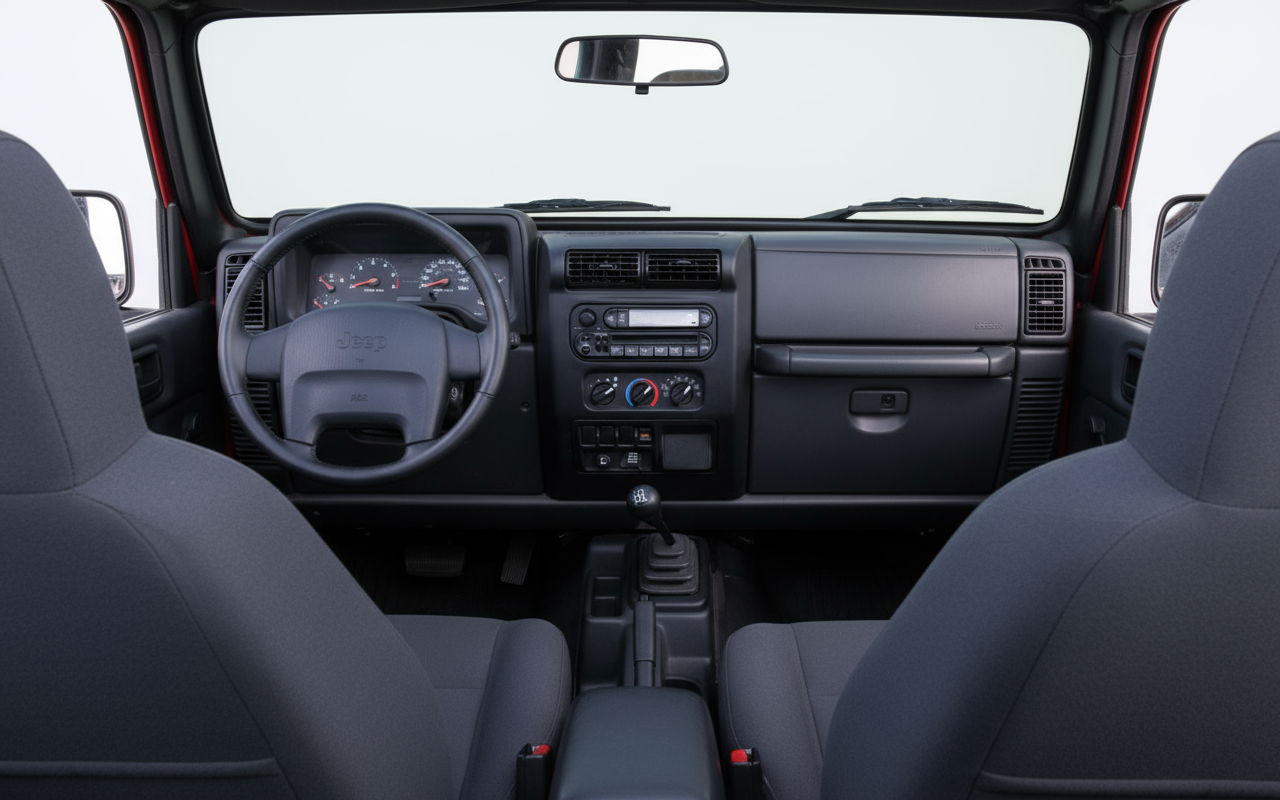
Its design is a masterpiece of functionality and character. The round headlights, the seven-slot grille, and the exposed hinges are not ornaments; they are part of its functional and rugged DNA. It's a form that follows function, with wide fenders, high ground clearance, and the ability to remove doors and the roof for total immersion in nature. The interior is spartan, designed to withstand dust, mud, and water, with large, simple controls you can operate even with gloves. There are no luxuries, only the essence of driving.
Technology and features
Technology in this Wrangler is measured in mechanical, not digital, terms. Forget touch screens and driving assistants. Here, the real technological prowess is its Command-Trac four-wheel-drive system, its solid axles, and an almost indestructible iron engine. It's a vehicle that celebrates analog engineering, a robust and reliable machine where every component is designed to last and be repaired with relative ease. Its technology is what allows you to reach places where mobile coverage is just a memory.
Competition
In the pantheon of pure off-roaders of its time, few could look it in the eye. Its most direct rival in philosophy was the Land Rover Defender, another icon with a similar focus on off-road capability over comfort. It also faced the Toyota Land Cruiser 90 series, which offered legendary Japanese reliability with a perhaps slightly more civilized approach. On a smaller scale, vehicles like the Suzuki Vitara or the Jimny tried to offer a dose of adventure, but without the power and imposing presence of the Wrangler.
Conclusion
The Jeep Wrangler 4.0 is a purely emotional purchase. It's an imperfect vehicle for daily use: it's thirsty, noisy, and its on-road comfort is limited. However, for those who value freedom, the capacity for adventure, and a genuine mechanical connection, it has no rival. It's more than a car; it's a tool for creating memories, a passport to inaccessible places, and another member of the family for lovers of nature and real driving. To own it is to understand that the destination is not what's important, but the path you dare to explore.