
Especificaciones y análisis del Hyundai i30
Power
100HP
Torque
137Nm
Consumption
6l/100
Emissions
139g/km
0-100 km/h
12.8s
Top Speed
182km/h
Weight
1260kg
Price
17,397€
Technical summary
Gasolina
Manual 6v
FWD
5 / 5 doors
378 L
53 L
73.6 kW
Current
Technical specifications
Engine
Capacities
Detailed analysis of the Hyundai i30 5p 1.4 MPi 100 CV SLE (2013)
General description
The 2012 Hyundai i30 was not just another car; it was a statement of intent. With this generation, the Korean brand proved it could go head-to-head with the European kings of the compact segment, offering a well-rounded product that captivated with its design and convinced with its quality. It was the car that changed the perception of Hyundai forever, a travel companion that promised reliability and a surprisingly pleasant driving experience.
Driving experience
Behind the wheel, the i30 with its 100 hp engine envelops you in an atmosphere of calm and confidence. It's not a car for seeking thrills, but for enjoying a smooth and serene journey. Its naturally aspirated engine responds progressively, and the six-speed gearbox allows you to tap into its potential in a relaxed manner. The chassis feels poised and comfortable, effectively filtering out irregularities and offering a stability that makes you feel safe at all times. It's a car that doesn't ask for a fight, but invites you to enjoy the pleasure of stress-free driving.
Design and aesthetics
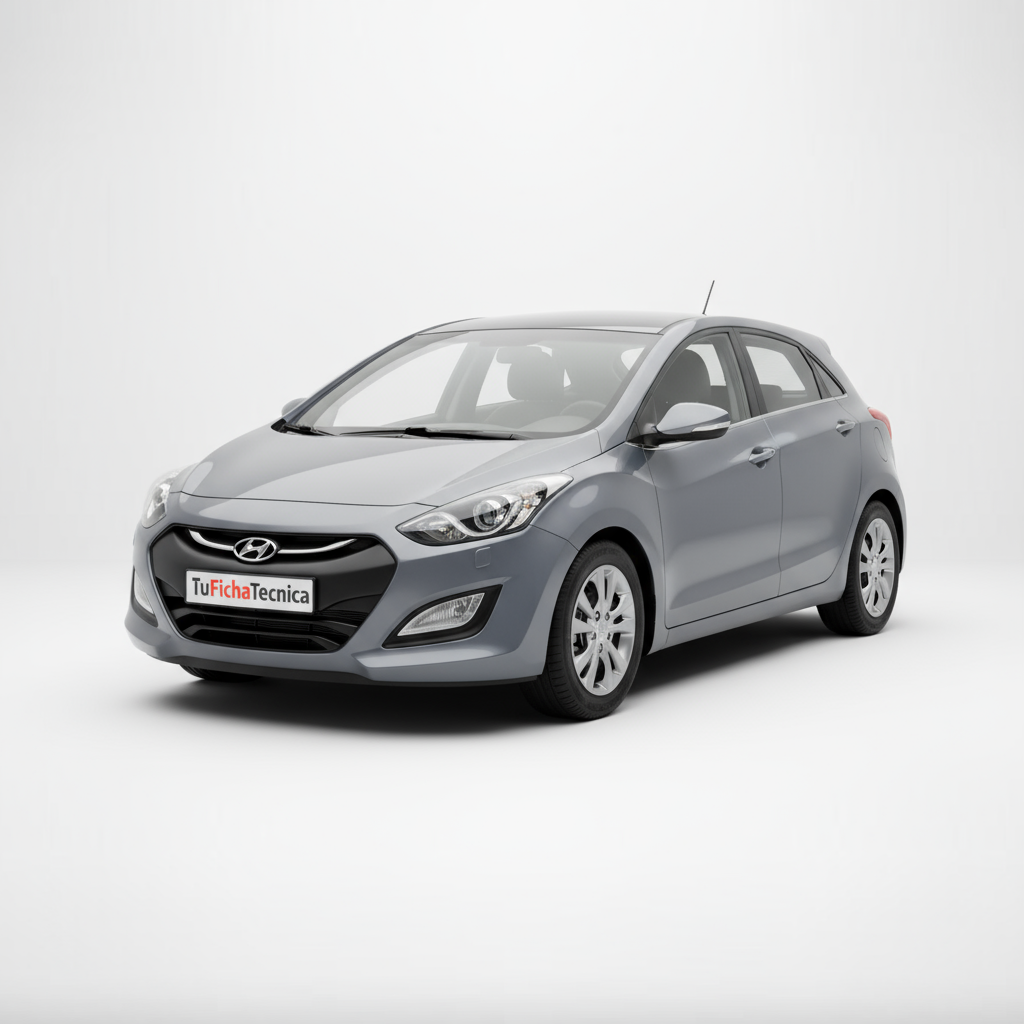
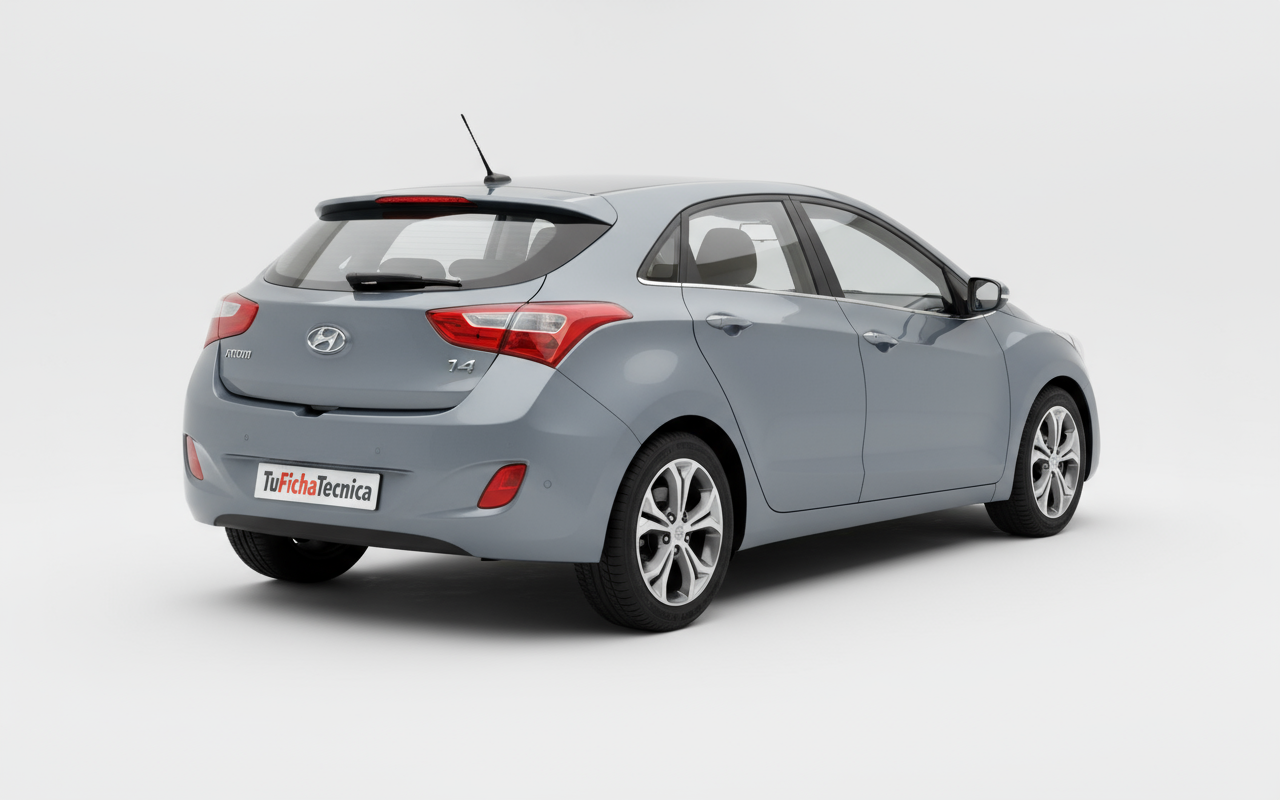
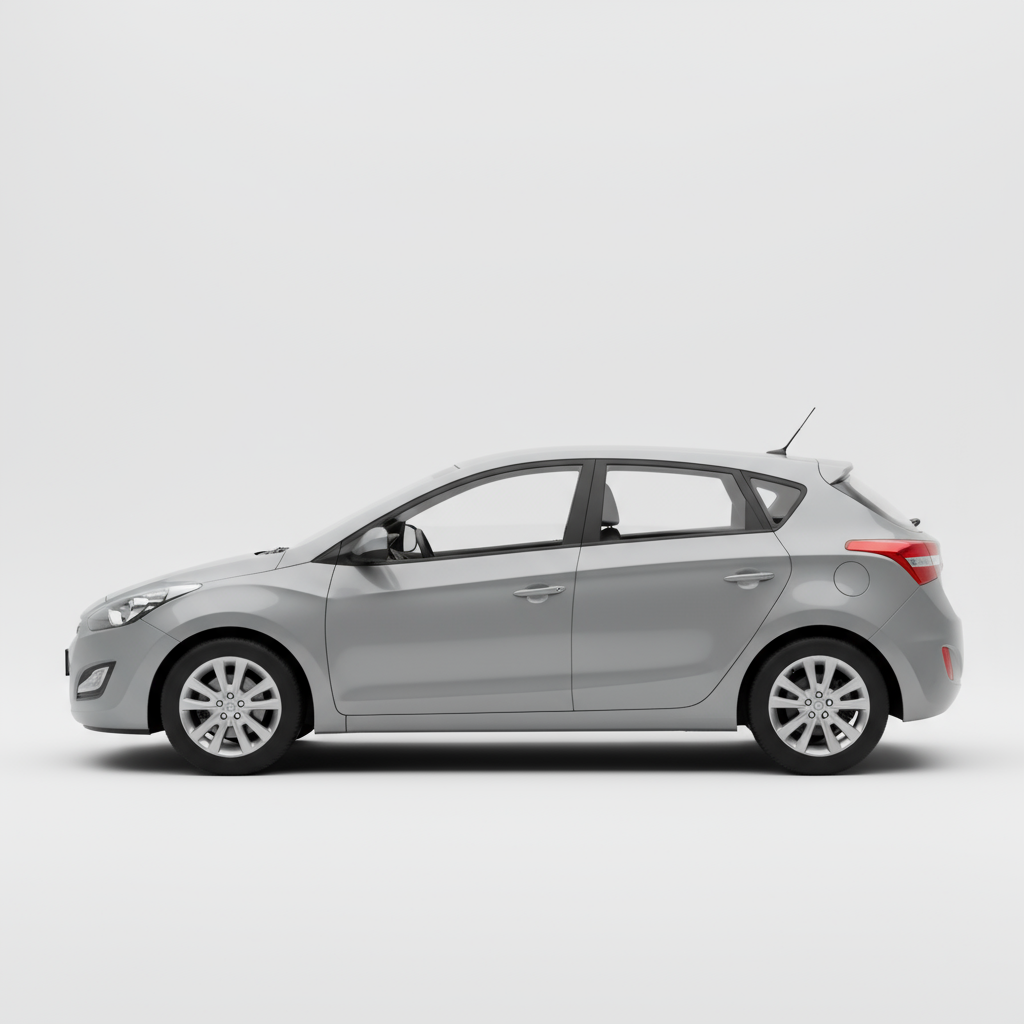
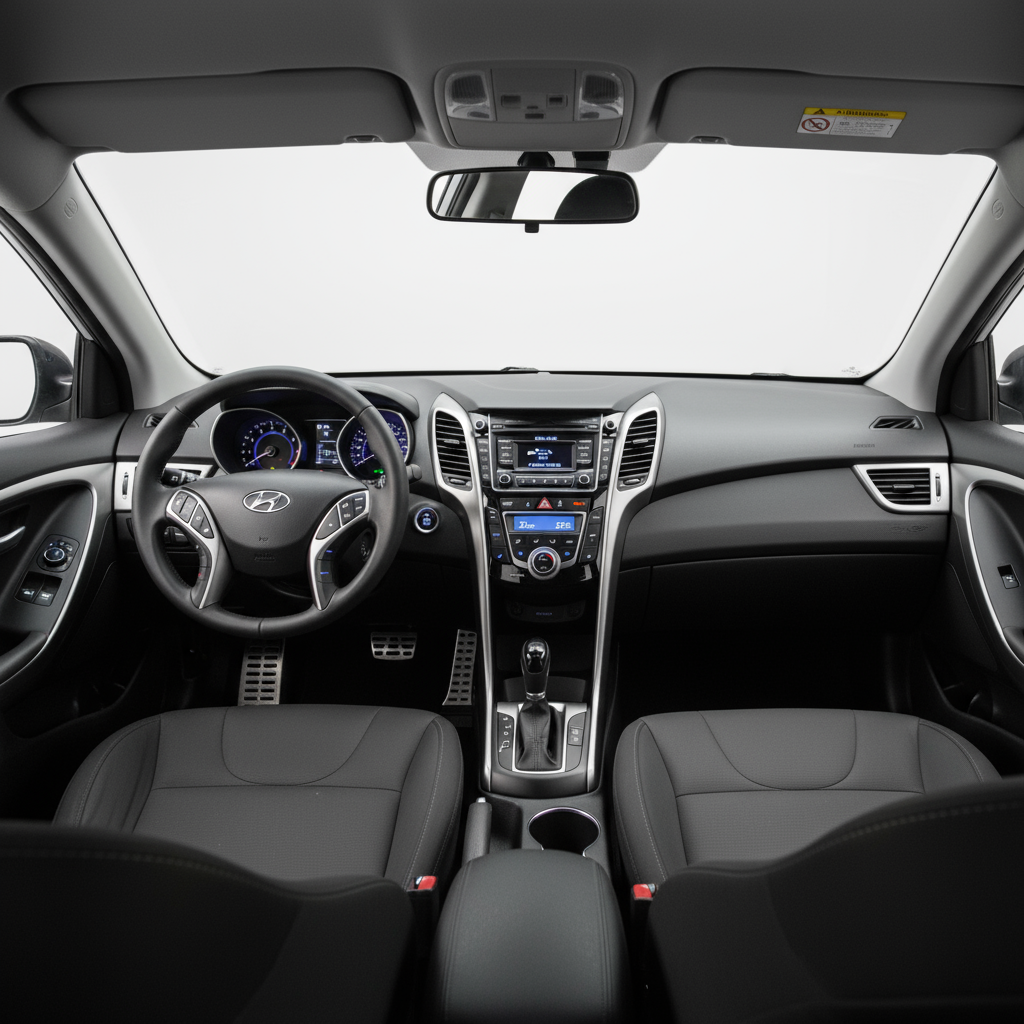
Hyundai's 'Fluidic Sculpture' design came to life in this i30, giving it fluid and organic lines that broke with the sobriety of its predecessor. Its front end with the hexagonal grille and its sleek headlights gave it a unique and attractive personality that has aged with admirable dignity. Inside, the qualitative leap was immense, with a dashboard of sinuous shapes, pleasant-to-the-touch materials, and a very careful ergonomics that made you feel at home from the very first moment.
Technology and features
At the time, the i30 offered a technological package focused on comfort and functionality. Without great fanfare, it delivered the essentials to make life on board easier. It featured elements like electric power steering, an interesting detail in its category. The audio and climate control systems were simple but effective. The real technology lay in its engineering: a well-tuned chassis and a reliable and efficient aluminum engine, built to last.
Competition
It entered a battlefield dominated by titans like the Volkswagen Golf, the Ford Focus, or the Opel Astra. The Hyundai i30 was not intimidated and played its cards masterfully. Against the German engineering or the dynamism of the Focus, the i30 offered a more emotional design, generous equipment, and a warranty that was a declaration of confidence in its product. It positioned itself as the smart alternative, a purchase that satisfied both the heart and the mind.
Conclusion
This Hyundai i30 is much more than a simple compact car. It is the symbol of a transformation, an honest and well-made car that offered a real and exciting alternative in a very competitive segment. Its balance of design, comfort, and reliability makes it an exceptional life companion. It won't give you the biggest adrenaline rush, but in return, it will give you thousands of kilometers of tranquility, confidence, and the satisfaction of having made a brilliant choice.