


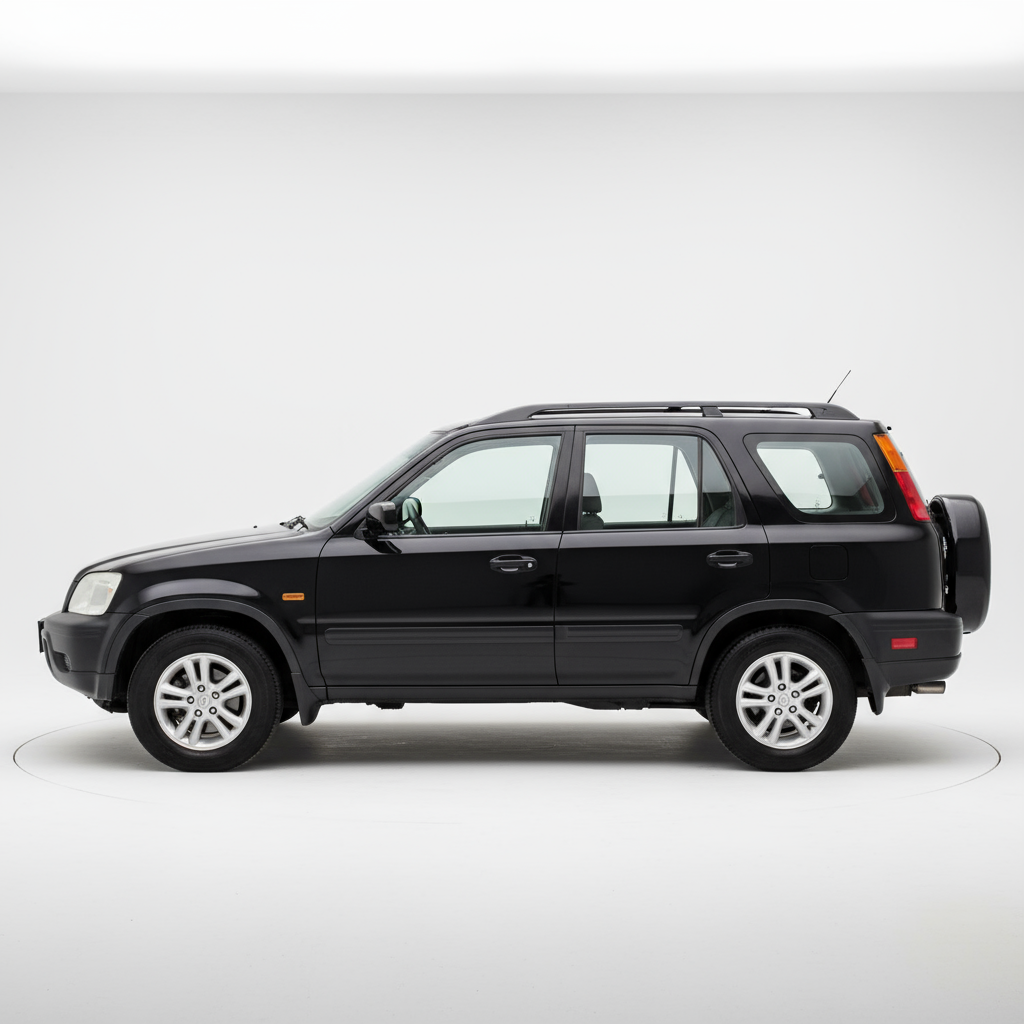
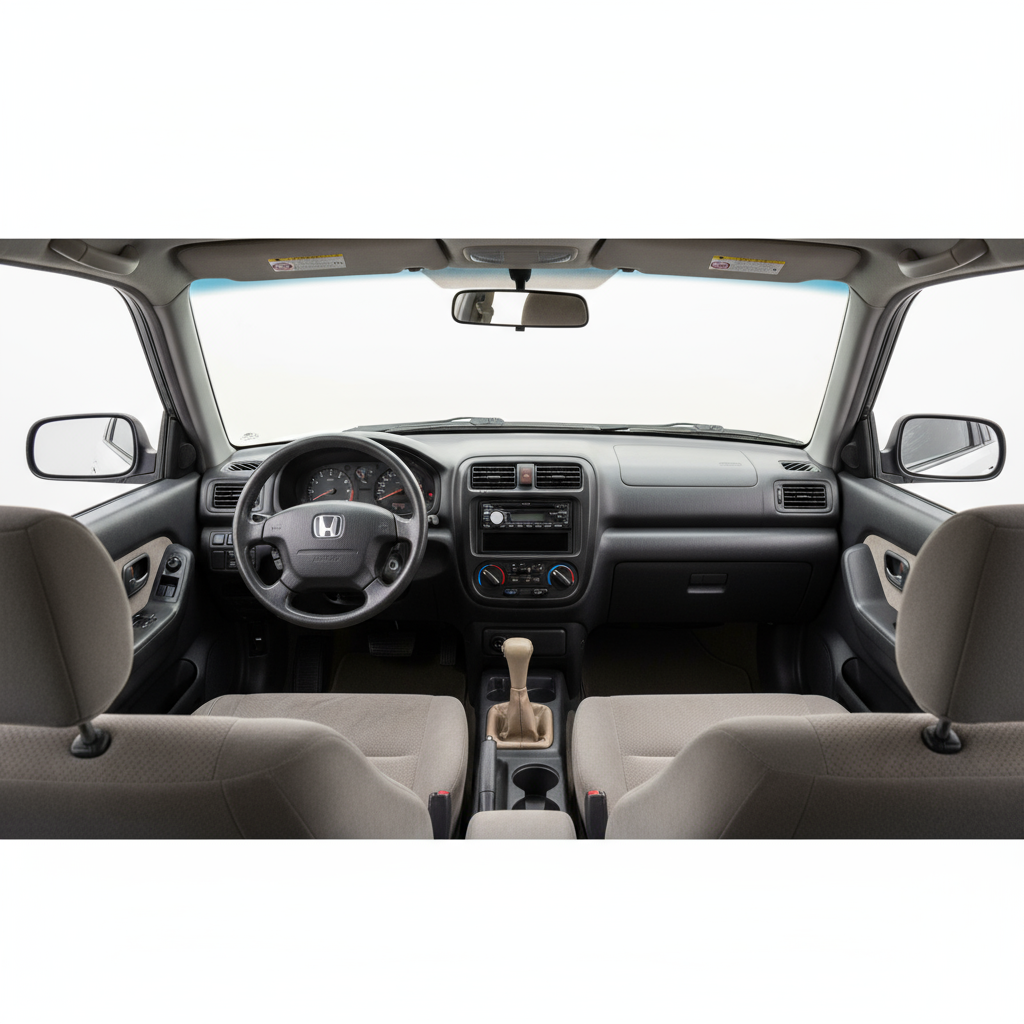
Especificaciones y análisis del Honda CR-V
Power
147HP
Torque
182Nm
Consumption
9.7l/100
Emissions
-g/km
0-100 km/h
10.5s
Top Speed
177km/h
Weight
1490kg
Price
26,084€
Technical summary
Gasolina
Manual 5v
AWD
5 / 5 doors
444 L
58 L
108 kW
Current
Technical specifications
Engine
Capacities
Detailed analysis of the Honda CR-V 2.0i DOHC 4x4 Luxury · 147 CV (1997-2002)
General description
The 1996 Honda CR-V is not just a car; it's the memory of an era and the pioneer that paved the way for the compact SUV universe. It was born with the promise of combining the comfort of a family car with the boldness of all-wheel drive, creating a vehicle that invited you to adventure without giving up everyday life. It was a breath of fresh air, a concept that changed the rules of the game forever.
Driving experience
Getting behind the wheel of the CR-V is connecting with a pure and honest driving experience. Its 2.0-liter, 147-horsepower engine responds with Honda's characteristic smoothness and progressiveness, without showing off but with constant delivery. The 5-speed manual gearbox makes you part of the experience, while the 4x4 traction gives you unwavering security on rough roads or in the rain. It doesn't seek top speed, but rather to offer a serene, comfortable, and confident journey.
Design and aesthetics
Its design is a reflection of the functionality and robustness of the 90s. With square yet friendly lines, the CR-V projects an image of a capable and reliable vehicle. Its interior is a marvel of space and clever solutions, like the famous picnic table integrated into the trunk floor. Every centimeter is designed for real life, offering generous room for five passengers and a versatile trunk that adapts to any plan.
Technology and features
The CR-V's technology lay in its brilliant engineering, not in screens or gimmicks. The heart was its aluminum DOHC engine, an example of efficiency and durability. Its 'Real Time' all-wheel-drive system was ingenious, operating as a front-wheel drive to save fuel and sending torque to the rear axle only when necessary. Having a double-wishbone suspension on both axles was a technical luxury that guaranteed superior dynamic behavior.
Competition
In a market that was just beginning to discover SUVs, the Honda CR-V faced a main competitor that shared its same philosophy: the Toyota RAV4. Both fought to define the segment, offering slightly different visions of the same successful formula. Other models like the Suzuki Vitara played in a more pure off-road oriented league, but the CR-V knew how to find its own space, winning over families looking for versatility and safety.
Conclusion
The first-generation Honda CR-V is much more than a classic; it's a legend. It represents Honda's vision of creating a car for everything and everyone, a vehicle that performed in the city, shone on the highway, and wasn't afraid to get muddy. Its legacy is legendary reliability and a timeless design that continues to evoke freedom and confidence. It's proof that a great car is measured by the experiences it allows you to live.