
Especificaciones y análisis del Ferrari 360
Power
400HP
Torque
373Nm
Consumption
17.9l/100
Emissions
-g/km
0-100 km/h
4.5s
Top Speed
295km/h
Weight
1390kg
Price
149,558€
Technical summary
Gasolina
Manual 6v
RWD
2 / 2 doors
220 L
95 L
294 kW
Current
Technical specifications
Engine
Capacities
Detailed analysis of the Ferrari 360 Modena · 400 CV (1999-2005)
General description
The Ferrari 360 Modena is not just a car, it's the cry of a new era for Maranello. Launched in 1999, it broke with the sharp lines of its predecessor to embrace a curvy, aerodynamic aesthetic that would mark the beginning of the 21st century for the Prancing Horse brand. It was a statement of intent, a supercar that promised not only breathtaking performance, but also greater usability.
Driving experience
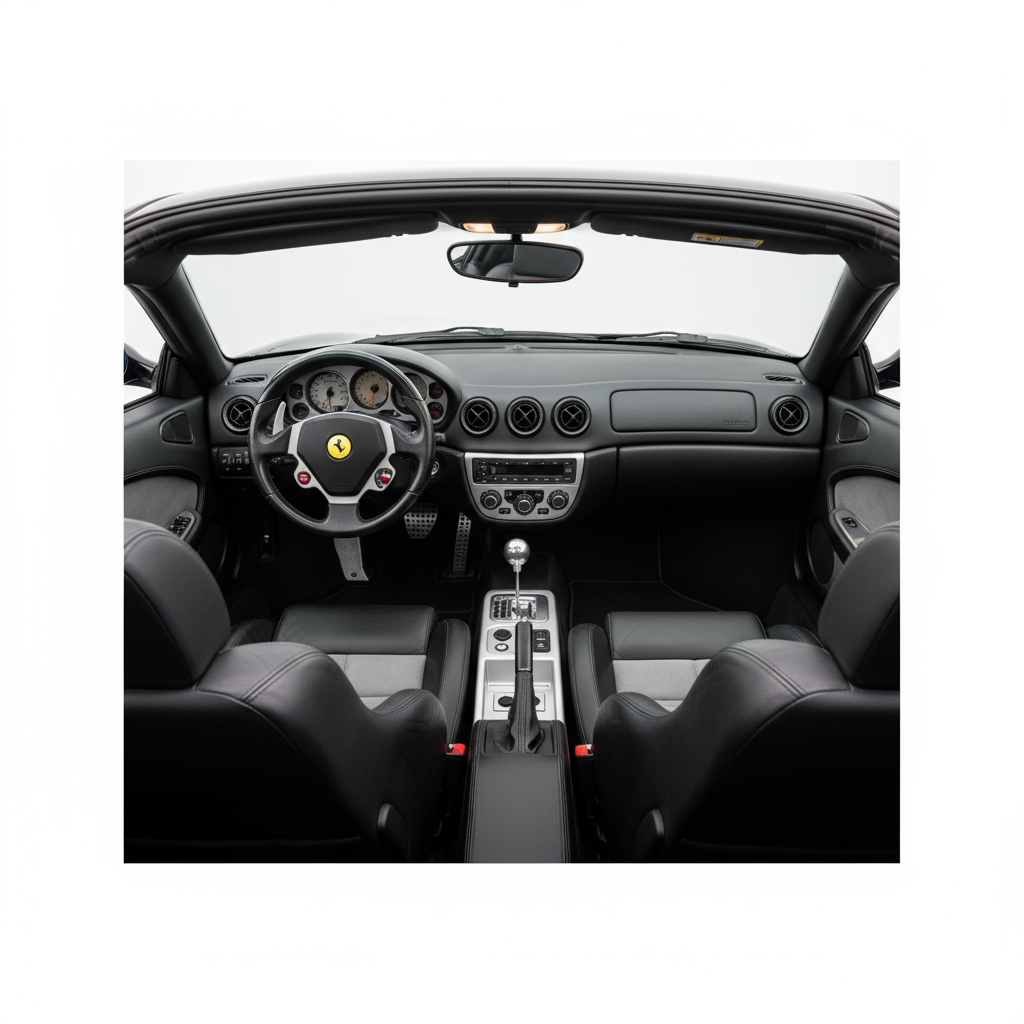
Getting behind the wheel of the 360 Modena is a visceral experience. The heart of it all is its 3.6-liter V8, a mechanical jewel that howls up to 8500 rpm. Every shift of the iconic metal gate of the six-speed manual gearbox is an event, a direct dialogue between man and machine. The acceleration pins you to the seat, but it's the sound, that metallic symphony flooding the cabin, that truly takes your breath away. Its aluminum chassis makes it agile and communicative, transmitting every texture of the asphalt.
Design and aesthetics
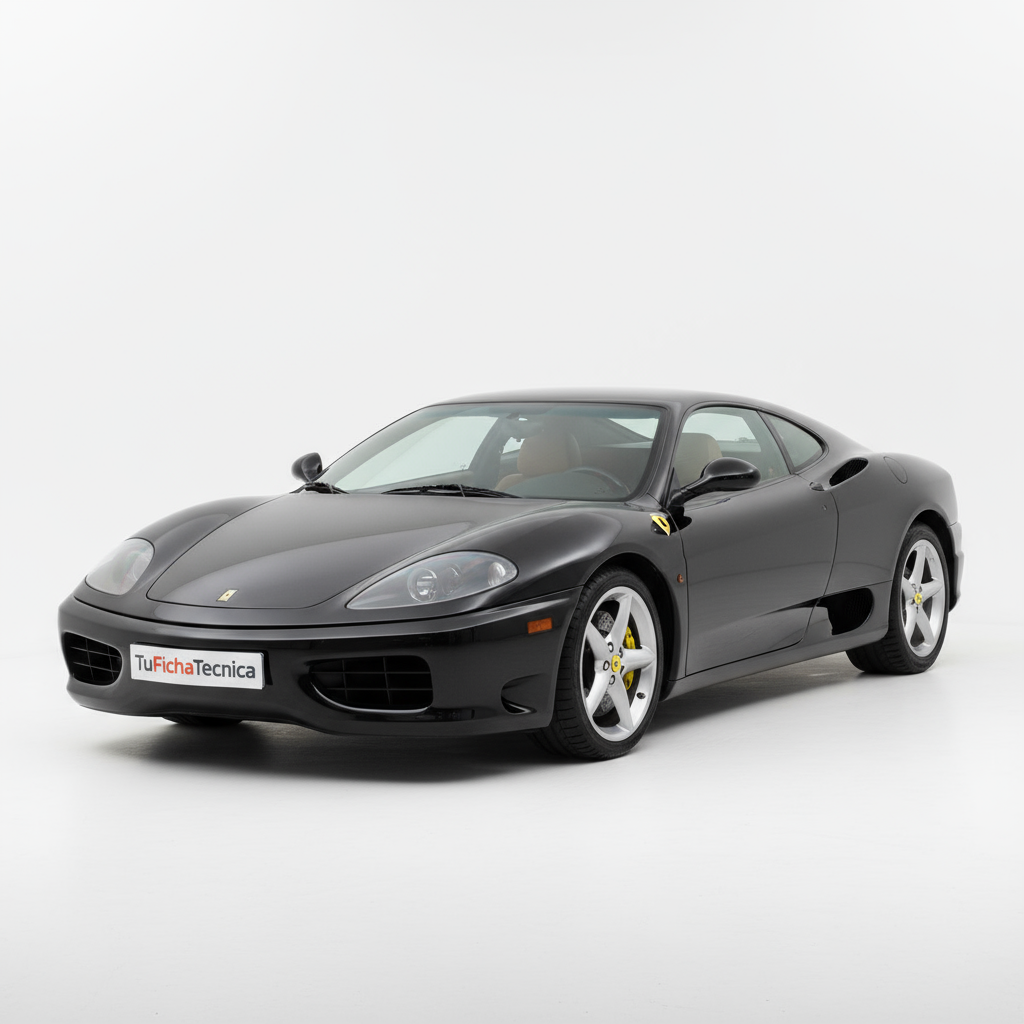
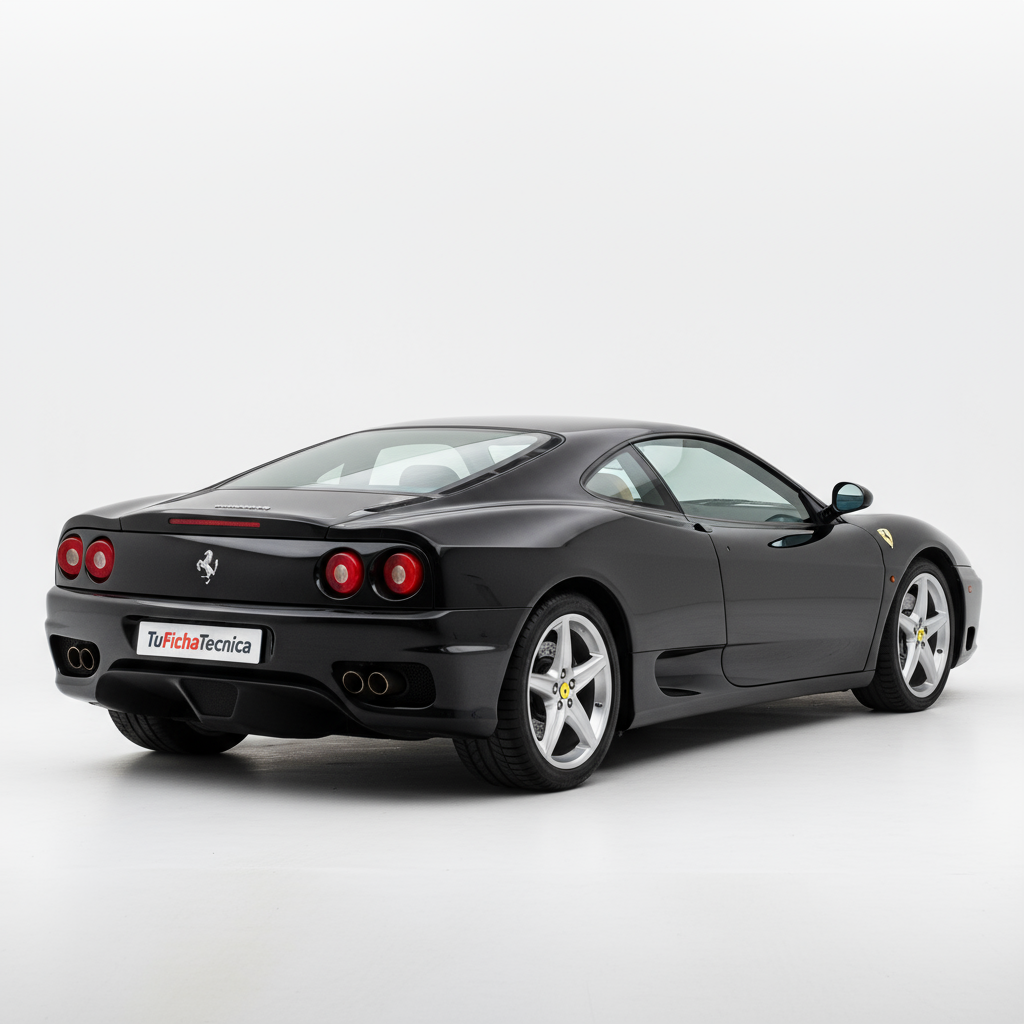
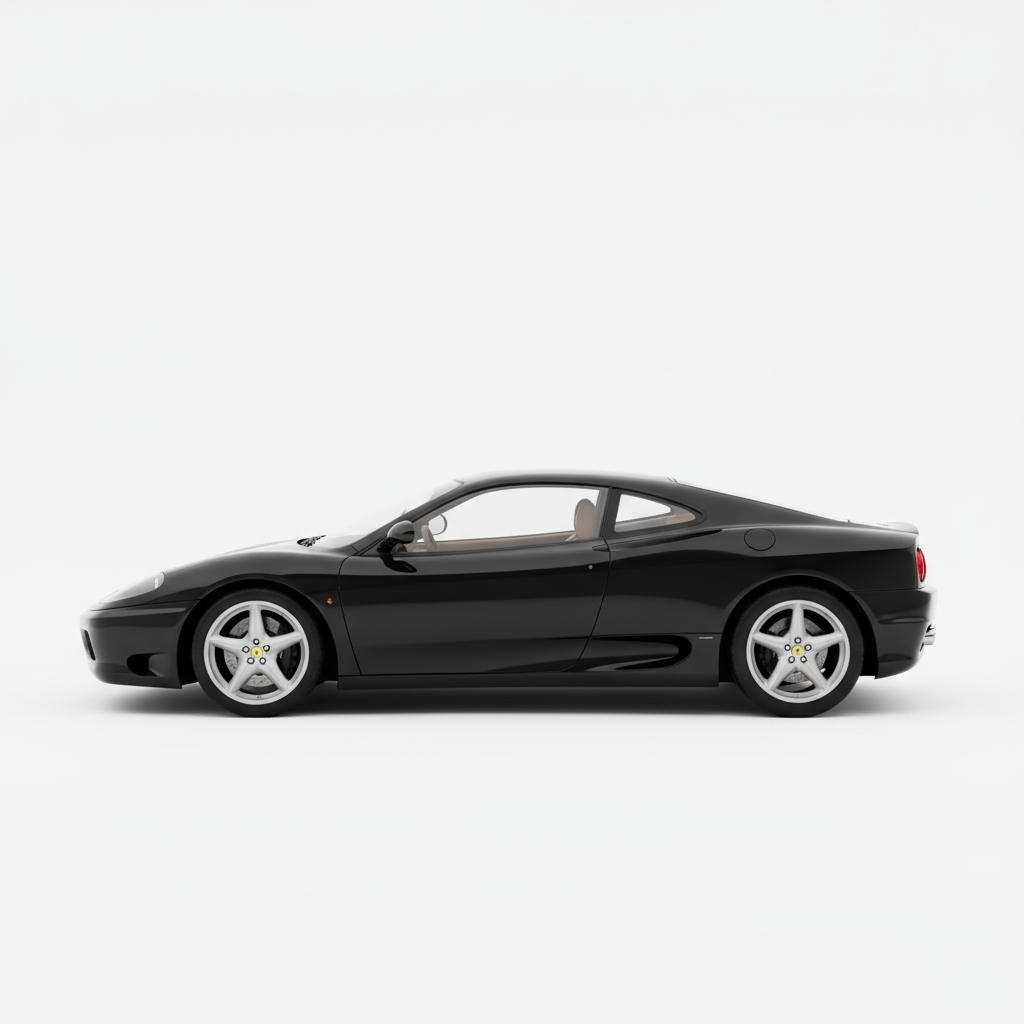
Designed by Pininfarina, the 360 Modena is a sculpture in motion. Its fluid and sensual forms, inspired by racing, are not just an aesthetic whim; every curve and every air intake has an aerodynamic function. The most exciting detail is the rear glass cover, which proudly displays the V8 engine like a work of art, making the mechanics a fundamental part of its exterior beauty.
Technology and features
The 360 Modena was a technological leap for Ferrari. Its greatest innovation was the chassis and body, built entirely of aluminum, a technique that allowed it to be larger than the F355 but significantly lighter and stiffer. The engine, with its five valves per cylinder, was a work of high-competition engineering adapted for the road. Although it lacks modern electronic aids, its double-wishbone suspension offered a level of control and efficiency that was cutting-edge for its time.
Competition
In its time, the Ferrari 360 Modena faced titans of the automotive world. Its main rival was the Lamborghini Gallardo, which arrived a bit later but with a similar proposal of a more 'usable' V10 supercar. It also competed with the Porsche 911 Turbo (996), which offered brutal efficiency and all-wheel drive, and with the Aston Martin DB7 Vantage, which played the card of a luxury and powerful grand tourer.
Conclusion
More than two decades after its launch, the Ferrari 360 Modena remains a profoundly desirable car. It represents a perfect turning point between the analog and digital eras of supercars. It offers a pure mechanical connection that many modern cars have lost, wrapped in a timeless design and with the unmistakable soul of a Maranello V8. It is, without a doubt, one of the great Ferraris of modern history.