
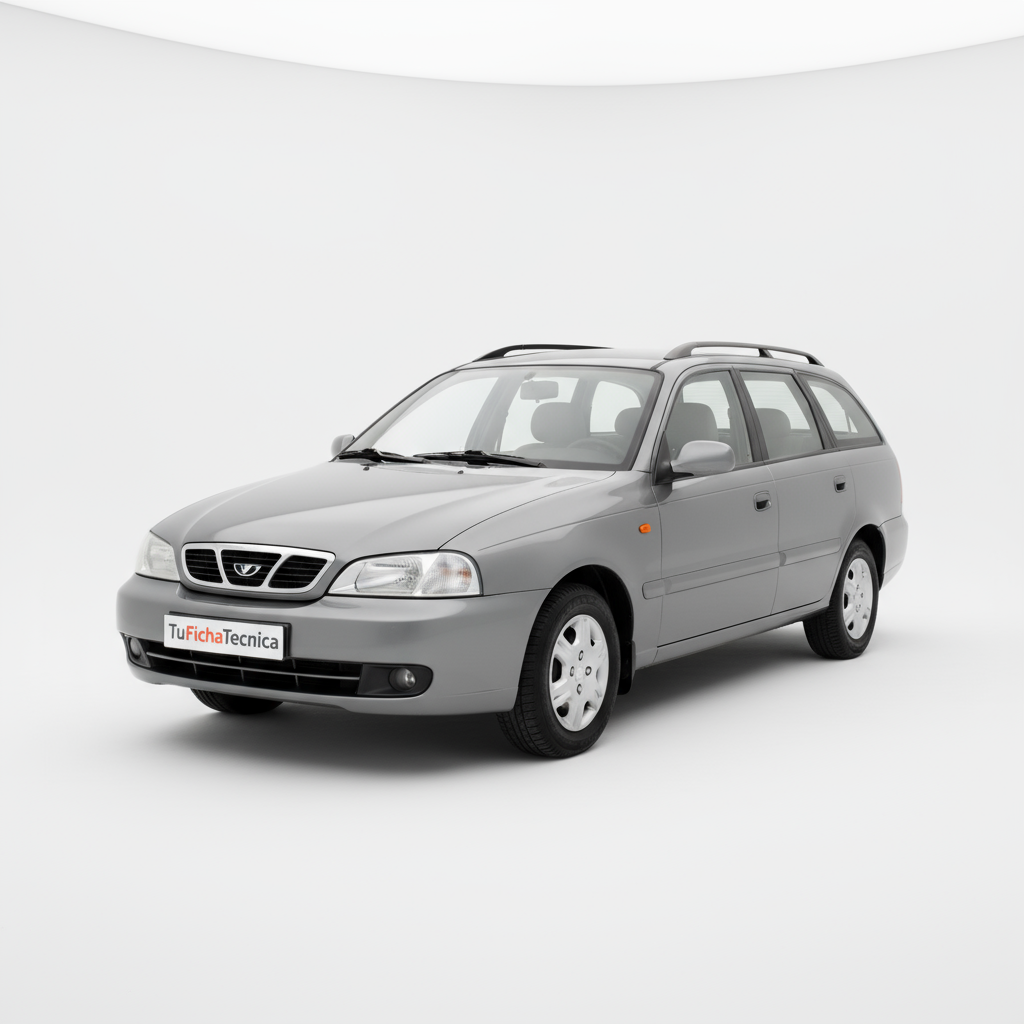
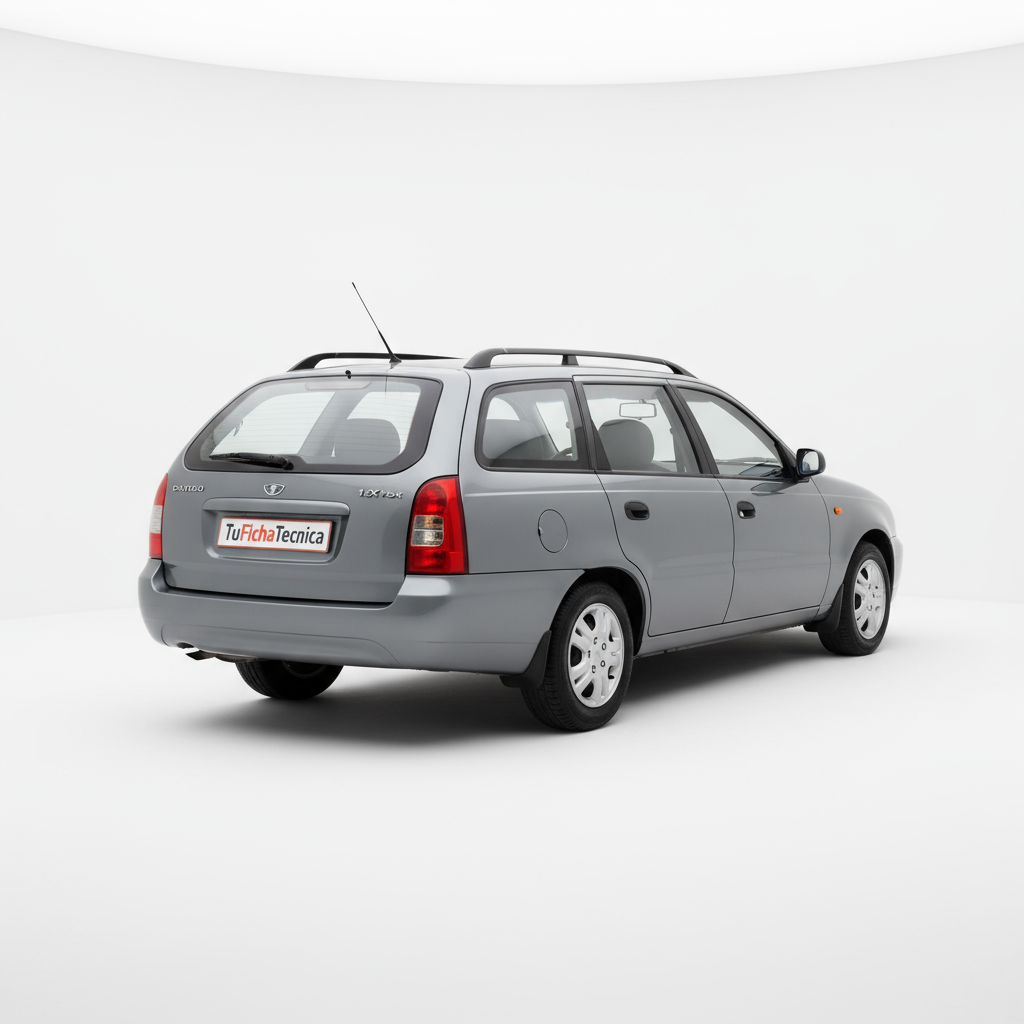
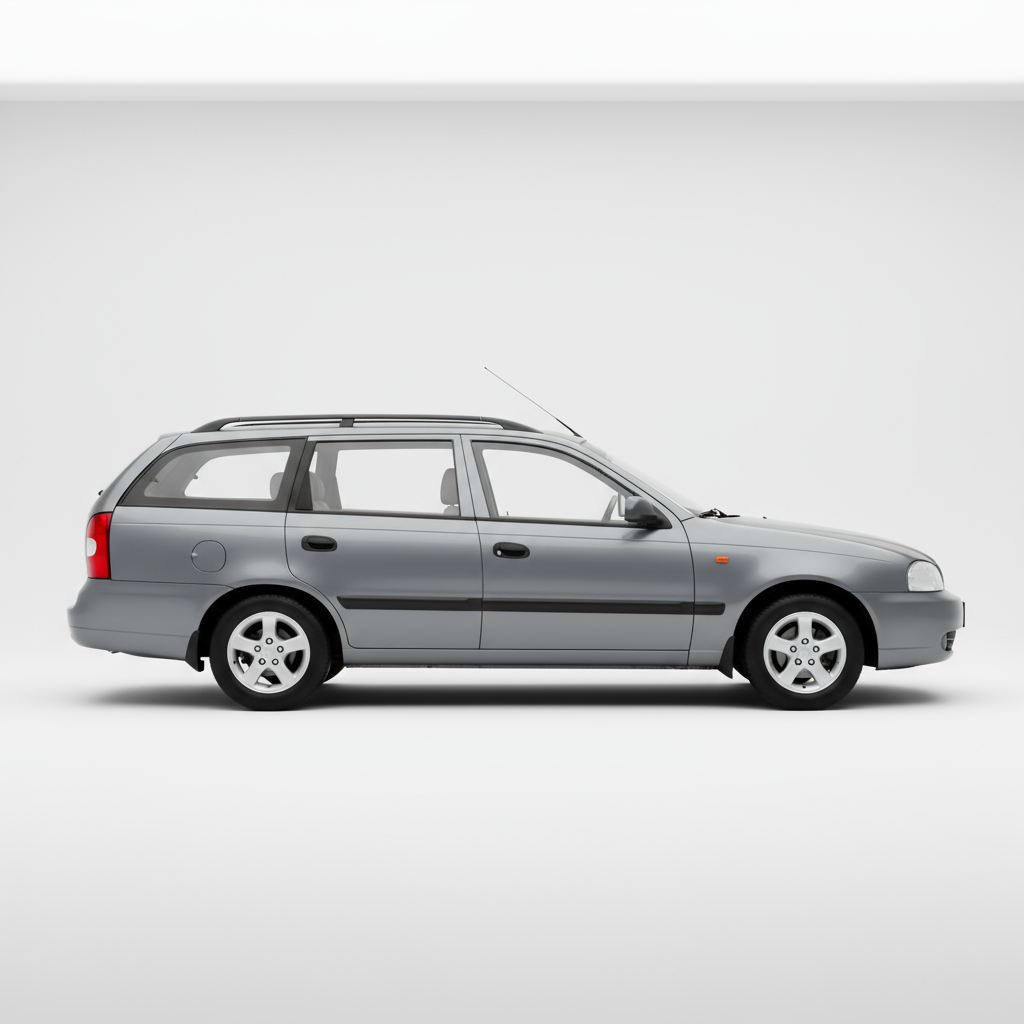

Especificaciones y análisis del Daewoo Nubira (Daewoo)
Power
106HP
Torque
145Nm
Consumption
7.8l/100
Emissions
-g/km
0-100 km/h
11s
Top Speed
175km/h
Weight
1313kg
Price
13,403€
Technical summary
Gasolina
Manual 5v
FWD
5 / 5 doors
550 L
62 L
78 kW
Current
Technical specifications
Engine
Capacities
Detailed analysis of the Daewoo Nubira SW 2001 1.6 16v SX · 106 CV (2001-2002)
General description
The Daewoo Nubira SW from the early 2000s is a memory of a time when a family car needed no frills. It was an honest and direct proposal from South Korea, a vehicle designed to offer maximum space and functionality at a price that made it accessible for many families dreaming of traveling without breaking the bank at the dealership.
Driving experience
Getting behind the wheel of the Nubira SW is a return to analog driving. Its 106 horsepower feels sufficient for daily use, moving the car with modest but competent ease. Don't expect a burst of adrenaline, but rather the quiet certainty of an engine that responds without rush but without pause. The suspension prioritizes comfort above all, filtering out road imperfections to make family trips more pleasant, though it forgoes any sporty aspirations. It's a car that takes you, not one that incites you to race.
Design and aesthetics
Its design is a faithful reflection of its time, with rounded shapes and an aesthetic that prioritizes function over form. It doesn't seek to turn heads, but to accommodate life. Its classic station wagon silhouette hides its greatest virtue: a generous 550-liter trunk, a treasure cave for baby strollers, suitcases, and all the luggage for a vacation. It's an unpretentious, humble, and practical design that today evokes a nostalgia for the simple.
Technology and features
The Nubira's technology is that of a world without touch screens or driving assistants. Here, the connection with the machine is direct. It had the essentials for its time: fuel injection, power steering, and a mixed braking system with discs at the front and drums at the rear. It was mechanics in its purest state, without electronic filters mediating the experience. Driving it is an exercise in attention and anticipation, a reminder of what cars were like before the digital revolution.
Competition
In the competitive European market, the Nubira SW faced giants like the Ford Focus Wagon, the Opel Astra Caravan, or the Renault Mégane Break. While its rivals played the cards of prestige, quality finishes, and more refined driving dynamics, the Daewoo bet everything on an unbeatable relationship between price, equipment, and space. It was the smart alternative for those who valued cubic centimeters more than brand pedigree.
Conclusion
The Daewoo Nubira SW was much more than a cheap car; it was a mobility solution for thousands of families. A loyal and spacious travel companion that, while lacking the shine and refinement of its competitors, delivered on its promise in spades. It represents a type of car that has almost become extinct today: the honest vehicle, focused on the real needs of people, that gave you a lot in exchange for little. A popular classic that deserves to be remembered fondly.