
Especificaciones y análisis del Dacia Duster
Power
105HP
Torque
148Nm
Consumption
7.5l/100
Emissions
177g/km
0-100 km/h
11.5s
Top Speed
164km/h
Weight
1235kg
Price
11,900€
Technical summary
Gasolina
Manual 5v
FWD
5 / 5 doors
475 L
50 L
77 kW
Current
Technical specifications
Engine
Capacities
Detailed analysis of the Dacia Duster Base 1.6 110 CV 4x2 (2010)
General description
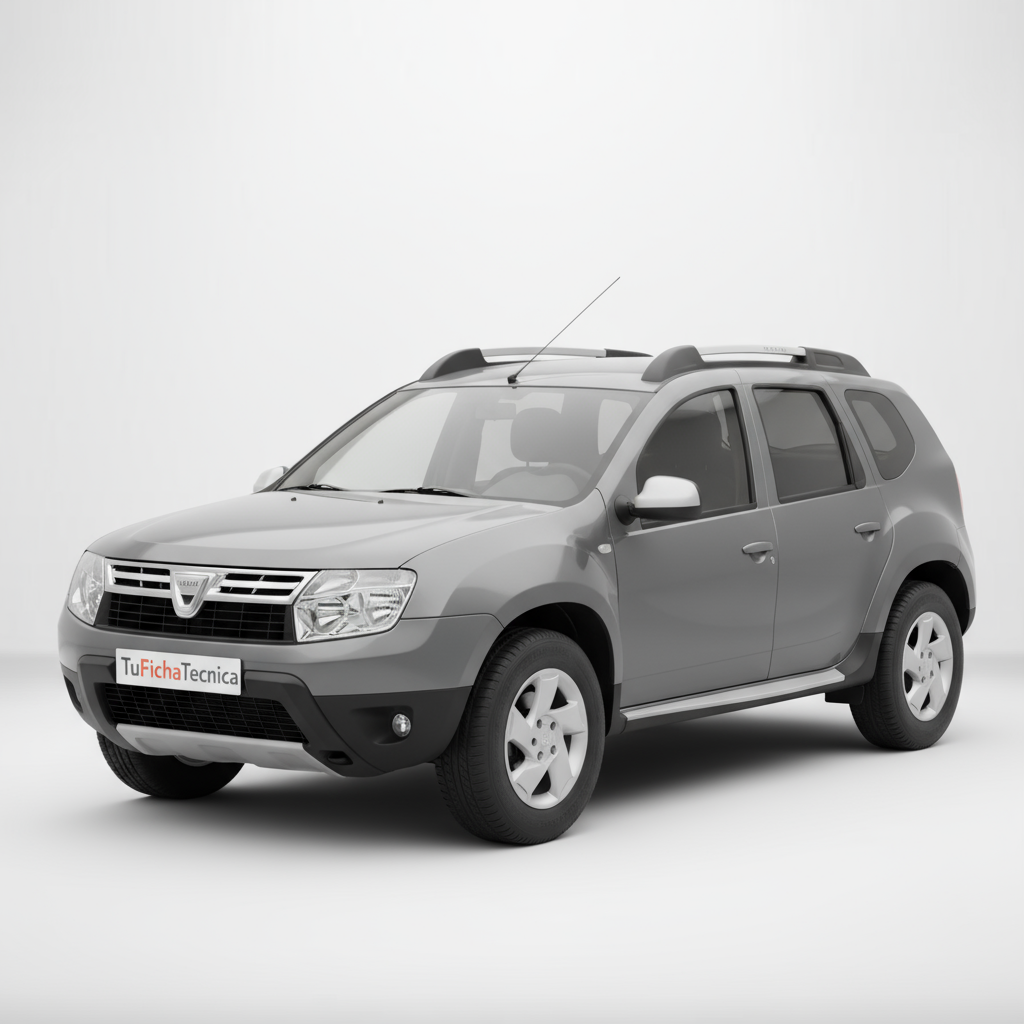
The 2010 Dacia Duster wasn't just a car; it was a true revolution. It arrived to disrupt the market, proving that owning a spacious, robust, and adventurous-looking SUV wasn't a luxury reserved for a few. With an unbeatable price, it became the gateway to a world of possibilities for thousands of families, a breath of fresh air that prioritized substance over style.
Driving experience
Getting behind the wheel of the 105 hp 1.6 Duster is a lesson in honesty. Don't expect blistering acceleration, but rather the noble and sufficient response of a naturally aspirated engine built to last. Its comfort-oriented suspension absorbs bumps with surprising ease, conveying a sense of robustness and confidence on both pavement and rough roads. It's a car that invites you to drive without rushing, to enjoy the journey with a direct, unfiltered connection to the road.
Design and aesthetics
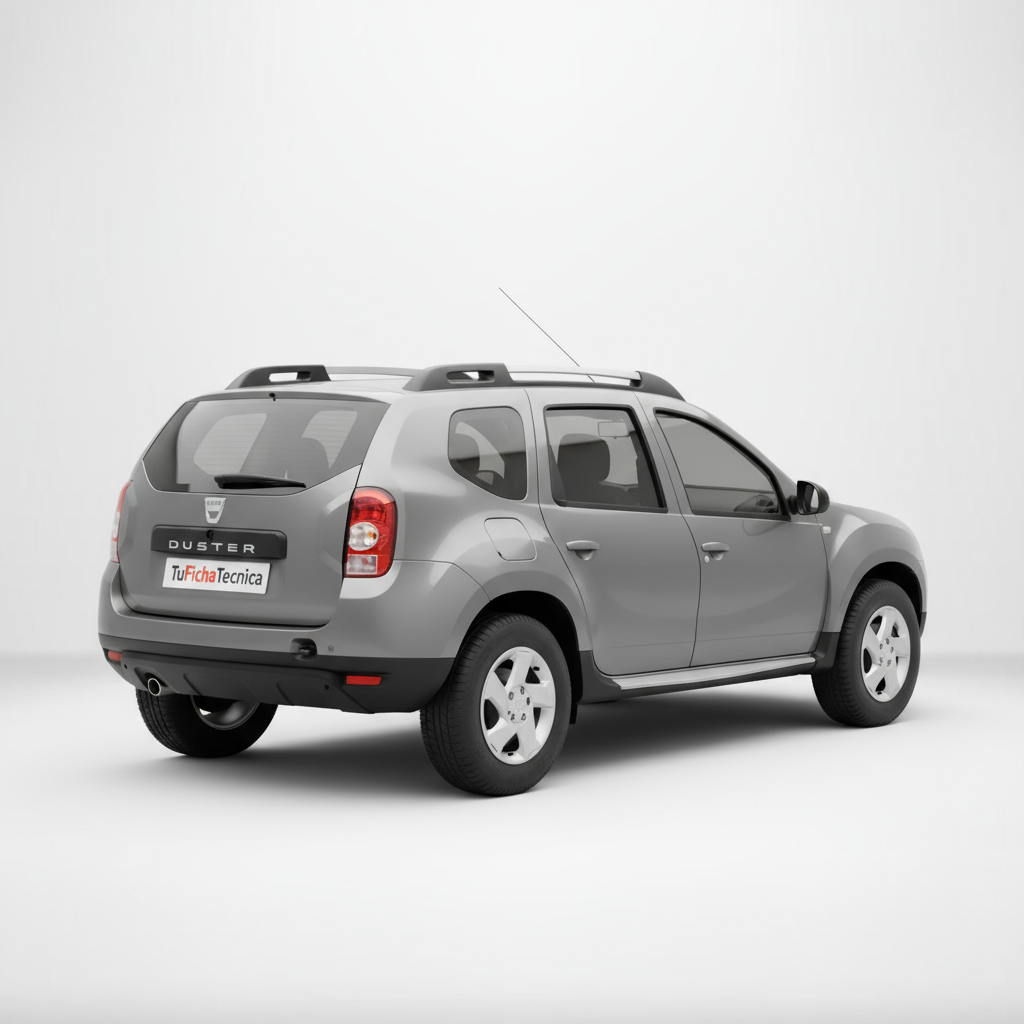
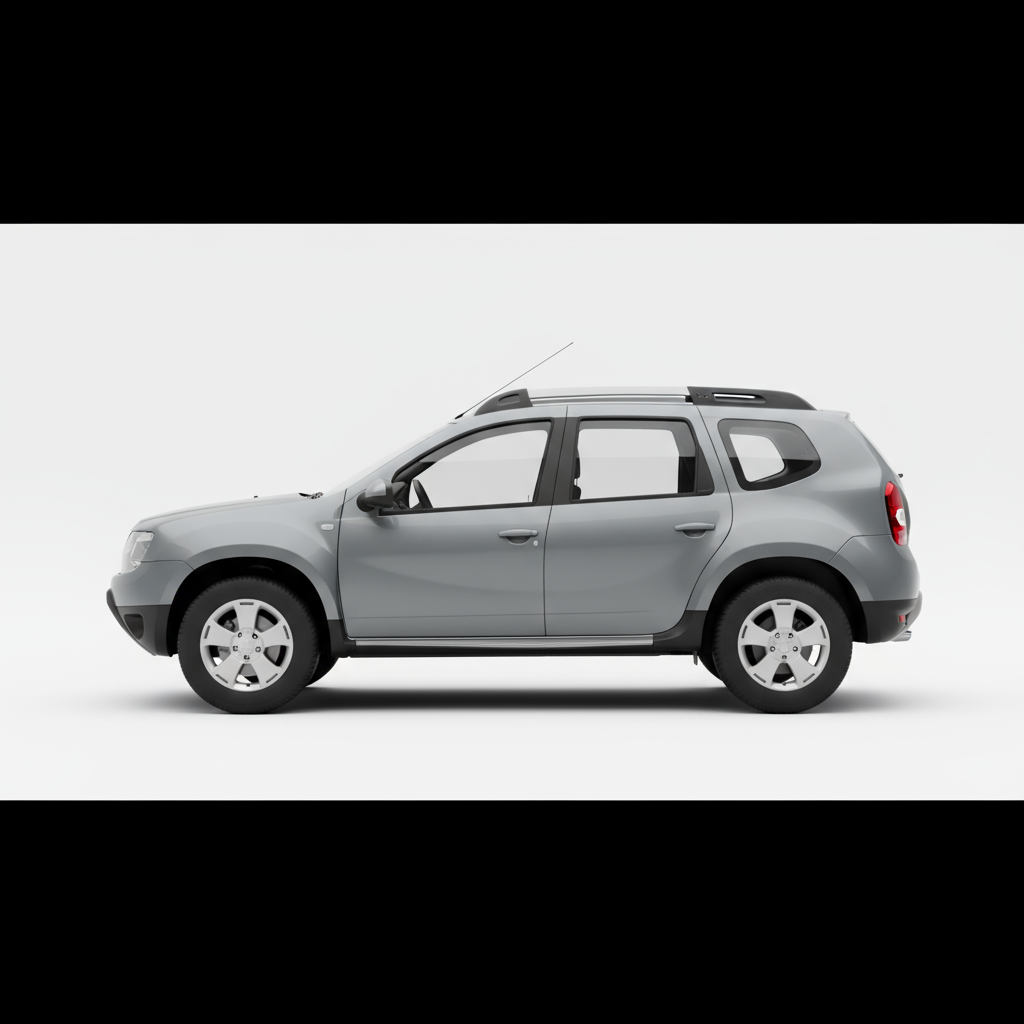
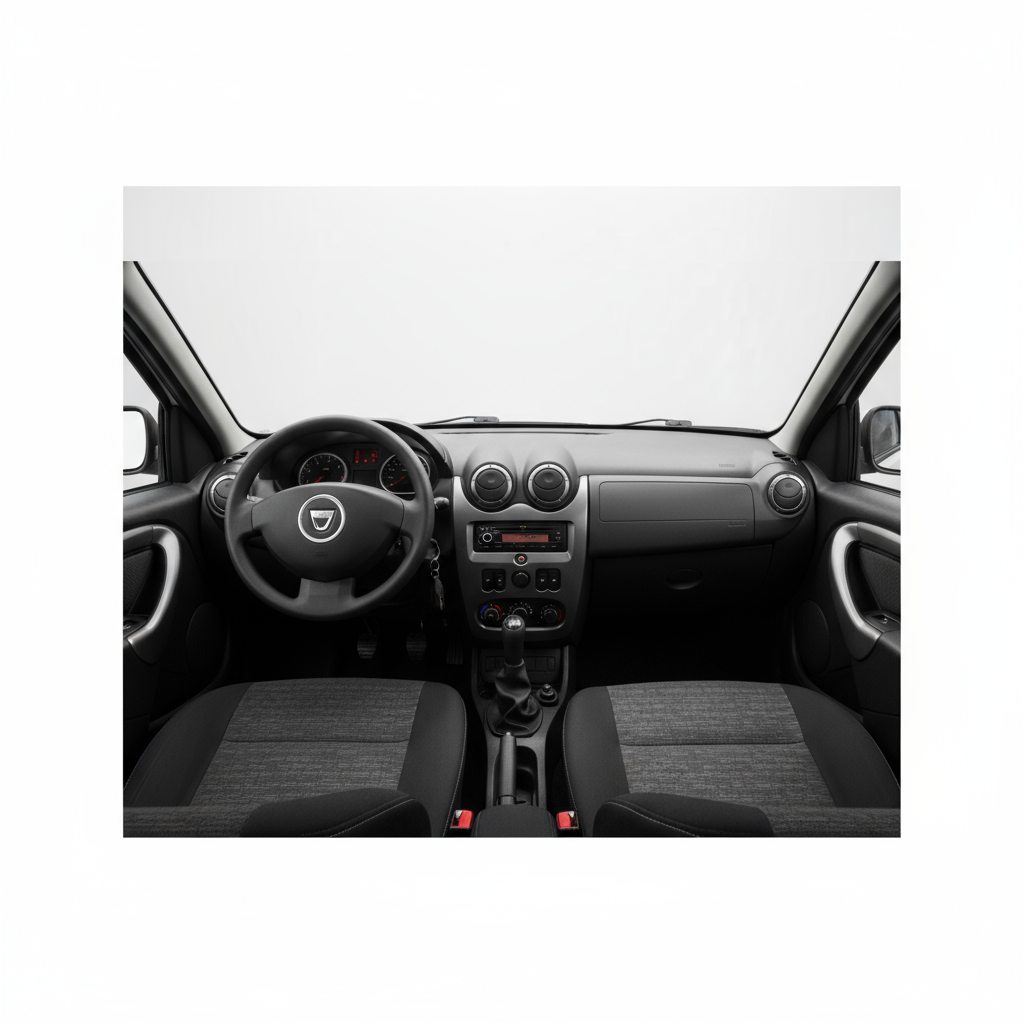
Its design is a statement of intent: function over form. The lines are simple, the wheel arches are pronounced, and the ground clearance is generous—everything screams 'I'm a real SUV.' Inside, simplicity is the rule, with hard plastics assembled to withstand the test of time and demanding use. There are no luxuries, but there is an interior space and a 475-liter trunk that put much more expensive models to shame. It's a design that wins you over not with its beauty, but with its intelligence and pragmatism.
Technology and features
In a world obsessed with screens, the 2010 Duster offers a respite. Its technological equipment is essential, the kind that doesn't fail. You won't find complex infotainment systems or an arsenal of driving aids. Its technology lies in its mechanical simplicity: a proven engine, a manual gearbox, and a sturdy chassis. It's the technology of durability, of what's easy and cheap to maintain—a value that time has proven to be incredibly precious.
Competition
At its launch, the Duster was in a league of its own. For its price as a new vehicle, it was difficult to find a direct rival that offered its combination of space, versatility, and SUV aesthetics. It could be compared to second-hand models or to utility vehicles with a rugged look like the Suzuki SX4 or the Fiat Sedici, but none could compete in terms of roominess and cargo capacity. The Duster had no rivals; it had victims.
Conclusion
The first-generation Dacia Duster is much more than a cheap car; it is the ultimate smart purchase. It represents the freedom from having to show off, the security of having a reliable and versatile tool for daily life and for adventure. It's a car that earns affection for its honesty, for always delivering on its promises without asking for anything in return. An icon that proved that true luxury is being able to go anywhere without worrying about anything else.