
Especificaciones y análisis del Citroën Xsara Picasso
Power
90HP
Torque
205Nm
Consumption
5.5l/100
Emissions
-g/km
0-100 km/h
14.5s
Top Speed
175km/h
Weight
1300kg
Price
20,686€
Technical summary
Gasóleo
Manual 5v
FWD
5 / 5 doors
550 L
60 L
66 kW
Current
Technical specifications
Engine
Capacities
Detailed analysis of the Citroën Xsara Picasso 2.0 HDi SX Plus · 90 CV (2002-2003)
General description
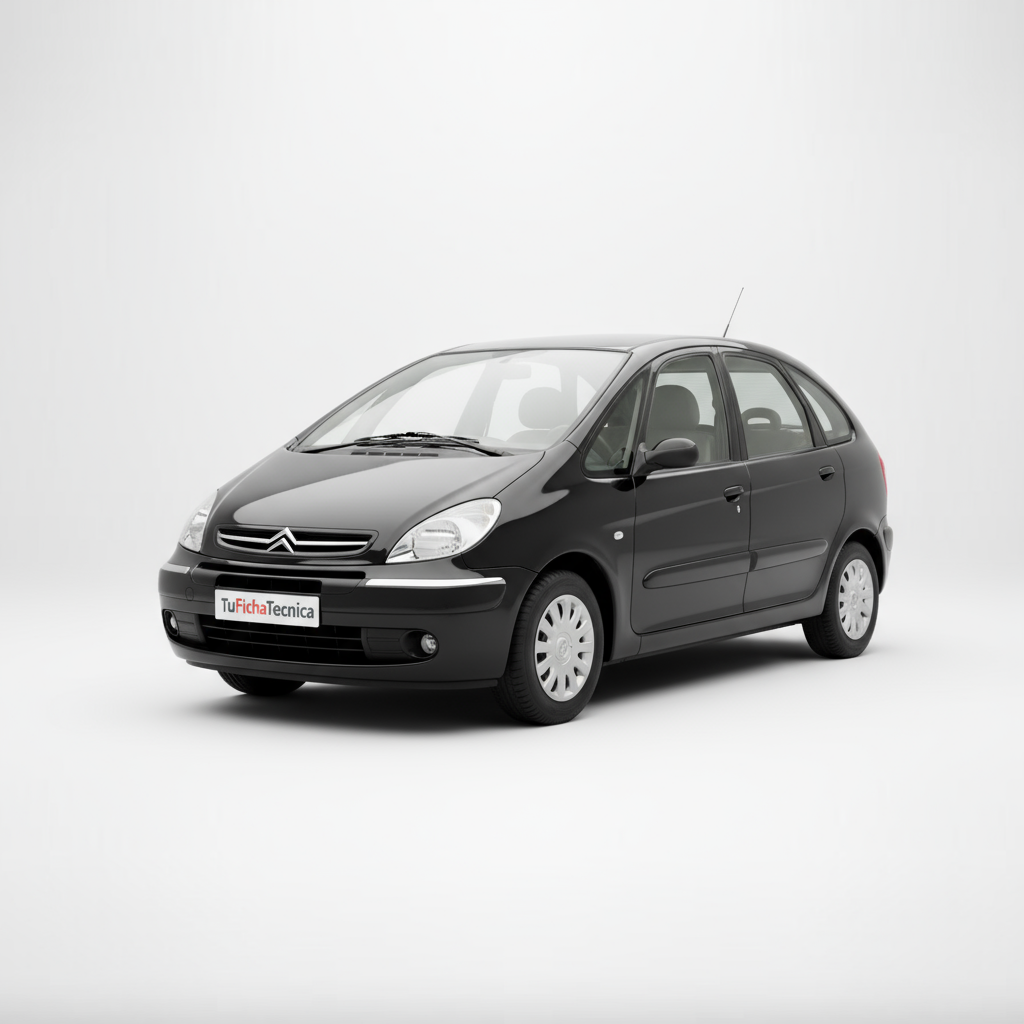
The Citroën Xsara Picasso was not just a car; it was a statement of intent. It arrived on the market to redefine the concept of the compact MPV, offering a family mobility solution that prioritized space, light, and versatility like never before. Its inspired and bold silhouette broke the mold and became an instant icon on the roads, a home on wheels for thousands of families.
Driving experience
Driving the Xsara Picasso is an experience focused on comfort and tranquility. Its 90-horsepower 2.0 HDi engine, while not aiming for speed records, pushes with commendable honesty and smoothness, ideal for long, uneventful journeys. The suspension masterfully filters out irregularities, creating a magic carpet ride sensation. The high driving position and the huge panoramic windshield flood the cabin with light and offer exceptional visibility, conveying a deep sense of control and safety with every kilometer.
Design and aesthetics
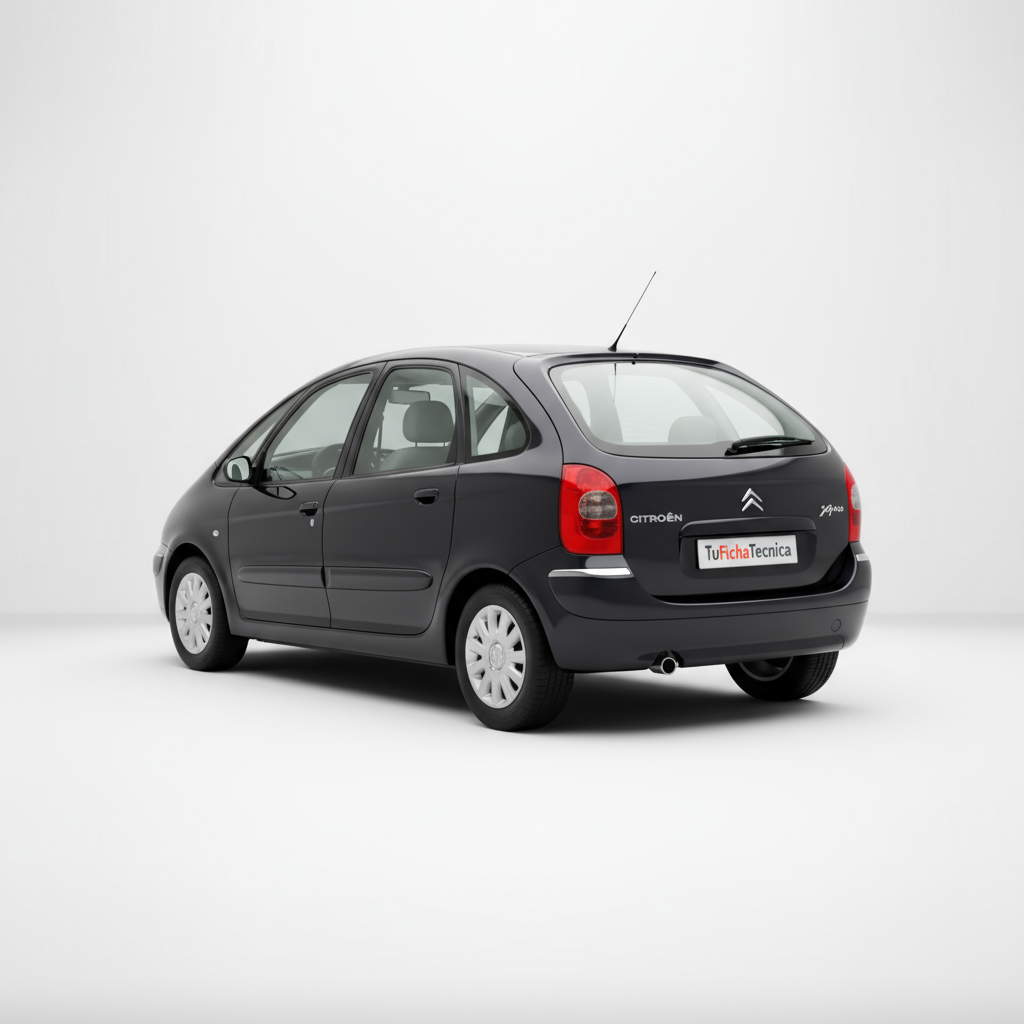
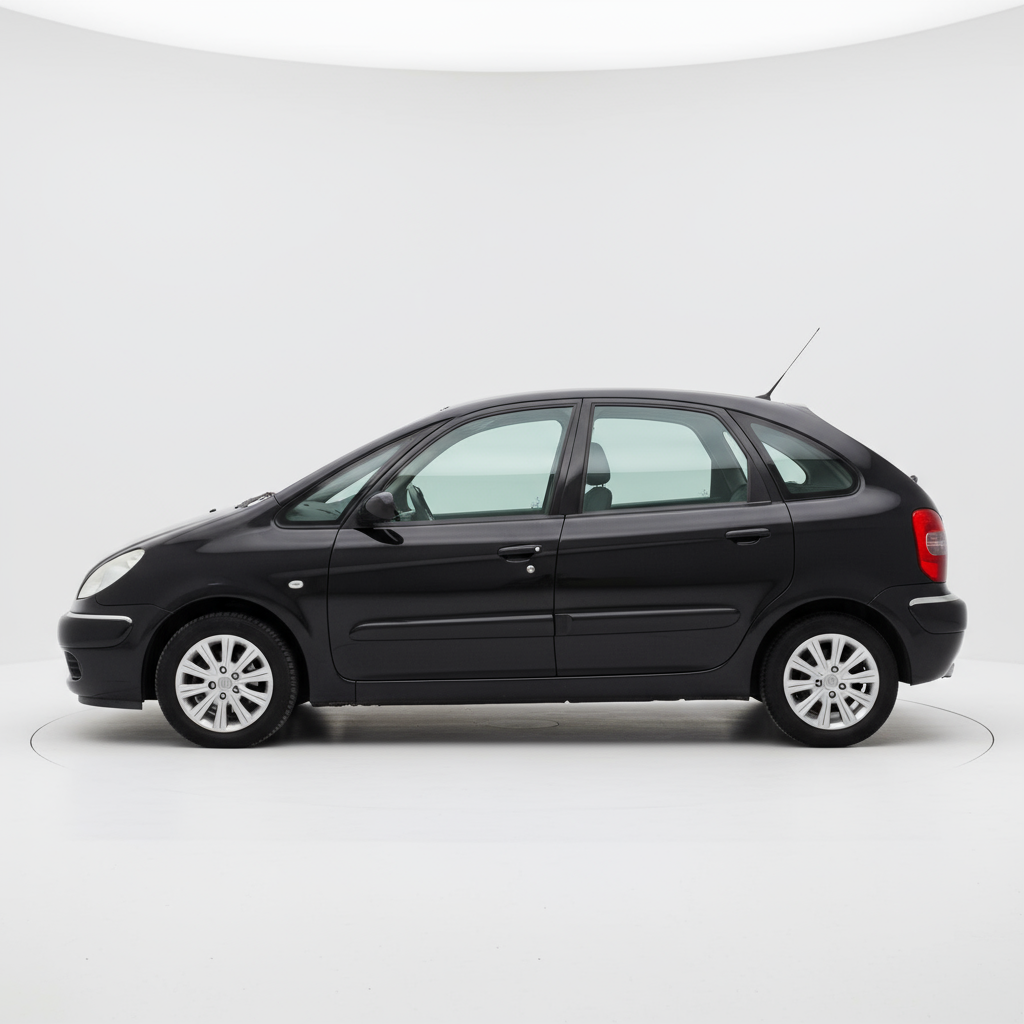
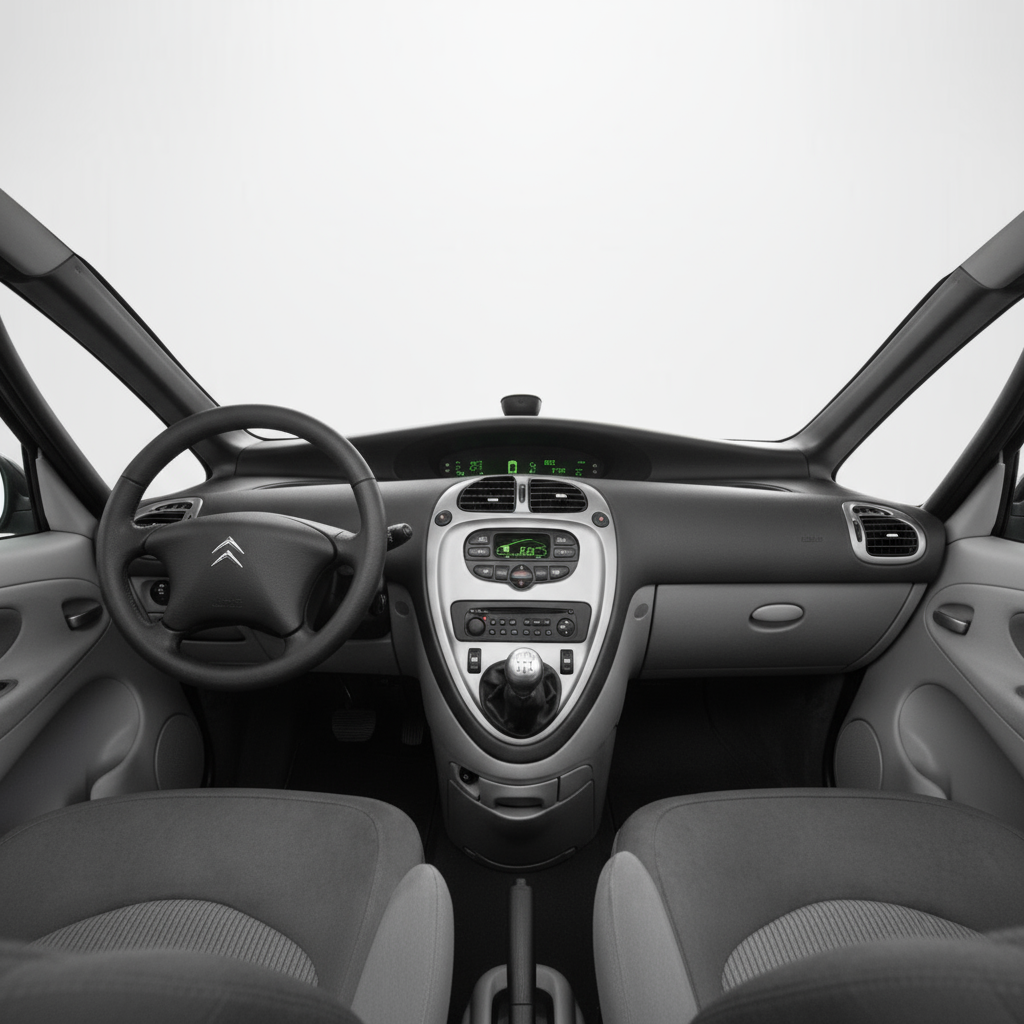
Its design, affectionately nicknamed 'the egg,' is pure audacity and functionality. On the outside, its rounded and friendly shapes give it a unique personality that has aged with admirable dignity. But its true magic lies inside: a dashboard with a central digital instrument cluster that cleared the field of vision, countless storage compartments, and, above all, three identical, independent, and removable rear seats. This modularity turned it into a rolling living room or a small van depending on the need of the moment.
Technology and features
For its time, the Xsara Picasso integrated technological solutions designed to make life on board easier. The central digital instrumentation was a futuristic bet that became a hallmark, allowing all passengers to see the information. Elements like the on-board computer or automatic climate control enhanced comfort, while its HDi engine with common rail injection represented a modern, efficient, and low-consumption mechanic, a fundamental pillar of its success.
Competition
In the competitive compact MPV segment, the Xsara Picasso faced titans. Its main adversary was undoubtedly the Renault Scénic, the pioneer of the category. It also had to compete with the Opel Zafira, which played the seven-seater card with its ingenious Flex7 system, and later with the arrival of the Ford Focus C-MAX, which brought a more dynamic touch to driving. Despite the tough competition, the Picasso managed to carve out its own space thanks to its charisma and unique solutions.
Conclusion
The Citroën Xsara Picasso is much more than just a vehicle; it is the memory of family trips, intelligent functionality, and a design that dared to be different. It represents an era when ingenuity was put at the service of space and comfort. An honest, reliable, and endearing car that did not seek to thrill with its speed, but with its ability to adapt to life, becoming another member of the family. Its legacy endures as one of the most beloved and remembered MPVs.