
Especificaciones y análisis del Citroën Xsara Picasso
Power
90HP
Torque
205Nm
Consumption
5.5l/100
Emissions
-g/km
0-100 km/h
12.6s
Top Speed
175km/h
Weight
1300kg
Price
14,126€
Technical summary
Gasóleo
Manual 5v
FWD
5 / 5 doors
550 L
60 L
66 kW
Current
Technical specifications
Engine
Capacities
Detailed analysis of the Citroën Xsara Picasso HDi 90 X · 90 CV (2002-2005)
General description
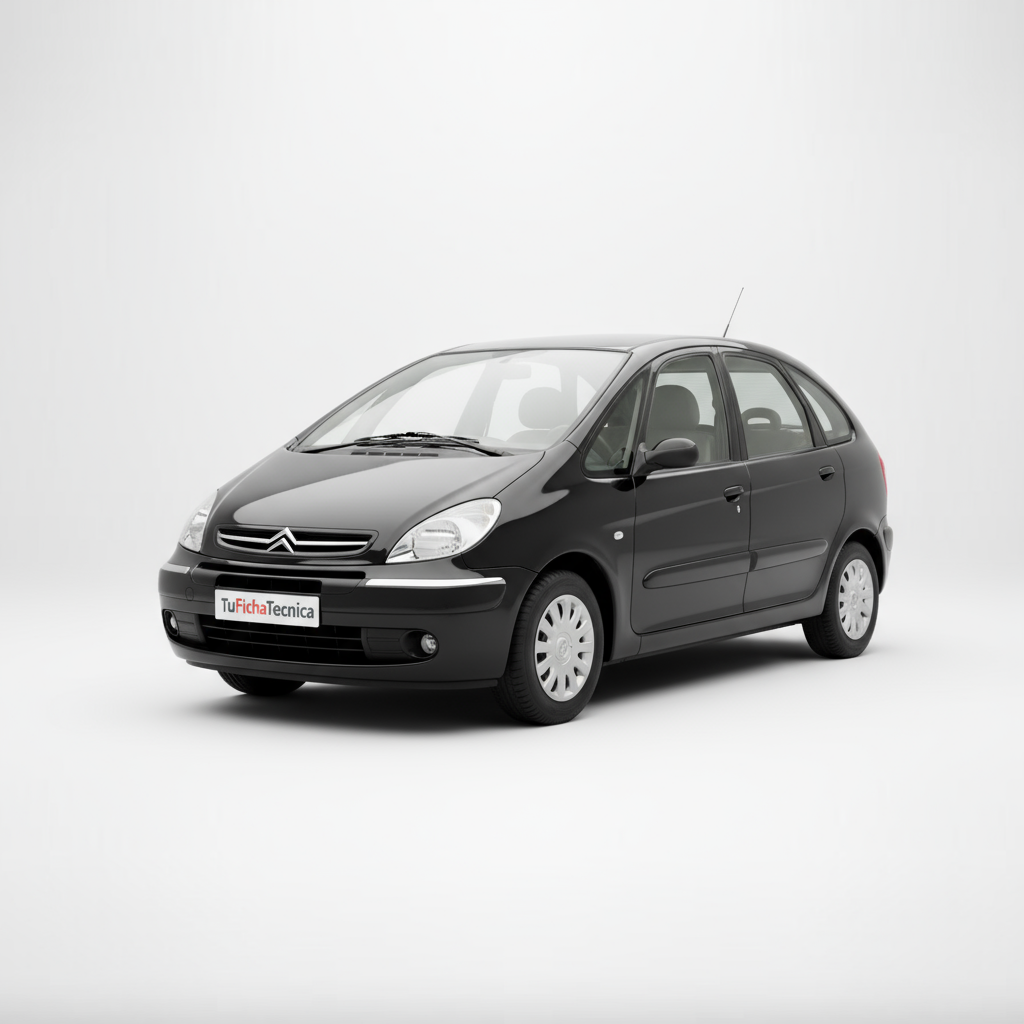
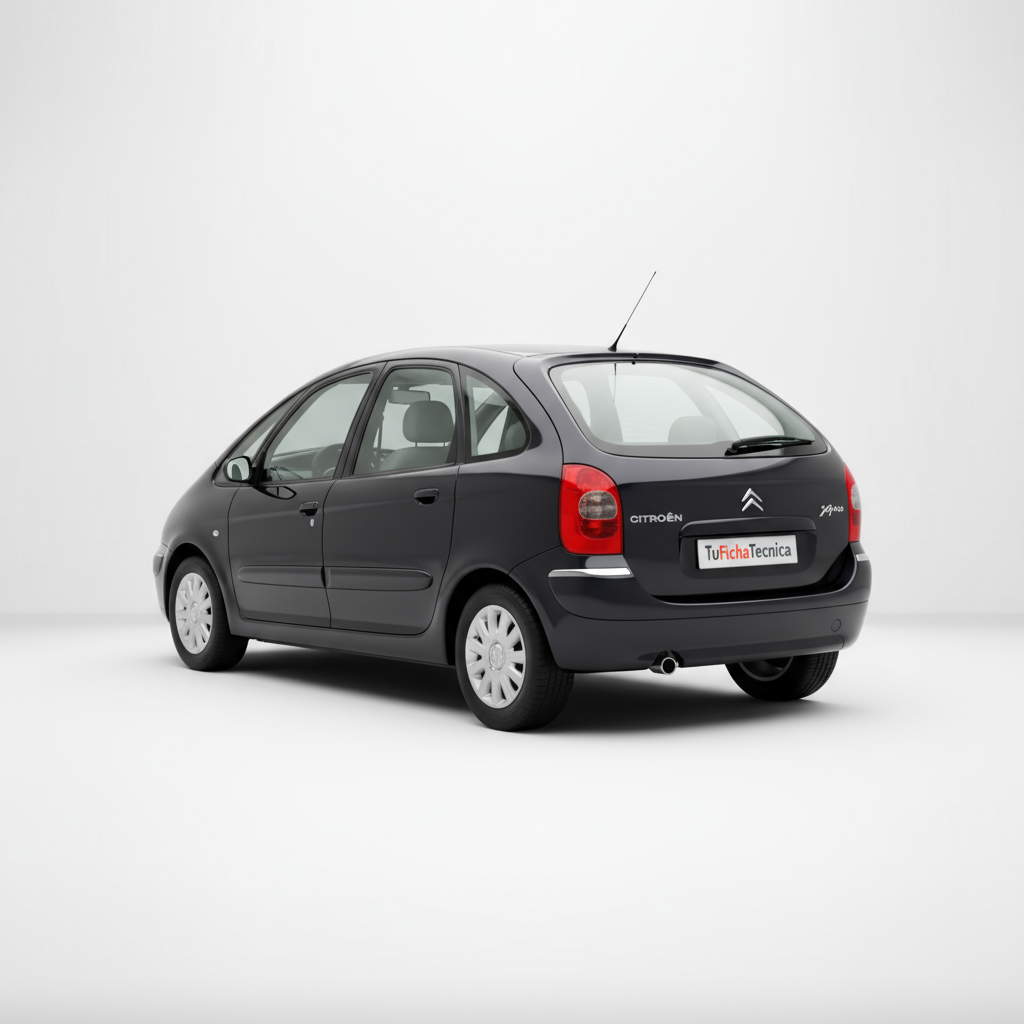
The Citroën Xsara Picasso is not just a car; it's the memory of an era and the travel companion for thousands of families. It arrived to redefine the concept of the compact minivan, offering space and interior light that changed the rules of the game. Its bold and friendly silhouette became an instant icon on the roads, a promise of comfort and family adventures.
Driving experience
Getting behind the wheel of the Xsara Picasso is a lesson in serenity. Its 90-horsepower HDi engine, though modest in numbers, pushes with admirable smoothness and consistency from low revs thanks to its generous torque. It doesn't seek speed, but comfort. The suspension, true to Citroën's tradition, filters out road imperfections with a mastery that makes you feel like you're floating, turning long journeys into a real pleasure.
Design and aesthetics
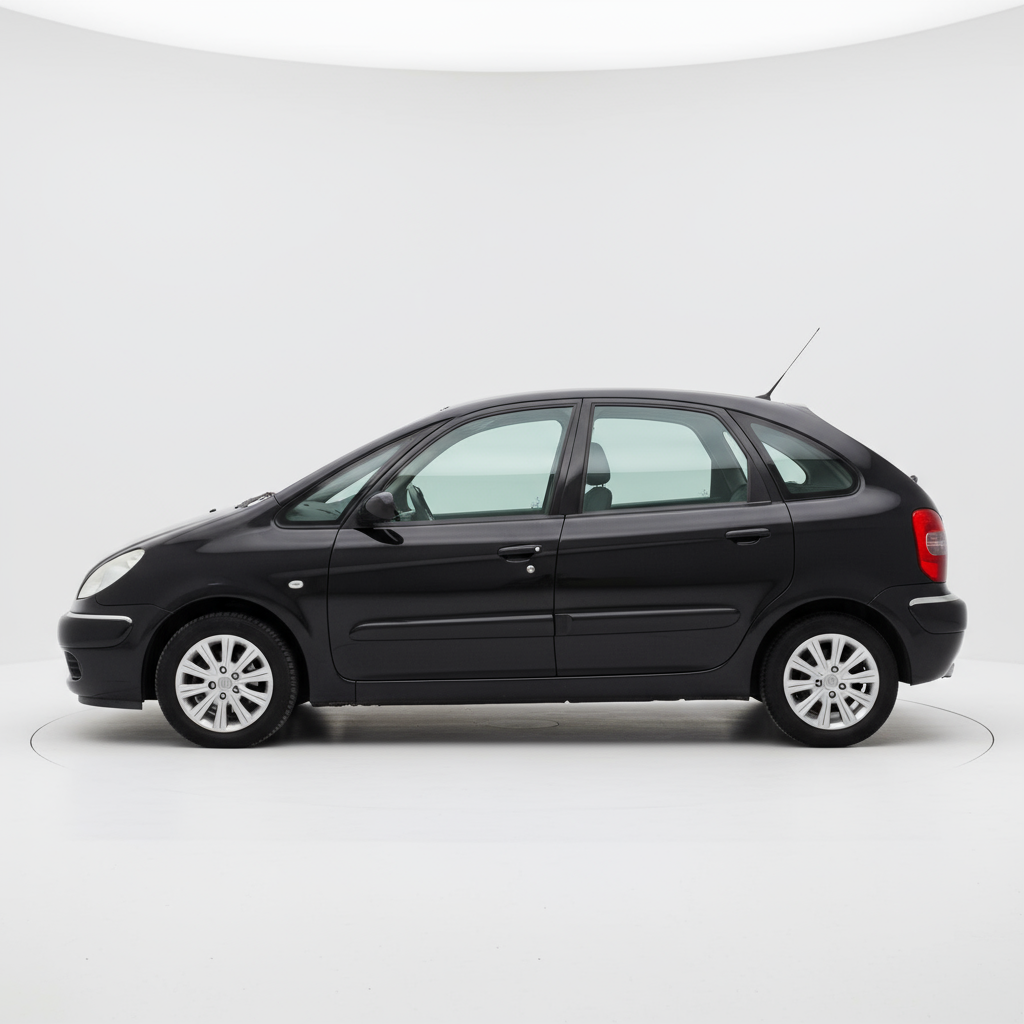
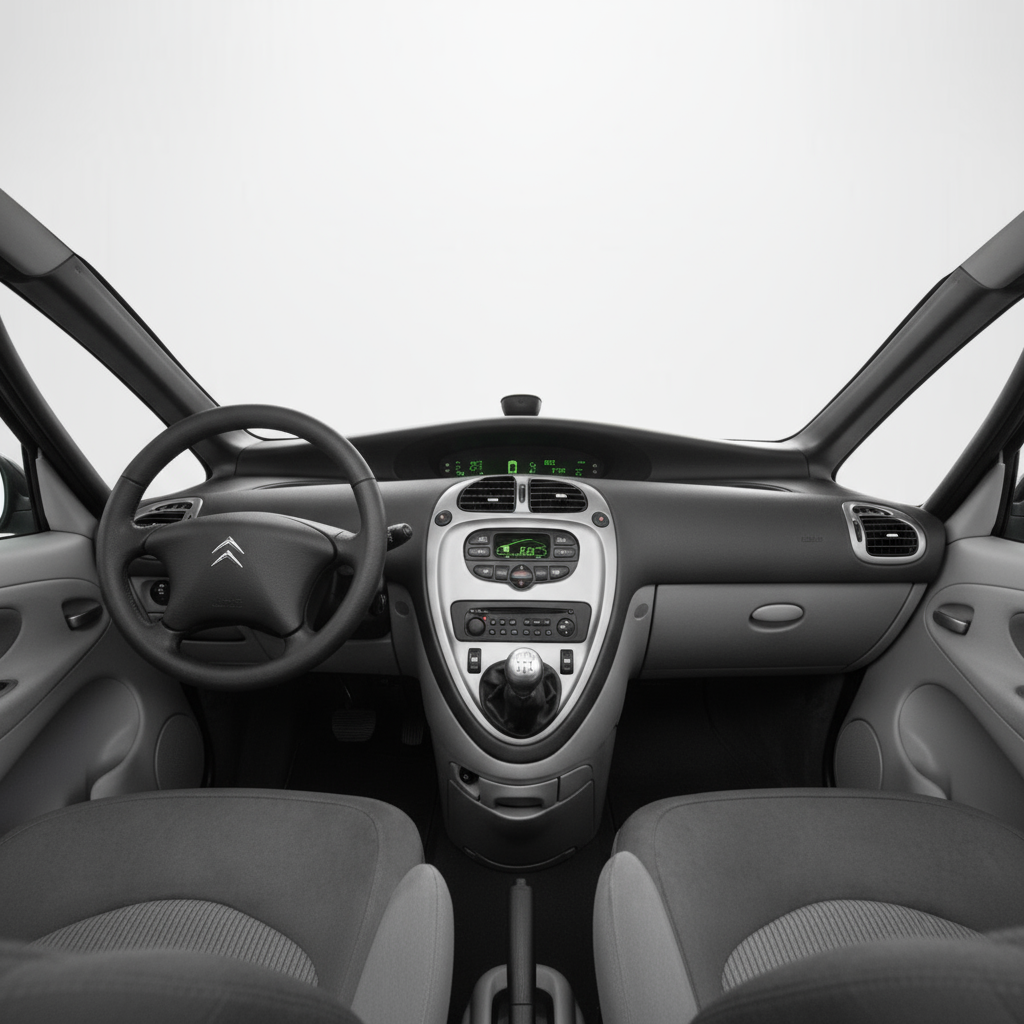
Its design, nicknamed 'the egg,' was a statement of intent. A rounded shape with almost no sharp edges that maximized interior space and visibility. Inside, light floods the cabin through its enormous windshield, while the dashboard with central digital instrumentation and the three individual, identical rear seats spoke a language of modularity and onboard living that few could match.
Technology and features
The technology of the Xsara Picasso was eminently practical. The HDi diesel engine with common-rail injection was a marvel of efficiency and reliability for its time. But its true innovation lay in ingenious solutions like the central digital instrumentation, which freed up the driver's view, or the incredible versatility of its seats, which could be folded or even removed to create a cavernous cargo space. It was technology at the service of the family.
Competition
In a segment it helped popularize, the Xsara Picasso faced tough competitors. Its arch-nemesis was always the Renault Scénic, the pioneer of the category. It also had to compete with the Opel Zafira, which offered the advantage of seven seats, and later with the Ford Focus C-MAX, which opted for more dynamic handling. However, the Picasso always had a unique charisma.
Conclusion
The Citroën Xsara Picasso is much more than a minivan; it's a chapter in automotive history and in the lives of many people. A vehicle that prioritized the well-being of its occupants above all else, with an unforgettable design and mechanical reliability that has become legendary. Driving it today is to reconnect with an intelligent and profoundly human way of understanding the automobile.