
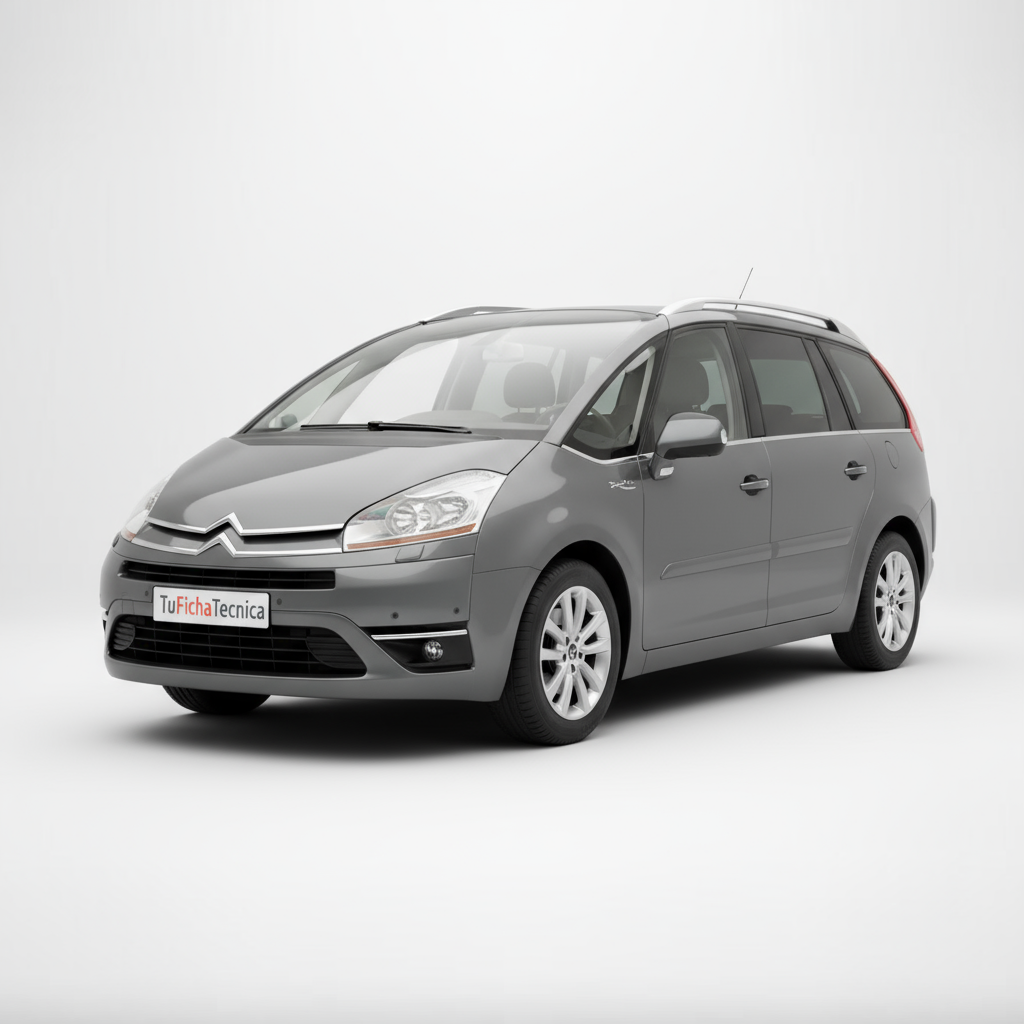
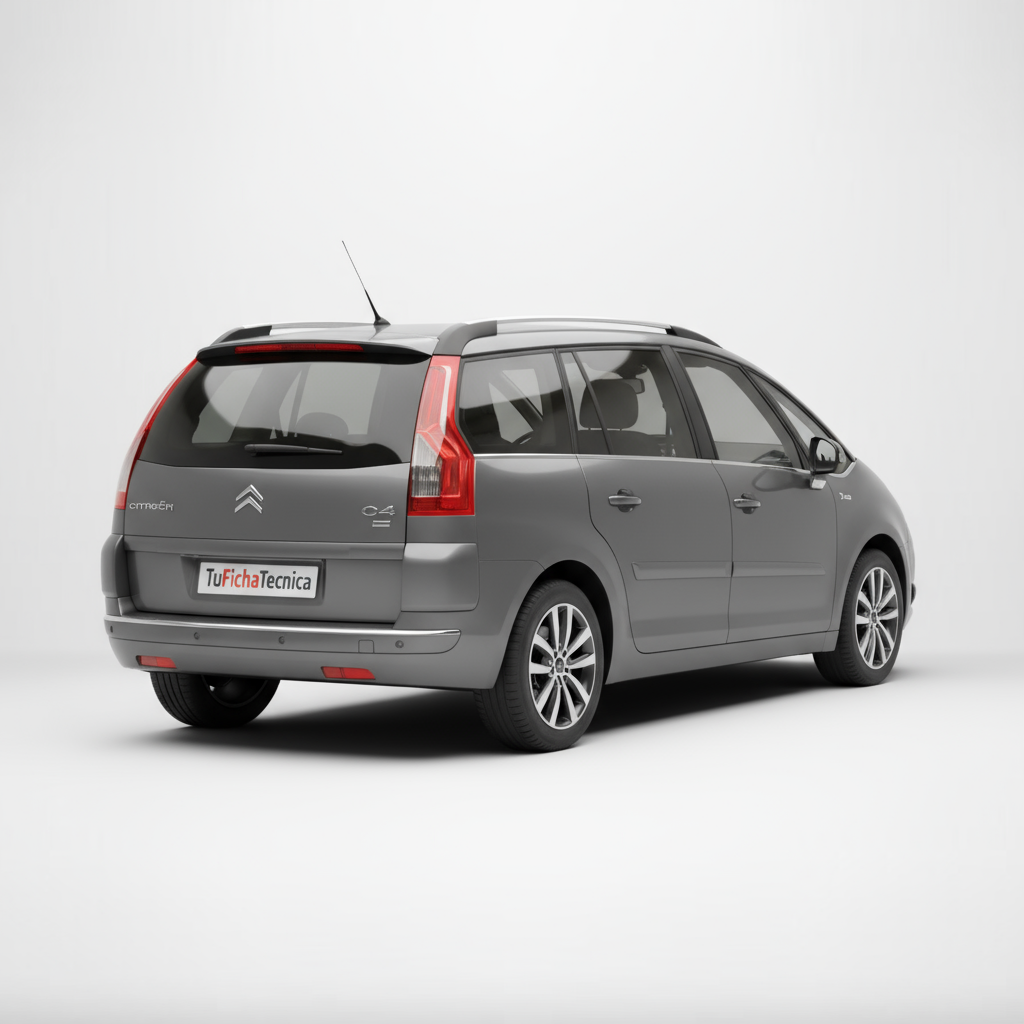
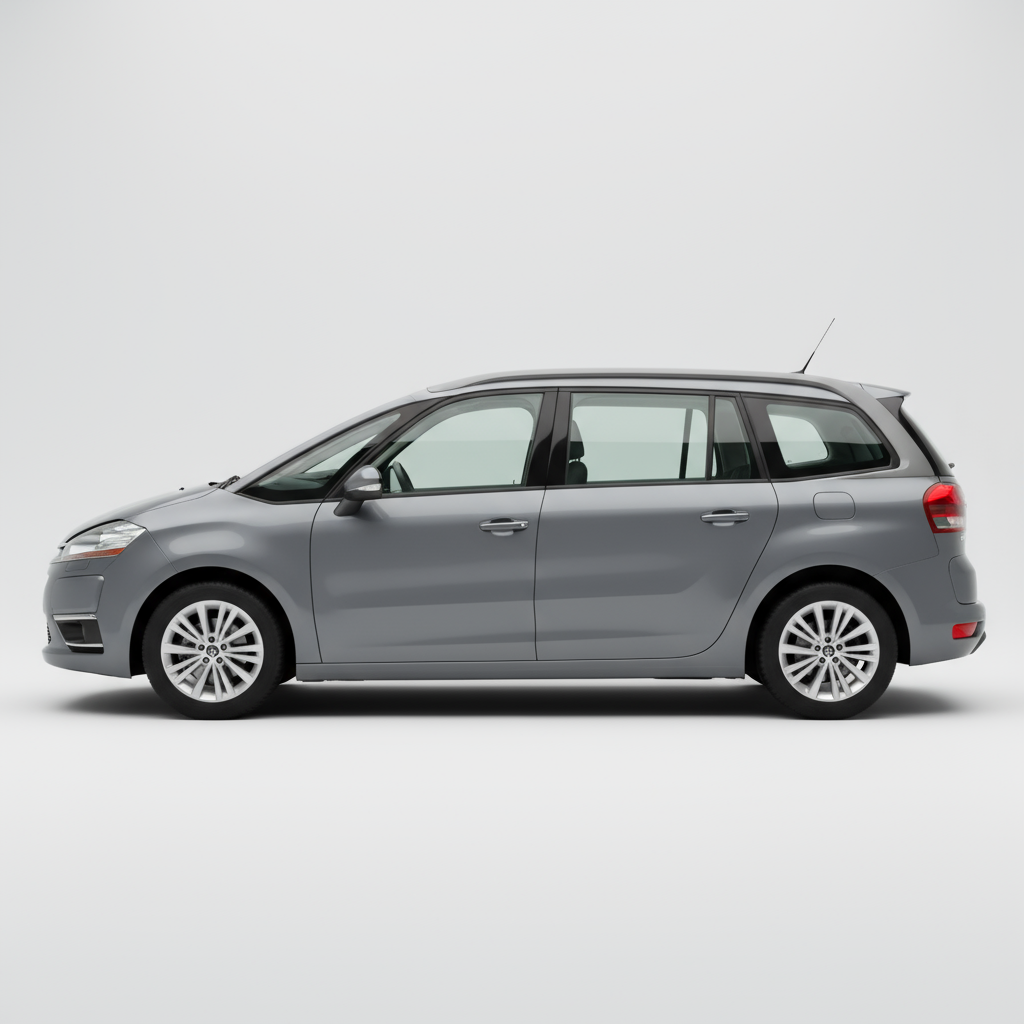
Especificaciones y análisis del Citroën Grand C4 Picasso
Power
136HP
Torque
270Nm
Consumption
5.9l/100
Emissions
155g/km
0-100 km/h
12.5s
Top Speed
195km/h
Weight
1695kg
Price
23,527€
Technical summary
Gasóleo
Automático 6v
FWD
7 / 5 doors
576 L
60 L
100 kW
Current
Technical specifications
Engine
Capacities
Detailed analysis of the Citroën Grand C4 Picasso HDi 135 CMP SX · 136 CV (2010)
General description
The 2007 Citroën Grand C4 Picasso was not just another minivan; it was a statement of intent, a spaceship for the family that landed on our roads. It represented Citroën's audacity to reinvent family travel, prioritizing light, space, and a sense of well-being that transformed every journey into a unique experience. It was a car designed to feel and enjoy the road, not just to travel on it.
Driving experience
Behind the wheel, the Grand C4 Picasso envelops you in a bubble of comfort. Its 136 HP HDi engine offers a capable and calm response, ideal for long highway trips with the family on board, where its torque feels generous. However, the automated manual transmission (CMP) is the soul of the controversy; its operation at low speeds can be jerky and requires an adaptation period to smooth out the shifts. The suspension, true to the brand's tradition, is exceptionally soft, filtering out road imperfections and creating a feeling of floating over the road. Don't look for sportiness, but a rolling sanctuary of peace.
Design and aesthetics
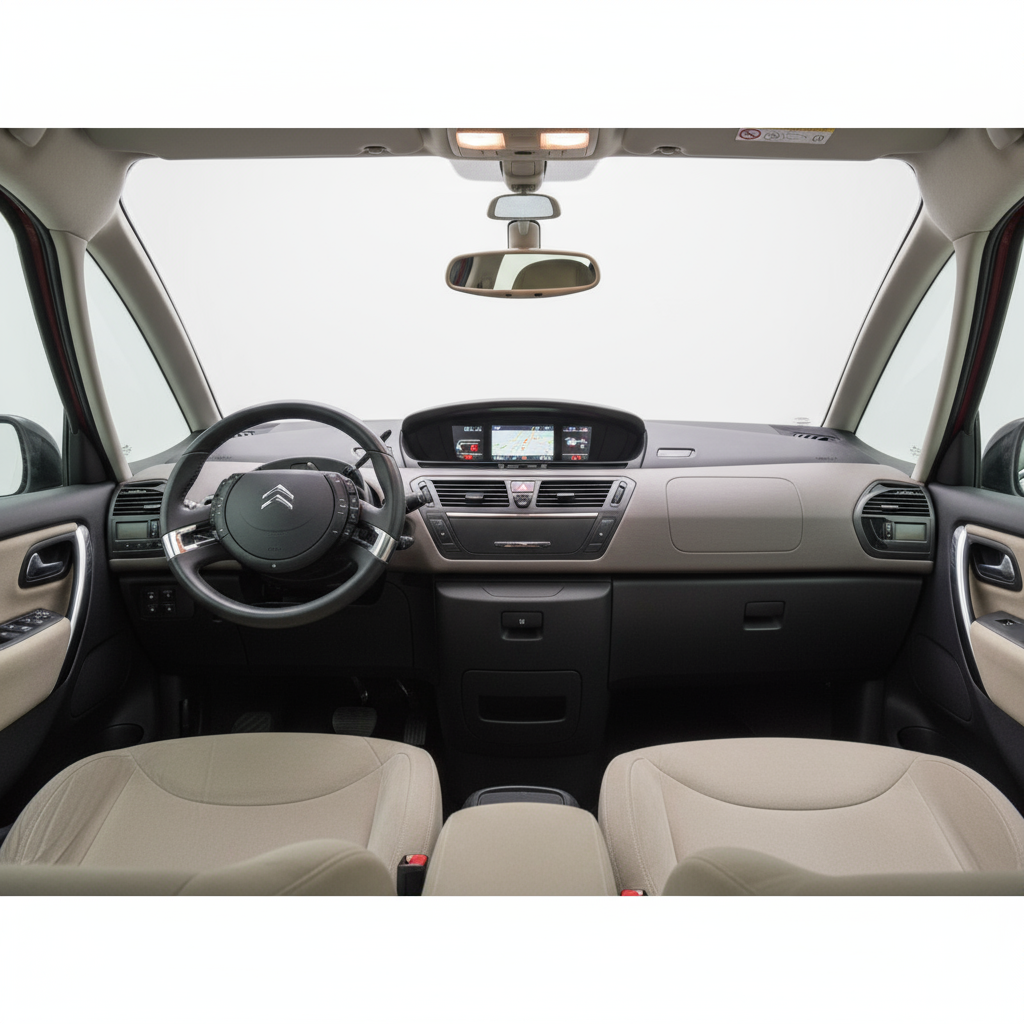
The design is its calling card and its greatest triumph. The 'Visiospace' concept materializes in a gigantic panoramic windshield that merges with the roof, flooding the cabin with light and offering almost cinematic visibility. Inside, the futuristic, centralized digital instrument cluster, along with the fixed-hub steering wheel controls, created an avant-garde atmosphere. Its modularity, with seven independent seats and a vast, configurable interior space, made it the perfect ally for any family adventure. It was, and still is, a spectacularly different car.
Technology and features
For its time, the Grand C4 Picasso was at the forefront. It incorporated elements uncommon in its segment such as an automatic electric parking brake, hill start assist, or a four-zone climate control. The centralized digital instrumentation was a risky bet that defined its innovative character. The CMP gearbox itself, although imperfect in its execution, represented an attempt to combine the comfort of an automatic with the efficiency of a manual. It was a car loaded with ingenious solutions designed to make life on board easier and more pleasant.
Competition
In the competitive seven-seater minivan segment, it faced titans like the Renault Grand Scénic, the Ford S-MAX, or the Volkswagen Touran. While the Grand Scénic competed in modularity and the S-MAX offered a noticeably more dynamic drive, the Citroën stood out for its supreme ride comfort and a radical design that polarized but never left anyone indifferent. Its focus on brightness and the feeling of interior space was an emotional selling point that few rivals could match.
Conclusion
The Citroën Grand C4 Picasso is a car chosen with both the heart and the head. It is an ode to family trips, a rolling living room where light and comfort are the true protagonists. Although the automated transmission can be a point of friction and its electronic reliability is not bulletproof, its bold design, incredible practicality, and the well-being it conveys on every kilometer make it an unforgettable and deeply human choice. A car with a soul that transcends mere transportation.