

Especificaciones y análisis del Citroën C4 Picasso
Power
140HP
Torque
200Nm
Consumption
8l/100
Emissions
190g/km
0-100 km/h
11.3s
Top Speed
195km/h
Weight
1586kg
Price
23,623€
Technical summary
Gasolina
Automático 6v
FWD
5 / 5 doors
500 L
60 L
103 kW
Current
Technical specifications
Engine
Capacities
Detailed analysis of the Citroën C4 Picasso 2.0i 16v CMP Exclusive · 140 CV (2008)
General description
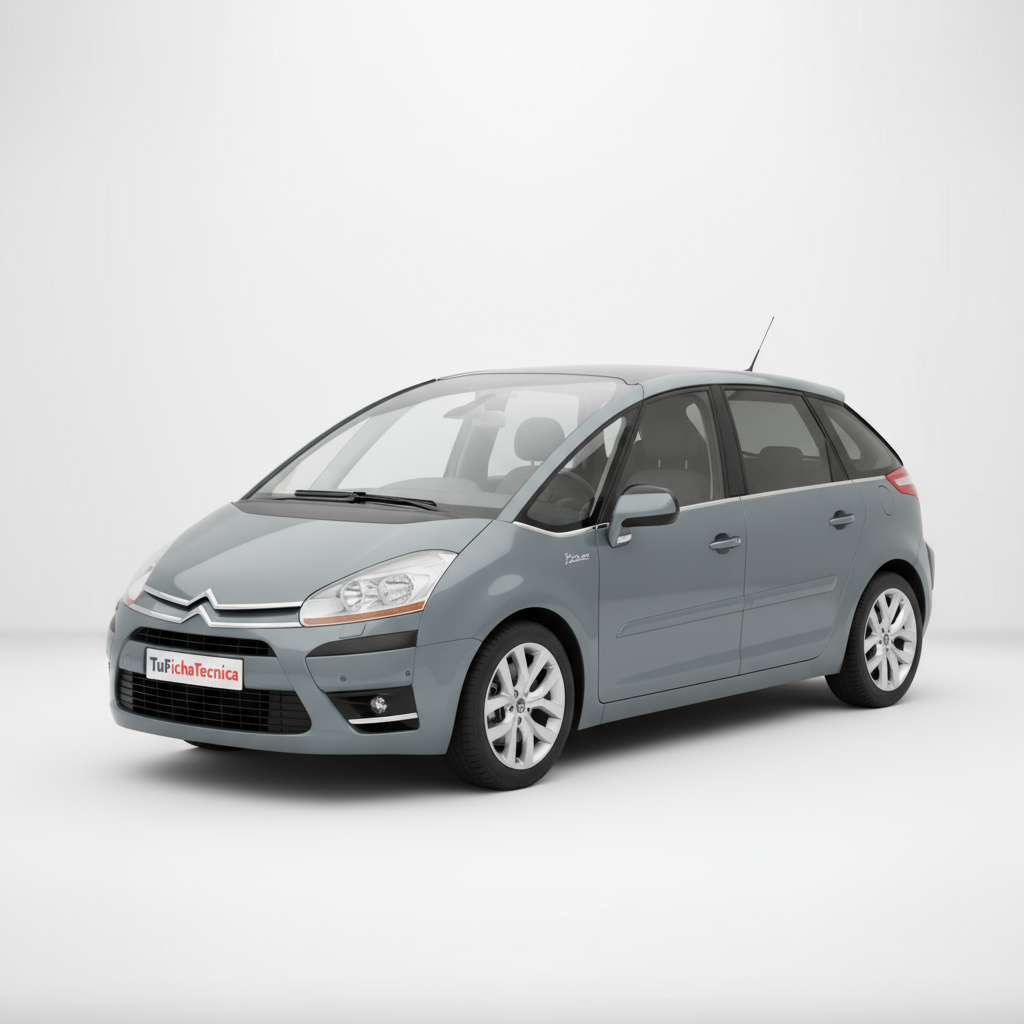
The 2007 Citroën C4 Picasso was not just another minivan; it was a statement of intent, a rolling glass bubble that redefined the concept of family travel. With its bold proposal, Citroën sought to flood the cabin with light and space, creating a unique driving and living experience that broke with the established norms.
Driving experience
Behind the wheel, the C4 Picasso envelops you in an atmosphere of calm and comfort. Its 140 horsepower is enough to move the vehicle with ease, but its true purpose is not speed, but smoothness. The suspension masterfully filters out irregularities, and the gigantic 'Visiospace' panoramic windshield immerses you in the landscape, transforming every journey into an almost cinematic experience. The CMP automated manual gearbox, though innovative for its time, can feel somewhat slow in its transitions, encouraging a relaxed and anticipatory driving style.
Design and aesthetics
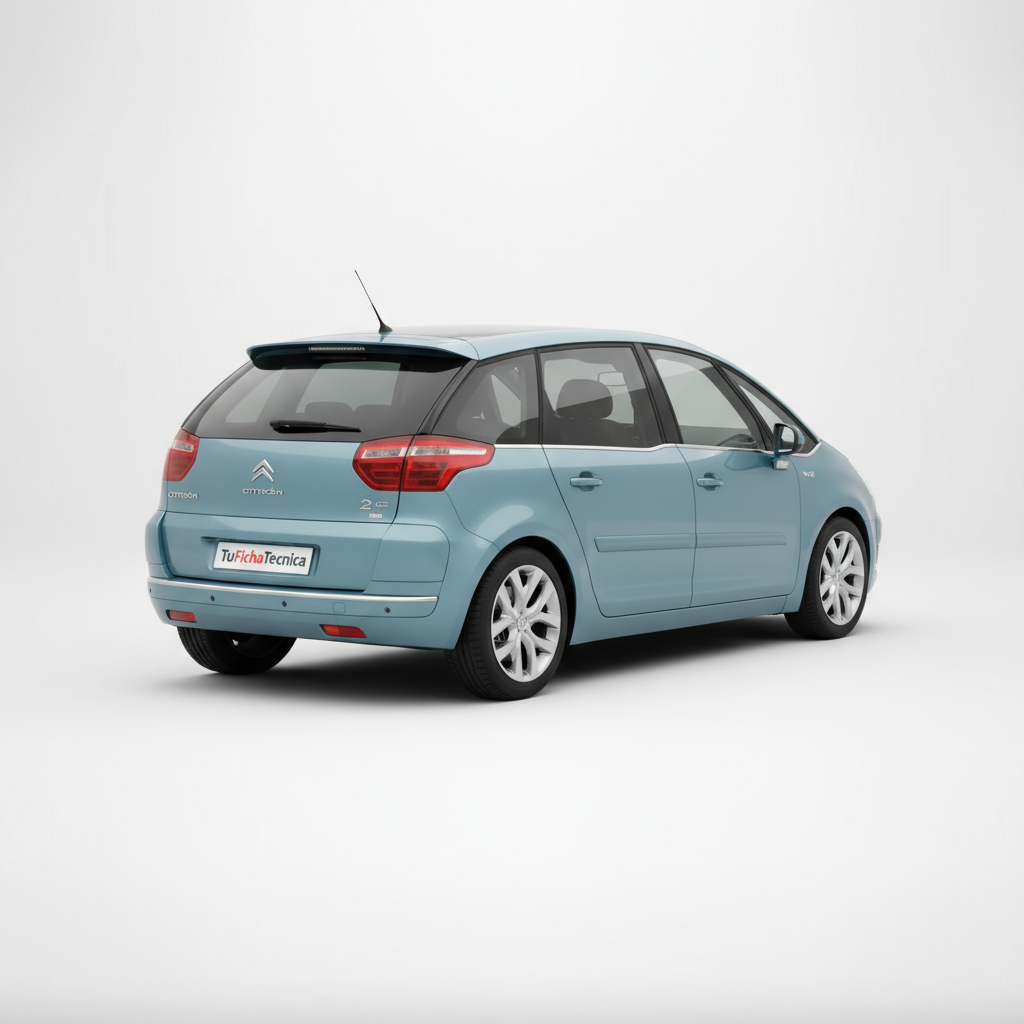
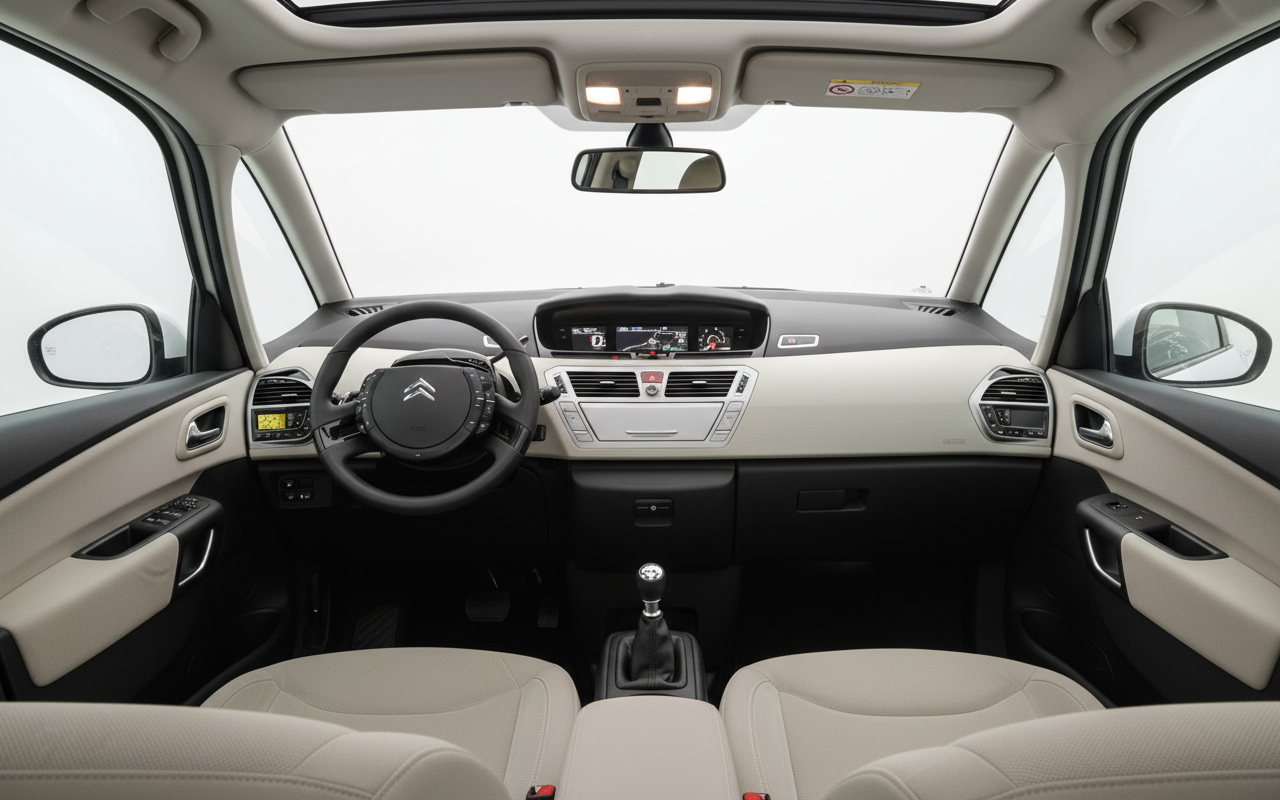
Its design, nicknamed 'the egg,' is unmistakable and timeless. A fluid and aerodynamic silhouette dominated by an unprecedented glass surface that merges with the roof. Inside, the futurism continued with a revolutionary driving position: a fixed-hub steering wheel that grouped multiple functions and a central digital instrument cluster that freed up visual space in front of the driver. Everything was designed to maximize the feeling of spaciousness and modularity.
Technology and features
For its time, the C4 Picasso was a technological showcase. Beyond its innovative design, it incorporated features like an automatic electric parking brake, dual-zone climate control, and the aforementioned fixed-hub multifunction steering wheel. The automated manual gearbox (CMP) represented an attempt to democratize the automatic transmission, offering convenience without the extra cost and consumption of traditional torque converter transmissions.
Competition
In a very competitive segment, it faced giants like the Renault Scénic, its natural arch-nemesis, and well-established models like the Ford C-MAX and the Volkswagen Touran. While its rivals focused on functionality or a touch of dynamism, the C4 Picasso played a completely different card: that of emotional design, brightness, and a sense of well-being on board that made it unique in its class.
Conclusion
The Citroën C4 Picasso is more than a car; it's an experience. A sanctuary designed for family enjoyment, where the journey is as important as the destination. It represents the audacity of a brand that dared to prioritize sensations, light, and comfort above all else. To drive it is to understand that a family car can also be an inspiring design object and a place to create unforgettable memories.