
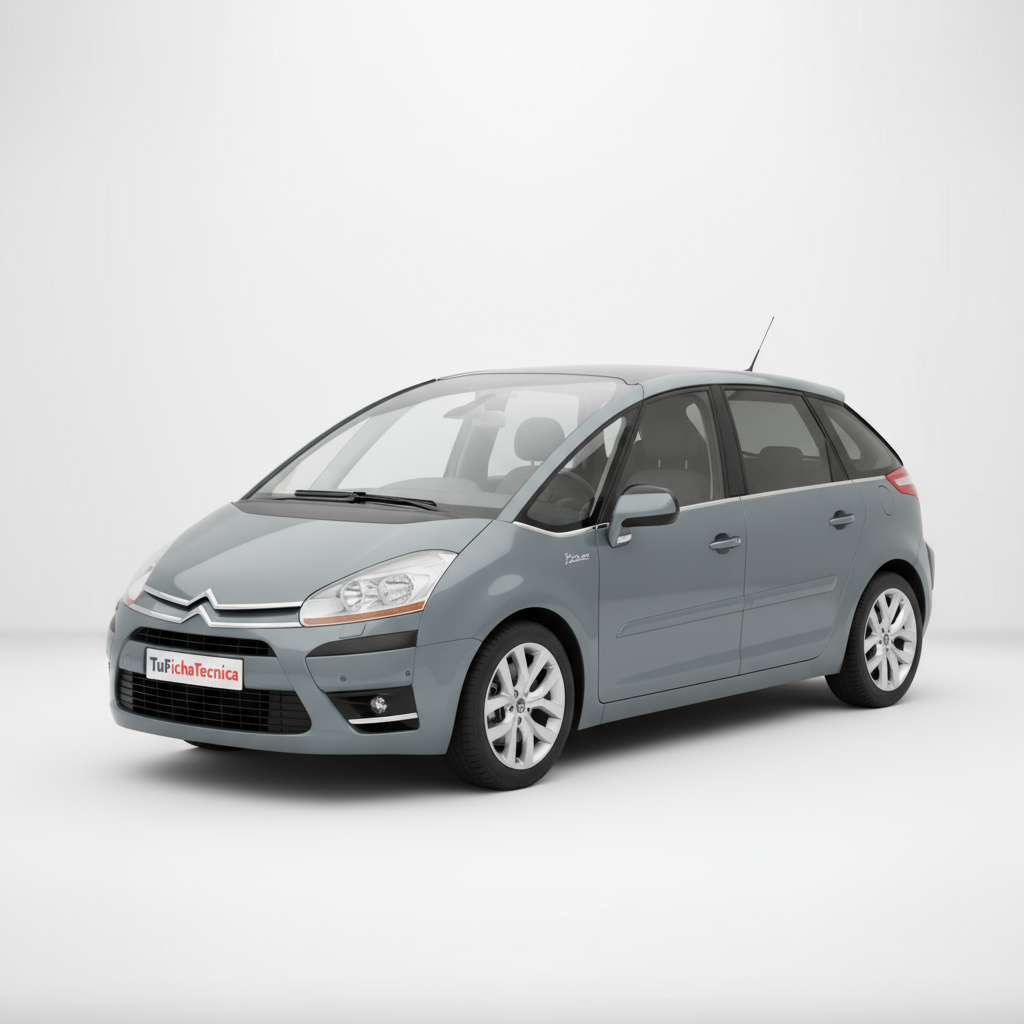
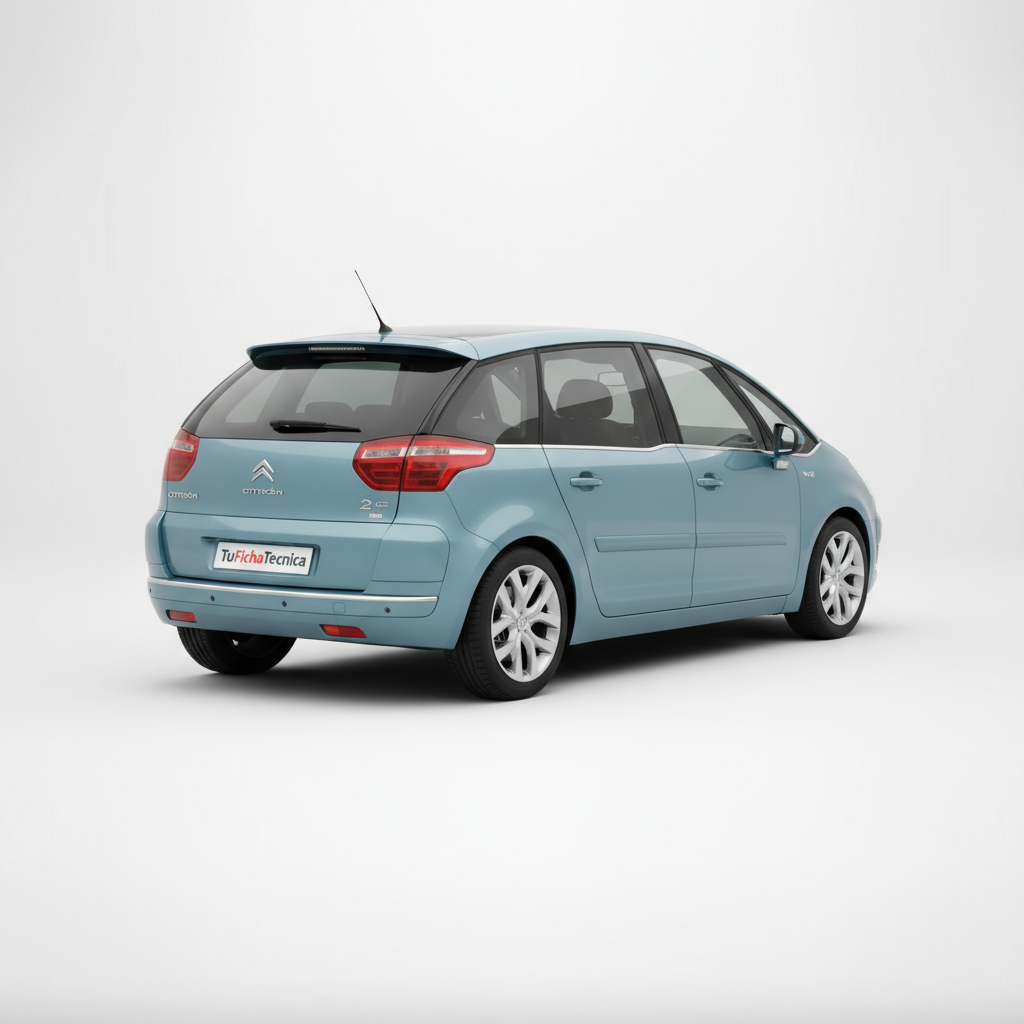

Especificaciones y análisis del Citroën C4 Picasso
Power
136HP
Torque
270Nm
Consumption
5.9l/100
Emissions
155g/km
0-100 km/h
12.4s
Top Speed
195km/h
Weight
1656kg
Price
23,970€
Technical summary
Gasóleo
Automático 6v
FWD
5 / 5 doors
500 L
60 L
100 kW
Current
Technical specifications
Engine
Capacities
Detailed analysis of the Citroën C4 Picasso HDi 135 FAP CMP Avatar · 136 CV (2010)
General description
The 2007 Citroën C4 Picasso was not just a minivan; it was a statement of intent. It arrived to redefine the concept of family travel, enveloping its occupants in an unprecedented bubble of light, space, and comfort. It was a breath of fresh air that proved a family car could be as innovative and exciting as it was practical.
Driving experience
Behind the wheel, the predominant feeling is one of absolute calm. The 136-horsepower HDi engine moves the vehicle with enough ease for stress-free travel, always prioritizing smoothness. The suspension masterfully filters out road imperfections, isolating you from the outside world and inviting a relaxed driving style. While the CMP automated manual gearbox can be somewhat hesitant in the city, on the open road it becomes an ally for devouring miles without fatigue, making every journey a pleasant and serene experience.
Design and aesthetics
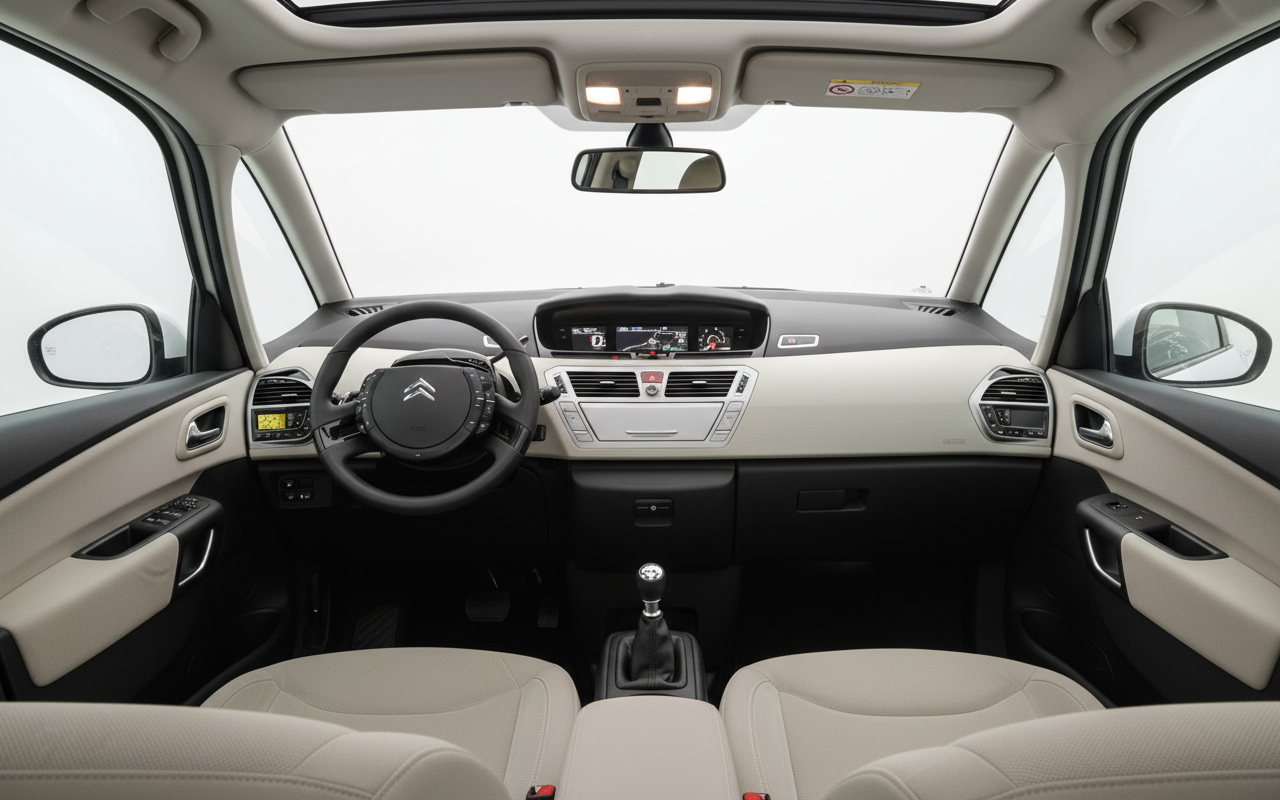
Its design was a true revolution. The 'Visiospace' panoramic windshield extended to the roof, flooding the cabin with a light that created a sense of freedom and spaciousness unknown in its category. Inside, the fixed-hub steering wheel and centralized digital instrumentation created a futuristic and uncluttered atmosphere. Every line, every surface, was designed to maximize well-being on board, turning the interior into a true rolling lounge.
Technology and features
For its time, the C4 Picasso was a technological showcase. Beyond its innovative spatial concept, it incorporated solutions such as an electric parking brake, four-zone climate control, and the digital instrumentation itself. The 2.0 HDi engine was a benchmark for its balance between performance and a modest consumption of 5.9 liters, while the automated manual gearbox represented a bold attempt to automate driving to make it more comfortable and efficient.
Competition
In a market crowded with competitors like the Renault Scénic, Ford C-MAX, or Volkswagen Touran, the C4 Picasso played a completely different card. While its rivals opted for sobriety or a more conventional driving feel, the Citroën stood out with an overwhelming personality, offering a level of comfort and an interior experience that simply couldn't be found in any other model in the segment.
Conclusion
The Citroën C4 Picasso is one of those cars that leaves a lasting impression. It was a brave vehicle that placed the needs and well-being of the family at the center of everything. Its unique combination of avant-garde design, a bright and modular interior, and superb ride comfort made it a success and a benchmark. Even today, it remains a reminder that functionality does not have to be at odds with emotion and audacity.