

Especificaciones y análisis del Citroën C4 Picasso
Power
136HP
Torque
270Nm
Consumption
6l/100
Emissions
157g/km
0-100 km/h
12.4s
Top Speed
195km/h
Weight
1656kg
Price
28,520€
Technical summary
Gasóleo
Automático 6v
FWD
5 / 5 doors
500 L
60 L
100 kW
Current
Technical specifications
Engine
Capacities
Detailed analysis of the Citroën C4 Picasso HDi 135 FAP CMP Exclusive Plus · 136 CV (2008-2009)
General description
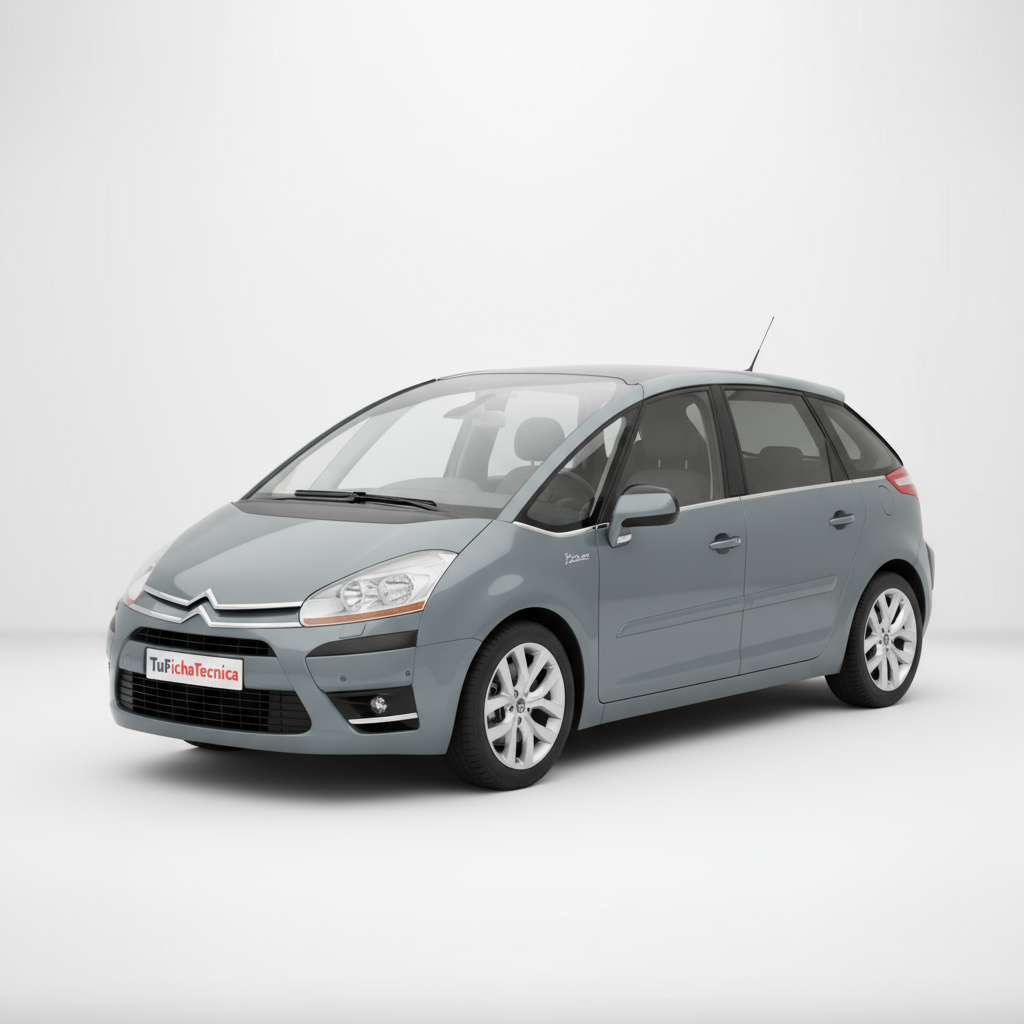
The 2007 Citroën C4 Picasso was not just a minivan; it was a statement of intent. In a market full of functional but predictable family vehicles, Citroën launched a spaceship for the road, a car that promised to turn every journey into a bright and comfortable experience. With its 136-horsepower HDi diesel engine and the Exclusive Plus trim, it represented the brand's vision for the future of family transport: bold, spacious, and radically different.
Driving experience
Behind the wheel, the C4 Picasso is a sea of contrasts. The 2.0 HDi engine pulls with confidence and determination, feeling robust and capable for long highway trips, where the car glides with exceptional silence and comfort. However, the experience is marred by the automated manual gearbox (CMP). Its slow and sometimes jerky transitions, especially in the city, break the magic and require a period of adaptation. It's a car that envelops you in a bubble of comfort and visibility, thanks to its gigantic windshield, but reminds you of its mechanical nature with every gear change.
Design and aesthetics
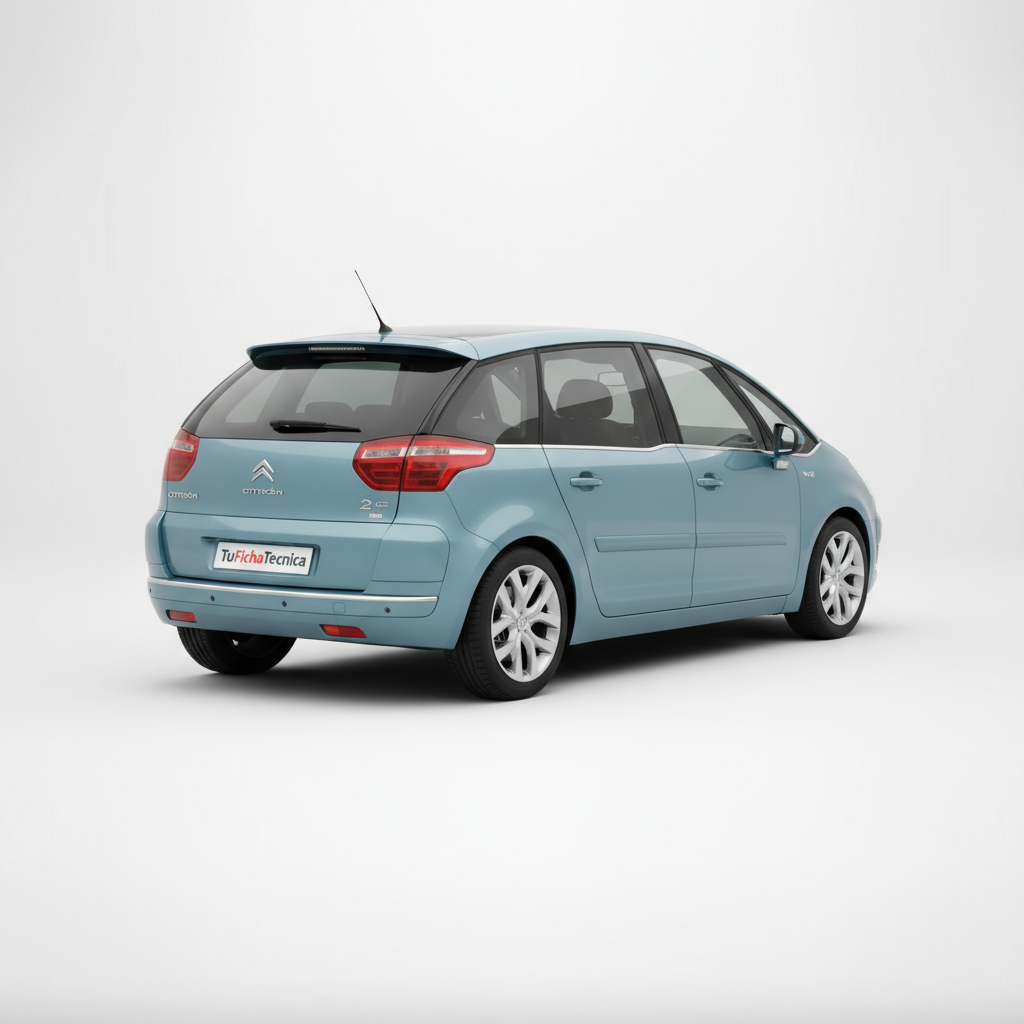
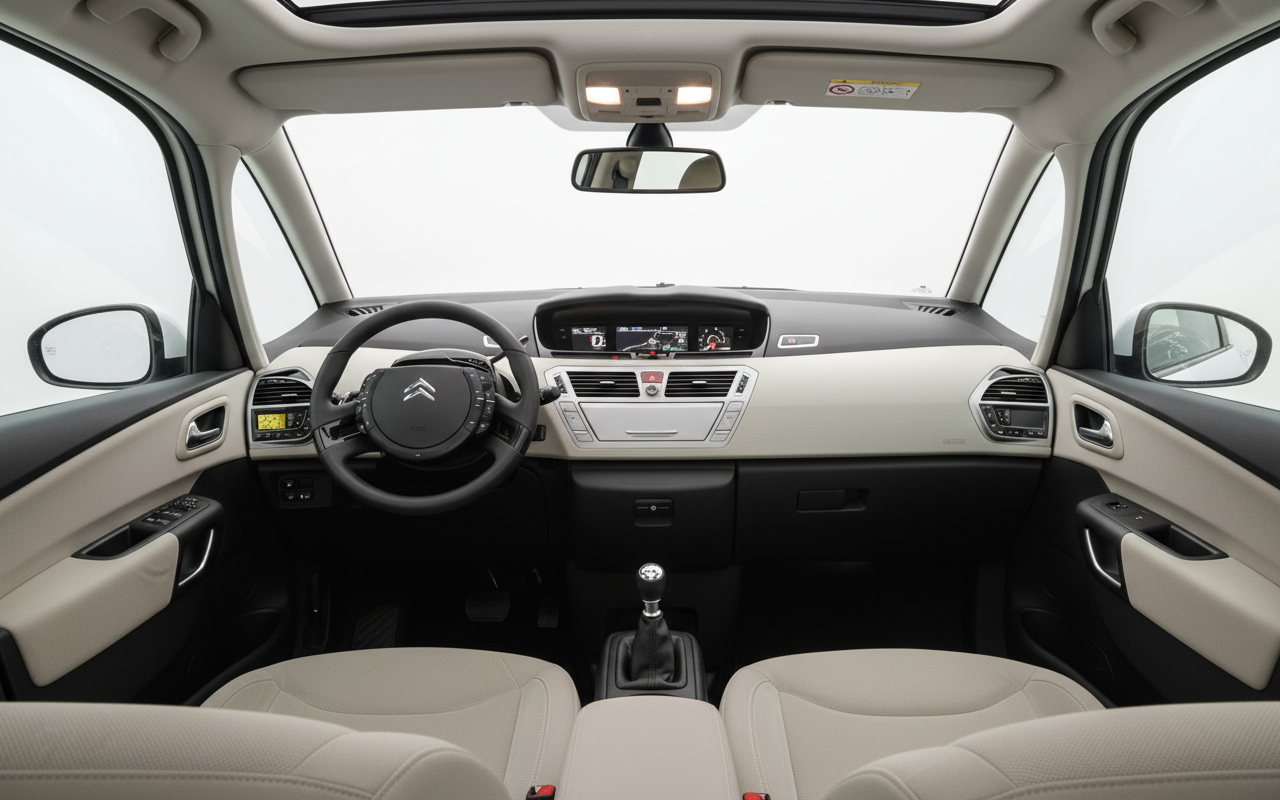
The design is, without a doubt, its soul. The 'Visiospace' concept permeates everything, with a panoramic windshield that extends to the roof and huge windows that create an unparalleled sense of freedom and spaciousness. On the outside, its fluid and rounded lines broke the mold, giving it a futuristic look that still feels special today. Inside, the fixed-hub steering wheel and centralized digital instrumentation were not just ornaments, but a genuine attempt to reinvent the interaction with the car, creating a cabin that feels more like a rolling lounge than a simple driver's seat.
Technology and features
For its time, the C4 Picasso was a technological showcase. Beyond its controversial CMP gearbox, it incorporated ingenious solutions like the fixed-hub steering wheel with controls, which allowed safer access to multiple functions. The central digital instrumentation offered a clear and modern display of information. In trims like the Exclusive Plus, it was common to find four-zone climate control, an electric parking brake, and an optional pneumatic rear suspension that maintained a constant height and further improved comfort, demonstrating Citroën's ambition to democratize high technology.
Competition
It competed in a fiercely contested segment. Its main adversary was the Renault Scénic, another French icon of modularity. The Ford C-MAX and S-MAX challenged it with much more agile and dynamic driving, attracting parents who didn't want to give up the pleasure of driving. On the other hand, the Volkswagen Touran offered sobriety and German build quality, while the Opel Zafira stood out for its practical seven-seat system. Against all of them, the C4 Picasso played the card of emotional design, supreme comfort, and unparalleled interior brightness.
Conclusion
The Citroën C4 Picasso is a car bought with both the heart and the head. It is an ode to comfort, space, and light, a perfect vehicle for families who value well-being on board above pure performance. Its design remains captivating, and its cabin is a wonderful place to spend time. Its big 'but' is the CMP gearbox, a technology that was not up to par with the rest of the package. If you can live with its quirks, you'll get a car with an overwhelming personality and a level of comfort that few rivals of its time could match.