

Especificaciones y análisis del Citroën C4 Picasso
Power
109HP
Torque
240Nm
Consumption
5.3l/100
Emissions
140g/km
0-100 km/h
13.2s
Top Speed
180km/h
Weight
1574kg
Price
20,020€
Technical summary
Gasóleo
Automático 6v
FWD
5 / 5 doors
500 L
60 L
80 kW
Current
Technical specifications
Engine
Capacities
Detailed analysis of the Citroën C4 Picasso HDi 110 FAP CMP Cool · 109 CV (2009-2010)
General description
The 2007 Citroën C4 Picasso was not just another minivan; it was a true revolution for families. It arrived to redefine the concept of travel, enveloping its occupants in an unprecedented bubble of light, space, and comfort. Its bold proposal instantly made it an icon and an object of desire for those seeking more than just a simple means of transport.
Driving experience
Driving the C4 Picasso is an experience that appeals to calm. Its 109-horsepower HDi engine doesn't seek speed records but aims to offer a smooth and extraordinarily economical journey. The suspension filters out road imperfections with a mastery that makes you feel like you're floating, while the immense panoramic windshield floods the cabin with light and connects you with the landscape in a unique way. The CMP automated manual gearbox requires an adaptation period to understand its rhythm, but once you get it, it contributes to a relaxed and stress-free drive, as if you were in your living room rolling down the road.
Design and aesthetics
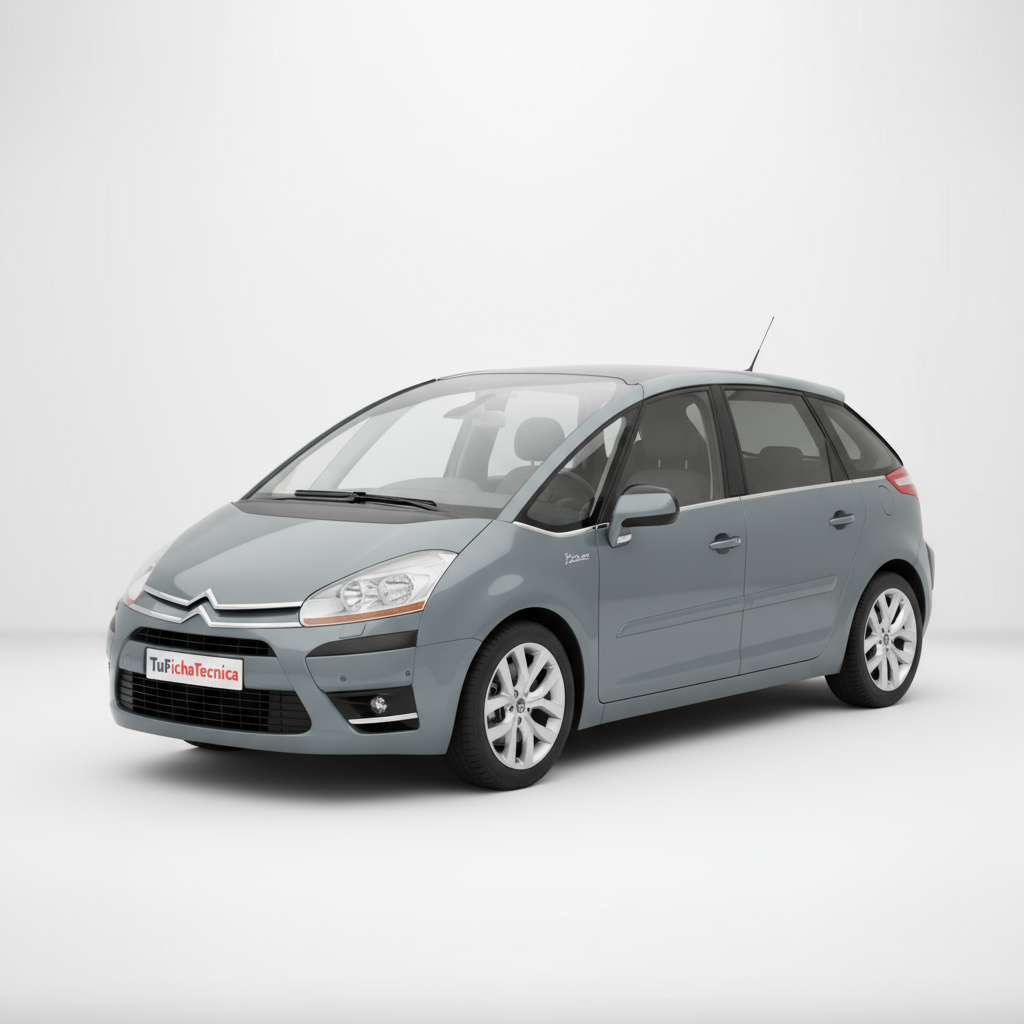
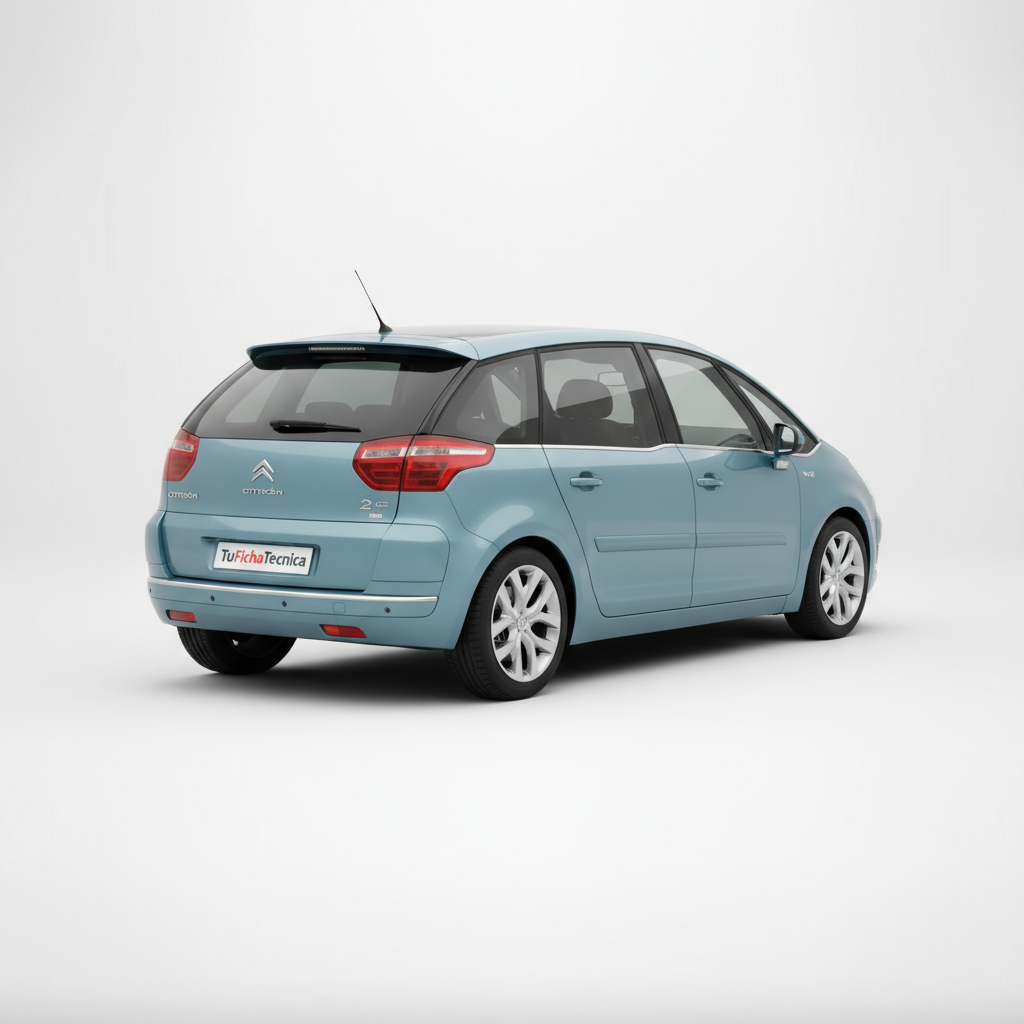
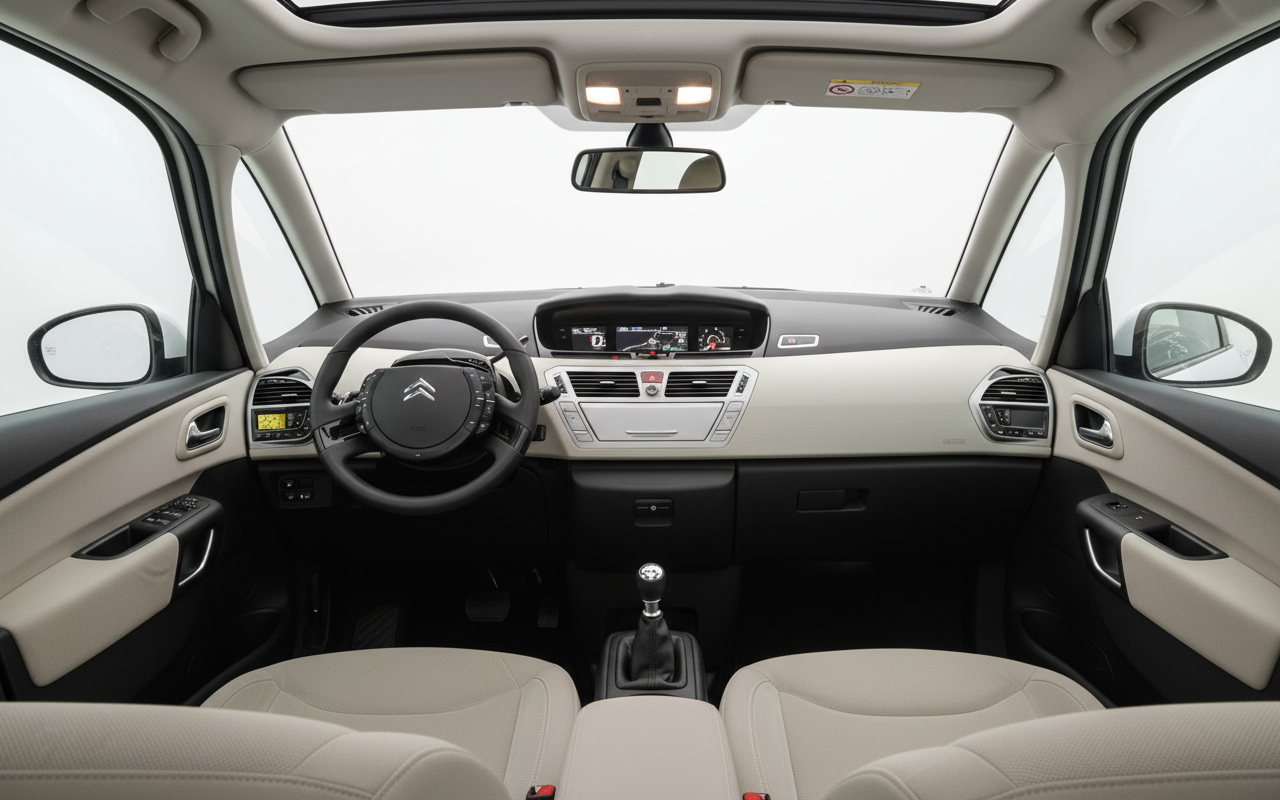
Its design was a stroke of audacity. Citroën called it 'Visiospace,' and for good reason. The futuristic line, almost like a spaceship, with its thin front pillars and gigantic glass surface, broke with everything established. Inside, the innovation continued with a fixed-hub steering wheel that grouped multiple functions and a central digital instrumentation that cleared the driver's field of vision. It was a design conceived from the inside out, where the absolute priority was the well-being and sense of spaciousness for the passengers.
Technology and features
For its time, the C4 Picasso felt like a car from the future. It incorporated solutions that simplified life on board, such as the automatic electric parking brake, climate control, or the aforementioned automated gearbox. The centralized digital instrumentation was a statement of intent, offering information in a clear and modern way. Although its technology may seem simple today, at the time it represented a qualitative leap in comfort and driving assistance for a vehicle in its segment.
Competition
In a very competitive market, it faced giants like the Renault Scénic, the Ford C-MAX, or the Volkswagen Touran. While its rivals opted for classic modularity, sharper dynamics, or German sobriety, the C4 Picasso played a completely different card: that of emotional design and absolute comfort. It distinguished itself by offering a more sensory and luminous travel experience, winning over those who valued originality and the pleasure of traveling above all else.
Conclusion
The Citroën C4 Picasso is one of those cars that leaves a mark. It's not perfect, but its charisma and bold proposal make it an unforgettable vehicle. It was conceived to enjoy the journey, to turn every trip into a small family adventure. Despite the peculiarities of its gearbox and a reliability that demands attention, its legacy is that of having shown that a family car could be exciting, beautiful, and, above all, a wonderful place to be.