
Especificaciones y análisis del Citroën C1
Power
68HP
Torque
93Nm
Consumption
4.3l/100
Emissions
99g/km
0-100 km/h
12.3s
Top Speed
160km/h
Weight
905kg
Price
7,990€
Technical summary
Gasolina
Manual 5v
FWD
4 / 5 doors
139 L
35 L
50 kW
Current
Technical specifications
Engine
Capacities
Detailed analysis of the Citroën C1 5p Attraction 1.0i 12v · 68 CV (2012)
General description
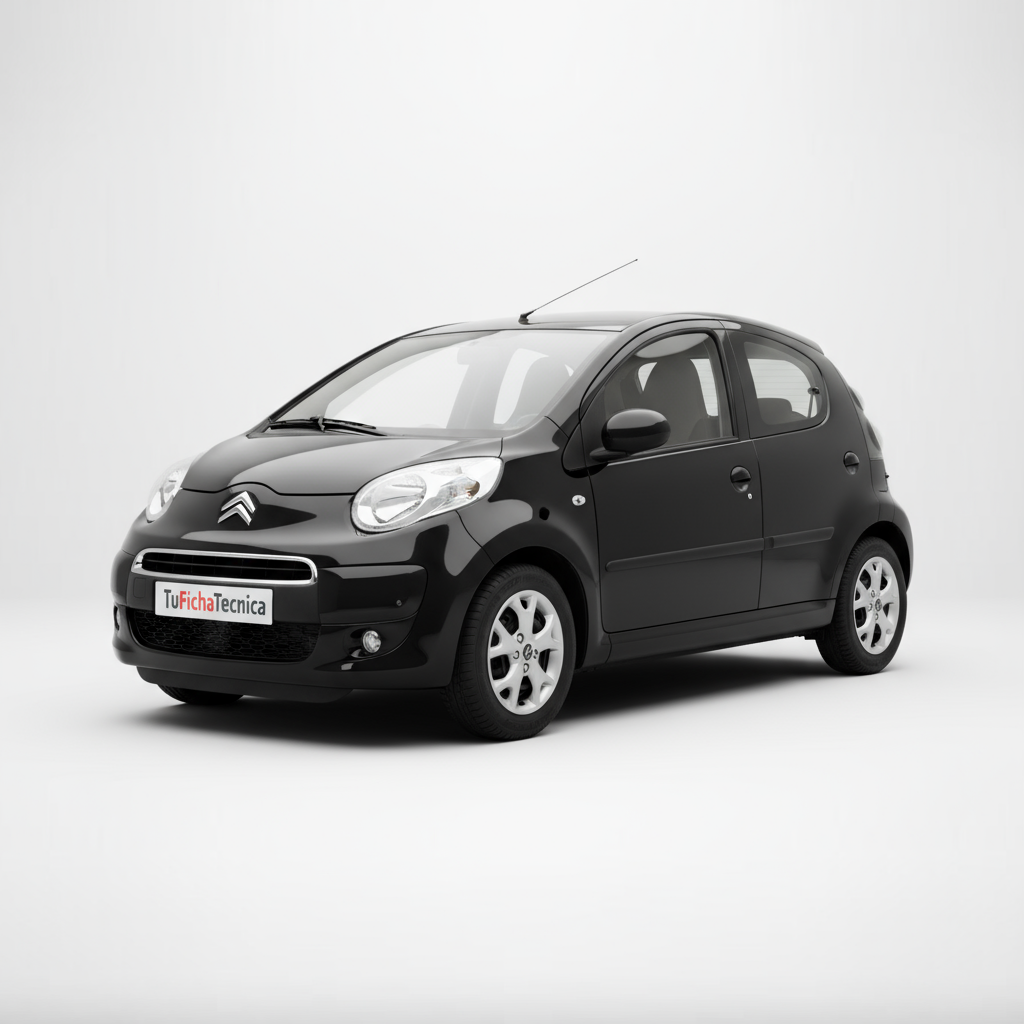
The 2012 Citroën C1 is the personification of the city car: small, clever, and full of charm. Born to conquer the narrowest streets, this little giant offers an honest and accessible mobility solution, a haven of simplicity in an increasingly complex world. It's a car with a clear purpose, designed for those who see the city not as an obstacle, but as their playground.
Driving experience
Driving the C1 is a delightfully analog experience. Its 68-horsepower 3-cylinder engine vibrates with a unique personality, emitting a characteristic sound that connects you directly to the mechanics. Don't look for blistering acceleration, but for surprising agility. Its featherweight of just 905 kg and its small size make it a king of urban zigzagging. Every shift of its 5-speed manual gearbox feels direct, and its incredibly low consumption of 4.3 liters per 100 km brings a smile to your face at every visit to the gas station.
Design and aesthetics
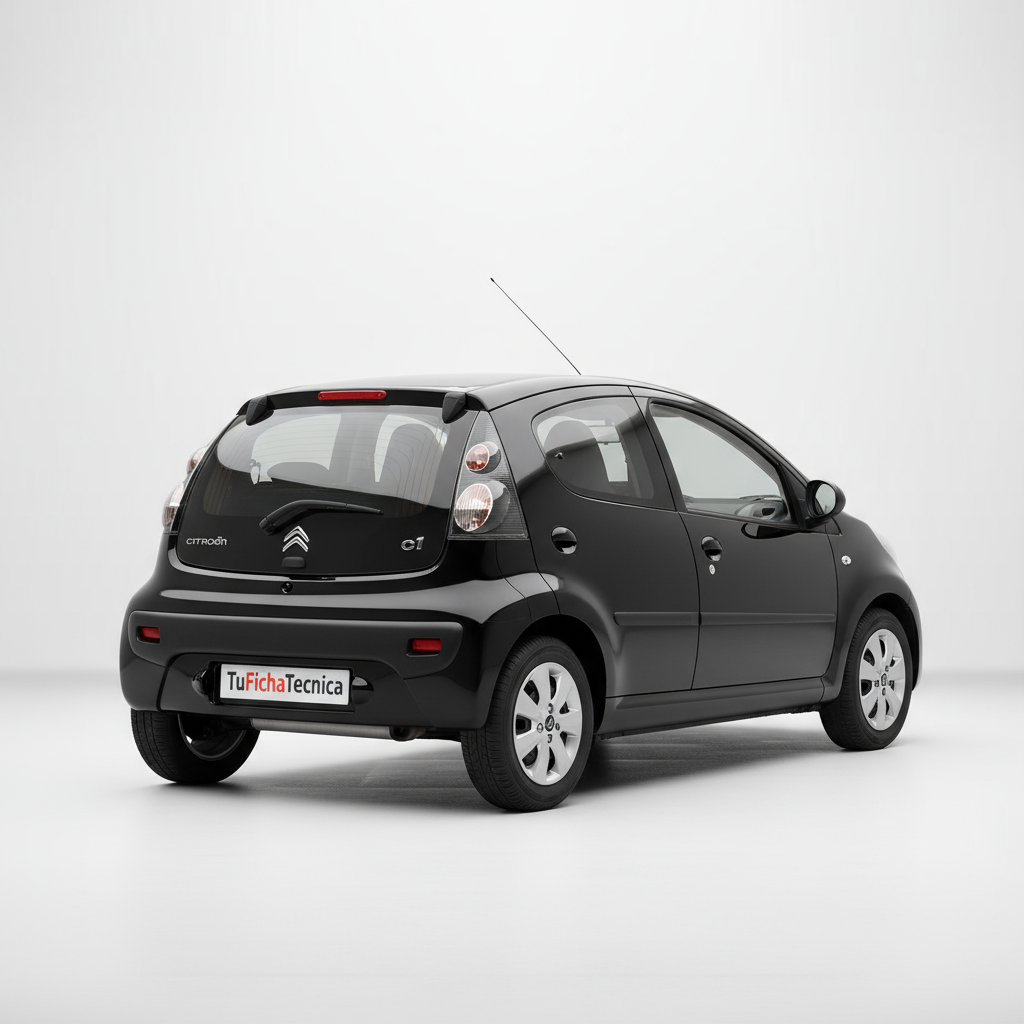
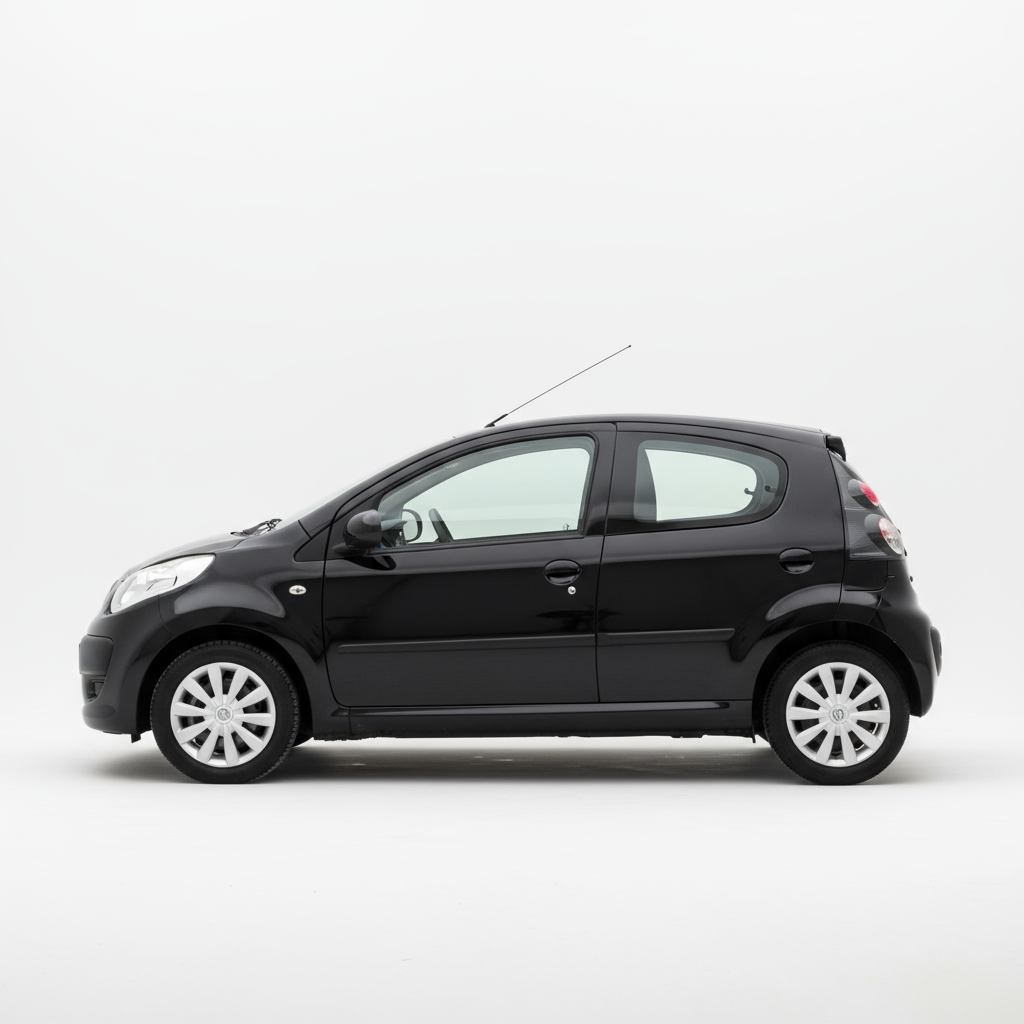
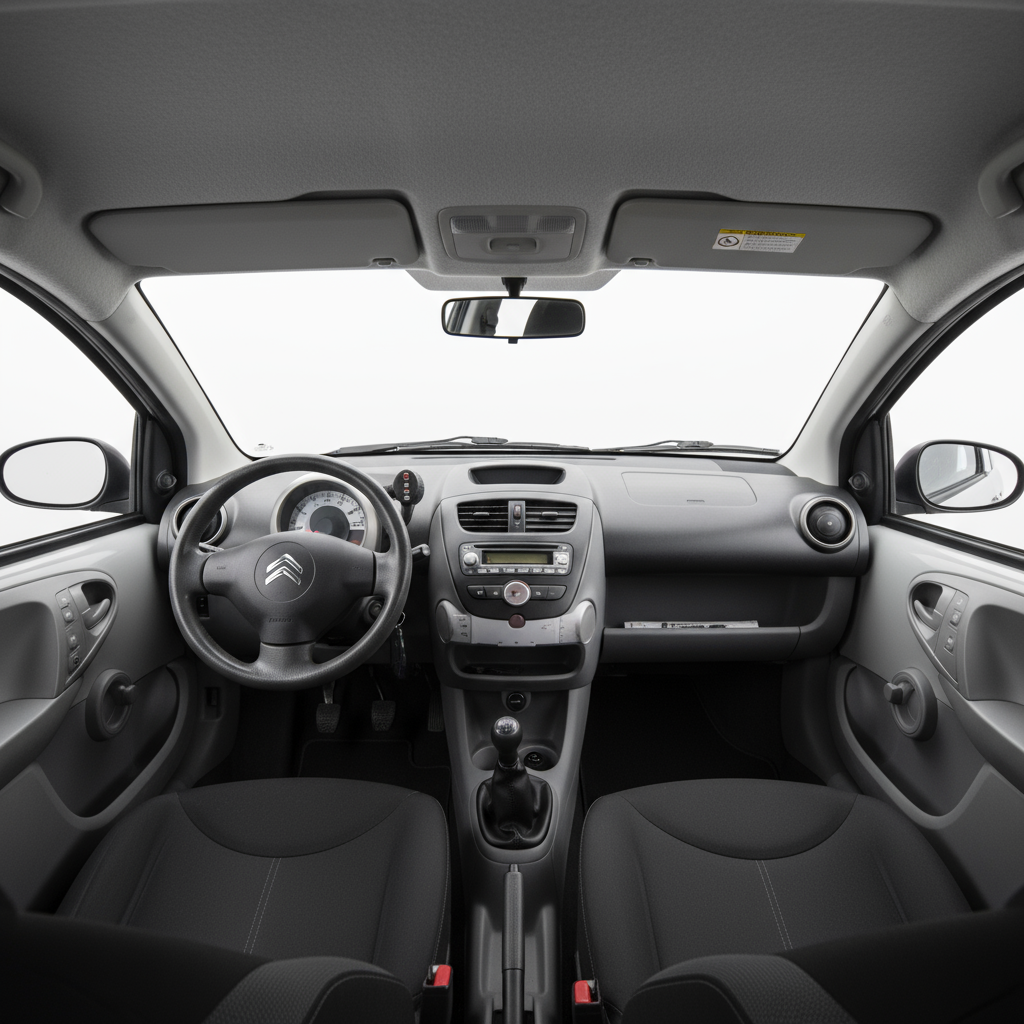
The C1's design is pure functionality with a touch of friendliness. Its rounded shapes and friendly front end give it a cheerful and carefree look. The 5-door version adds an unexpected dose of practicality in such a compact car. Inside, simplicity is the norm, with a minimalist instrument cluster that gives you only the essential information. The tailgate, which is the glass window itself, is an iconic design feature and a clever solution that maximizes space and visibility.
Technology and features
In a world of screens and assistants, the 2012 C1 is an oasis of simplicity. The onboard technology is strictly what's necessary, focused on basic safety like ABS. This Attraction trim even does without power steering, offering a total mechanical connection to the road. You won't find complex infotainment systems. Its greatest technological feat lies in its efficient aluminum engine, designed to minimize consumption and emissions, earning it the C label.
Competition
The Citroën C1 was not alone in its conquest of the city. It was part of an almost identical trio with its siblings, the Peugeot 107 and the Toyota Aygo, with which it shared a platform and soul. Beyond its family, it faced other heavyweights of the A-segment of the time, such as the charismatic Fiat Panda, the versatile Renault Twingo, or the efficient Hyundai i10 and Kia Picanto. Each offered its own recipe for urban mobility, but few were as pure as the C1.
Conclusion
The Citroën C1 is more than just a car; it's a statement of principles. It's the smart choice for those who value economy, agility, and reliability over luxury and superfluous technology. It's a loyal companion for the daily battle in the city, a vehicle that brings you back to the essence of driving with a touching honesty. Its charm lies not in what it has, but in everything it doesn't need, proving that sometimes, less is much more.